The second season of Luke Cage is a fascinating piece of work.
It is far more cohesive than the first season when taken as a whole, and harks back to the sturdy consistency of earlier seasons like the first seasons of Daredevil and Jessica Jones. It is a show with a very clear idea of what it is trying to do and say, and with a much stronger sense of structure than its stablemates like Iron Fist, The Defenders and The Punisher. It also avoids the surplus of ambitions and lack of structure that undercut the second seasons of Daredevil and Jessica Jones.

It is fair to describe Luke Cage as the first Marvel Netflix series to tangibly improve in the transition from its first season to its second season, to learn from some of the mistakes that the production made in their initial thirteen episodes and to render a more satisfying and cohesive whole. Indeed, there’s a reasonable argument to be made that the second season of Luke Cage does what a lot of really great sequels should do, in that it deepens the themes of the original while also refining what works and expelling what doesn’t.
This is not to say that the second season of Luke Cage is perfect. The season suffers from the now-familiar “Netflix bloat”, the sense that the writers are effectively padding the series to reach a preordained episode count that is tied to outdated notions of what television is or should be. There is no reason for the second season of Luke Cage to be a loose thirteen episodes, when it could easily work as a tighter eight. There are points in the season where the show enters a conscious holding pattern, like a song that keeps looping its bridge to stall before the crescendo.
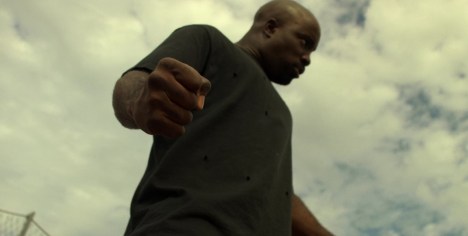
However, even allowing for these problems, there is a sense that the production team are trying to find a way to make these thirteen episodes work. There are several points in the season in which the show allows its characters room to breath in sequences that could have been shortened or rendered more efficient, allowing the audience to spend extended amount of time with these individuals between the big dramatic beats to capture a sense of humanity that might be lost in a tighter or more efficient version of the series.
The second season of Luke Cage is a fascinating and engaging piece of work, even if it suffers a bit in terms of padding and pacing. Nevertheless, it represents a significant improvement on most of the recent collaborations between Netflix and Marvel Studios, having a strong sense of identity that was sorely lacking from most of the material produced since the end of its first season.
Continue reading →
Filed under: Television | Tagged: luke cage, season 2 | Leave a comment »
















 the m0vie blog