• Following Us

  • Categories

  • Check out the Archives


  • Awards & Nominations

Star Trek – Space Seed (Review)

To celebrate the release of Star Trek: Into Darkness this month, we’ll be running through the first season of the classic Star Trek all this month. Check back daily to get ready to boldly go. It’s only logical.

Following the commercial success (and lack of critical success) of Star Trek: The Motion Picture, Paramount made a conscious decision to side-line Gene Roddenberry. Given that his plans for the sequel involved Spock travelling through time to assassinate Kennedy, we can likely all agree that was probably a good thing. Harve Bennett was tasked with producing the sequel, and took to the task of researching what would become the second Star Trek film. Demonstrating considerable respect for the source material, Bennett locked himself away and screened all three seasons of the show, looking for inspiration.

Apparently he only needed to reach the tail end of the first season, because he had found the basis of his film by the closing credits of Space Seed.
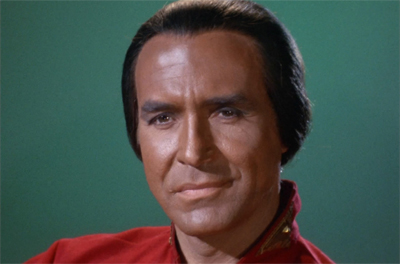
You Khan do it...

You Khan do it…

Continue reading

Star Trek – The Squire of Gothos (Review)

To celebrate the release of Star Trek: Into Darkness this month, we’ll be running through the first season of the classic Star Trek all this month. Check back daily to get ready to boldly go. It’s only logical.

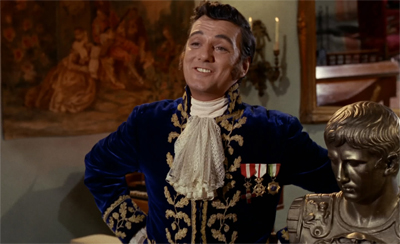
It’s easy to see why The Squire of Gothos has become such a Star Trek touchstone. The show is iconic, but there are particular images and ideas that resonate beyond the core fanbase. Captain Pike’s wheelchair from The Menagerie is one such example, as is the fight with the Gorn from Arena. It’s amazing that Star Trek could produce so many memorable and distinctive images so quickly. Trelane might not have the same name recognition, or even the same pop culture cache, but The Squire of Gothos makes quite an impression.

Indeed, the image of a god-like being acting like a spoilt child, dressed in all manner of period military clothing is a great visual, and it’s little wonder that Roddenberry would return to that idea when he was writing Encounter at Farpoint, the first episode of Star Trek: The Next Generation. Similarly, The Squire of Gothos is one of the major influences on Futurama‘s superb parody/homage, Where No Fan Has Gone Before, right down to the wonderful “twist” ending that has been spoiled by almost half-a-century of pop culture osmosis.

Still, even apart from its massive influence on pop culture, The Squire of Gothos is still a fantastic piece of television, and an example of Star Trek at its very best.

It's hip to be squire...

It’s hip to be squire…

Continue reading

Star Trek – Shore Leave (Review)

To celebrate the release of Star Trek: Into Darkness this month, we’ll be running through the first season of the classic Star Trek all this month. Check back daily to get ready to boldly go. It’s only logical.

When I talk about the surreal sixties energy that really holds quite a bit of Star Trek together, it’s quite possible that it sounds like a back-handed compliment, a cheap and easy gig at a cult television show. However, I mean that sincerely. When I argue that the illogical and somewhat scattershot dynamism of the last act of Court Martial can barely hold the patchwork script together, it’s quite possible that I sound like I’m being sarcastic. However, my affection for the mad-cap mayhem particular to the first iteration of Star Trek is entirely genuine. Although it makes no sense, the climax to Court Martial isn’t the problem. Everything leading up to it is.

I think Shore Leave is pretty much the perfect iteration of this concept. It is, from start to finish, absolutely insane nonsense that threatens to fall apart if one concentrates too hard on any particular detail. However, it’s executed with enough energy and drive that it becomes a compelling and surreal piece of television, and one of the best illustrations of the kind of weirdness that the classic Star Trek could pull off almost effortlessly.

No bunny business...

No bunny business…

Continue reading

Star Trek: Early Voyages #12-15 – Futures, Parts I, II, III & IV (Review)

To celebrate the release of Star Trek: Into Darkness this month, we’ll be running through the first season of the classic Star Trek all this month. Check back daily to get ready to boldly go. It’s only logical.

We’ll be supplementing our coverage of the episodes with some additional materials – mainly novels and comics and films. This is one such entry.

As we discussed before, Star Trek: Early Voyages is about as close to a series starring Christopher Pike as we are ever likely see. A monthly comic book running for about a year-and-a-half, told by Dan Abnett and Ian Edginton, the book followed the adventures of Christopher Pike’s Enterprise, a prelude to the classic Star Trek television show, filling some gaps left by The Cage and The Menagerie. However, the comic had the benefit of being told after a lot of Star Trek had aired.

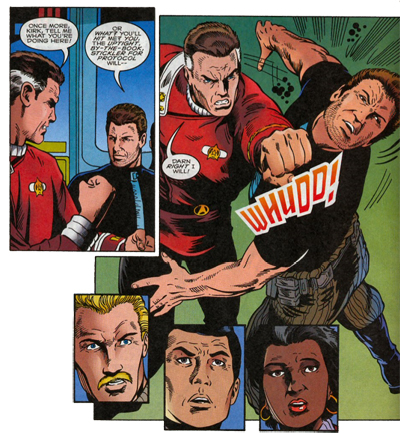
First published in 1997, it hit stands after the big-screen adventures of the Kirk era had officially wrapped up in Star Trek: Generations, and long after Star Trek: The Next Generation had gone off the air. Even Star Trek: Deep Space Nine was more than half way through its run. This puts Early Voyages in an interesting place. It is set in the past, but knows how the future plays out. The epic four-part Futures storyline plays with this concept, offering us a glimpse of an imperfect future where Captain Kirk is a rogue running a cargo ship, the Klingons have annexed considerable portions of the Federation and are on the verge of war…

Oh, and Christopher Pike is happy. That’s how you know it’s a flawed universe.

"And THAT is for stealing my show!"

“And THAT is for stealing my show!”

Continue reading

Star Trek – Court Martial (Review)

To celebrate the release of Star Trek: Into Darkness this month, we’ll be running through the first season of the classic Star Trek all this month. Check back daily to get ready to boldly go. It’s only logical.

It’s hard not to be impressed by the sheer versatility of Star Trek as a format. For a show about exploring the universe, the creators have really managed to incorporate just about any and all genres of television story. Over the franchise’s 700-episode history, there’s been a wealth of quirky episodes that explore types of stories that one might consider quite surreal for a show about a ship travelling to the stars. A court room episode might not be the most radical of these shifts, but Court Martial is still fascinating as an evolution of Star Trek as a concept, broadening the kind of stories that could be told within a Star Trek framework. After all, the fact that there’s a whole subgenre of Star Trek involving court room drama is probably rooted in this first-season adventure.

While its influence is absolutely massive, Court Martial is still a problematic episode. Despite demonstrating what writers could really do within the context of the show, Court Martial suffers because it’s really not that good.

Running rings around the prosecution...

Running rings around the prosecution…

Continue reading

Star Trek – Miri (Review)

To celebrate the release of Star Trek: Into Darkness this month, we’ll be running through the first season of the classic Star Trek all this month. Check back daily to get ready to boldly go. It’s only logical.

It is amazing how Star Trek manages to deftly balance the absurd with the horrific, the bizarre with the terrifying and the camp with the truly haunting. It’s something that’s really unique to the first iteration of the show, that deft ability to go completely for broke, willing to look completely ridiculous without any hint of embarrassment or modesty. Any of the spin-offs would be too conservative and too dignified to attempt anything quite as insane as Miri, with the failure of episodes like Move Along Home demonstrating that it’s impossible to replicate the freedom and the enthusiasm of the original show.

As a result, Miri is a wonderfully weird hour of television, one which is – on just about any level – incredibly wacky. And yet, despite that truly “out there” approach, it’s also a strangely compelling and engaging example of Star Trek.

Feels like going home...

Feels like going home…

Continue reading

Star Trek – Errand of Vengeance: The Edge of the Sword by Kevin Ryan (Review)

To celebrate the release of Star Trek: Into Darkness this month, we’ll be running through the first season of the classic Star Trek all this month. Check back daily to get ready to boldly go. It’s only logical.

We’ll be supplementing our coverage of the episodes with some additional materials – mainly novels and comics and films. This is one such entry.

When you think about it, Star Trek finished its first season with its mythology reasonably well established. There were the Romulans, the Klingons and the Federation. (Oh, my!) We knew that Kirk had a brother on the colonies, who died in the season finalé. Vulcan was a hot desert planet. The Prime Directive existed, and we even got a taste of how Starfleet operated. However, these things all developed gradually over the course of the year, and early episodes couldn’t even seem to agree who exactly Kirk was working for.

The Federation was first mentioned in Arena and only fully named in A Taste of Armageddon. The Klingons were introduced in Errand of Mercy, with a cold war between the two galactic powers finally turning hot. Of course, it’s hard to write “finally” when they had only been introduced in this particular episode. So where were the Klingons during the show’s first year? How come we didn’t pick up any of the tension that must have been simmering?

Kevin Ryan’s Errand of Vengeance trilogy attempts to offer some context, suggesting that the Klingon threat had been brewing during the entire first season. It follows Jon Anderson, a new recruit to the ship’s security department, arriving just before the events of What Are Little Girls Made Of? Oh, and he’s a Klingon infiltrator.

tos-errandofvengeance1

Continue reading

Star Trek – Romulans: Pawns of War by John Byrne (Review)

To celebrate the release of Star Trek: Into Darkness this month, we’ll be running through the first season of the classic Star Trek all this month. Check back daily to get ready to boldly go. It’s only logical.

We’ll be supplementing our coverage of the episodes with some additional materials – mainly novels and comics and films. This is one such entry.

Where were the Klingons? That seems to be one of the most frequently asked questions when a modern writer re-visits the early part of the first season of Star Trek. It makes sense. The Klingons are the franchise’s flagship aliens, and their long-term relations with the Federation mark one of the show’s earliest examples of continuity. The Organian Peace Treaty from Errand of Mercy is mentioned once or twice, but it informs a lot of the appearances of the Klingons in the classic Star Trek, as the warriors are prevented from engaging in direct warfare with the Federation.

However, when first introduced in Errand of Mercy, towards the end of the first season, the Klingons have just declared war on the Federation. However, it seems like this has been expected for a long time. Kirk speaks of the Klingons like old enemies. Kor knows that captain of the Enterprise by name. There’s a sense of a pre-established history, which makes their appearance towards the tale-end of the season all the more perplexing. Apparently they have been there all along, even if we haven’t seen them before.

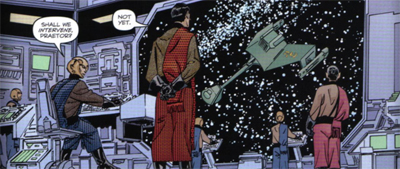
John Byrne’s Alien Spotlight issue might have been themed around the Romulans, and the collected edition might be Romulans: Pawns of War, but it seems more devoted to exploring what exactly the Klingons were up to behind the scenes between their appearances on Star Trek.

Cry havok, and let slip the dogs of war...!

Cry havok, and let slip the dogs of war…!

Continue reading

Doctor Who: Earthshock (Review)

To celebrate the fiftieth anniversary of the longest-running science-fiction show in the world, I’ll be taking weekly looks at some of my own personal favourite stories and arcs, from the old and new series, with a view to encapsulating the sublime, the clever and the fiendishly odd of the BBC’s Doctor Who.

Earthshock originally aired in 1982.

I would suggest you get your people well back. The hatch may be booby-trapped.

What about you?

Well, my arms are only this long. I can’t get any further away.

– the Doctor and Scott

Earthshock is regarded as one of the stronger stories of Peter Davison’s tenure on Doctor Who. It’s easy enough to see why. After all, it features not one but two memorable twists. It also harks back to the classic “base under siege” stories of the Patrick Troughton era. While it’s still very clearly a piece of early eighties Doctor Who, its production values hold up rather well compared to adventures from that era of the show. It’s written by Eric Saward and, like The Visitation, it has that same sense of tension and pace, building towards a truly massive final twist.

And yet, despite that, I find it very difficult to love Earthshock. I suspect a lot of that is down to how it seems like Doctor Who learned all the wrong lessons from Earthshock, retroactively tainting an otherwise very solid serial.

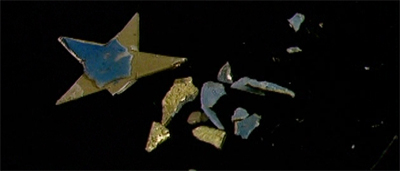
Shattered...

Shattered…

Continue reading

Star Trek – Balance of Terror (Review)

To celebrate the release of Star Trek: Into Darkness this month, we’ll be running through the first season of the classic Star Trek all this month. Check back daily to get ready to boldly go. It’s only logical.

I’ve talked about it about it quite a bit in my earlier reviews, so I won’t dwell on it too much here, but Star Trek got really good really quickly. Balance of Terror is only the ninth ever episode of Star Trek ever produced, but it stands as one of the finest entries in the original series, and perhaps even the franchise. It also represents the moment where the model of what Star Trek would be really sort of solidified. The first eight episodes had contained any number of classic Star Trek tropes.

The Cage and Charlie X gave us old and immeasurably powerful alien civilisations, while Where No Man Has Gone Before gave us a god-like being. The Man Trap gave us space monsters. Mudd’s Women gave us awkward gender politics. The Enemy Within created the whole “transporter malfunction” and “evil duplicate” subgenres. However, Balance of Terror is the first episode to suggest outer space might be more than the place where crazy stuff happens and our heroes bump into monsters or ancient civilisations. The universe might have its own politics, its own history, its own civilisations that will emerge, contrasted with mankind’s expansion into space.

The Klingons are undoubtedly the most recognisable and iconic of the classic Star Trek races, but the Romulans are the first of the franchise mainstays to appear, and Balance of Terror is the first episode to devote considerable effort to world-building the Star Trek universe.

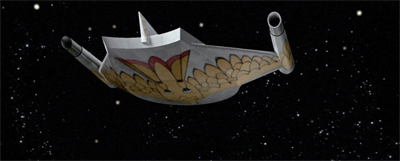
The not-so-great bird of the galaxy...

The not-so-great bird of the galaxy…

Continue reading