• Following Us

  • Categories

  • Check out the Archives


  • Awards & Nominations

Star Trek – Debt of Honour (Review)

This June, we’re taking a look at some classic Star Trek movie tie-ins and other interesting objects. Check back daily for the latest reviews and retrospectives.

By all accounts, Debt of Honour should be an unqualified success.

It’s a prestige graphic novel from DC comics, produced around the twenty-fifth anniversary of Star Trek and the release of Star Trek VI: The Undiscovered Country. It is written by celebrated comic book scribe Chris Claremont, fresh off his career-defining stint on Uncanny X-Men. An avowed Star Trek fan and comic book veteran, this should be in his wheel house. The art is provided by Adam Hughes, one of the most celebrated and respected artists of his time.
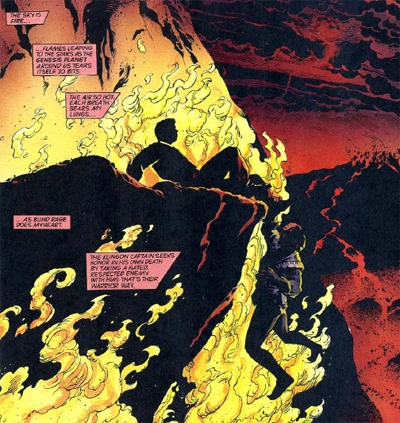
Talk about kicking off a comic...

Talk about kicking off a comic…

By any measure, Debt of Honour should count as some sort of hallmark for DC Comics’ Star Trek tie-ins. Unfortunately, that isn’t quite the case. A rather muddled storyline that is hopelessly devoted to Star Trek continuity while awkward interfacing with it,  Debt of Honour is just packed a little too tight. Charting a story from the earliest days of Kirk’s career to the aftermath of Star Trek IV: The Voyage Home, Claremont bites off more than he can chew.

Over the course of Debt of Honour, Claremont introduces a vague alien threat that has apparently been haunting Kirk for his entire career, a new arch-foe or love interest for Kirk, and even a supporting role for Kor. Along the way, he packs in cameos and shout-outs to various parts of Star Trek lore. He even explains why Klingons suddenly had ridges around the time of Star Trek: The Motion Picture. Ultimately, Debt of Honour is ambitious, but a little over-stuffed and quite over-cooked.

Warp speed ahead!

Warp speed ahead!

Continue reading

Star Trek – The 25th Anniversary (Review)

This June, we’re taking a look at some classic Star Trek movie tie-ins. Check back daily for the latest reviews and retrospectives.

Star Trek VI: The Undiscovered Country was released quite close to the twenty-fifth anniversary of Star Trek. With Star Trek: The Next Generation at the height of its popularity, the franchise was able to mark the occasion with a variety of celebrations. There were comic books and prose books celebrating the occasion. Both Spock and Scotty appeared on The Next Generation around the time of the anniversary.

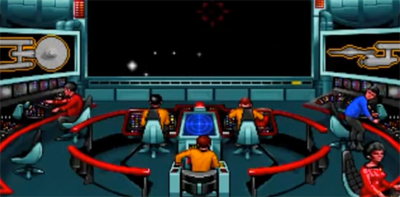
Perhaps the most obvious example was the release of Star Trek: The 25th Anniversary by Interplay. While it was not the first video game to be based on the Star Trek franchise, it was the first high profile release. It set the tone for commercial Star Trek video games, remaining one of the best-selling Star Trek video games ever produced. It paved the way for everything from Bridge Commander to A Final Unity to Elite Force.

Ship shape...

Ship shape…

Released across multiple platforms and featuring seven episodic adventures structured like episodes of the classic television show, The 25th Anniversary set a dramatic and effective precedent for Star Trek video gaming. The CD-ROM edition of the game took things even further, featuring voice recordings of the show’s primary cast to help lend a sense of continuity and credibility to events. The 25th Anniversary is littered with easter eggs and in-jokes, and it’s constructed with the utmost love and affection.

However, perhaps what is most interesting about The 25th Anniversary is the way that it plays into all these established Star Trek clichés and tropes, but with a rather sophisticated outlook. It’s a wonderful example of how the original Star Trek show never stopped reinventing itself, only really reaching a truly idealised form long after it had been off the air.

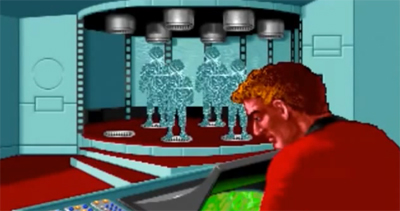
Beam me up, Kyle!

Beam me up, Kyle!

Continue reading

Star Trek: The Next Generation – Tin Man (Review)

This January and February, we’ll be finishing up our look at the second season of Star Trek: The Next Generation and moving on to the third year of the show, both recently and lovingly remastered for high definition. Check back daily for the latest review.

Tin Man is an interesting piece of science-fiction situated towards the end of the third season of Star Trek: The Next Generation. Michael Piller’s focus on character general shifted the show a little bit away from science-fiction high-concepts, with Tin Man feeling like something of a companion piece to the science-fiction mystery of The Survivors. It’s a story about the wonders of the universe, a rather eloquent (and underrated) celebration of the limitless potential that exists out in the cosmos.

This no the Tam or the place...

This no the Tam or the place…

Continue reading

Star Trek: The Next Generation – Sins of the Father (Review)

This January and February, we’ll be finishing up our look at the second season of Star Trek: The Next Generation and moving on to the third year of the show, both recently and lovingly remastered for high definition. Check back daily for the latest review.

Sins of the Father is another watershed moment for Star Trek: The Next Generation and Star Trek as a whole. It’s really the first time that the franchise has invested in proper long-form world-building, rather than treating continuity as something that occasionally built up by sheer narrative momentum. It’s an episode that ends on an ambiguous note, suggesting more to come. It’s also an episode that nails down a lot of Klingon culture and tradition.

In a way, it’s the logical conclusion of a narrative style that has been building since The Enemy and The Defector earlier in the season; creating a sense that The Next Generation isn’t just the story of the crazy adventures that or crew have week in and week out, but a window into a much larger fictional universe. There’s a sense that the adventures of the Enterprise are set against a much larger and vaster universe, and Sins of the Father really gives us a glimpse at that.

It broadens the scope of The Next Generation, in terms of subject matter and also in terms of narrative possibilities.

Picard gets his Palpatine on...

Picard gets his Palpatine on…

Continue reading

Star Trek: The Next Generation – Yesterday’s Enterprise (Review)

This January and February, we’ll be finishing up our look at the second season of Star Trek: The Next Generation and moving on to the third year of the show, both recently and lovingly remastered for high definition. Check back daily for the latest review.

Yesterday’s Enterprise is one of the best-loved pieces of Star Trek ever produced. Its inclusion is a given in absolutely any “best of” poll being run for Star Trek: The Next Generation or even the franchise as a whole. A rather thoughtful piece of high-concept science-fiction exploring the importance of the right people in the right time, Yesterday’s Enterprise is proof that The Next Generation has truly come of age. After two years of wandering in the wilderness, the show has finally found its feet.

Of course, the production of Yesterday’s Enterprise was quite traumatic. The story and script went through multiple iterations between the original pitch and the version presented on the screen. The episode was written by pretty much the entire writing staff over the Thanksgiving weekend, racing against the clock to get it finished. Due to scheduling issues with Denise Crosby and Whoopi Goldberg, it was filmed in late December instead of early January.

As with so much of the third season, there’s a sense that the episode was held together by chewing gum and rubber bands. However, also like most of the third season, that sense only comes from those delving into the behind-the-scenes stories. Looking at the episode itself, this was a show on the top of its game.

The battle bridge...

The battle bridge…

Continue reading

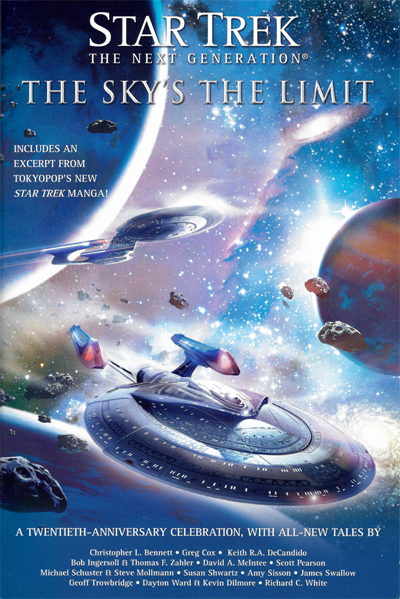
Star Trek: The Next Generation – The Sky’s the Limit: Suicide Note by Geoff Trowbridge (Review)

This January and February, we’ll be finishing up our look at the second season of Star Trek: The Next Generation and moving on to the third year of the show, both recently and lovingly remastered for high definition. Check back daily for the latest review.

We’ll be supplementing our coverage of the episodes with some additional materials – mainly novels and comics and films.

Suicide Note is another one of those great “expanding from dangling plot threads left at the conclusion of an episode of Star Trek: The Next Generation stories that are popular in tie-in media. In this case, writer Geoff Trowbridge is building off the end of The Defector, which saw Captain Picard receiving a suicide note from the eponymous defector Admiral Jarok. Jarok had asked Picard to pass the not on to his family, which was not possible at the time.

Of course, The Next Generation never really dealt with these threads, because – put quite simply – it wasn’t that kind of show. So it’s fun to pick up these threads and to try to recontextualise them in terms of everything that has unfolded since. In this case, Trowbridge is able to explore Jarok’s sacrifice in the context of the Federation and Romulan alliance towards the end of Star Trek: Deep Space Nine, in the wake of In the Pale Moonlight.

In keeping with Trowbridge’s The Chimes at Midnight, Suicide Note is structured as a critical exploration of American history, through the prism of Star Trek. While The Chimes at Midnight was a brutal deconstruction of the franchise’s roots in the Second World War, Suicide Note is framed in a more modern context.

tng-theskysthelimit

Continue reading

Star Trek – The Romulan Way by Diane Duane and Peter Morwood (Review)

This January and February, we’ll be finishing up our look at the second season of Star Trek: The Next Generation and moving on to the third year of the show, both recently and lovingly remastered for high definition. Check back daily for the latest review.

We’ll be supplementing our coverage of the episodes with some additional materials – mainly novels and comics and films. This is one such entry.

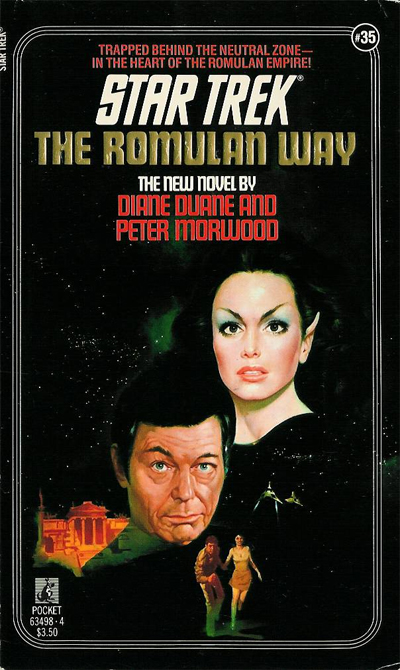
The Romulan Way is the second book in Diane Duane’s “Rihannsu” cycle – although the first book in the series, My Enemy, My Ally was only retroactively distinguished from standard Star Trek tie-ins. Much like My Enemy, My Ally had been roughly contemporaneous with John M. Ford’s The Final Reflection, Duane’s follow-up was published around the same time as Ford’s own sequel to his earlier work, How Much for Just the Planet? Expanding on My Enemy, My Ally, The Romulan Way sees Duane delving more thoroughly into Romulan history and culture.

The Romulan Way was published amid a sea of change at Paramount and Pocket Books in the late eighties, with shifting mandates and objectives for these tie-in books that represented a conscious effort to hem in some of the more creative tendencies of mid-eighties Star Trek novelist. To demonstrate how rapidly things were changing, both The Romulan Way and How Much for Just the Planet? were both published within three years of their predecessors. After this point, it would take Duane another thirteen years to write the third volume in her saga, and John M. Ford would never write another Star Trek tie-in again.

It’s very hard to condone any publishing philosophy that leads to results like that.

tos-theromulanway

Continue reading

Star Trek Sequelitis – Who We Want to See

Never afraid to jump on the bandwagon, we were so impressed by the movie that we’ve seen, we thought we’d write a list of the aliens and creatures that we want or don’t want to see in the proposed sequel. Part of me really hopes that JJ Abrams continues to breath originality back into the series, but there are also a lot of very cool aliens out there in the big Star trek universe. Here are a few of the many, many characters and species we can see being considered for an appearance.

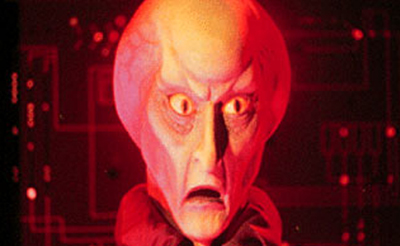
Balok was shocked he didn't make the list...

Balok was shocked he didn’t make the list…

Continue reading