• Following Us

  • Categories

  • Check out the Archives


  • Awards & Nominations

Doctor Who: Terror of the Autons (Review)

To celebrate the fiftieth anniversary of the longest-running science-fiction show in the world, I’ll be taking weekly looks at some of my own personal favourite stories and arcs, from the old and new series, with a view to encapsulating the sublime, the clever and the fiendishly odd of the BBC’s Doctor Who.

Terror of the Autons originally aired in 1971.

That jackanapes! All he ever does is cause trouble!

– nice to see the Doctor taking the Master seriously

I think you can make a fairly credible argument that Jon Pertwee’s first season of Doctor Who stands out as one of the best years the show ever produced. Facing the challenge of migrating from black-and-white to colour, and forced to tell stories entirely set on present-day Earth, the writers and producers managed to craft a season of television that I think stands quite well when measured against the very best of vintage BBC science-fiction. Sure, there may have been walking shop-front dummies, lizard people, animal men and haunted space suits, but the stories were surprisingly mature and relatively clever. The writers used the framework of Doctor Who to tell four very good and very philosophical stories exploring both bold science-fiction high-concepts (alternate universes) and also moral quandaries (how humanity relates to the unknown).

Terror of the Autons is the first story in Jon Pertwee’s second season. I’m actually quite fond of it, and it’s packed to the brim with iconic imagery, so it’s very difficult to be too critical of it. After all, any adventure that left so large an impression on the public imagination must have something to recommend it. However, there’s a very clear sense of regression here. It seems, from this first serial of Pertwee’s second year, that the agenda has changed somewhat.

Terror of the Autons is arguably more indicative of Pertwee’s time in the lead role than any of those stories from his first year. It’s exciting, it’s fast-paced, it has a decidedly man-of-mystery feeling to it, but it also feels somewhat light and a little insubstantial. Not that there’s anything wrong with that, but it just feels like a definite regression.
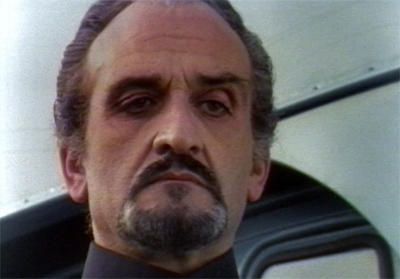
Master of the Whoniverse?

Master of the Whoniverse?

Continue reading

Doctor Who: The Talons of Weng-Chiang (Review)

To celebrate the fiftieth anniversary of the longest-running science-fiction show in the world, I’ll be taking weekly looks at some of my own personal favourite stories and arcs, from the old and new series, with a view to encapsulating the sublime, the clever and the fiendishly odd of the BBC’s Doctor Who.

The Talons of Weng-Chiang originally aired in 1977.

Ah! Eureka! Do you know what that is?

You ask me so that you can tell me.

That’s right. It’s a trionic lattice, an integral part of a time cabinet. It’s impossible to open it without it.

You mean it’s a key.

Yes. He’s not only a scientific fool, he’s an absent-minded one.

Perhaps he has another eureka.

No, eureka’s Greek for “this bath is too hot.”

– the Doctor and Leela

The Talons of Weng-Chiang is generally agreed to be one of the (if not the) greatest Doctor Who adventures ever produced. It tends to hover around the top of various official polls, with only Caves of Androzani and City of Death coming close to it in public opinion. As such, I feel a little bit guilty when I confess that it doesn’t rank as one of my absolute favourite adventures. I like it a great deal, I think it embodies a great deal of what works about the Philip Hinchcliffe era of the show. However, if I’m looking for a dark pseudo-historical adventure, I am more likely to pick either The Pyramids of Mars or The Horror of Fang Rock.

I can see why a lot of people respond to The Talons of Weng-Chiang, and it has a lot to recommend it, but there are a number of minor problems that hold the serial back from the cusp of perfection, in my opinion.

Read it at your (Yellow) Peril...

Read it at your (Yellow) Peril…

Continue reading

Doctor Who: The Caves of Androzani (Review)

To celebrate the fiftieth anniversary of the longest-running science-fiction show in the world, I’ll be taking weekly looks at some of my own personal favourite stories and arcs, from the old and new series, with a view to encapsulating the sublime, the clever and the fiendishly odd of the BBC’s Doctor Who.

The Caves of Androzani originally aired in 1984.

Androzani Major was becoming quite developed the last time I passed this way.

When was that?

I don’t remember. I’m pretty sure it wasn’t the future.

You’re a very confusing person to be with, Doctor, you know that?

I tried keeping a diary once. Not chronological, of course, but the trouble with time travel is one never seems to find the time.

– The Doctor and Peri reflect on travel in the TARDIS

At the risk of succumbing to cliché, The Caves of Androzani is my favourite Doctor Who serial from the classic series. A perfect encapsulation of Peter Davison’s tenure, a fitting farewell story that incarnation of the Doctor, and arguably the perfect regeneration adventure, The Caves of Androzani is one of the very few DVDs that I happen to own twice. And that’s quite a ringing endorsement.

Five outta five?

Continue reading

Doctor Who: Spearhead From Space (Review)

To celebrate the fiftieth anniversary of the longest-running science-fiction show in the world, I’ll be taking weekly looks at some of my own personal favourite stories and arcs, from the old and new series, with a view to encapsulating the sublime, the clever and the fiendishly odd of the BBC’s Doctor Who.

Spearhead from Space originally aired in 1970.

Oh well, at least he won’t get very far.

You mean, before your men shoot him again?

I don’t find that funny.

– The Brigadier and Liz discuss the Doctor’s (second) escape

Looking back now, it’s hard to believe that Spearhead from Space had so much riding on it, if only because of the deft combination of Robert Holmes’ sharp script and Derek Martinus’ confident direction. Indeed, the serial served as something of a second pilot for the show, demonstrating that the survival of the series during the transition between William Hatnell and Patrick Troughton had not been a fluke, broadcasting in colour for the first time, and setting up an entirely new status quo set primarily on present-day Earth. It’s a miracle that it all works so well, let alone that fact that it remains one of the most accessible adventures featuring the character.

We need a Doctor in the TARDIS!

Continue reading