• Following Us

  • Categories

  • Check out the Archives


  • Awards & Nominations

Non-Review Review: Green Room

This film was seen as part of the Audi Dublin International Film Festival 2016.

Green Room is a masterful artisanally-crafted suspense thriller.

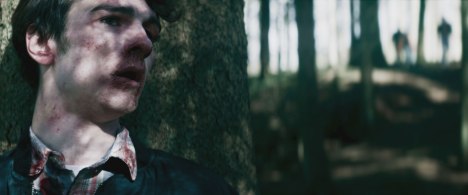
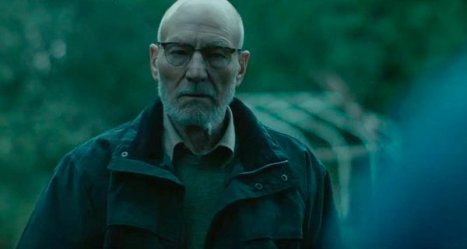
Writer and director Jeremy Saulnier crafts a loving tribute to seventies horror that feels like a truer successor to the “backwoods horror” genre than many contemporary remakes and reimaginings. Following a punk band named The Ain’t Rights that stumble into a tense stand-off with a bunch of neo-nazis in rural Oregon, Green Room is almost aggressively old-school in its horror sensibilities. It is tense and claustrophobic, paranoid and unsettling. Saulnier has a masterful understanding of the genre and its expectations, crafting a pitch perfect homage.
greenroom

Green Room is a very canny piece of work, but never in a manner that is distracting. The film is wry without being ironic, more arch than subversive. Appropriately enough, given its punk protagonists, the movie’s hints of cynicism about its genre and set-up bely a more earnest appreciation of the form. Green Room is a classic and conventional horror film about a bunch of kids who took a wrong turn, and it is utterly unapologetic about that. Instead, it commits to providing one of the most visceral traditional horror experiences in recent memory.

Green Room is a nasty piece of work. And is all the better for it.
greenroom6

Continue reading

Non-Review Review: Anomalisa

This film was (almost) seen as part of the Audi Dublin International Film Festival 2016.

Anomalisa is a heartbreaking tale of isolation and loneliness, an affecting drama about living in a world that feels illusory.

Directed by Duke Johnson and Charlie Kaufman, from Kaufman’s screenplay adapted from his own stageplay, most of the discussion of Anomalisa has focused upon its unconventional production. The movie was essentially crowdsourced, as the space allocated in the closing credits to the project’s kickstarter backers will attest. However, Anomalisa is also a stop motion production, painstakingly and meticulously filmed using life-like dolls to tell a sad story about adultery and anomie.

anomalisa1

In some respects, this fascination with form makes sense. After all, Anomalisa is a very human and grounded story. Even allowing for the difficulty that Kaufman had fundraising for the project, it would likely have been more practical to realise the story with living performers in a more conventional style. However, the distinctive technique provides a powerful emotional weight to Johnson and Kaufman’s story. The relative banality of the illusion is very much the much the point.

Anomalisa is not so much a story about fantasy as it is about a disconcerting sense of unreality.

anomalisa-098_0

Continue reading

Non-Review Review: High-Rise

This film was seen as part of the Audi Dublin International Film Festival 2016.

Ben Wheatley’s High-Rise is a beautiful ugly film.

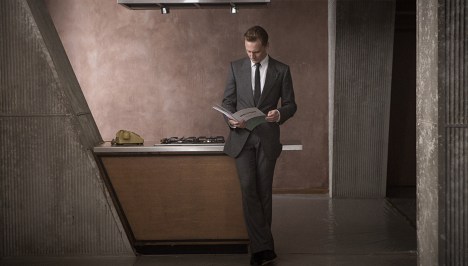
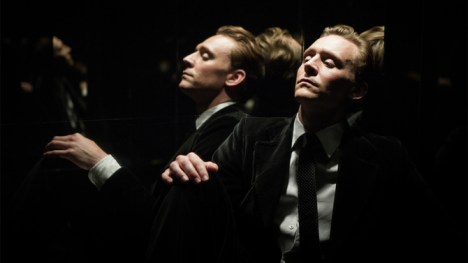
An adaptation of J. G. Ballard’s surrealist novel, High-Rise fits rather comfortably within Wheatley’s aesthetic. There is an apocalyptic paranoia running through the film, which charts the social decay of the eponymous building over a three-week period. Class warfare is rendered literal in multiple senses, as the lower classes visit violence upon the wealthier inhabitants of the tower block. Even during the most peaceful and serene sequences of the movie’s first half, there is an underlying anxiety and dread bubbling just beneath the surface.

highrise3

High-Rise is disjointed and uneven, but that would seem to be something of the point. Amy Jump’s screenplay and Ben Wheatley’s direction eschew conventional pacing, with the world collapsing more in fits and starts than in a steady decline. Wheatley and Jump also edit the film, emphasising the chaotic nature of this collapse through jumps and montages that document the erosion of social order in a manner that ebbs and flows. It is disorientating and occasionally even frustrating, but one senses that this is meant to be the point.

High-Rise is a messy piece of work. But then, as the movie seems to suggest, things get messy when life is forced into a neatly delineated box.

HR_0430_tiff.tif

Continue reading

Non-Review Review: The Truth Commissioner

This film was seen as part of the Audi Dublin International Film Festival 2016.

The Truth Commissioner began life as a pitch for a BBC television show.

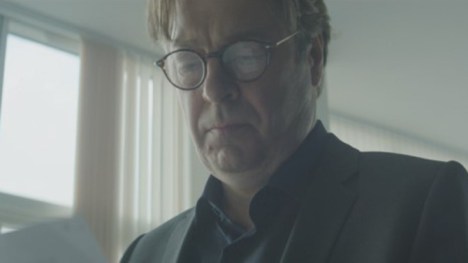
This is quite clear from the way that film is put together, both in terms of plotting and in terms of visual composition. It is not too difficult to imagine The Truth Commissioner stretched out to a prestigious six-week television drama event series, playing as a sibling series to other politically-charged thrillers like The Honourable Woman or The Night Manager; albeit with a more modest cast and location than those two recent high-profile examples of the BBC’s dramatic programming.

thetruthcommissioner1

As written by Eoin O’Callaghan, The Truth Commissioner feels rather condensed; populated by a cast of characters who seem compressed to fit the movie’s relatively modest runtime. Character relationships and dynamics are rendered in extremes; they are either left inferred or bluntly stated. There is a sense that The Truth Commissioner has been stripped down to fit this particular format, playing as a rough outline of a strong central idea rather than a fully realised political thriller.

Director Declan Recks does a great job realising this contemporary Belfast drama, layering on the paranoia as the eponymous character finds himself navigating dangerous waters. The Truth Commissioner is a stylish piece of work, albeit one that seems more like a condensed BBC drama than an exciting feature film in its own right.

thetruthcommissioner

Continue reading

Non-Review Review: Kung-Fu Panda III

This film was seen as part of the Audi Dublin International Film Festival 2016.

Kung-Fu Panda III retains the energy and style that distinguished the prior instalments of the series, even if the emotional beats feel further and further removed from what made the original such a beloved animated classic.

The original Kung-Fu Panda offered a compelling genre mash-up, slotting anthropomorphised animals into a kung-fu action adventure. However, despite the pulpier elements of the plot, Kung-Fu Panda carried a surprising emotional weight. Featuring one of Jack Black’s strongest performances and mining the incongruity of a Panda martial artist for all its worth, Kung-Fu Panda fleshed out and developed its world and its characters with a surprising amount of depth.

kungfupanda3

However, that emotional depth faded over the course of the sequels. Kung-Fu Panda II touched on issues related to identity and adoption amid a more generic action adventure, fleshing out Po’s backstory and exploring how he came to be raised by a mongoose. Picking up on the cliffhanger teased in the closing scene of Kung-Fu Panda II, Kung-Fu Panda III finds Po reconnecting with his long-lost father and trying to make sense of his place in the world. However, a lot of its emotional beats feel overly familiar and routine.

Still, Kung-Fu Panda III retains the energy and dynamism of the prior two installments, with a kinetic visual style and a number of visually impressive set pieces. It just feels a bit more hollow than the previous films in the series.

kungfupanda3a

Continue reading

Non-Review Review: Hail, Caesar!

This film was seen as part of the Audi Dublin International Film Festival 2016.

Hail, Caesar! is little more than an excuse for the Coen Brothers to adventure through classic Hollywood; a series of fantastic scenes and sequences tied together more by central theme than by a linear plot. It is telling how many performers essentially find themselves relegated to only a single scene or two, with performers like Scarlett Johannessen, Jonah Hill, Tilda Swinton, Frances McDormand, Alison Pill, Ralph Fiennes and Channing Tatum effectively (and occasionally literally) dancing around the film than weaving through it.

In many respects, this simply shouldn’t work. On paper – and perhaps on reflection – Hail, Caesar! plays like an anthology of great little scenes; a collection of short films all linked by the classic Hollywood aesthetic more than a single unifying narrative. The actual substance of the film is quite removed from the story promised by the trailers, which seem to tease “an old-timey movie Ocean’s Eleven with actors teaming up to rescue a kidnapped George Clooney.” It spoils nothing to reveal that the movie is most definitely not about that.

hailcaesar4

Although the kidnapping of Baird Whitlock is a central thread, Hail, Caesar! plays more like a day in the life of Hollywood studio fixer Eddie Mannix. Mannix is (very) loosely based on the real studio executive (and notorious “fixer”) of the same name, although it seems quite unlikely that he ever had a day quite as bizarre as that presented here. The Coen Brothers have a great deal of fun incorporating classic Hollywood iconography into their film, both as movies within the movie and then in a more meta-fictional manner towards the climax.

However, Hail, Caesar! is tied together through its recurring humanism. The movie opens with Mannix taking confession for his sins, part of a daily ritual. One of the films featured is an old-school biblical epic. Complex economic theories are woven through the narrative, and the film repeatedly touches upon the awkward relationship that exists between Capitol Pictures and its performers. Although Hail, Caesar! is too shrewd to propose easy answers to its complex web of character interactions, it does tease some insightful questions. And features some great set pieces.

hailcaesar5

Continue reading

Non-Review Review: Truth

This film was seen as part of the Audi Dublin International Film Festival 2016.

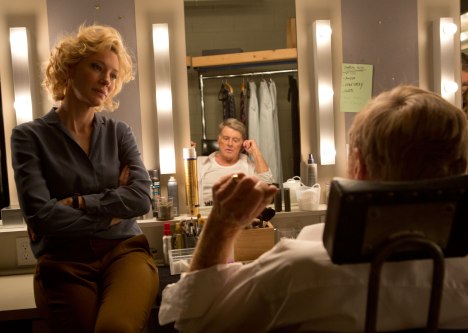
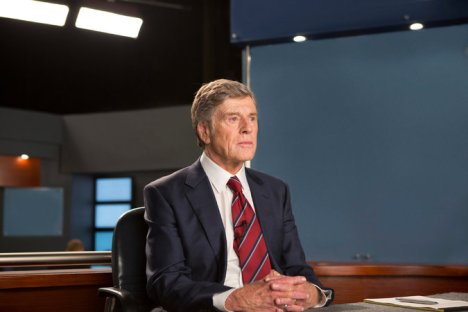
Truth is a truly repugnant piece of work.

It is quite plain to see what Truth aspires towards. It wants to be a prestige picture about the erosion of journalistic freedom in twenty-first century America; it positions itself alongside films like Spotlight and All the President’s Men (and even television series like the fifth season of The Wire) in contending that a free press is an essential organ of a functioning democracy. It is entirely correct in this respect. Truth is bookended by reminders of how the press exposed scandals like Abu Ghraib and held those in authority to account.

truth

However, Truth is spectacularly ill-judged. The film clearly wants to tell a story about journalists who find themselves under intense scrutiny for reporting something that those in power would not want exposed. There are very candid stories to be told about the failure of the American press in this role during the early years of the twenty-first century; the role of the media in the march towards the Iraq war, the death of newspaper journalism and the rise of messier (and uglier) system in its place.

Unfortunately, Truth chooses the worst possible story upon which to make this stand. What clearly aspires to be a drama about journalistic integrity becomes a tone-deaf testament to journalistic incompetence. Then again, perhaps Truth picked its subject matter perfectly.

truth4

Continue reading

Non-Review Review: Sing Street

This film was seen as part of the Audi Dublin International Film Festival 2016.

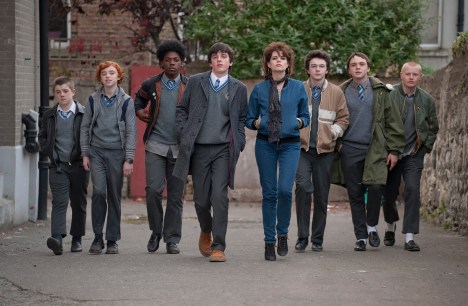
Sing Street is a joyous musical coming of age story.

As with Once and Begin Again, director John Carney demonstrates an innate (and romantic) appreciation for the role of music in interpersonal interactions. As in both Once and Begin Again, Carney employs music as an emotional shorthand; both in how the characters relate to one another and how the audience relates to the film. As with his two prior films, Carney treats music as a language of love and attraction, offering his characters the chance to communicate ideas or feeling that can only be hinted at through conversation, no matter how intimate.

However, Sing Street more firmly ties its musical elements to a sense of memory or nostalgia, with a soundtrack that evokes the film’s secondary school setting as effectively as costumes or set dressings. Sing Street is an ode to the joys and adventures of youth, set to a catchy synthesiser beat.

singstreet1

Continue reading

Non-Review Review: How to be Single

How to be Single is nowhere near as radical as its title would suggest.

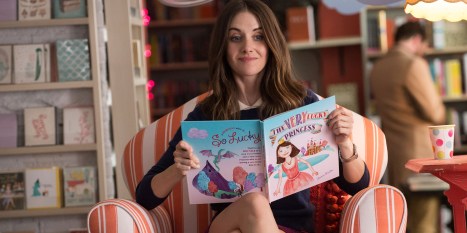
As with Deadpool, there is a sense that film is more interested in acknowledging the tropes and conventions of the genre than it is in actively subverting them. How to be Single talks a good game, particularly through its central character. Dakota Johnson is well cast as the movie’s lead, anchoring an impressive ensemble of comedic actors. While How to be Single nods towards and acknowledges the expectations of the romantic comedy genre, it is more interested in gently bending and flexing the rules than actively breaking them.

According to formula...

According to formula…

Not that there is anything wrong with this approach. Indeed, How to be Single is a fairly solid example of the genre, with a witty script and a great cast providing just about everything that the audience could expect from a romantic comedy. How to be Single is perhaps a little too long for its own good, particularly in its final act. There are points at which the film hews a little bit too close to the romantic clichés for its own good, particularly in plot threads focusing on Leslie Mann and Alison Brie. However, the movie is charming enough that these are not fatal flaws.

How to be Single could easily have been a little more transgressive or a little more provocative, but the end result is a well-made and well-acted romantic comedy that has just enough self-awareness to understand the audience’s expectations; just not enough to really surpass them.

By the book...

By the book…

Continue reading

Non-Review Review: Triple 9

Triple 9 looks great.

Although it set in modern day Atlanta, director John Hillcoat seems to frame Triple 9 as a grim companion piece to The Road. Hillcoat captures the horrors of urban decay, creating a world that seems to teeter on the edge of the abyss. The camera pans through abandoned tenement buildings and lingers on graffiti; bodies are found in shopping trolleys while tinted windows serve to conceal immediate dangers. As filmed by Hillcoat and filtered through the lens of cinematographer Nicolas Karakatsanis, Atlanta seems to be composed of slums and overpasses.

Traffic stop...

Traffic stop…

From the impressive opening heist set piece, Hillcoat saturates the film with red, as if our heroes are only glimpsed through the light of hellfire. That red comes from multiple sources; a red dye pack that explodes at the worst possible moment, the boots worn by one of the characters, the lights from a police car, the fire from a distant (and somewhat anticlimactic) explosion. Triple 9 is oppressive and grim, with Hillcoat threatening to bring the world collapsing down upon his protagonists.

The problem with Triple 9 has nothing to do with Hillcoat’s aesthetic. Instead, the film suffers from a generic and unfocused script populated by characters who lack agency and identity. The main figures in Triple 9 often feel like pieces of paper caught in a breeze, moving in any given direction at the whim of the plot rather than through any essential quality of their own. Things happen not because they are organic (or even inevitable), but because they are convenient. There are points at which it seems like maybe the characters are not in hell; maybe the audience are.

Married to the mob...

Married to the mob…

Continue reading