












You’re going to fire me at a planet? That’s your plan? I get fired at a planet and expected to fix it?
In fairness, that is slightly your M.O.
Don’t be fair to the Daleks when they’re firing me at a planet.
And more wacky structural hijinks ensue.
The sixth and seventh seasons of the revived Doctor Who are strange beasts, for a number of reasons. The decision to split the seasons stands out, but there is also a sense that they are structured in a counter-intuitive manner. The Impossible Astronaut and Day of the Moon served as a two-part season finalé, despite opening the sixth season. In contrast, Let’s Kill Hitler played like a frothy season premiere. (The Wedding of River Song is perhaps the most difficult to place; while certainly not a light run-around season opener, it was nevertheless a bit light for a finalé.)
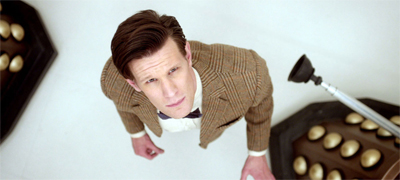
Things are looking up…
The seventh season arguably streamlines the structure a bit. The Name of the Doctor plays almost like a season premiere, revealing the origin story for “the Impossible Girl” and teasing ideas like the War Doctor and Trenzalore relentlessly. In contrast, Asylum of the Daleks feels like a season finalé, teasing a new companion as the existing companions struggle to get on with their real lives, featuring fleets of Dalek ships destroying planets and massive amounts of continuity.
Indeed, the biggest problem with Asylum of the Daleks is that it has not enough time to establish all its core elements. Plot points come out of nowhere. Character beats are established in the same scenes that resolve them. Asylum of the Daleks is a big episode in keeping with the “blockbuster” aesthetic of the anniversary season, but it also establishes the limitations of that approach.
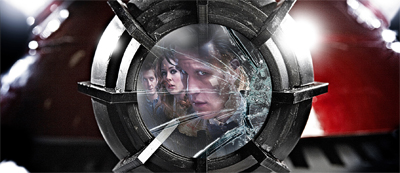
Moffat’s crack at writing a Dalek episode…
Filed under: Television | Tagged: bbc, Big Bang, christmas, Dalek, doctor, doctor who, doomsday, Moffat, Pandorica Opens, russell t. davies, steven moffat, victory of the daleks | 1 Comment »



 the m0vie blog