• Following Us

  • Categories

  • Check out the Archives


  • Awards & Nominations

“No one trusts each other anymore.” Brian Michael Bendis’ “Avengers” and the War on Terror

One of the great things about long-running pop art, whether television shows, film franchises or comic books, is the sense in which they can serve as a reflection of shifting cultural concerns.

The Marvel Universe spans more than six decades of continuity. It is perhaps too much to call it a single story, even if comic book continuity is held together by that fiction. It is the work of countless writers and artists, working under different editorial regimes with different creative and commercial constraints. The visual language of the medium has shifted over decades, along with its target audience, not to mention its relationship with the mainstream culture.

Still, while monthly superhero comics are rarely considered high or important art, they are an interesting window into their particular cultural moment. These characters and archetypes are constantly changing and evolving, being reworked and recontextualised to fit the perpetual present. Rereading old comic books can feel like stepping inside a time machine, taking the reader back to not just a particular moment in comics continuity, but a funhouse mirror of the larger culture.

Brian Michael Bendis stewarded the Avengers titles for eight years, from 2004 to 2012. He managed the brand across multiple titles starting with Avengers Disassembled into New Avengers and Mighty Avengers, and through a host of epic status quo-altering events. Some of those events, like House of M, Secret Invasion and Siege, Bendis wrote himself. Other events, like Civil War, he simply tied into from the sidelines.

Still, that initial run of comics from Avengers Disassembled to Siege remains hugely important. Bendis restructured the Marvel Universe to place the Avengers franchise at its core, displacing the X-Men as the company’s flagship brand. Coinciding with the launch of Marvel Studios, that run is an obvious and ongoing touchstone for the Marvel Cinematic Universe, which has directly adapted segments of this run into films like Captain America: Civil War and shows like Secret Invasion.
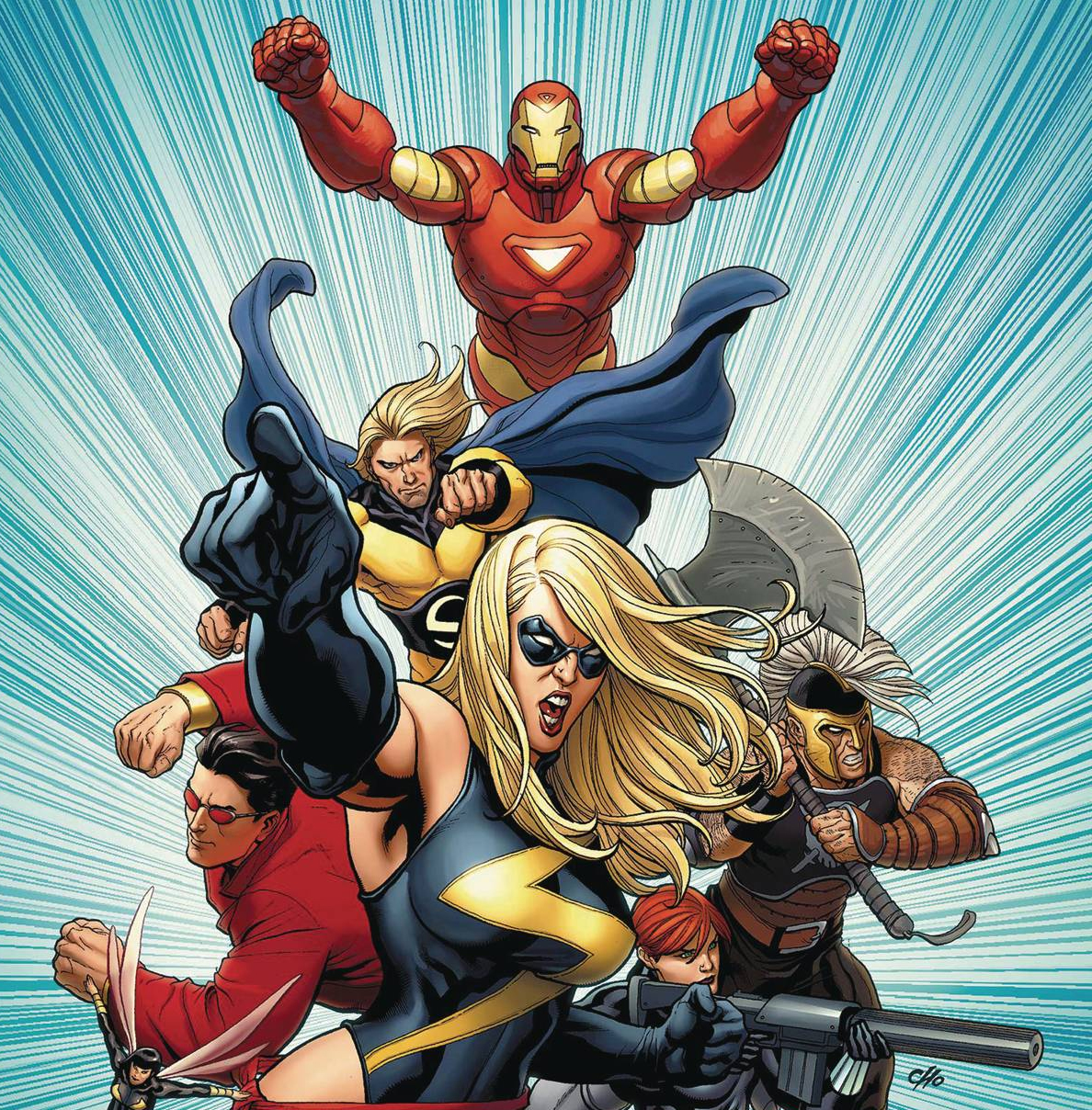
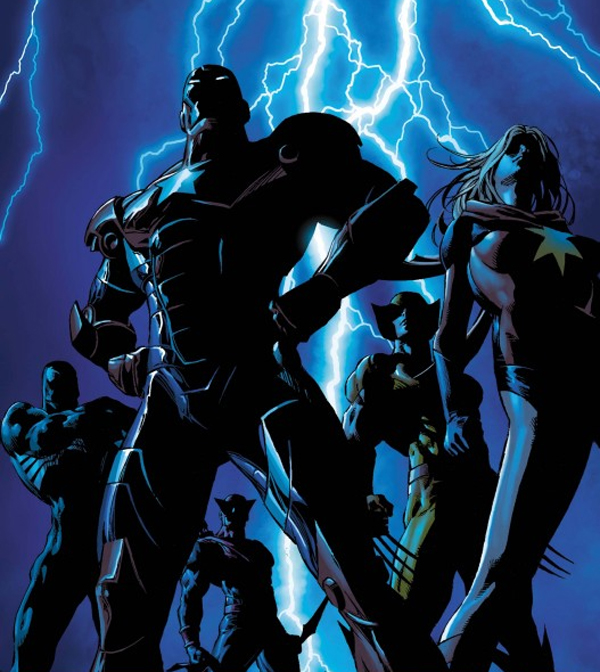
Even as the big crossover events like Avengers: Infinity War or Avengers: Secret Wars draw more heavily from the work of Bendis’ successor on the Avengers titles, Jonathan Hickman, Bendis’ Avengers remains a key influence. Thunderbolts*, for example, feels heavily indebted conceptually to Bendis’ Dark Avengers and even leans heavily on the character of Sentry, a continuity curiosity who became central to Bendis’ larger arcs.

However, even outside of its obvious cultural footprint, the remains one of the definitive explorations of the War on Terror in popular American culture, elevating the emotional and symbolic response to the 9/11 terrorist attacks into a sort of pop mythology, playing out the country’s psychodrama in costumes and capes. Bendis’ Avengers run is messy and uneven, occasionally downright clumsy in its execution. It is also a snapshot of a moment.
Continue reading

Warren Ellis and Mike Deodato Jr.’s Run on Thunderbolts (Review/Retrospective)

This March, to celebrate the release of Captain America: The Winter Soldier, we’ll be taking a look at some classic and not-so-classic Avengers comic books. Check back daily for the latest updates!

Warren Ellis and Mike Deodato Jr.’s year-long twelve-issue run on Thunderbolts is a phenomenal piece of work from a mainstream comic book company. It’s an absurdly fun comic book – one that goes completely off the rails any number of times, moving with momentum of a runaway freight train. Ellis’ unhinged plotting and dialogue find a perfect partner in Deodato’s dark and moody (yet photo-realistic) artwork.

While Ellis includes quite a bit of social, political and even meta commentary in this year-long anti-hero team-up book, there’s a sense that Thunderbolts was written with an intention of going completely overboard, basking in the surreal absurdity of superhero storytelling conventions while playing with a selection of (mostly) second-tier characters that free Ellis’ hand significantly. There are few dependencies and obligations that Ellis has with this cast, allowing him to go to town with them.

In many respects, Thunderbolts feels like a slightly more cynical, slightly more grounded counterpart to his (roughly) contemporaneous Nextwave: Agents of H.A.T.E. Over course, “slightly more grounded” simply means that a middle-aged civil servant in a goblin outfit is the villain of the piece, rather than a hyper-intelligent talking dinosaur.

Norman Osborn is a perfectly sane individual...

Norman Osborn is a perfectly sane individual…

Continue reading

Brian Michael Bendis’ Avengers – Dark Avengers (Hardcover) (Review/Retrospective)

April (and a little bit of May) are “Avengers month” at the m0vie blog. In anticipation of Joss Whedon’s superhero epic, we’ll have a variety of articles and reviews published looking at various aspects of “Earth’s Mightiest Heroes.”

Dark Avengers actually reads quite well as a self-contained volume. It’s relatively short, running sixteen issues (fourteen of which are collected here, with the other two collected in Utopia) and an annual. It sits between two gigantic crossovers, Secret Invasion and Siege, so it isn’t as frequently derailed as Bendis’ New Avengers was (or even Mighty Avengers was). Instead, it feels like a nice little self-contained chapter in the epic superhero saga that Bendis has been writing for quite some time, dating back to the first issue of New Avengers, an exploration of the modern superhero myth in this cynic world so keen to deconstruct our idols in the wake of classics like Watchmen and The Dark Knight Returns. It’s not a perfect book, but it’s a clever and succinct summary of the themes the author has been exploring, in a fun and dynamic sort of way.

Maybe it should be called “Moodily-lit Avengers”…

Continue reading

X-Men/Dark Avengers: Utopia (Review/Retrospective)

This is the fourteenth in a series of comic book reviews that will look at the direction of Marvel’s shared universe (and, in particular, their “Avengers” franchise) over the past five or so years, as they’ve been attempting to position the property at the heart of their fictional universe. With The Avengers planned for a cinematic release in 2012, I thought I’d bring myself up to speed by taking a look at Marvel’s tangled web of continuity. Get an overview of what I’m trying to take a look at here.

There’s an essay to be written about how Marvel has so carefully and meticulously replaced the X-Men with The Avengers as their biggest A-list franchise book (in fact, there’s a quite wonderful essay written here about that). During the nineties, the big event crossovers at Marvel seemed to exist at the leisure of their mutants – Age of Apocalypse and Onslaught being two of the more obvious examples. However, since House of M, the mutants have been consciously sidelined. They continue to have their own internal events and crossovers – Messiah Complex and Second Coming the most obvious examples – but they remain largely insular and detached from the regular goings on in the Marvel Universe. Except for Wolverine, because he’s everywhere.

Marvel announces Dark Avengers on Ice!

Continue reading

Matt Fraction’s Run on The Invincible Iron Man – Vol. 1 (Hardcover)

Released just in time for you to play catchup before Iron Man 2 hits the cinemas, Marvel have published the first nineteen issues of Matt Fraction’s run on The Invincible Iron Man. It’s a big book. Unfortunately, it only contains two storylines (it looks like the era of decompression isn’t quite over), but despite some storytelling issues it manages to be a fairly entertaining read. Mostly because Fraction seems to have a fairly solid handle on the man inside the suit of armour.

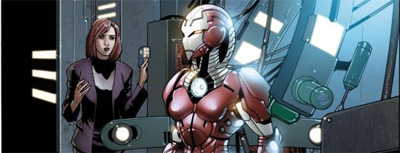
Iron Woman...

Note: I do feel a little bit robbed. I bought this on amazon.com advertised as a Marvel Omnibus. It arrives at my door as a slightly larger than usual hardcover. There are next-to-no extras or commentaries or anything. I was looking forward to shelving this with my cool Omnibus collection – they do just look better. It isn’t any smaller than the Death of Captain America Omnibus or the second Brubaker Daredevil Omnibus. I’m a little bit ticked off. But I’ll get over it.

Continue reading