• Following Us

  • Categories

  • Check out the Archives


  • Awards & Nominations

Non-Review Review: Free State of Jones

Free State of Jones does a decent job approximating the feel of a prestige picture.

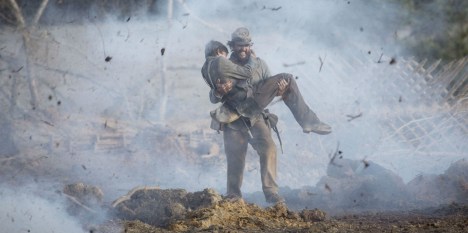
Free State of Jones feels almost like writer and director Gary Ross is running through a checklist of all the elements expected from a successful prestige picture. It deals with heavy subject matter, unfolding primarily during the Civil War and touching upon Reconstruction. It is paced indulgently, never rising to more the a sitting trot. It is anchored in performance by a critically-acclaimed Oscar-winning actor who dominates the film. Its cinematography is uncomplicated and stately. It is laboured with a framing device that offers the illusion of depth.
When the dust settles...

When the dust settles…

Free State of Jones plays as an imitation of a much bolder and provocative film. There are points at which the film brushes up against potentially brilliant ideas, only to back away. For a film about slavery, Free State of Jones finds itself unable to look beyond its white leading character. The framing and scene composition is clearly intended to seem dignified, but instead feels lifeless. The film’s perspective is limited, in both a literal and figurative sense. There are a lot of interesting ideas inside Free State of Jones, but none of them are allowed to grow.

There is a heavy earnestness to Free State of Jones, but it suffocates the story.
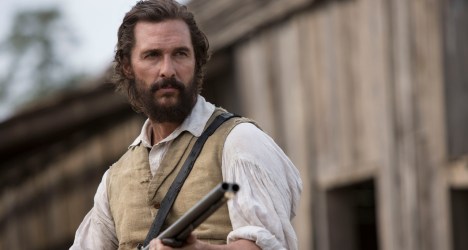
Riding shotgun on secession.

Riding shotgun on secession.

Continue reading

Non-Review Review: The Girl With All the Gifts

The Girl With All the Gifts is brilliant and uncompromising.

Elevated by a smart script drawing from a clever book, and fantastically tense direction from Colm McCarthy, The Girl With All the Gifts is at once a brilliant example of the classic zombie movie tropes and a sly subversion of them. The Girl With All the Gifts was originally published in 2014, but it feels strangely of this cultural moment. It is very much a young adult science-fiction commentary on the world as it exists today, perfectly capturing the anxiety simmering beneath Brexit and Trumpism.

Gifted.

Gifted.

The Girl With All the Gifts in an exception piece of work, Carey’s script understanding the myriad of genre conventions that it is navigating while McCarthy pushes the material just a little bit further. It is unsettling and palpable in the ways that a post-apocalyptic zombie film needs to be, but it also goes that bit further. The strongest aspect of The Girl With All the Gifts is a willingness to follow its strands through to their logical conclusion, as unrelenting and confrontational as they might be.

The Girl With All the Gifts reimagines the zombie movie for a new generation.

Putting her neck on the line.

Putting her neck on the line.

Continue reading

Non-Review Review: The Magnificent Seven

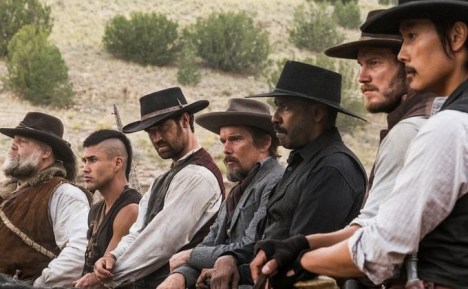
The Magnificent Seven is a western, pure and simple.

It is not a deconstruction. It is not a reconstruction. It is not filtered through the lense of postmodernism or through the prism of postcolonialism. It does not interrogate the underlying assumptions of the western, nor does it explore the relationship between the myth of the frontier and the brutal reality. From beginning to end, through and through, The Magnificent Seven is very much a straightforward execution of the familiar western tropes delivered with a minimum of irony or reflection.

"Ain't we magnificent?"

“Ain’t we magnificent?”

There is a certain charm to this. Director Antoine Fuqua takes great pleasure in running through the standard western tropes, particularly those epic tracking steadicam shots of riders galloping through acres of beautiful countryside as the theme music builds. There is a certain pleasure to be had in The Magnificent Seven as a film resistant to modernisation, a film content in the assumption that the language and iconography of the genre does not need to be tweaked or updated beyond the application of some computer-generated imagery and a modern cast.

There is also something deeply frustrating in all of this, something that reduces The Magnificent Seven to a rather lifeless collection of western imagery tied together in a fairly unimaginative way without anything particularly bold or exciting to say.

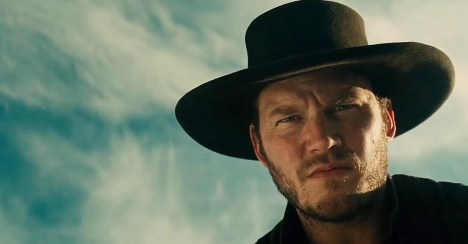
The sky's the limit.

The sky’s the limit.

Continue reading

Non-Review Review: Ben Hur (2016)

What does a biblical blockbuster look like in the twenty-first century?

Hollywood has wrestled with the question of how best to resurrect old genres. The past couple of years have seen a resurgence in revisionist westerns like The Hateful Eight or Bone Tomahawk or The Revenant. There have even been a smaller number of contemporary swords-and-sandals epics like The Eagle or Centurion or Pompeii. These genre were once a staple of Hollywood production, but they fell by the wayside in the intervening years. Barring an occasional breakout success, they are considered dead genres.

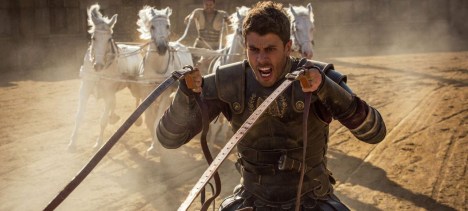
Chariots of fire!

Chariots of fire!

Biblical epics are very much an example of such a genre, to the point that Hail, Caesar! focused on the production of such a film as a celebration of the Golden Age of Hollywood. More people can probably point to the iconic version of Ben-Hur starring Charleton Heston as the eponymous chariot rider than can name Lew Wallace as the author of the book upon which it was based. When Hollywood attempted a blockbuster adaptation of C.S. Lewis’ Narnia books, they did so by stripping out a lot of the more overt Christian themes.

Ben-Hur is part of a mini modern revival of these classic biblical epics for a new age, alongside films like Exodus: Gods and Kings or Noah or Risen. It is a film which struggles with the question of what a biblical epic needs to look like in this day and age, but is primarily useful as a counter-example. Whatever a successful modern biblical epic might look like, it is not this.

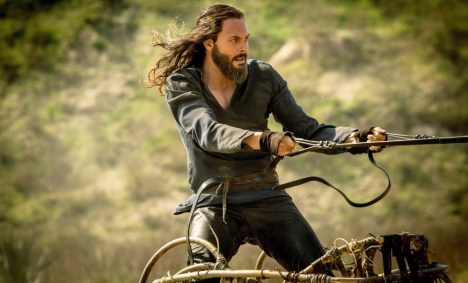
"Is Game of Thrones hiring, by any chance?"

“Is Game of Thrones hiring, by any chance?”

Continue reading

Non-Review Review: Hell or High Water

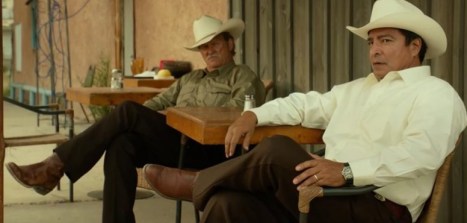
Hell or High Water is a modern western, a tale of the land and the people shaped by it.

Hell or High Water revels in the old cowboy tropes. Repeatedly over the course of the film’s runtime, eye witnesses liken the outlaw pair at the centre of the story to “cowboys” or “cowpokes.” Set in West Texas, the film unfolds in a world of cowboy hats and rattlesnakes. This is a story about lonely men in the desert, land and self-determination. At one point, a half-Native American half-Mexican character pauses to reflect upon the idea that this is essentially the foundational myth of the frontier playing out again. The actors might change, but the roles remain the same.

No Country for Young Men.

No Country for Young Men.

Hell or High Water is bitter and cynical reflection on the concept of land and ownership, and the importance that it plays to the American identity. Towards the end of the film, bank robber Toby Howard justifies his actions by reference to generations of struggle; the generations that came before and the generations that will follow, and the land that has either condemned or sustained them. Toby is quite literally building his own future out there on the frontier, his bank robberies motivated by the urge to wrest back his family’s land so he might wrest a profit from it.

Like its lead characters, and like the land that drives them to this desperate course of action, Taylor Sheridan’s script is reserved and restrained. There is an economy to it, a sparseness and a leanness that suits this tale and the people inhabiting it. However, Sheridan’s script implicitly trusts director David Mackenzie, who manages to find a striking beauty and a stunning brutality in this rugged landscape inhabited by these rugged men.

At home on the Ranger...

At home on the Ranger…

Continue reading

Non-Review: Don’t Breathe

Don’t Breathe works reasonably well for about two thirds of its runtime.

The premise of Fede Alvarez’s Detroit-based horror is quite clever, a stew of familiar ideas thrown into a blender and delivered in a very stylish manner. Don’t Breathe is a film that begs to be summarised in pithy one-liners that bridge movie titles using the dreaded “… with …” In those terms, Don’t Breathe is Home Alone meets Halloween, Wait Until Dark meets The Bling Ring, Panic Room meets Saw. The combinations are infinite, as are the influences. And there is a charm to that.

Firing blind.

Firing blind.

Horror is a visceral genre; doing something new is great, but so is doing something familiar in a novel way. For its first two thirds, Don’t Breathe is an exciting and tense horror movie with an ingenious high concept and with a number of reliable jump scares. Fede Alvarez does not necessarily innovate, but he understands how to pace a sequence for maximum tension and he has a great eye for cinematic influences. Contemporary culture can often feel like “remix” culture, mashing old ideas together to create something interesting. Don’t Breathe fits with that.

The problem comes during the movie’s third act, when the thrills and horror slow down just long enough to flesh out the “monster” at the centre of the film. As it pushes into its climax, Don’t Breathe becomes a lot less intriguing and effective. In those final twenty minutes, Don’t Breathe indulges the baser impulses of the horror genre in a manner that is crass and cheap. Don’t Breathe begins as a series of inventive homages to the best that horror genre has to offer. Unfortunately, it ends as a demonstration of the genre’s worst attributes.

Setting his (gun) sight on them.

Setting his (gun) sight on them.

Continue reading

Non-Review Review: The Young Offenders

The Young Offenders is mighty Cork, boi.

Perhaps the most enjoyable aspect of Peter Foott’s coming of age adventure comedy is its sense of place. There are any number of Irish films that depict modern rural life, most obviously the films of John McDonagh (Calvary or The Guard) or Garage or even Smalltown. However, for all that those stories deal with big themes and bold ideas, it is rare to get a perfect sense of place. As with just about any country, Ireland offers a rich and diverse cultural landscape, and The Young Offenders is interested in exploring that landscape even before the first use of a map insert.

theyoungoffenders1

Continue reading

Non-Review Review: Sausage Party

Perhaps the most charming thing about Sausage Party is that it exists in the first place.

After all, a computer-generated animated movie about foul-mouthed hyper-violent and aggressively sexual anthropomorphised food products was always going to be something of a tough sell. More than that, there was always a risk that the film’s best joke could not sustain the necessary ninety-minute runtime. “Let’s do an R-rated comedy animated in the style of a Dreamworks or Pixar film!” is very wry, but it seems like the kind of idea that brews in the early hours of the morning at a wild party and is promptly forgotten.

Food for thought...

Food for thought…

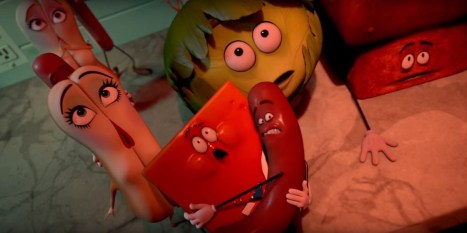
At one point in Sausage Party, the heroic hotdog Frank encounters a group of ancient foodstuffs hiding out in the liquor aisle of the shopping market that he calls home. These old and experience foodstuffs recall how they carefully cultivated and curated the mythology of the supermarket, building a religion that treated consumers as “gods” and which encouraged the store’s food and drink to dream of being “chosen.” There is even a hymn that the food sings every morning. A wisened old liquor bottle explains that this whole plan was the result of a massive stoner session.

In some ways, Sausage Party feels like it had a similar genesis, beginning with a goofy joke among friends that escalated and evolved into a surprisingly fleshed-out and developed world. Sausage Party works remarkably well given that it is essentially one very clever joke spread across ninety minutes, padded out with healthy doses of absurdity and puns. While the movie can occasionally feel a little indulgent and meandering, that charm carries it a long way. Sausage Party is one extended gag, but it is just about funny enough to pull it off.

Sweet mother of mercy...

Sweet mother of mercy…

Continue reading

Non-Review Review: War Dogs

At one point in the movie War Dogs, manipulative sociopath Efraim Diveroli presents his naive business partner David Packouz with a gift.

It is a sequence that is as illustrative of War Dogs as it is key for Efraim. The gift in question is a golden hand grenade, a gesture of tremendous subtlety on the part of the film and its secondary lead. See, Efraim and David are self-described gun runners. More than that, they are ostentatious over-the-top gun runners with no sense of tact and the bare minimum of business sense. What better way for Efraim to convey this to David (and for the film to convey it to the audience) than through the gift of a gold-plated hand grenade.

"Quick question: do we HAVE to be framed with these picture of Bush and Cheney? I mean, I think people get it."

“Quick question: do we HAVE to be framed with these picture of Bush and Cheney? I mean, I think people get it.”

However, the kicker comes in the inscription that Efraim has engraved on the bottom of the ridiculous gift. “The world is yours,” the grenade seems to promise its owner. It is, of course, a line from Scarface. It is, in fact, a line from both versions of Scarface. It is the bitterly ironic sentiment that closes out the film, an encapsulation of the greed and hubris that led the two gangster protagonists their downfall. Conveyed through advertising, it was also a stinging commentary on the American Dream. It was the height of irony, a cynical sting at the end of a moral fable.

There is a sense that Efraim does not necessarily understand irony. Having watched War Dogs, it is not entirely clear that the film does either.

Cool gun runnings.

Cool gun runnings.

Continue reading

Non-Review Review: Lights Out

For the bulk of its runtime, Lights Out is a very old-fashioned and very clever horror movie.

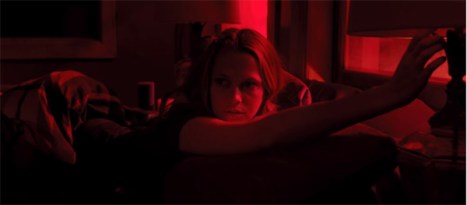
The basic premise of Lights Out is quite clever, even on its own terms. The central antagonist of the film is a demonic entity that seems to move through darkness. Characters are safe from its influence so long as they remain in the light. It is a very smart riff on a primal fear. The fear of darkness is the most primal of fears, the anxiety about the unknown and what might lurk in the shadows. Lights Out takes that universal fear and mines it for scares, in a fashion that is very classic while also quite clever.

A bit of the old ultraviolet...

A bit of the old ultraviolet…

The premise alone is enough to drive Lights Out, to power an eighty-one-minute horror film. However, director David Sandberg and writer Eric Heisserer go a great deal further. In the style of many classic horror stories, Lights Out positions its demon as an allegorical device. This demon that stalks its prey through darkness is treated as an apt metaphor for depression, a creature that has latched on to a small suburban family and tormented them quietly for years. It is a premise that The Babadook used to great effect, and it adds a little extra heft to Lights Out.

However, there is a sense that Lights Out is just a little bit too clever for its own good. The film follows its basic premise to a very clever and innovative conclusion within the world that it has created. The problem is that the movie’s final big plot development rather brutally undercuts the central allegory in such a way that the film trips over its own wit. Still, discounting those final few minutes, Lights Out is a visceral thrill-ride and a joy from start to almost-finish.

Red sky at night...

Red sky at night…

Continue reading