• Following Us

  • Categories

  • Check out the Archives


  • Awards & Nominations

Non-Review Review: Sully – Miracle on the Hudson

Sully: Miracle on the Hudson has a certain Frank Capra quality to it.

To be fair, a lot of that comes from the casting of Tom Hanks in the title role. Hanks radiates a certain ineffable integrity, a “Hanksian Decency” that informs his performances in films as diverse as Bridge of Spies and Inferno. It is tempting to think of him as “America’s Dad”, particularly given the grey hair and the moustache that he donned for the title role here. However, it is also tempting to think of him as a latter-day Jimmy Stewart, the embodiment of a certain type of fundamental American decency that lends itself to this sort of narrative.

Hanks for the memories.

Hanks for the memories.

Similarly, director Clint Eastwood has a similar philosophy. Eastwood’s films tend to be organised around strong moral principles. Often those principles are articulated in terms of personal responsibility, particularly the responsibility that individuals have for others whether in a professional capacity (J. Edgar) or a personal capacity (Million Dollar Baby) or simply by virtue of being there (Gran Torino). Eastwood’s recurring fascination with individual responsibility makes him a quintessentially American director.

This combination is ideally suited to Sully, which is constructed as something akin to a modern-day American fairytale.

"Mr. Sullenberger goes to the NTSB Debriefing."

“Mr. Sullenberger goes to the NTSB Debriefing.”

Continue reading

Non-Review Review: The Edge of Seventeen

The Edge of Seventeen is a fantastic coming of age film from writer and director Kelly Fremon Craig.

The script sparkles, the casting is spot-on, the humour is well-observed. Like so many great coming of age comedies, The Edge of Seventeen understands that familiar teenage angst where the entire world seems to have been constructed as a sadistic (and highly targetted) Rube Goldberg machine for the sole purpose of torturing one single individual. The Edge of Seventeen balances this all very deftly, creating a set of circumstances that understandably feel like the end of the world to the lead character, but which seem comical to a more matured detached audience.

Teenage wildlife.

Teenage wildlife.

However, the true strength of any coming of age film lies in the casting. Easy A was a fantastic film, but it was cleverly elevated by the shrewd casting of Emma Stone as its wry protagonist. The Edge of Seventeen places Hailee Steinfeld at the centre of its teenage universe. Steinfeld delivers a pitch-perfect performance that meticulously walks the line between sardonic and vulnerable. The Edge of Seventeen has the luxury of a well-crafted and well-observed script, but it lives or dies by its central performance.

Steinfeld is phenomenal.

Animated discussion.

Animated discussion.

Continue reading

Non-Review Review: Fantastic Beasts and Where to Find Them

Fantastic Beasts and Where to Find Them is a solid piece of popcorn entertainment.

It is, to be clear, just a little overstuffed. Its cast is so large that it borders on unwieldy. Its runtime is just a little bit bloated. It devotes far too much time and energy to setting up movies that will be released over the next couple of years. It is a surprisingly dark movie for a film that seems to set a whimsical tone. Its central metaphors get a little muddled. Its version of America feels like it has been stitched together by a collection of anthropologists who have access to well-worn copies of King Kong and Citizen Kane.

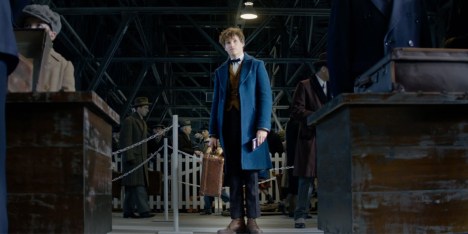
Suits you, sir!

Suits you, sir!

Still, there is an undeniable charm to Fantastic Beasts and Where to Find Them, a movie that luxuriates in the chance to explore a familiar universe through a different perspective. Given the success of the franchise in all media, it was inevitable that audiences would get “an American Harry Potter.” In fact, it could be argued that there have been any number of ill-fated attempts over the years including films like Mortal Instruments. If “an American Harry Potter” was to be inescapable, there are worse options than Fantastic Beasts and Where to Find Them.

Fantastic Beasts and Where to Find Them never quite matches the height of its parent franchise, but occasionally manages to recapture some of the magic.

Wizzing around the world.

Wizzing around the world.

Continue reading

Non-Review Review: La La Land

La La Land is a beautiful piece of work, a film destined to leave the audience smiling and humming.

Damien Chazelle constructs an affectionate and old fashioned ode to Hollywood, to the magic of movies in particular and art in general. La La Land is a romance in just about every sense of the word, a tale of two young lovers chasing their dreams in the City of Angel with little more than the belief that they might one day find contentment and fulfilment. The result is a joyous celebration of film and music, a loving tribute to its emotive and transformative power that refuses to buckle beneath the demands of cynicism.

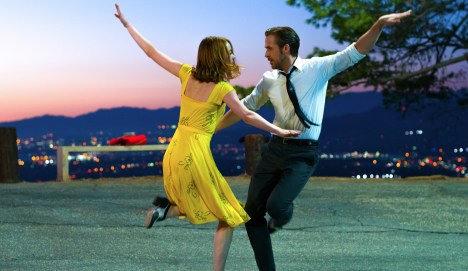
Song and dance about it.

Song and dance about it.

La La Land is endearing in its optimism, its embrace of musical fantasia and its belief in Los Angeles as a place where everyone can chase their dreams… and sometimes, if they’re lucky, those dreams might come true. It is an unapologetically romantic look at Tinseltown, one that could easily be dismissed as trite. Indeed, the most stinging criticism of the film is the most obvious; that La La Land is a movie that runs the risk of cruising to a Best Picture win by virtue of being a film by Hollywood about the romance of Hollywood. Argo and The Artist redux.

La La Land is very much aware of that criticism. And it does not care. “You say romantic like it’s a bad word,” complains soulful jazz pianist Sebastian at one point early at the film. It seems like the characters in La La Land refuse to live in a world smothered by cynicism and suffocated by self-awareness. Luckily enough, La La Land has little time for such vice and commits wholeheartedly to its dreamscape. If romance is a bad word, La La Land doesn’t even blush.

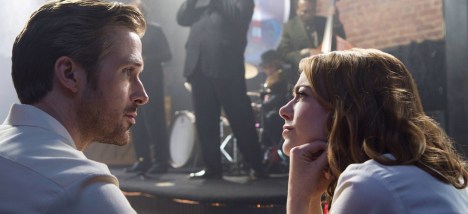
All that jazz...

All that jazz…

Continue reading

Non-Review Review: The Accountant

If the default summer blockbuster is a “comic book” movie, then The Accountant is an “airport paperback” movie.

Although The Accountant is based upon an original idea by screenwriter Bill Dubuque, it feels very much like something adapted from some pulpy thriller. It has all the ingredients. Like so many John Gresham best sellers, it has a title comprised of a noun used as the definitive article. It has a pithy high concept that can be summarised in a nice tagline. It is packed full of ridiculous twists. It has a plot that is largely just something on which it can hang all manner of goofy ideas. It even has a fondness for absurd (and contrived) exposition delivered via monologue.

Unaccountable variables.

Unaccountable variables.

This is both the best and the worst thing about The Accountant. By just about any measure, The Accountant is a ridiculous film with a fairly thin concept and with a variety of twists that will seem inevitable to any genre-savvy observer. However, there is something quite enjoyable in watching The Accountant bounce between these crazy twists. The Accountant works best when it embraces its pulpier attributes, rolling with each crazy development after the last and never stopping to catch its breath.

The Accountant is a very weird and dysfunctional film, but that dysfunction becomes part of the charm. Much like those page-turners picked up to help pass long flights, it is unlikely that much of The Accountant will remain with audiences after the credits roll. However, there is still some fun to be had.

You can make a killing in this field.

You can make a killing in this field.

Continue reading

Non-Review Review: Arrival

Arrival has a number of great central ideas, and a fantastic central performance.

Those ideas get the film relatively far. Arrival is a film strong enough to stand on the basis of its high concepts and its leading performance. Arrival plays with a whole host of big and bold science-fiction ideas that hint at powerful philosophical questions about humankind’s place in the universe and their perception of their very existence. These ideas are clever and thought-provoking, capable of sparking many late-night conversations over pizza or refreshments in the way that great movies tend to do. Amy is simply wonderful as the movie’s primary character.

Going in circles.

Going in circles.

Unfortunately, Arrival hits something of a wall once it fully maps out its big ideas and its bold premises. The film has these sometimes clever notions, but never expends the necessary energy to tie them into a coherent plot or a logical character arc. Arrival seems to think that these ideas are smart enough that there is no thought required in how best to use them. The result is a muddled film, one that seems as likely to conjure frustrated questioning of its underlying logic as much as of its big ideas

Ironically, Arrival charts an interesting course but never quite gets there.

Falling to Earth.

Falling to Earth.

Continue reading

Non-Review Review: The Light Between Oceans

There are times when The Light Between Oceans almost makes sense.

At certain moments in the film’s two-hour-plus runtime, the clouds part and the sky clears. In these fleeting seconds, it becomes clear what The Light Between Oceans is trying to do and what it wants to be about. A beacon seems to shine through the film, reaching out to the audience and guiding them towards the heart of the film. There are moments when things seem to align and The Light Between Oceans almost gels into the melodramatic morality play to which it aspires, much like the withdrawing might reveal some hidden treasure.

All at sea.

All at sea.

Inevitably, the tide comes rushing back in. The Light Between Oceans becomes cluttered and clumsy. The film aspires to be a profound commentary on grand themes like loss and responsibility, a story about love and forgiveness. However, the narrative is clunky. The film strives for a moral weight that it never quite manages to attain, contorting its narrative and characters in strange directions that serve vague notions while undercutting a sense of coherence.

The Light Between Oceans might consider itself to be the stoic and restrained lighthouse keeper at its core, a character who tries his best to be the moral centre as the sea tosses and the heaven rages around him. Unfortunately, it feels more like the rowing boat discovered towards the end of the first act, one lost and adrift, driven not by purpose but contrivance.

Somewhere... beyond the sea...

Somewhere… beyond the sea…

Continue reading

Non-Review Review: Queen of Katwe

Early in Queen of Katwe, chess teacher Robert Katende notes that his young prodigy Phiona Mutesi can see eight moves ahead.

It is a remarkable visual, as Phiona halts their game in order to play out the next eight moves of their match culminating in the inevitable checkmate. There is an elegance to the movements, the choreography of the pieces moving across the board, and Mutesi intuitively understands not only where her pieces should go, but where her opponent’s pieces will go. This ability to predict the flow of a particular game, the narrative that it will chart, is the key to Phiona’s future and her best chance of getting out of the Katwe slums.

queenofkatwe1

In some ways, this sequence feels like something of a commentary on the film itself. The true story of Phiona Mutesi is truly remarkable, serving as an archetypal underdog story about a young girl from the Ugandan slums who went on to become one of the best chess players in the world. Queen of Katwe unfolds rather like that chess game, a series of moves and counter-moves that any savvy audience member will recognise beat-for-beat as the narrative of this sort of tale. Queen of Katwe holds very few surprises in terms of story.

And yet, in spite of that, there is something truly remarkable in watching that story play out, just as there is something striking in watching those pieces of wood move across the board. Queen of Katwe is a beautiful and joyous piece of film, a very old story that is very well-told, anchored in three fantastic central performances and some great direction from Mira Nair.

queenofkatwe

Continue reading

Non-Review Review: Inferno

Inferno is not a good movie.

It is clunky and contrived, moving at so gentle a pace that even the character need to constantly remind each other that the fate of the human race lies in the balance. Its action sequences are clumsily staged, its twists are all entirely predictable and its impressive international cast strain to stretch their roles out to two dimensions. This is a film that has trouble generating tension despite the fact that there is an imminent threat to half of the world’s population. Inferno simply doesn’t work.

"It says... 'one if by land, two if by sea'?"

“It says… ‘one if by land, two if by sea’?”

And yet, in spite of all that, there is something strangely compelling about it. Inferno is amess of a film, but one that holds attention by virtue of how strikingly odd it is. Inferno feels very much like a James Bond film, if only they’d sanded down the rough edges of that nice old Roger Moore fellow, cast that quirky uncle who is really useful at table quizzes, and combined it with something like The Crystal Maze. The film plays like afternoon television on an epic scale, with Robert Langdon feeling like he could call in a favour from Perry Mason or R. Quincy at any moment.

Inferno is strange enough that it holds interest, feeling more unique than the recycled pseudo-histories of The DaVinci Code or Angels and Demons. There is an endearing eccentricity to the film, which might just be the gentlest apocalyptic thriller ever made. It is a weekday afternoon blockbuster.

"I belong in a museum!"

“I belong in a museum!”

Continue reading

Non-Review Review: Miss Peregrine’s Home for Peculiar Children

Miss Peregrine’s Home for Peculiar Children works best when it serves as a vehicle for Tim Burton’s imagination, exploring a world where tall tales seem to be real and monsters manifest themselves literally, where trauma and loss are explained through escape into fantasy, and where shadows distort and bend into uncanny shapes as if to suggest that there is so much more to this world than it might first appear. This is all stock Burton imagery, but the director approaches it with an endearing energy.

Unfortunately, there is more to Miss Peregrine’s Home for Peculiar Children. The film is not content to play as broad Burton fantasy of childhood mythmaking and coming of age. Despite an opening act that hints at something of a young adult follow-up to Big Fish, Miss Peregrine’s Home for Peculiar Children inevitably gets bogged down in the finer trappings of its young adult source material. Exposition is ladled on, rival orders are established, sequels are set up, familiar plot beats are not so much hit as hammered.

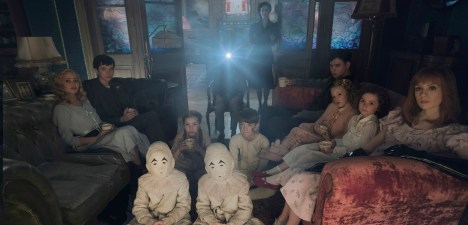
Movie night.

Movie night.

Continue reading