• Following Us

  • Categories

  • Check out the Archives


  • Awards & Nominations

Star Trek (IDW, 2009) #13 – The Red Shirt’s Tale (Review)

The first Star Trek pilot, The Cage, was produced in 1964. To celebrate its fiftieth anniversary, this December we are reviewing the second season of the original Star Trek show. You can check out our first season reviews here. Check back daily for the latest review.

The IDW monthly comic series that launched after the release of Star Trek is an interesting beast.

Writer Mike Johnson has been on board since the title launched in September 2011, lending the comic a sense of creative consistency. Much has been made of the involvement of Roberto Orci as “creative consultant” on the title, as if to imply that the comic might somehow be legitimised in relation to the blockbuster franchise that spawned it. Certainly, the series does not enjoy the same loose attitude towards contemporary continuity that characterised the DC comics series published during the mid-eighties.
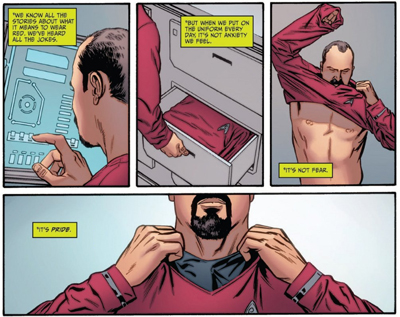
Suit up!

Suit up!

At the same time, it is not as if IDW’s on-going Star Trek comic series can claim a closer relation to canon. After all, the events of the comic’s first arc were rendered explicitly non-canonical by a casual conversation between Pike and Kirk in the first twenty minutes of Star Trek Into Darkness. This is not a problem of course – any more than continuity issues were a problem for the mid-eighties DC series – but they do suggest that the series’ fixation on continuity is perhaps misplaced.

This weird fetishisation of “continuity” defined the first year or so of the title’s existence, with issues dedicated to essentially re-telling classic Star Trek stories using the new cast and crew. (Indeed, only one story from that year – Vulcan’s Vengeance – was not based on a classic episode.) The Red Shirt’s Tale serves as something of a half-way marker as the comic began to transition away from these sorts of continuity-heavy retellings, focusing a bit more on the new characters and the new world. The issue is a retelling of The Apple, but in a way that is more thoughtful and playful than a lot of what came before.
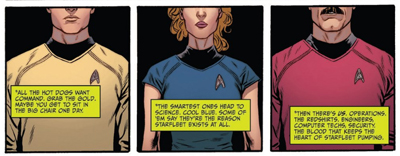
Colour-coded...

Colour-coded…

Continue reading

Star Trek – The Apple (Review)

The first Star Trek pilot, The Cage, was produced in 1964. To celebrate its fiftieth anniversary, this December we are reviewing the second season of the original Star Trek show. You can check out our first season reviews here. Check back daily for the latest review.

It’s amazing how iconic Star Trek could be, even when it was terrible. There’s something quite ironic about how much of the franchise’s truly memorable iconography is rooted in some of the show’s weakest episodes. The Apple is one of the most iconic and memorable Star Trek episodes, featuring a giant evil dragon head sculpture, David Soul in orange body paint, lots of speechifying from Kirk, and a strong atheistic message with Kirk casting himself as Satan in the Garden of Eden.

It is also just terrible.

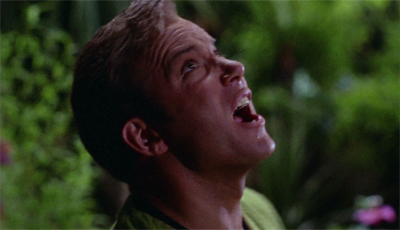
"VAAAAAAAL!!!"

“VAAAAAAAL!!!”

Continue reading

Star Trek (DC Comics, 1984) #43-45 – The Return of the Serpent! (Review)

The first Star Trek pilot, The Cage, was produced in 1964. To celebrate its fiftieth anniversary, this December we are reviewing the second season of the original Star Trek show. You can check out our first season reviews here. Check back daily for the latest review.

One of the benefits of a franchise as old and as diverse as Star Trek is the opportunity it provides for introspection and reflection. Star Trek has existed for almost fifty years. In those fifty years, the franchise has been written by a lot of different people at a lot of different points in time. As such, it makes sense that viewpoints shift and core principles are questioned. One of the more intriguing aspects of watching Star Trek grow older is watching the franchise question some of its earlier decisions and opinions.

The Return of the Serpent plays very much as a criticism of The Apple, a three-issue storyline dedicated to exploring just how wrong Kirk was to impose his own attitudes and beliefs upon the people of Gamma Trianguli VI. In some ways it can be see as both a spiritual successor to Star Trek II: The Wrath of Khan and a precursor to the Star Trek: Deep Space Nine episode Crossover, in that it is a story based significantly around critiquing a moral judgement made by James Tiberius Kirk and endorsed by the show.

Shocking twists!

Shocking twists!

The Return of the Serpent is an interesting story, because it consciously problematicises a story from the original Star Trek television show. It is essentially a story about how Kirk made a terrible decision that cost countless lives. This criticism is voiced more explicitly that the criticism of Kirk in The Wrath of Khan and half-a-decade before Crossover would make it to air. This is a very bold and brave tie-in from DC comics. It is hard to imagine a story like The Return of the Serpent being published during Richard Arnold’s tenure overseeing Star Trek tie-ins.

That said, Mike Carlin’s script is not without its own problems. For all that it challenges a decision that Kirk made during the original run of the series, the ending rather consciously avoids the implications of that decision. The Return of the Serpent seems to assume that Kirk can just reverse the damage he has caused by flicking a switch – by going back and repairing the original mistake. For all that The Return of the Serpent cleverly interrogates Kirk’s decisions and motivations, it is undermined by a rather clean and convenient resolution.

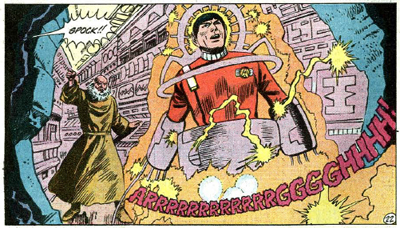
Into the belly of the beast...

Into the belly of the beast…

Continue reading

Star Trek – Wolf in the Fold (Review)

The first Star Trek pilot, The Cage, was produced in 1964. To celebrate its fiftieth anniversary, this December we are reviewing the second season of the original Star Trek show. You can check out our first season reviews here. Check back daily for the latest review.

Wolf in the Fold is Robert Bloch’s third and final contribution to Star Trek.

In keeping with What Are Little Girls Made Of? and Catspaw, the result is intriguing, bizarre and more than a little bit dysfunctional. More than any of the other writers drafted in to write for the science fiction show, Bloch’s fingerprints remain all over his script. Writers like Gene L. Coon and D.C. Fontana generally do a good job reconciling the work of science-fiction writers like Ray Bradbury, Theodore Sturgeon, Norman Spinrad or Harlan Ellison to make their stories fit within the frame work of Star Trek. However, even after re-writes, Bloch’s voice remains his own.

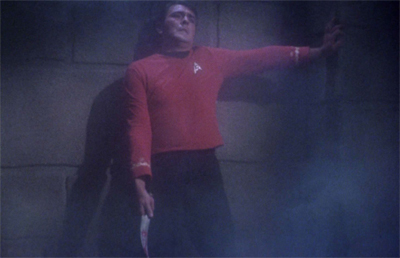
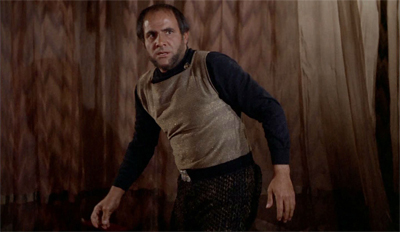
Knife to see you...

Knife to see you…

Of course, it’s quite clear that Wolf in the Fold has been through the standard re-write process. The script is a mess, struggling to tie together two basic plots (Scotty is accused of murder; the Enterprise is possessed by Jack the Ripper) in ways that don’t always work. There’s a really long and awkward expositional scene in the middle of the episode that consists primarily of Majel Barrett reading off weird-sounding words in order to assure viewers that Jack the Ripper really could be an immortal hate-fueled killing machine, given the rules of the Star Trek universe.

The are very serious problems with Wolf in the Fold. On a storytelling level, the pacing is a mess and the tone is all over the place. Bloch’s scripts continue to be even more problematic than usual when it comes to issue of gender – “Star Trek does slasher horror” is as borderline misogynistic as you might fear. However, there is something endearingly bizarre about the whole thing, as Bloch once again forces Kirk and his crew to confront an irrational universe that doesn’t necessarily conform to their understanding of it.

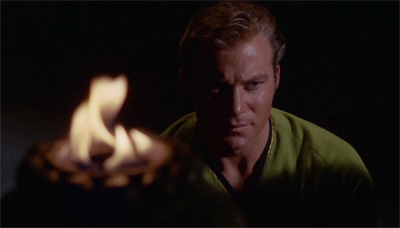
Flame on...

Flame on…

Continue reading

Star Trek – The Doomsday Machine (Review)

The first Star Trek pilot, The Cage, was produced in 1964. To celebrate its fiftieth anniversary, this December we are reviewing the second season of the original Star Trek show. You can check out our first season reviews here. Check back daily for the latest review.

The Doomsday Machine is another Star Trek classic.

Much like Amok Time directly before it, The Doomsday Machine is a piece of Star Trek that works both as powerful drama and clever allegory. It is an episode that has had a tremendous influence on the franchise. The “planet killer” has become a staple of Star Trek tie-in fiction, and even the franchise itself has kept the episode’s legacy alive, with the son of Commodore Decker originally planned as a regular in Star Trek: Phase II and eventually appearing in Star Trek: The Motion Picture.

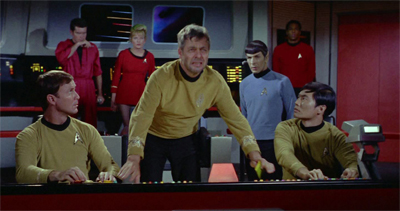
All hands on Decker...

All hands on Decker…

The Doomsday Machine is at once a beautifully tragic character study and a potent cautionary tale for the atomic age. The episode the first example of “Star Trek does Moby Dick”, a story template that would become popular enough to sustain another episode in the same season, quite a few later Star Trek episodes across the franchise and no fewer than two of the franchise’s trips to the big screen. In many ways, The Doomsday Machine sets the template for Star Trek engaging with classic literature, building off The Conscience of a King.

It’s also beautifully produced, right down to the creature that Spinrad himself described as “a windsock dipped in cement.”

A commandeering presence...

A commandeering presence…

Continue reading

Star Trek – Amok Time (Review)

The first Star Trek pilot, The Cage, was produced in 1964. To celebrate its fiftieth anniversary, this December we are reviewing the second season of the original Star Trek show. You can check out our first season reviews here. Check back daily for the latest review.

Amok Time was the fifth show produced for the second season of Star Trek, but was the first show to air. This isn’t unusual. The production and broadcast order of various Star Trek episodes have not necessarily matched up. On shows like Star Trek: The Next Generation or Star Trek: Deep Space Nine, this was usually due to production delays or changes on specific episodes. On Star Trek: Voyager, the first and second seasons produced episodes that would not be aired until the other side of summer.

However, on the original Star Trek, the production and broadcast order of the episodes is radically different. For example, Friday’s Child was the third episode of the second season produced, but the eleventh broadcast. This makes watching the show in production order on blu ray a delightfully frustrating experience. The first five episodes produced for the second season are split across three different discs.

Good wholesome family fun...

Good wholesome family fun…

Sometimes the changes in production order were purely practical. For example, The Man Trap was the first episode of Star Trek to air because it happened to be the most suitable of the episodes that had been produced to that point. The broadcast order of the first season introduced all manner of production and continuity glitches, with uniforms and cast changing seemingly randomly. Still, The Man Trap was felt to be, effectively, the least bad option to introduce new audiences to Star Trek.

Amok Time, the second season premiere, was an entirely different kettle of fish. This was easily the strongest of the three Star Trek season premieres, and there’s a sense that the production team knew this going into the episode. Designed to ruthlessly capitalise on the popularity and success surrounding the character of Spock, the episode was very clearly intended to put the show’s best foot forward for audiences returning to watch the second season. The result is one of the best episodes the franchise ever produced.

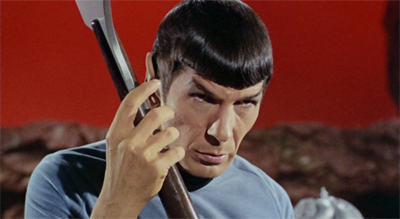
Spock remains as sharp as ever...

Spock remains as sharp as ever…

Continue reading

Star Trek – Who Mourns For Adonais? (Review)

The first Star Trek pilot, The Cage, was produced in 1964. To celebrate its fiftieth anniversary, this December we are reviewing the second season of the original Star Trek show. You can check out our first season reviews here. Check back daily for the latest review.

In many respects, Who Mourns for Adonais? is a formative episode for Star Trek as a franchise. It’s a show that really informs a lot of the franchise that would follow, even beyond the confines of the original television show. It’s an episode that represents the first clear articulation of a strand of thought that has been bubbling away through the first season of Star Trek and into the second, exploring the religious side of the Star Trek universe and mankind’s place in the cosmos.

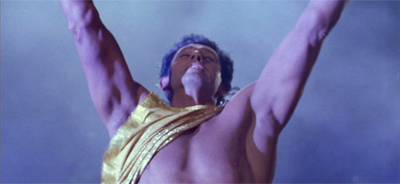
The episode is iconic and memorable. It is packed with images that are familiar to even the most casual of fans. “Kirk confronts a Greek god in deep space!” is a catchy premise. “A giant hand grabs the Enterprise and threatens to crush the ship!” is the type of delightfully insane visual that ranks with “Captain Kirk as a Nazi!” or “space Lincoln!” when it comes to Star Trek visuals that stick with people outside the context of the show itself. Coupled with the distillation of those themes, this is a “big” episode.

"Jack, I'm flying!"

“Jack, I’m flying!”

Unfortunately, Who Mourns for Adonais? is also a deeply troubling episode. It has problems heaped upon problems. Some of those problems are inherited from the general aesthetic of the show, and are not specific to this episode. However, some of those problems are explicitly articulated here. Who Mourns for Adonais? is an episode that embodies quite a few of the very serious problems that run through the original Star Trek and haunt the franchise for quite some time.

The fact that these problems come baked into an iconic and memorable episode is disappointing.

"Oh, your gods..."

“Oh, your gods…”

Continue reading

Star Trek – Friday’s Child (Review)

The first Star Trek pilot, The Cage, was produced in 1964. To celebrate its fiftieth anniversary, this December we are reviewing the second season of the original Star Trek show. You can check out our first season reviews here. Check back daily for the latest review.

Errand of Mercy was a highlight of the first season. A wry script from producer Gene L. Coon introduced the Klingons as an antagonist for the Federation. Made up to look like space!Mongols, the Klingon Empire was presented as an imperial force hell-bent on expanding its sphere of influence. In case the parallels were a little too subtle, they were locked in a Cold War with the Federation. As such, they were the perfect stand-ins for Communist aggressors trying to undermine American foreign policy.

Of course, Errand of Mercy was brutally cynical in its depiction of the Federation. The episode suggested quite heavily that the Federation was just as imperialist and adversarial as the Klingons. They might couch their foreign policy in friendly language and polite overtures, but their end goals are quite similar. Smaller political entities are nothing but pieces shuffled around a board in a deadly game of chess. Errand of Mercy was not flattering in its portrayal of Kirk, presenting him as little more than a warmonger.

"Damn dirty Klingon!"

“Damn dirty Klingon!”

Errand of Mercy was a massive success. It remains a fan favourite to this day. In some respects, that is due to the introduction of the Klingons, but it is also an exceptional hour of scripted science fiction. So it makes sense that the show would return to the Klingons when it was renewed for a second season. Friday’s Child was the third episode produced during the second season, and returns to quite a few themes hit on by Errand of Mercy. Those themes would recur.

Friday’s Child demonstrates the obvious risks of an episode like Errand of Mercy. It’s an episode that essentially takes the “Klingons as space!Communists” seriously.

We come in peace...

We come in peace…

Continue reading

Star Trek – Metamorphosis (Review)

The first Star Trek pilot, The Cage, was produced in 1964. To celebrate its fiftieth anniversary, this December we are reviewing the second season of the original Star Trek show. You can check out our first season reviews here. Check back daily for the latest review.

Gene L. Coon’s last solo script for Star Trek, Metamorphosis is an intriguing episode that seems trapped between two extremes.

A love story operating within the unique confines of the Star Trek universe, it is nominally a story about how love can take just about any form. Here, it’s a story between a lonely old man and sentient cloud of sparkles. However, at the same time, Metamorphosis is aggressively and actively heteronormative – suggesting that while it may be acceptable for a man to fall in love with a non-corporeal entity, that alien has to be female.

All your Cochranes are belong to us...

That “in love” glow…

Continue reading

Star Trek – Debt of Honour (Review)

This June, we’re taking a look at some classic Star Trek movie tie-ins and other interesting objects. Check back daily for the latest reviews and retrospectives.

By all accounts, Debt of Honour should be an unqualified success.

It’s a prestige graphic novel from DC comics, produced around the twenty-fifth anniversary of Star Trek and the release of Star Trek VI: The Undiscovered Country. It is written by celebrated comic book scribe Chris Claremont, fresh off his career-defining stint on Uncanny X-Men. An avowed Star Trek fan and comic book veteran, this should be in his wheel house. The art is provided by Adam Hughes, one of the most celebrated and respected artists of his time.

Talk about kicking off a comic...

Talk about kicking off a comic…

By any measure, Debt of Honour should count as some sort of hallmark for DC Comics’ Star Trek tie-ins. Unfortunately, that isn’t quite the case. A rather muddled storyline that is hopelessly devoted to Star Trek continuity while awkward interfacing with it,  Debt of Honour is just packed a little too tight. Charting a story from the earliest days of Kirk’s career to the aftermath of Star Trek IV: The Voyage Home, Claremont bites off more than he can chew.

Over the course of Debt of Honour, Claremont introduces a vague alien threat that has apparently been haunting Kirk for his entire career, a new arch-foe or love interest for Kirk, and even a supporting role for Kor. Along the way, he packs in cameos and shout-outs to various parts of Star Trek lore. He even explains why Klingons suddenly had ridges around the time of Star Trek: The Motion Picture. Ultimately, Debt of Honour is ambitious, but a little over-stuffed and quite over-cooked.

Warp speed ahead!

Warp speed ahead!

Continue reading