• Following Us

  • Categories

  • Check out the Archives


  • Awards & Nominations

The X-Files: Season One (Topps) #2 – Deep Throat (Review)

This February and March, we’re taking a trip back in time to review the fourth season of The X-Files and the first season of Millennium.

Season One feels like a very odd way to franchise The X-Files.

Topps had enjoyed tremendous success with their licensed tie-in comic book, so it made a certain amount of sense to try to milk the franchise as much as possible. After all, they had already tried a number of other promotions, like releasing “digests” to supplement that monthly series and releasing tie-in comics to appear with magazines like Wizard. So offering another series that would publish on a regular basis starring Mulder and Scully made perfectly logical sense.
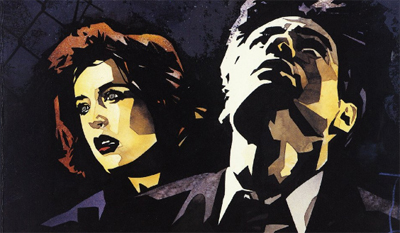
The truth is up there...

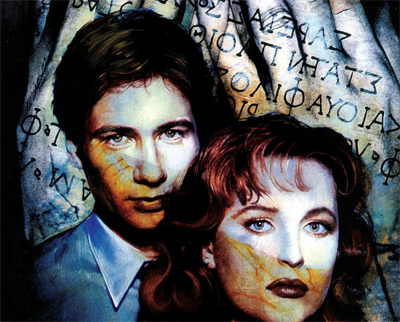
The truth is up there…

About a year after the release of their adaptation of The Pilot, Topps decided to push ahead with a series of regular adaptations of first season episodes of The X-Files. They reissued their adaptation of The Pilot as the first comic in the series, and then began publishing new adaptations of those early episodes written by Roy Thomas and illustrated by a rotating team of artists. The comics would be about twice as long as the issues of the monthly series, but would only publish once every two months. The monthly series was priced a $2.50, with Season One priced at $4.95.

It is hard not to feel quite cynical about Season One, particularly in an era where these classic episodes of The X-Files stream of Netflix and entire seasons are available to purchase at very low prices.
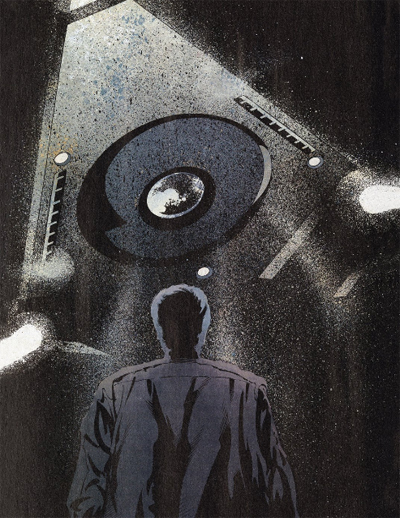
The shape of things to come...

The shape of things to come…

Continue reading

Star Trek – Assignment: Earth (IDW, 2008) (Review)

The first Star Trek pilot, The Cage, was produced in 1964. To celebrate its fiftieth anniversary, this December we are reviewing the second season of the original Star Trek show. You can check out our first season reviews here. Check back daily for the latest review.

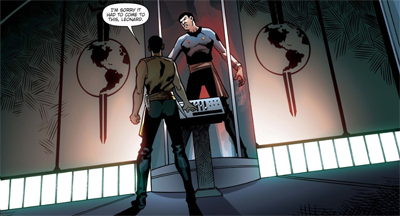
John Byrne’s five-issue Assignment: Earth miniseries is fascinating, because it is perhaps the closest that fans will ever come to getting an actual series spinning out of the episode Assignment: Earth. Of course, the second season finalé had been planned as a backdoor pilot for a new television show, but it never quite materialised. Understandably, Gary Seven tends to appear in spin-off material as a guest star or supporting player. Assignment: Earth focuses on the adventures of Supervisor 194 on his own terms.

Coupled with Byrne’s decidedly old-school done-in-one storytelling structure, Assignment: Earth manages to tell four separate stories featuring Gary Seven and Roberta Lincoln doing what they do in the late sixties and into the seventies. A series of unique and episodic adventures delivered on a regular, Assignment: Earth comes quite close to capturing the feel of a television show. Taking the television episode as his starting point, John Byrne manages to pitch a series of adventures that feel like they might hint at the direction the show could have gone.

Sensors detect a spin-off!

Sensors detect a spin-off!

While the Assignment: Earth miniseries is ultimately disposable and largely forgettable, it is an interesting experiment. By their nature, prose novels like The Eugenics Wars can only focus on a single plot starring the character. Using his fairly compressed approach to comic book storytelling, Byrne can tell five different stories in rapid succession, each with a clear beginning, middle and end. While these stories are inevitably written from the vantage point of 2008, they still feel like they might offer a glimpse at what the show might have looked like.

In many respects, Byrne is hampered by his source material. While the writer and artist has a bit of fun with the concept, a lot of Assignment: Earth ultimately feels a little dry and a little heavy-handed. Despite all the nods towards relevance and social commentary, Assignment: Earth lacks the spirit of adventure and excitement that a television show like this would need in the longer term.

"You'll have fifty percent less Nixon to kick around!"

“You’ll have fifty percent less Nixon to kick around!”

Continue reading

Star Trek: Alien Spotlight – Tribbles (Review)

The first Star Trek pilot, The Cage, was produced in 1964. To celebrate its fiftieth anniversary, this December we are reviewing the second season of the original Star Trek show. You can check out our first season reviews here. Check back daily for the latest review.

There is something delightfully gonzo about trying to write a comic book from the perspective of a bunch of Tribbles.

IDW’s Alien Spotlight series did not always work as well as it might, but the delightful done-in-one format of stand-alone stories told from the perspective of iconic Star Trek aliens allowed for a bit more versatility and flexibility than the line was normally afforded. Alien Spotlight: Cardassians was set after the end of Star Trek: Deep Space Nine. Alien Spotlight: Borg featured a delightfully clever logical paradox and a Borg invasion. Alien Spotlight: Klingons allowed Keith R.A. DeCandido to work his magic with the Klingons. Alien Spotlight: Romulans served as a springboard for John Byrne towards his Romulans saga.

You think you've got tribbles?

You think you’ve got tribbles?

There were more than a few disappointments along the way, but the Alien Spotlight series stands as one of the highlights of IDW’s Star Trek licensing. Alien Spotlight: Tribbles is a very odd piece of work. It is the kind of high-concept story that might feel like a gimmick and feels stretched over a single issue, let alone an arc. However, it is just silly enough that it works. Telling the story of a conflict between a bunch of Klingons and a human freighter crew through the eyes of the Tribbles is a fascinating idea.

While there is a sense that writer Stuart Moore occasionally has to stretch to get the story to where it needs to go, but Alien Spotlight: Tribbles is a delightfully charming (if perhaps a little too light) Star Trek diversion.

Laugh it up, fur ball...

Laugh it up, fur ball…

Continue reading

Star Trek (IDW, 2009) #15-16 – Mirrored (Review)

The first Star Trek pilot, The Cage, was produced in 1964. To celebrate its fiftieth anniversary, this December we are reviewing the second season of the original Star Trek show. You can check out our first season reviews here. Check back daily for the latest review.

The mirror universe is a fun concept.

Over the run of the franchise, quite divorced from the context of Mirror, Mirror, the mirror universe itself is an excuse to go big; to indulge in hammy and silly behaviour. There’s no need to worry about putting the toys back in the box, or even the general philosophy of the franchise as a whole. Appropriately enough, it becomes a place where you can do almost anything you might imagine with no real consequences. Writers get to do big space opera stuff, actors get to munch on the scenery.

All hail the empire...

All hail the empire…

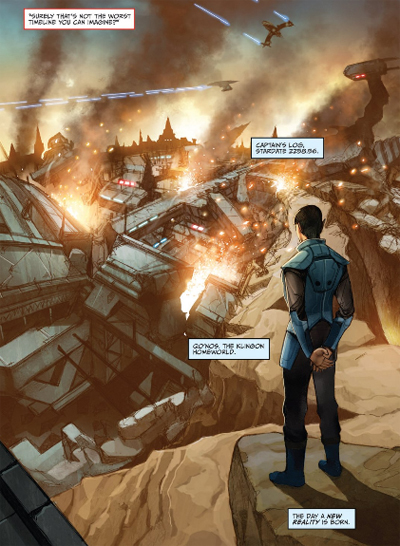
There is a reason that the most giddy and indulgent fan service from the already giddy and fan-service-filled fourth season of Star Trek: Enterprise was the two-parter set in the mirror universe. Indeed, Mirrored arguably borrows more from In a Mirror, Darkly than it does from Mirror, Mirror. The entire two-part story is launched from a casual conjectural conversation between Scotty and McCoy – suggesting that this might just be some flight of fancy. Indeed, the story cuts to the mirror universe as Scotty asks McCoy about “the worst timeline [he] can imagine.”

Mirrored is a very silly, very disposable story. It combines the weird fascination with alternate universes that runs through IDW’s monthly Star Trek series with the fixation on the events of JJ Abrams’ franchise-launching reboot. The result does not rank with the best mirror universe stories ever told, feeling too indulgent for its own good.

A cutting retort...

A cutting retort…

Continue reading

Star Trek – Mirror Images (Review)

The first Star Trek pilot, The Cage, was produced in 1964. To celebrate its fiftieth anniversary, this December we are reviewing the second season of the original Star Trek show. You can check out our first season reviews here. Check back daily for the latest review.

There has always been something rather strange about IDW’s Star Trek publishing line. How does the company decide what ideas got to print? What indicators do they look at in order to determine that one concept is worth exploration, but another is not? Basing the monthly on-going comic series around JJ Abrams’ rebooted Star Trek universe makes a great deal of sense, as does commissioning D.C. Fontana to write Year Four – The Enterprise Experiment. However, there is a sense that a lot of their output comes from throwing darts at boards.

For example, comics based on Star Trek: The Next Generation and Star Trek: Deep Space Nine have been confined to miniseries or arcs of the on-going monthly series; this seems odd, given that the market buying comics books would have been at the perfect age to feel nostalgia for them. However, miniseries like Intelligence Gathering or Assimilation2 are given as much prominence as strange alternate universe stories as The Last Generation or Mirror Images.

Pained leadership...

Pained leadership…

It isn’t that The Last Generation or Mirror Images aren’t interesting, at least on paper. While the execution in both cases might leave a little to be desired, there are interesting stories to be told in the classic “what if…” comic book style. However, it is hard to believe that there is as much demand for the four-issue story of mirror!Kirk taking command of the I.S.S. Enterprise and killing mirror!Pike as there is to see Data or Odo or Picard again. Given the success that IDW has enjoyed resurrecting The X-Files, it would seem nineties nostalgia is out there.

There is an argument to be made that the classic crew is currently more popular and iconic than any of the spin-offs, largely thanks to the recent cinematic reboot. However, is there really so much demand for a story based around Christopher Pike that four issues of mirror!Pike scheming demand to published?

Only logical...

Only logical…

Continue reading

The X-Files (Topps) #1 – Not To Be Opened Until X-Mas (Review)

This August (and a little of September), we’re taking a trip back in time to review the second season of The X-Files. In November, we’ll be looking at the third season. And maybe more.

If you needed proof that The X-Files had made it, then the forty-issue Topps comic book series from the mid-nineties seems a place to start. Of course, this has less to do with the stories published in the comics themselves – though some are very interesting – and more to do with the comic book market in the nineties and the business model employed by Topps. The comic book industry was perhaps at its peak in the nineties – at least when it came to exposure and public profile.

Chris Claremont and Jim Lee’s X-Men #1 became the biggest-selling comic book of all time in 1991, selling over eight million copies. A year later, DC Comics published The Death of Superman, a sprawling highly-publicised comic book event that killed off (and then revived) the Man of Steel. The year after that, Batman got in on the action with the Knightfall trilogy, a suitably spectacular event that featured the crippling of Bruce Wayne, his replacement as Batman, and the eventual return of the Caped Crusader.

The truth is in here?

The truth is in here?

It is important to put those figures in perspective. While this was a financial peak for the comic book industry, it was still something of a fringe economy. In the mid-nineties, a television show attracting only eight million viewers would find itself on the bubble line when it came to renewal. However, that figure was the largest readership of any comic book ever. (Audience diversification means that both television audiences and comic book readers have dwindled in the years since, but the latter much more than the former.)

However, the business model for comic books in the nineties made them highly profitable, despite their smaller audience. Price gouging was not uncommon, with some retailers charging as much as $30 for Superman #75 in 1992. Poly bags, gimmick covers, variant artwork, celebrity authors – comics were largely driven by gimmicks in the nineties. More than that, the emphasis on comic books as an investment in the mainstream media helped to suggest the industry was more for collectors than for readers.

Holy conspiracy, Mulder!

Holy conspiracy, Mulder!

It is telling that the company to land the license for The X-Files was Topps, a company famous for producing sports memorabilia. The company had branched into comics in 1993, as the industry was growing and growing, hoping to license various characters and properties. The implication was that The X-Files comic had been designed more as an accessory than as a story. The cover to Not To Be Opened Until X-Mas ever features a handy “first collectors item issue” tag below the “1” at the top left-hand corner.

Licensed comic books have something of a chequered history. In the context of the mid-nineties, it would be easy to write off the forty-one issues (and change) of The X-Files as a cynical cash-in. However, the series has moments of brilliance and insight that mark it as a worth extension of the brand name.

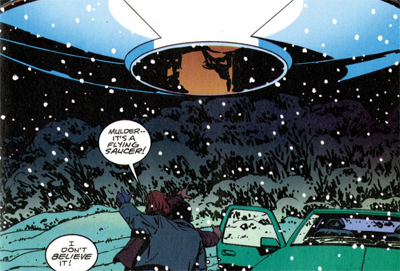
Up in the sky!

Up in the sky!

Continue reading

Star Trek: Khan – Ruling in Hell (Review)

This June, we’re taking a look at some classic Star Trek movie tie-ins and other interesting objects. Check back daily for the latest reviews and retrospectives.

Khan is a massively important figure in the grand mythology of Star Trek.

One need only look to Star Trek Into Darkness as proof of that assertion – a film that trades on how iconic the name “Khan” is, even to the most casual of fans. However, despite the fact that Khan has only appeared in a single episode and two feature films, each spaced apart by more than a decade, the character continues to exert a strong pull over the rest of the franchise. He is arguably more iconic and well-known than any lead character from a show produced after Star Trek: The Next Generation.

War of the supermen...

War of the supermen…

After all, Khan’s influence can be felt on just about every iteration of the franchise. On Star Trek: Deep Space Nine, he haunted the character of Julian Bashir. When the fourth season of Star Trek: Enterprise began its high-profile journey into the franchise’s continuity, Khan became something of a touchstone. The season’s first three-part episode (Borderland, Cold Station 12 and The Augments) was devoted to exploring the legacy of Khan Noonien Singh. Indeed, the show even tied Khan into the origin of the flat-foreheaded Klingons in Affliction and Divergence.

And yet, despite all this, there really is only so much material the character can support. Khan Noonien Singh is an iconic bad guy, but there’s a point where he ends up over-saturated.

The sands of time...

The sands of time…

Continue reading

Star Trek II: The Wrath of Khan (IDW, 2009) #1-3 (Review)

This June, we’re taking a look at some classic Star Trek movie tie-ins and other interesting objects. Check back daily for the latest reviews and retrospectives.

Due to bad timing, the Star Trek comic book license was between publishers when Star Trek II: The Wrath of Khan was released into cinemas in 1982. As the license transitioned between Marvel and DC, the movie adaptation got lost in the shuffle. As a result, the film was the only classic Star Trek film without a contemporary comic book adaptation. It remained that way for over a quarter of a century.

However, on the release of JJ Abrams’ rebooted Star Trek, current license holder IDW decided to release an omnibus of the classic movie adaptations as a tie-in. In doing so, they discovered a Wrath-of-Khan-sized hole in the collection, and so set about filling it with a three-issue miniseries that could be included in the omnibus for completeness’ sake.

Stationary orbit...

Stationary orbit…

Continue reading

Star Trek: The Newspaper Strips – Called Home (Review)

This June, we’re taking a look at some classic Star Trek movie tie-ins and other interesting objects. Check back daily for the latest reviews and retrospectives.

It’s amazing how diverse and expansive the history of the Star Trek franchise is. Even odd little curiosities like the Gold Key Comics and The Newspaper Strips endure in one form or another – passed down over the years and lovingly maintained. There really are no truly forgotten pieces of Star Trek out there, and one of the great things about IDW’s management of the Star Trek license has been their willingness to dig into the annals of Star Trek history to produce some striking pieces of work.

(I am really hoping that their reprint programme extends at some point to include the British Star Trek comic strips, which were wonderfully dynamic pieces of work that were never properly reprinted outside the United Kingdom. However, given how thorough the reprint programme has been, it seems almost inevitable that those strips will see the light of day in some form or another.)

The Newspaper Strips were launched in 1979, débuting four days before the cinematic release of Star Trek: The Motion Picture. The strip only ran for until 1983, cancelled due to the fact that the market was crowded out with more popular science-fiction comic strips like Star Wars or Flash Gordon. Still, despite the ignominious finish for the strip, it is a fascinating piece of Star Trek history, an example of one of the many ways the franchise survived during its long hiatus from television.

tos-calledhome

Continue reading

Star Trek: The Newspaper Strips – Beware the Omnimind! (aka Restructuring is Futile) (Review)

This January and February, we’ll be finishing up our look at the second season of Star Trek: The Next Generation and moving on to the third year of the show, both recently and lovingly remastered for high definition. Check back daily for the latest review.

We’ll be supplementing our coverage of the episodes with some additional materials – mainly novels and comics and films. This is one such entry.

As brilliant as the Borg were when they were introduced in Q Who?, they were hardly the most original of constructs. The cybernetic aliens went on to become one of the most iconic and recognisable pieces of Star Trek lore, featuring in the most popular Star Trek: The Next Generation feature film and all the subsequent spin-offs, but it’s tempting to give the Borg a bit more credit than they’re due.

After all, cybernetic organisms were hardly cutting edge in 1989. In fact, this wasn’t even the first time that Star Trek had told this kind of story. In late 1981, the Star Trek news paper strip that had begun as a companion piece to Star Trek: The Motion Picture, featured a similar adversary for Kirk’s Enterprise.

Resistance is futile!

Resistance is futile!

Continue reading