• Following Us

  • Categories

  • Check out the Archives


  • Awards & Nominations

Non-Review Review: Hitchcock/Truffaut

This film was seen as part of the Audi Dublin International Film Festival 2016.

Hitchcock/Truffaut is incredibly light and fluffy.

In many respects, Kent Jones’ documentary about the eponymous piece of classic film literature plays like something of a late night infomercial populated with nerdiest film endorsements imaginable. Hitchcock/Truffaut is not so much interested in exploring and expanding its source text, instead settling for celebration. Wes Anderson boasts that his copy of the book is so well-used that it is held together by rubber bands; Kiyoshi Kurosawa explains that the only thing holding him back from blatantly stealing from the book is a promise to himself.

hitchcocktruffaut

There is not anything particularly wrong with this. There is something quite fun in watching film-makers get evangelical about their craft. All of the talking heads offer some insight into their own work when they expand upon what Alfred Hitchcock means to them. Martin Scorsese’s joy as he journeys shot-by-shot into Psycho is infectious, and it is clear that everybody involved with the project holds Hitchcock in the highest possible regard and embraces him as a cornerstone of modern movie-making.

Hitchcock/Truffaut‘s biggest issue is also its strongest virtue; this is a cheerful and superficial acknowledgement of its subject, one that decides particularly in-depth coverage of the auteur is secondary to rendering the material accessible to neophytes.

hitchcocktruffaut5

Continue reading

Non-Review Review: Mammal

This film was seen as part of the Audi Dublin International Film Festival 2016.

Mammal is a psychosexual exploration of grief with a strong sense of direction and two strong central performances, albeit one that manages the rare feat of feeling both sensationalism and lifeless in the same instant.

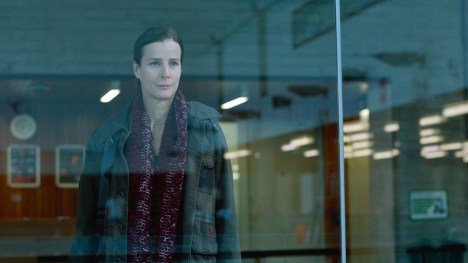
Writer and director Rebecca Daly has a strong sense of tone, creating a palpable uncertainty and anxiety that pervades the first half of the film. Daly crafts an engaging sense of ambiguity, allowing tensions and uncertainties to simmer beneath the surface of the relationship between her two central characters. The performances help a great deal, with Rachel Griffiths doing great work as the divorced and isolated Margaret and Barry Keoghan offering strong support as the mysterious Joe. Mammal is filled with awkward silences and tense foreboding.

mammal

Unfortunately, all of those tension and anxiety has to build to something, and Mammal suffers in how it decides to deliver upon and follow through on all that suspense and ambiguity. Mammal really struggles during its second act, offering twists that should be shocking but are ultimately entirely predictable. Mammal seems to try to escalate in its final act, but the film suffers quite a bit from its own efficiency at setting the mood. In its last forty minutes, the film is left nowhere to go but the most expected directions, the blows softened by the fact they’ve been awkwardly signposted.

Mammal works best when it focuses on the interiority of its characters, but struggles when it asks them to act upon one another.

mammal2

Continue reading

Non-Review Review: Green Room

This film was seen as part of the Audi Dublin International Film Festival 2016.

Green Room is a masterful artisanally-crafted suspense thriller.

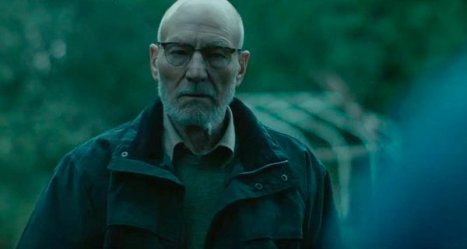
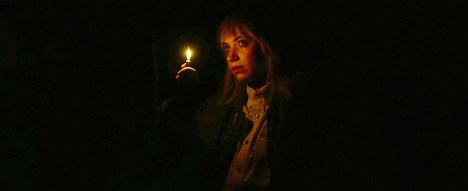
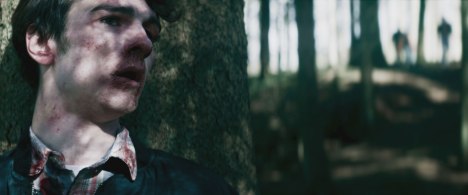
Writer and director Jeremy Saulnier crafts a loving tribute to seventies horror that feels like a truer successor to the “backwoods horror” genre than many contemporary remakes and reimaginings. Following a punk band named The Ain’t Rights that stumble into a tense stand-off with a bunch of neo-nazis in rural Oregon, Green Room is almost aggressively old-school in its horror sensibilities. It is tense and claustrophobic, paranoid and unsettling. Saulnier has a masterful understanding of the genre and its expectations, crafting a pitch perfect homage.

greenroom

Green Room is a very canny piece of work, but never in a manner that is distracting. The film is wry without being ironic, more arch than subversive. Appropriately enough, given its punk protagonists, the movie’s hints of cynicism about its genre and set-up bely a more earnest appreciation of the form. Green Room is a classic and conventional horror film about a bunch of kids who took a wrong turn, and it is utterly unapologetic about that. Instead, it commits to providing one of the most visceral traditional horror experiences in recent memory.

Green Room is a nasty piece of work. And is all the better for it.

greenroom6

Continue reading

Non-Review Review: Demolition

This film was seen as part of the Audi Dublin International Film Festival 2016.

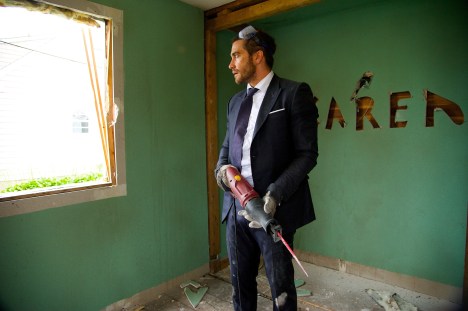
Demolition is saturated by quirk.

Demolition is suffocated by quirk.

Continue reading

Non-Review Review: Anomalisa

This film was (almost) seen as part of the Audi Dublin International Film Festival 2016.

Anomalisa is a heartbreaking tale of isolation and loneliness, an affecting drama about living in a world that feels illusory.

Directed by Duke Johnson and Charlie Kaufman, from Kaufman’s screenplay adapted from his own stageplay, most of the discussion of Anomalisa has focused upon its unconventional production. The movie was essentially crowdsourced, as the space allocated in the closing credits to the project’s kickstarter backers will attest. However, Anomalisa is also a stop motion production, painstakingly and meticulously filmed using life-like dolls to tell a sad story about adultery and anomie.

anomalisa1

In some respects, this fascination with form makes sense. After all, Anomalisa is a very human and grounded story. Even allowing for the difficulty that Kaufman had fundraising for the project, it would likely have been more practical to realise the story with living performers in a more conventional style. However, the distinctive technique provides a powerful emotional weight to Johnson and Kaufman’s story. The relative banality of the illusion is very much the much the point.

Anomalisa is not so much a story about fantasy as it is about a disconcerting sense of unreality.

anomalisa-098_0

Continue reading

Non-Review Review: High-Rise

This film was seen as part of the Audi Dublin International Film Festival 2016.

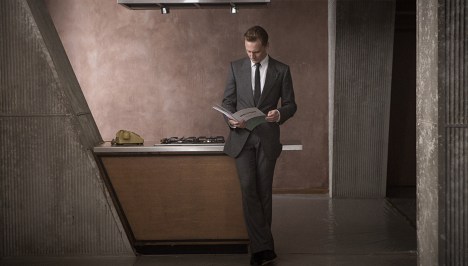
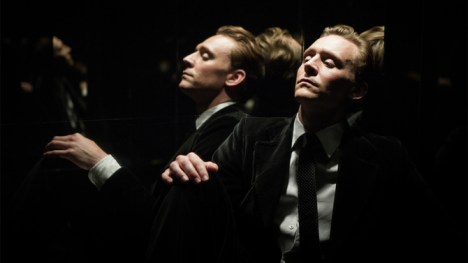
Ben Wheatley’s High-Rise is a beautiful ugly film.

An adaptation of J. G. Ballard’s surrealist novel, High-Rise fits rather comfortably within Wheatley’s aesthetic. There is an apocalyptic paranoia running through the film, which charts the social decay of the eponymous building over a three-week period. Class warfare is rendered literal in multiple senses, as the lower classes visit violence upon the wealthier inhabitants of the tower block. Even during the most peaceful and serene sequences of the movie’s first half, there is an underlying anxiety and dread bubbling just beneath the surface.

highrise3

High-Rise is disjointed and uneven, but that would seem to be something of the point. Amy Jump’s screenplay and Ben Wheatley’s direction eschew conventional pacing, with the world collapsing more in fits and starts than in a steady decline. Wheatley and Jump also edit the film, emphasising the chaotic nature of this collapse through jumps and montages that document the erosion of social order in a manner that ebbs and flows. It is disorientating and occasionally even frustrating, but one senses that this is meant to be the point.

High-Rise is a messy piece of work. But then, as the movie seems to suggest, things get messy when life is forced into a neatly delineated box.

HR_0430_tiff.tif

Continue reading

Non-Review Review: The Truth Commissioner

This film was seen as part of the Audi Dublin International Film Festival 2016.

The Truth Commissioner began life as a pitch for a BBC television show.

This is quite clear from the way that film is put together, both in terms of plotting and in terms of visual composition. It is not too difficult to imagine The Truth Commissioner stretched out to a prestigious six-week television drama event series, playing as a sibling series to other politically-charged thrillers like The Honourable Woman or The Night Manager; albeit with a more modest cast and location than those two recent high-profile examples of the BBC’s dramatic programming.

thetruthcommissioner1

As written by Eoin O’Callaghan, The Truth Commissioner feels rather condensed; populated by a cast of characters who seem compressed to fit the movie’s relatively modest runtime. Character relationships and dynamics are rendered in extremes; they are either left inferred or bluntly stated. There is a sense that The Truth Commissioner has been stripped down to fit this particular format, playing as a rough outline of a strong central idea rather than a fully realised political thriller.

Director Declan Recks does a great job realising this contemporary Belfast drama, layering on the paranoia as the eponymous character finds himself navigating dangerous waters. The Truth Commissioner is a stylish piece of work, albeit one that seems more like a condensed BBC drama than an exciting feature film in its own right.

thetruthcommissioner

Continue reading

Non-Review Review: Kung-Fu Panda III

This film was seen as part of the Audi Dublin International Film Festival 2016.

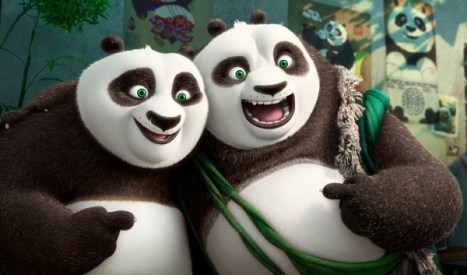
Kung-Fu Panda III retains the energy and style that distinguished the prior instalments of the series, even if the emotional beats feel further and further removed from what made the original such a beloved animated classic.

The original Kung-Fu Panda offered a compelling genre mash-up, slotting anthropomorphised animals into a kung-fu action adventure. However, despite the pulpier elements of the plot, Kung-Fu Panda carried a surprising emotional weight. Featuring one of Jack Black’s strongest performances and mining the incongruity of a Panda martial artist for all its worth, Kung-Fu Panda fleshed out and developed its world and its characters with a surprising amount of depth.

kungfupanda3

However, that emotional depth faded over the course of the sequels. Kung-Fu Panda II touched on issues related to identity and adoption amid a more generic action adventure, fleshing out Po’s backstory and exploring how he came to be raised by a mongoose. Picking up on the cliffhanger teased in the closing scene of Kung-Fu Panda II, Kung-Fu Panda III finds Po reconnecting with his long-lost father and trying to make sense of his place in the world. However, a lot of its emotional beats feel overly familiar and routine.

Still, Kung-Fu Panda III retains the energy and dynamism of the prior two installments, with a kinetic visual style and a number of visually impressive set pieces. It just feels a bit more hollow than the previous films in the series.

kungfupanda3a

Continue reading

Non-Review Review: Sing Street

This film was seen as part of the Audi Dublin International Film Festival 2016.

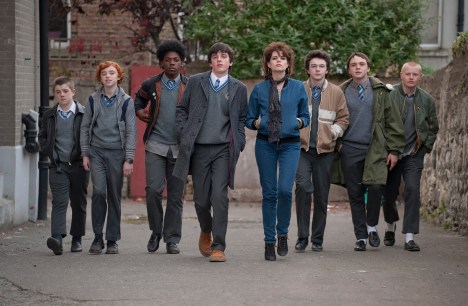
Sing Street is a joyous musical coming of age story.

As with Once and Begin Again, director John Carney demonstrates an innate (and romantic) appreciation for the role of music in interpersonal interactions. As in both Once and Begin Again, Carney employs music as an emotional shorthand; both in how the characters relate to one another and how the audience relates to the film. As with his two prior films, Carney treats music as a language of love and attraction, offering his characters the chance to communicate ideas or feeling that can only be hinted at through conversation, no matter how intimate.

However, Sing Street more firmly ties its musical elements to a sense of memory or nostalgia, with a soundtrack that evokes the film’s secondary school setting as effectively as costumes or set dressings. Sing Street is an ode to the joys and adventures of youth, set to a catchy synthesiser beat.

singstreet1

Continue reading

Non-Review Review: How to be Single

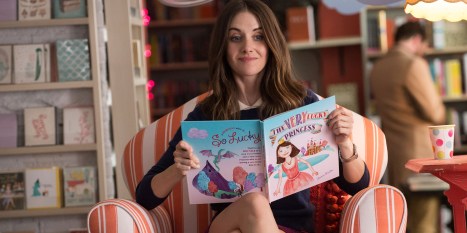
How to be Single is nowhere near as radical as its title would suggest.

As with Deadpool, there is a sense that film is more interested in acknowledging the tropes and conventions of the genre than it is in actively subverting them. How to be Single talks a good game, particularly through its central character. Dakota Johnson is well cast as the movie’s lead, anchoring an impressive ensemble of comedic actors. While How to be Single nods towards and acknowledges the expectations of the romantic comedy genre, it is more interested in gently bending and flexing the rules than actively breaking them.

According to formula...

According to formula…

Not that there is anything wrong with this approach. Indeed, How to be Single is a fairly solid example of the genre, with a witty script and a great cast providing just about everything that the audience could expect from a romantic comedy. How to be Single is perhaps a little too long for its own good, particularly in its final act. There are points at which the film hews a little bit too close to the romantic clichés for its own good, particularly in plot threads focusing on Leslie Mann and Alison Brie. However, the movie is charming enough that these are not fatal flaws.

How to be Single could easily have been a little more transgressive or a little more provocative, but the end result is a well-made and well-acted romantic comedy that has just enough self-awareness to understand the audience’s expectations; just not enough to really surpass them.

By the book...

By the book…

Continue reading