• Following Us

  • Categories

  • Check out the Archives


  • Awards & Nominations

Doctor Who: The Eaters of Light (Review)

“I think we’ve lost her, Doctor.”

“No. No, no, no, no. We just don’t know where she is. Not the same thing at all.”
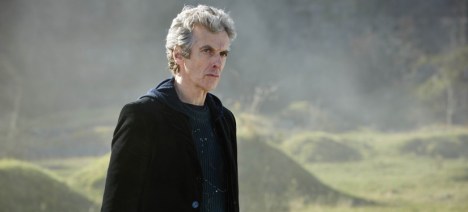
Caesar the day.

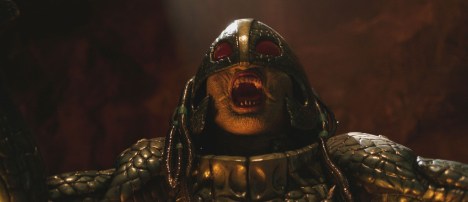
The Eaters of Light is notable as the first episode of the revival Doctor Who to be written by a writer who worked on the classic series.

Of course, Russell T. Davies populated his relaunch with veterans of the interregnum, of the period between the cancellation of the classic show and the debut of the revival. Mark Gatiss had written books and audio plays. Steven Moffat had scripted The Curse of Fatal Death. Paul Cornell had overseen his own stillborn reboot in Scream of the Shalka. Rob Shearman had written for Big Finish. So it was not as if the series had ever completely abandoned its history and roots.
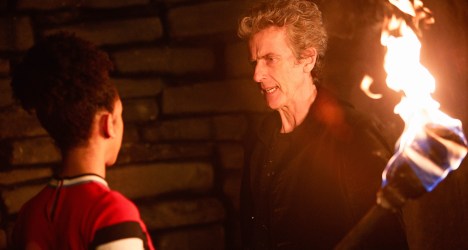
Torchbearer.

Indeed, over the course of the return, various landmark events occurred. The Autons were the first villains to reappear, appearing in Spearhead from Space, Terror of the Autons and Rose. William Thomas became the first actor to appear in both the classic series and the revival, scoring guest appearances in Remembrance of the Daleks and Boom Town. Graeme Harper was the first director to work on both iterations, directing The Caves of Androzani and Revelation of the Daleks, before becoming a go-to director during the Davies era.

In some ways, The Eaters of Light offers another such landmark in the evolution of the series. Rona Munro becomes the first writer to work on both the classic series and the revival.
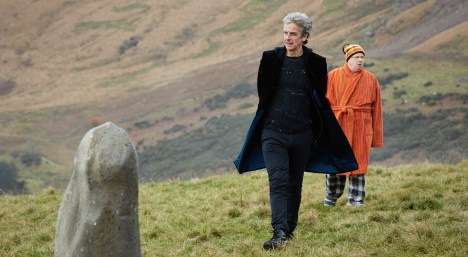
Stones of blood.

Continue reading

Doctor Who: Empress of Mars (Review)

Empress of Mars might be the last script that Mark Gatiss writes for Doctor Who for a long time.

Chris Chibnell has expressed an interest in putting together an American-style “writers’ room” upon taking over the series. It is entirely possible that Gatiss might continue to write for the show, to the point that he has expressed optimism at the possibility. Nevertheless, it seems likely that Chibnell would have a different dynamic with Gatiss than the other showrunners; Gatiss was the first writer to write for the revival other than Russell T. Davies, and co-created Sherlock with Steven Moffat.

Forget a Hard Brexit or a Soft Brexit.
Mars wants a Cold Brexit.

Gatiss has been a fixture of Doctor Who, dating back even beyond the start of the revival. Like Davies and Moffat, Gatiss wrote extensively for the property during the interregnum between Survival and Rose. Since the series returned to television screens, Gatiss has been a regular contributor. He has written for eight of the ten television seasons to air since the show was revived in 2005. He has written for every season overseen by Steven Moffat, making him unique among the stable of  Doctor Who recurring writers. As such, Empress of Mars represents the end of an era.

Empress of Mars might just be the best script that Mark Gatiss has ever written for Doctor Who.

For Queen and Planet.

Continue reading

Doctor Who: Extremis (Review)

I need to know what’s real and what’s not real.

Don’t we all.

“Book him, lads!”

“Death is an increasing problem,” reflects the voice over at the start of Extremis.

The first five episodes of the season had largely been about establishing the new cast dynamic. The Pilot, Smile and Thin Ice were an old school present-future-past triptych to start the year in introduce Bill. Knock Knock focused on Bill’s life outside the TARDIS. Oxygen marked the first episode to properly incorporate Nardole into the adventure. This was largely work setting up a dynamic that would carry across the season. However, the table has now been set.

It ain’t Oval ’til it’s Oval.

It makes sense that the season should turn its attention to the prospect of death at this point in the year. This will be the final season of Doctor Who to star Peter Capaldi. It will also be the last season produced by Steven Moffat. Extremis is the sixth episode of the twelve-episode season. It marks a point of transition for this final year, particularly positioned as the first episode in a mid-season pseudo-three-parter.

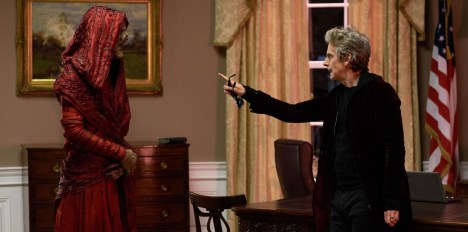
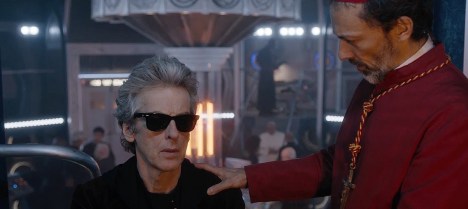
Death permeates Extremis, in a manner both literal and metaphorical. It is an episode in which the Doctor effectively commits suicide, along with many of the planet’s best and brightest, accepting his own uselessness in the context of the world around him. This primary plot is juxtaposed with a framing sequence in which the Doctor bears witness to the execution of Missy, a sequence that goes into great detail about just how difficult it must be to kill a Time Lord.

The light at the end.

Extremis is a very grim episode, in a manner that recalls Heaven Sent. Both are episodes built around the big twist that the audience is watching an iteration of the Doctor, rather than the definitive version of the Doctor himself. It is possible to contextualise this within the broader framework of the Moffat era, populated as it is by doppelgangers and counterpart Doctors; the ganger!Doctor from The Rebel Flesh and The Almost People, the Teselecta from The Wedding of River Song, even Clara at the end of Hell Bent.

However, the iterations of the Doctor in Heaven Sent and Extremis exist to ask their own particular question. These are episodes built around the challenge of what the Doctor does when he is confronted with a problem that he cannot solve, a trap that he cannot escape. In Heaven Sent, no single iteration of the Doctor can escape the clockwork prison. In Extremis, this iteration of the Doctor is actively helping the enemy. Neither is the “definitive” Doctor. What does the Doctor do when confronted with the idea that he is not “real”? He fights anyway.

He hasn’t a prayer.

Continue reading

Doctor Who: Oxygen (Review)

Like every worker everywhere, we’re fighting the suits.

– the Doctor about sums it up

In space, EVERYONE can hear you scream…

Oxygen plays very much like a companion piece to Thin Ice earlier in the season. Both are essentially stories about monstrous capitalism, from nineteenth century London through to the depths of outer space.

Indeed, Oxygen pitches itself as something akin to a late seventies or early eighties science-fiction film, in terms of aesthetic and politics. The episode’s production design recalls the “used future” of films like Star Wars, while the heavy criticism of capitalism invites comparison to films like Alien or Outland. Indeed, Oxygen even borrows from a similar strain of horror movies, tapping into the fear of zombies as the monstrous face of capitalism that can be traced back to Dawn of the Dead.

Station keeping.

Jamie Mathiesen has been one of the most consistently impressive writers of the Twelfth Doctor’s tenure, turning in impressive scripts for both Mummy on the Orient Express and The Girl Who Died, along with a genuine masterpiece in Flatline. Indeed, Oxygen is the most impressive episode in the stretch of the season, a bold and ambitious piece of allegorical science-fiction, wedded to a genuinely scary concept, top-notch production design, and any number of clever ideas.

Oxygen is a brilliant piece of work, and a reminder of just how effectively Doctor Who can blend its disparate elements into a satisfying whole.

Give him space to work.

Continue reading

Doctor Who – Knock, Knock (Review)

“That’s what they’re called, Driads?”

“That’s what I’m calling them, yes.”

“You’ve gone crazy.”

“Well, I can’t just call them lice, can I?”

Performance is a bit wooden.

Knock Knock is a solid, if unexceptional, episode of Doctor Who. It occasionally feels more like a grab bag of idea welded together, more than a single cohesive story.

Knock Knock is essentially three very different episodes sutured together in a decidedly haphazard fashion. Knock Knock is, in quick succession: an episode focusing on Bill’s life outside the TARDIS, an old-school haunted house adventure, an intense familial psychodrama with a powerhouse guest performance. There is a strong sense that Knock Knock would work better if it chose to be any two of those three episodes, but that it simply cannot hold itself together trying to satisfy all three masters.

Dial it back, there.

Continue reading

Doctor Who: Thin Ice (Review)

“How is that a screwdriver?”

“In a very broad sense.”

“Well, how is it sonic?”

“It makes a noise.”

Pilot fish.

Thin Ice is a fairly solid historical adventure, one that takes a fairly conventional Doctor Who template and puts a slightly self-aware spin on it.

As with The Pilot and Smile, there is a decidedly nostalgic quality to Thin Ice. As with the two prior episodes, Thin Ice feels like a conscious throwback to the structure of the Davies era. Moffat’s final season as showrunner has opened with the classic present-future-past triptych that recalls Rose, The End of the World and The Unquiet Dead, or The Christmas Invasion, New Earth and Tooth and Claw or Smith and JonesThe Shakespeare Code and Gridlock. This is a very familiar and comforting pattern.

Hat’s off to him.

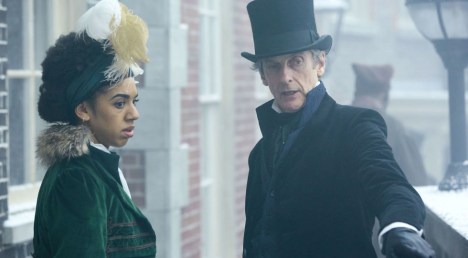
As with Smile before it, Thin Ice is built upon a stock plot. A series of mysterious disappearances lead the Doctor and his companion to one inescapable conclusion: there is a monster menacing Regency England. Thin Ice feels very much like the kind of episode that Mark Gatiss has been known to write, an affectionate historical depiction of an iconic chapter in British history like The Unquiet Dead, The Idiot’s Lantern or The Crimson Horror. Indeed, Thin Ice looks lavish, complete with all the costume drama trappings that one might expect.

However, much like Smile, there is a slight twist on the tale. Whereas Smile attempted to subvert the classic “machines gone awry” plot with a clumsy last-minute twist, Thin Ice instead makes a point to weave its commentary and theme through the familiar structure of the episode. Thin Ice might be a very conventional historical monster story, but it engages with themes of race and class that are often under-explored in these stories.

The time travelers who came in from the cold…

Continue reading

Doctor Who: Smile (Review)

Smile is a retro future thriller updated for the twenty-first century. It is 2001: A Space Odyssey and Logan’s Run by way of Ex Machina or The Girl With All the Gifts.

On the surface, Smile is the story of a rogue computer program seeking to enslave or destroy mankind. Popular culture is littered with that particular nightmare, a sentient AI that embarks upon patricide; Skynet from The Terminator, Alpha 60 in Alphaville. Indeed, Doctor Who has a rich history of playing with the trope; the sentient computer in The Keys of Marinus, B.O.S.S. from The Green Death, WOTON from The War Machines, P7E from Underworld. It is a classic science-fiction trope, and Smile plays with the idea of help robots becoming self-aware and murderous.

Bad bots.

Indeed, even the aesthetic of the episode consciously evokes those retro stories. Smile was filmed in Valencia’s City of Arts and Sciences, a beautiful architectural marvel defined by its smooth white surfaces and peaceful atmosphere. It feels very sterile and very clean, its minimalism evoking the set designs of those classic films and its relative lack of colour harking back to the time when Doctor Who was broadcast in black-and-white. For most of its runtime, Smile feels like a very old-fashioned piece of science-fiction.

However, around the halfway point, a shift takes place. All of a sudden, the smooth whites of the city give way to the grim industrial earth tones of the rocket. The episode seems to jump forward to gritty late seventies and early eighties science-fiction, the “used future” of Star Wars and Alien. As the episode continues, it pushes even further. Ultimately, it becomes a sly subversion of the archetypal “robot rebellion” story, instead exploring the implications of that narrative. The Vardi are transformed from renegade robots to freed slaves. It is a clever twist, albeit somewhat rushed.

Character arcs.

Continue reading

Doctor Who: The Pilot (Review)

“That’s my face?”

“You seem a bit flexible on the idea.”

“You have no idea.”

The Pilot does pretty much exactly what it says on the tin.

It is effectively a soft jumping-on point very much aimed at a back-to-basics approach to Doctor Who. It is an episode that is not particularly ambitious or original, but instead serves to lay out the groundwork for the season ahead. Like so many episodes introducing new companions, it uses the companion in question as a window into the world of the Doctor and as an opportunity to effectively redefine the show. Given the overlap between Amy and Clara with Asylum of the Daleks, this is arguably the cleanest such introduction since The Eleventh Hour.

Getting on board…

It has been almost two years since the last full season of Doctor Who. There is every possibility that The Pilot could be a young fan’s introduction to the series. By that measure, The Pilot is reasonably successful. It runs through a fairly solid checklist of things that a reintroduction to Doctor Who should do. It introduces a new status quo. It features a simple villain that is driven by an intriguing high concept. It hints at a nice long-form mystery. It establishes a sense of character and identity for the new companion.

The result is an episode that feels more like a springboard and a mission statement than a strong episode in its own right, a reminder of what to expect from Doctor Who served as something of a warm-up lap.

Time (War) out…

Continue reading

Doctor Who – The Return of Doctor Mysterio (Review)

What is that?

Well, in terms you would understand…

… sorry, there aren’t any.

The Return of Doctor Mysterio feels very much like a return to the aesthetic of the Doctor Who Christmas Specials of the Russell T. Davies era.

Russell T. Davies tended to build his Christmas Specials as blockbuster events, stories featuring gigantic invasions and the end of the world. In some ways, the perfect fodder for a family sitting down after Christmas dinner, half paying attention to the television and very much in need of a plot that was packed with spectacle while moving a mile-a-minute. As a rule, the Russell T. Davies specials did not demand the complete and devoted attention of the best episode, instead feeling more like a lavish desert than a hearty main course.

Here comes a hero.

Here comes a hero.

For Davies, Christmas entertainment itself seemed to be the genre to which he wrote, with his specials very consciously intended to evoke a general mood or feeling of Christmas television. Indeed, Davies would even extend the tone of his specials beyond stereotypical Christmas concerns as in The Christmas Invasion or The Runaway Bride. Voyage of the Damned is the most obvious example, a riff on The Poseidon Adventure and other maritime disaster films that have little directly to do with Christmas but air in constant rotation during the season.

Steven Moffat has tended to use his Christmas Specials as part of larger emotional and story arcs. A Christmas Carol involved some light “timey wimey” stuff. The Doctor, the Widow and the Wardrobe built to a big emotional reunion with the Pond family. The Snowmen was all about the Doctor’s angst over the loss of River and the Ponds. The Time of the Doctor was a subversion of the “thirteenth regeneration” story. Last Christmas was very much about Clara. The Husbands of River Song was about saying farewell to River.

No escape.

No escape.

In contrast, the big emotional beats of the Davies Christmas Specials tended to be drawn in broader terms. The departure of Christopher Eccleston meant that The Christmas Invasion had to deal rather directly with the arrival of David Tennant, but the Tenth Doctor’s heartbreak over the loss of Rose played out in the background of The Runaway Bride paying off in one big moment where he repeated her name. The continuity elements in The End of Time, Part I were largely superfluous to the broad storytelling.

The Return of Doctor Mysterio very much evokes to the storytelling sensibilities of the earlier Davies era. Even the story beats harken back to Christmases past. Nardole’s brief closing acknowledgement of River Song evokes the Tenth Doctor’s brief closing acknowledgement of Rose in The Christmas Invasion. The action climax of the Doctor on the bridge of a crashing alien ship hurdling towards a major metropolis feels lifted from Voyage of the Damned. However, there is also the fact that The Return of Doctor Mysterio is a broadly-drawn superhero film.

Damned if you do, damned if you don't...

Damned if you do, damned if you don’t…

Continue reading

Doctor Who: The Husbands of River Song (Review)

Every Christmas is last Christmas.

The Husbands of River Song is an odd duck.

The first half is a fairly light romp, a rapid-fire farce that ties together the goofy science-fiction of Doctor Who with Moffat’s own fondness for banter and wordplay. The plot is fairly light, the dynamics fairly simple; the script leans rather heavily on its two lead characters and a slew of one-liners that aim for quantity over quality. It is in, in many respects, the Moffat era equivalent of a Davies era Christmas special; it is easy to follow bombast with an impressive scale, pitched at the perfect volume to help digest all those mince pies. Even the earlier timeslot seems appropriate.

doctorwho-thehusbandsofriversong2

The second half is something completely different. It is an emotional farewell to the character of River Song, effectively closing the time loop that began all those years (and Doctors) ago with Silence in the Library. Although The Name of the Doctor leaves open the possibility to future stories about River Song, The Husbands of River Song provides the last truly essential piece of the jigsaw puzzle. In doing so, it pays off a bit of continuity that has been hanging in the air for seven years. This seems an odd choice to combine with the lighter fare in the first half.

It is not that there is anything particularly wrong with either half. Certainly, Moffat is a writer who has done an excellent job changing track mid-story at certain points in the past; A Good Man Goes to War comes to mind. However, there are also points at which the switch has been less than elegant; Let’s Kill Hitler is probably the strongest example. The problem with The Husbands of River Song is that it leans far more towards the latter than the former.

doctorwho-thehusbandsofriversong

Continue reading