• Following Us

  • Categories

  • Check out the Archives


  • Awards & Nominations

Doctor Who: The Trial of a Time Lord – Mindwarp (Review)

To celebrate the fiftieth anniversary of the longest-running science-fiction show in the world, I’ll be taking weekly looks at some of my own personal favourite stories and arcs, from the old and new series, with a view to encapsulating the sublime, the clever and the fiendishly odd of the BBC’s Doctor Who.

The Trial of a Time Lord originally aired in 1986.

Hey, keep together. This is a great day for battle. A great day to die!

Does he always go on like that?

Afraid so.

-Ycranos, Tuza and Peri discover she apparently has a type

The Trial of a Time Lord loosely adheres to the structure of A Christmas Carol. If The Mysterious Planet can be seen as the “past” story, then Mindwarp is very clearly the “present” story. The BBC’s sudden “hiatus” for Doctor Who yanked the series suddenly out of Colin Baker’s first season, to the point where dialogue from Baker referencing the planned series opener had to be dubbed out. As a result, for the eighteen month gap, Colin Baker’s first full season in the role was a perpetual “present.” It was the last Doctor Who that had aired, and – as a result – it was the version of the show that first popped into people’s minds when they thought of the series.

So it seems fitting that The Trial of a Time Lord sees Colin Baker yanked directly from an adventure that looks like it could have been filmed as part of his first full year in the role. If The Mysterious Planet evokes a hazy and romantic past, a story constructed from familiar archetypes and plot points, then Mindwarp is a very clear acknowledgement of what the show had evolved into. Given the difficulties facing the programme after that problematic year, Mindwarp is the segment of this over-arching plot that needs to make the most robust defence of the show, or at least deflect the most criticism.

Despite some interesting strengths, Mindwarp doesn’t quite construct a convincing argument in favour of the show. More than that, though, its deflections prove a little weak.

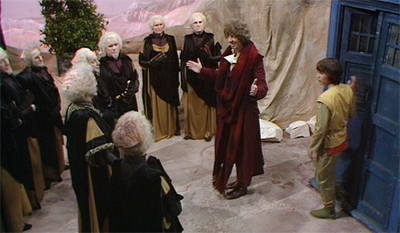
Out of this world...

Out of this world…

Continue reading

Doctor Who: Vincent and the Doctor (Review)

To celebrate the fiftieth anniversary of the longest-running science-fiction show in the world, I’ll be taking weekly looks at some of my own personal favourite stories and arcs, from the old and new series, with a view to encapsulating the sublime, the clever and the fiendishly odd of the BBC’s Doctor Who.

Vincent and the Doctor originally aired in 2010.

But you’re not armed.

I am.

What with?

Overconfidence, this, and a small screwdriver. I’m absolutely sorted.

– Vincent and the Doctor

One of the strengths of the revived series has been a willingness to engage with a variety of writers. While Andrew Cartmel may have tried in vain to convince Alan Moore to write for the final years of the classic show, Russell T. Davies and Steven Moffat have managed to draw a wealth of diverse talent to write for the revived series. Sometimes this didn’t always work out (Life on Mars creator Matthew Graham wrote Fear Her), but it did mean that the series could boasts scripts from figures as diverse as Neil Gaiman and Richard Curtis.

There’s something to be said for the diversity the format of the show allows. Vincent and the Doctor is really unlike any other story the show has ever tried to tell, but it still manages to feel like Doctor Who. Which is something pretty spectacular, and worth celebrating. Doctor Who works best as a vehicle for any and all kinds of stories, where the audience isn’t always exactly sure what it is going to get.

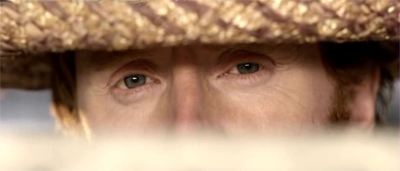
An artist's eyes...

An artist’s eyes…

Continue reading

Doctor Who: The Gunfighters (Review)

To celebrate the fiftieth anniversary of the longest-running science-fiction show in the world, I’ll be taking weekly looks at some of my own personal favourite stories and arcs, from the old and new series, with a view to encapsulating the sublime, the clever and the fiendishly odd of the BBC’s Doctor Who.

The Gunfighters originally aired in 1966.

Everything excepting that rattlesnake friend of yours Holliday blew in this mornin’. Who’re your friends, Wyatt?

Well I, er–

Oh, quite, quite so. Allow me, sir, to introduce Miss Dodo Dupont, wizard of the ivory keys, and er Steven Regret, tenor. And lastly sir, your humble servant Doctor Caligari.

Doctor who?

Yes, quite right.

– Masterson, Wyatt Earp and the Doctor

I am hesitant to turn my trip into the history of Doctor Who into a series of articles about fan opinion or consensus. If I like a story, or dislike a story, I have my reasons that I will often try to explain away. However, sometimes it’s nice to have a bit of context. It is handy, for example, to know that I like The Talons of Weng-Chiang just a little bit less than most fans seem to. The Gunfighters is an oft-maligned serial. It is part of the show’s troubled third season, building – as it did – off the show’s generally quite solid second year. However, I actually enjoy The Gunfighters for what it is, which is a knack I seem to have for a lot of the stories from William Hartnell’s era.

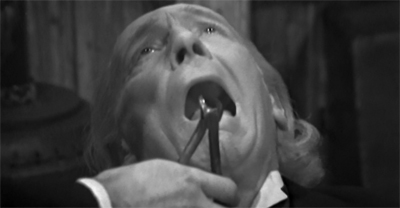
People would try to convince you that it's like pulling teeth...

People would try to convince you that it’s like pulling teeth…

Continue reading

Doctor Who: Planet of Fire – Special Edition (Review)

To celebrate the fiftieth anniversary of the longest-running science-fiction show in the world, I’ll be taking weekly looks at some of my own personal favourite stories and arcs, from the old and new series, with a view to encapsulating the sublime, the clever and the fiendishly odd of the BBC’s Doctor Who.

Planet of Fire originally aired in 1984.

I don’t know where the girl is. I don’t have the comparator!

Commence the burning!

No! You must believe me!

Oh, but I do believe you. Commence the burnings!

Stop this!

You are quite powerless. Continue the sacrifices. See that this Doctor burns slowly.

– The Doctor and the Master continue the theme for the year

Planet of Fire is a strange little episode, positioned as it is directly before The Caves of Androzani. Writer Peter Grimwade was effectively assigned a set of list of story points to get through (write Kamelion and Turlough out, kill the Master, write Peri in) and manages to hit just about all of them successfully. It’s a wonder that the serial isn’t a gigantic mess, especially given that it comes from the writer of Time-Flight. On the other hand, though the serial starts off in a rather interesting manner, it ends as a disappointingly conventional adventure, calling to mind Frontios from earlier in the season.

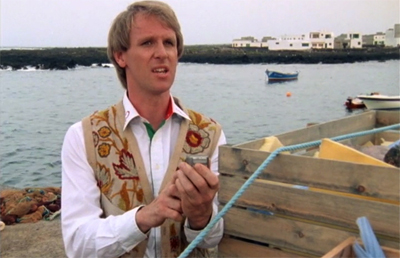
Davison's not waisted here...

Continue reading

Doctor Who: Terminus (Review)

To celebrate the fiftieth anniversary of the longest-running science-fiction show in the world, I’ll be taking weekly looks at some of my own personal favourite stories and arcs, from the old and new series, with a view to encapsulating the sublime, the clever and the fiendishly odd of the BBC’s Doctor Who.

Terminus originally aired in 1983. It was the second instalment in the Black Guardian Trilogy.

Tegan?

What?

If ever you had to kill someone, could you do it? Could you?

No. I don’t know. If it was important, to save my friend, to defend myself.

But cold-bloodedly?

You’re weird, Turlough.

– Turlough does seem to “get” Tegan, does he?

Terminus gets a bit of a bad wrap, and I can understand why. It’s a very “eighties” production, in all the wrong ways. There’s too much soap opera, there’s bad acting, there’s a wealth of high concept ideas that are never properly exploited, the monster looks absolutely terrible, and the budget shows in the worst possible manner. Still, despite all these (very significant) flaws, I still kinda like it, admiring the story more for the ambition than for the execution.

The serial has some pretty big garn-damn problems...

Continue reading

Doctor Who: Mawdryn Undead (Review)

To celebrate the fiftieth anniversary of the longest-running science-fiction show in the world, I’ll be taking weekly looks at some of my own personal favourite stories and arcs, from the old and new series, with a view to encapsulating the sublime, the clever and the fiendishly odd of the BBC’s Doctor Who.

Mawdryn Undead originally aired in 1983. It was the first instalment in the Black Guardian Trilogy.

Oh look, it’s all a long time ago, Doctor. I mean, surely what’s past is —

Very much in the present, Brigadier. You never did understand the interrelation of time.

– Brigadier and the Doctor have a bit of time travel trouble

Mawdryn Undead is a bit of a strange beast. It’s written by director Peter Grimwade, who last wrote the script for the unbelievably bad Time-Flight, which is a serious contender for the worst Doctor Who adventure of the eighties – no small accomplishment in a decade that gave us The Twin Dilemma and Timelash. Still, Mawdryn Undead is an entertaining little romp with a clever central concept that is somewhat overshadowed by the fact that Grimwade seems to have been given a laundry-list of tasks to accomplish with his script. With the serial featuring the Brigadier, introducing Turlough and kick-starting The Black Guardian trilogy, you can understand why the rather nifty little time-travel story tends to get overshadowed a bit.

Faithful companion?

Continue reading

Doctor Who: Snakedance (Review)

To celebrate the fiftieth anniversary of the longest-running science-fiction show in the world, I’ll be taking weekly looks at some of my own personal favourite stories and arcs, from the old and new series, with a view to encapsulating the sublime, the clever and the fiendishly odd of the BBC’s Doctor Who.

Snakedance originally aired in 1983.

I know exactly what you want.

Do you?

Yes, you’ve come to pester me with some extravagant theory you’ve dreamed up concerning the Mara, and should I, the Director, fail to take sufficient notice of your colourful improbabilities, it will be the end of civilisation as we know it at least. How am I doing so far, hmm?

– Ambril and the Doctor

I think it’s quite a compliment to the concept of the Mara, introduced the previous season in Kinda, that the relatively new alien menace was chosen to take part in the celebration of classic villains that was Peter Davison’s second season. It was only a year old at the time, and hadn’t exactly been stunningly realised, so it seems like a massive vote of confidence in the monster to see it measured against foes like Omega in Arc of Infinity and the Master in The King’s Demons. Common knowledge will tell you that Snakedance is a perfectly entertaining serial, but can’t really measure up to one of the better stories of Davison’s first season. I’m not so convinced, and think that the two stories actually complement one another perfectly.

Don't let this get out of hand...

Continue reading

Doctor Who: Logopolis (Review)

To celebrate the fiftieth anniversary of the longest-running science-fiction show in the world, I’ll be taking weekly looks at some of my own personal favourite stories and arcs, from the old and new series, with a view to encapsulating the sublime, the clever and the fiendishly odd of the BBC’s Doctor Who.

Logopolis originally aired in 1981. It was the second instalment in the “Master” trilogy.

It’s the end… but the moment has been prepared for.

– the Doctor finally figures out what this year has been about

I don’t think the departure of a Doctor has even been a bigger deal than it was with Tom Baker. Sure, Christopher Eccleston’s first season was so fixated on death that his departure seemed preordained, even in the episodes written before his decision to leave. Similarly, Peter Davison’s final year seems designed to demonstrate that the universe is no longer suited to this particular iteration of the Doctor. Maybe David Tennant’s final year is focused on his passing, but the episodes are so spaced out that it makes little difference. However, we’ve just spent an entire year focused on the idea of entropy and decay, the inevitably of change and the notion that death is just a nature part of the cycle of things.

When the Doctor assures his companions that “the moment has been prepared for”, he may as well be looking at the camera, assuring those of us at home that the past year has been spent readying them for the unthinkable: the time when Tom Baker might not be the Doctor.

Final destination?

Final destination?

Continue reading

Doctor Who: The Keeper of Traken (Review)

To celebrate the fiftieth anniversary of the longest-running science-fiction show in the world, I’ll be taking weekly looks at some of my own personal favourite stories and arcs, from the old and new series, with a view to encapsulating the sublime, the clever and the fiendishly odd of the BBC’s Doctor Who.

The Keeper of Traken originally aired in 1981. It was the first instalment in the “Master” trilogy.

He dies, Doctor. The Keeper dies!

– Tremas heralds the end of an era

Of course, the entire season has been less than subtle about the point, but The Keeper of Traken is the point at which Tom Baker’s final season builds to critical mass, and reaches the point of no return. Entropy, decay and death have all been crucial ingredients in the year’s collection of adventures, but The Keeper of Traken is the point at which it seems like our character has set himself on an incontrovertible course, a path from which he cannot diverge. Baker’s approaching departure gives The Keeper of Traken a great deal of weight, and helps balance a story that might otherwise seem excessive or overblown. There’s melodrama here, but it feels strangely appropriate.

Lawrence Miles has argued that Logopolis was the funeral for the Fourth Doctor. If so, The Keeper of Traken is his wake – and it’s fitting that Irish poet and writer Johnny Byrne should provide this strangely lively (if morbid) celebration.

Hell of a wake...

Hell of a wake…

Continue reading

Doctor Who: State of Decay (Review)

To celebrate the fiftieth anniversary of the longest-running science-fiction show in the world, I’ll be taking weekly looks at some of my own personal favourite stories and arcs, from the old and new series, with a view to encapsulating the sublime, the clever and the fiendishly odd of the BBC’s Doctor Who.

State of Decay originally aired in 1980. It was the second instalment of the E-Space Trilogy.

You are incredible.

Yes, I suppose I am, really. I’ve never given it much thought.

– who says Romana and the Doctor weren’t meant for one another?

Just when it seemed that the John Nathan-Turner era was going to be all about hokey pseudo-science concepts and galaxy-conquering cacti, State of Decay comes along and offers a good old-fashioned gothic science-fiction adventure from long-time writer Terrance Dicks. It feels like a very conscious throw-back in the midst of an otherwise new and distinctive season, but I honestly don’t mind this story about vampires on an alien world, if only because it feels right that Baker should get to do one last gothic horror before he finishes up in the lead role.

Towering over the locals...

Continue reading