• Following Us

  • Categories

  • Check out the Archives


  • Awards & Nominations

The Flash (1987-2009) #5-6 – Speed McGee/Super Nature (Review)

So, I’m considering reviewing this season of The Flash, because the pilot looks interesting and I’ve always had a soft spot for the Scarlet Speedster. I’m also considering taking a storyline-by-storyline trek through the 1987-2009 Flash on-going series as a companion piece. If you are interested in reading either of these, please let me know in the comments.

Half-way through its first year, The Flash is still a mess.

It’s easy enough to see what writer Mike Baron is trying to do, but nothing is really gelling together. In theory, The Flash is the story of a twenty-year-old kid who is trying to fill his mentor’s shoes. It’s about a hero who has only just passed from his teenage years into adulthood, and trying to navigate all the problems that come with that. The intent is quite obvious here – to draw in readers who had been alienated by the somewhat generic (and perhaps even “dull”) perception of Barry Allen.
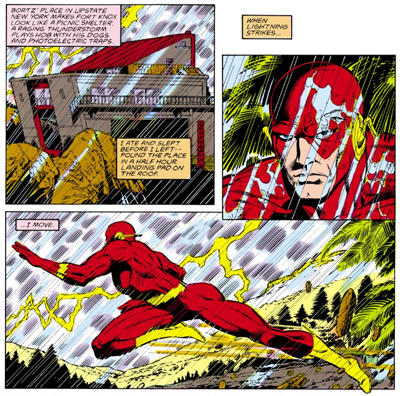
"Hm. This is always much more atmospheric when Batman does it."

“Hm. This is always much more atmospheric when Batman does it.”

This is an approach that clearly owes a lot to Marvel’s reinvention of the superhero genre, and it’s fairly easy to read Mike Baron’s Wally West as an attempt to update the superhero archetype established by Peter Parker for the eighties. Wally is a bit more grounded and real than his predecessor, with a bit of an edge. He finds himself navigating issues and personal problems that Barry Allen never had to worry about.

Unfortunately, the series can’t quite make this work. For every step forwards, there is an awkward step backwards. Every time it seems like The Flash might have a good personal hook into the world of Wally West, it falls back on generic superhero clichés that seem to have been ad-libbed into the script.
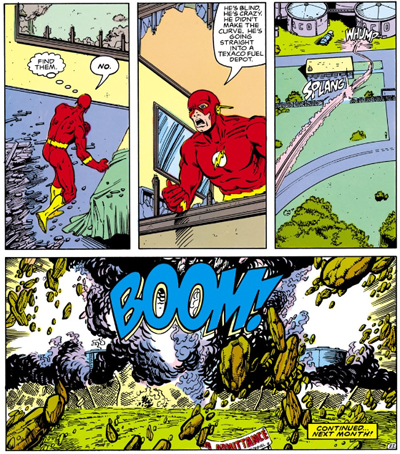
"Talk about an explosive relationship."

“Talk about an explosive relationship.”

Continue reading

The X-Files – End Game (Review)

This August (and a little of September), we’re taking a trip back in time to review the second season of The X-Files. In November, we’ll be looking at the third season. And maybe more.

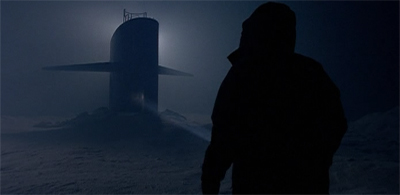
Towards the end of End Game, Mulder stumbles across a nuclear submarine that was attacked in the episode’s teaser. The craft was disabled by a strange craft it picked up in the ocean. Now, following a mysterious alien figure across the world in a quest to find his sister, Mulder approaches the location of the lost American submarine. As he does, he notices the submarine’s coning tower, bursting through the ice.

It’s one of those beautifully iconic television moments. It’s an image that is audacious and stunning and beautiful and breathtaking. It immediately gives End Game (and Colony) a sense of scale. All of a sudden, this isn’t just a bunch of stuff happening under the radar in some small town somewhere. This is the hijacking of a nuclear submarine by a hostile entity. This is Mulder going to the ends of the Earth to get his sister back.

Not so green any longer...

Not so green any longer…

It’s also worth noting that the symbolism is beautiful. Even looking at a picture of Mulder on the ice conjures up all manner of associations. Coupled with the non-linear storytelling employed by Colony and End Game, it calls Frankenstein to mind – Frankenstein serving as a massively influential text on Chris Carter. However, the idea of Mulder finding important existential answers on an Arctic soundstage also evokes Clark Kent’s self-discovery in Richard Donner’s Superman films, playing into the sense that this is an episode framed in cinematic terms.

The rest of the episode could just be dead air, and End Game would still work impressively well. However, End Game remains a fantastic piece of work in its own right, effectively codifying how a two-parter is meant to work.

The truth is out there...

The truth is out there…

Continue reading