• Following Us

  • Categories

  • Check out the Archives


  • Awards & Nominations

The Tommy Westphall Hypothesis

I’m a sucker for meta-fiction – the idea of storytelling outside the story. One of the more fascinating notions suggested by Marvel’s recent spate of movies is the notion that all the individual stories in Iron Man, Thor and Captain America will be tied together to be revealed to be part of a larger canvas (in this case, The Avengers in 2012). I love it when television and films are shown to occupy the same fictional reality (for example, the Star Trek franchise, spread across five television shows (possibly six) and eleven feature films). So it goes without saying that I adore The Tommy Westphall Hypothesis.

And I thought I had an active imagination! (Click to enlarge)

For those unfamiliar with the hypothesis, it basically states that most television takes place within the head of an eleven-year-old autistic boy.

Continue reading

The Crisis Surrounding “Crisis Crossovers”

We’re a bit late to the party, but this week we’ll be celebrating the 75th anniversary of DC Comics, with a look at the medium, the company and the characters in a selection of bonus features running Monday through Friday. This is one of those articles. Be sure to join us for the rest.

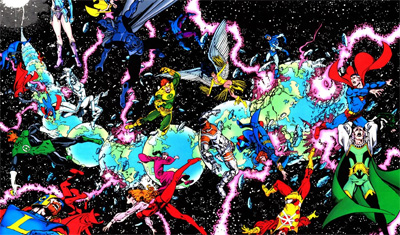
In 2012, we will witness the first true superhero crossover on the big screen, with Iron Man, Captain America and Thor joining forces as The Avengers to battle evil. The Hulk may even get in on the action. However,this sort of overlap is hardly new to the source material which will inform the film. It seems that the comic book medium is dominated by the crossover fad, with the two major companies churning out massive event after massive event. Is this a good thing which demonstrates the strength and flexibility of the monthly-publishing schedule, or does this style of writing only serve to make the medium even more insular?

Yeah, see how messy this picture looks? Multiply that by about 42 and that gives you the idea of the complexity we're looking at...

Continue reading

Are Deleted Scenes “In Continuity”?

One of the wonderful things about the advent of portable media like DVDs and BluRay is that it allows filmmakers to cram a whole lot more of their film on to the disk. Most offer a variety of insights into the filmmaking process – such as featurettes or commentaries – whereas some add more texture to the environment created – deleted or extended scenes, or included multimedia extras and so on. It’s become quite common to release extended editions (or directors’ cuts) of major motion picture releases – Watchmen, for example, has no less than three versions so far, for example. Here’s the question though: should those deleted or extended scenes be treated as the word of god (for lack of a better description) and as having occurred in the continuity with which we are presented? Admittedly it’s less of a problem for movies, where there are only occasionally sequels and even then continuity is generally loose, but what about television series? I’m watching the second season of Battlestar Galactica and it includes two distinct versions of the episode Pegasus – the extended one featuring at least one important plotpoint – so which do I presume happened when I view the following episodes?

scissors

Is it only the final cut that matters?

Continue reading