• Following Us

  • Categories

  • Check out the Archives


  • Awards & Nominations

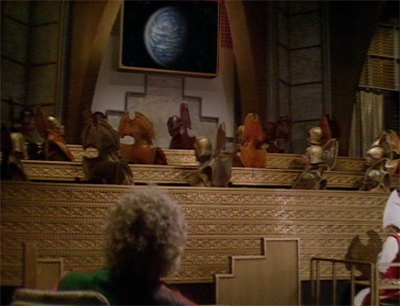
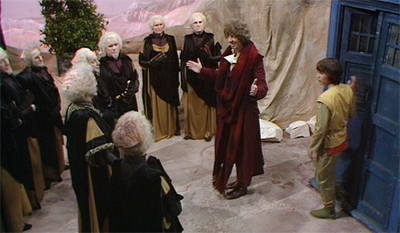
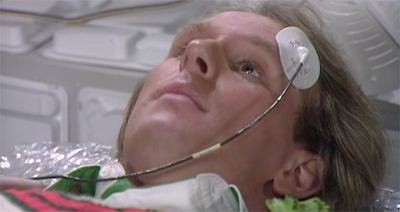
Doctor Who: The Trial of a Time Lord – Mindwarp (Review)

To celebrate the fiftieth anniversary of the longest-running science-fiction show in the world, I’ll be taking weekly looks at some of my own personal favourite stories and arcs, from the old and new series, with a view to encapsulating the sublime, the clever and the fiendishly odd of the BBC’s Doctor Who.

The Trial of a Time Lord originally aired in 1986.

Hey, keep together. This is a great day for battle. A great day to die!

Does he always go on like that?

Afraid so.

-Ycranos, Tuza and Peri discover she apparently has a type

The Trial of a Time Lord loosely adheres to the structure of A Christmas Carol. If The Mysterious Planet can be seen as the “past” story, then Mindwarp is very clearly the “present” story. The BBC’s sudden “hiatus” for Doctor Who yanked the series suddenly out of Colin Baker’s first season, to the point where dialogue from Baker referencing the planned series opener had to be dubbed out. As a result, for the eighteen month gap, Colin Baker’s first full season in the role was a perpetual “present.” It was the last Doctor Who that had aired, and – as a result – it was the version of the show that first popped into people’s minds when they thought of the series.

So it seems fitting that The Trial of a Time Lord sees Colin Baker yanked directly from an adventure that looks like it could have been filmed as part of his first full year in the role. If The Mysterious Planet evokes a hazy and romantic past, a story constructed from familiar archetypes and plot points, then Mindwarp is a very clear acknowledgement of what the show had evolved into. Given the difficulties facing the programme after that problematic year, Mindwarp is the segment of this over-arching plot that needs to make the most robust defence of the show, or at least deflect the most criticism.

Despite some interesting strengths, Mindwarp doesn’t quite construct a convincing argument in favour of the show. More than that, though, its deflections prove a little weak.

Out of this world...

Out of this world…

Continue reading

Doctor Who: The Trial of a Time Lord – The Mysterious Planet (Review)

To celebrate the fiftieth anniversary of the longest-running science-fiction show in the world, I’ll be taking weekly looks at some of my own personal favourite stories and arcs, from the old and new series, with a view to encapsulating the sublime, the clever and the fiendishly odd of the BBC’s Doctor Who.

The Trial of a Time Lord originally aired in 1986.

Well, this is a charade.

– the Doctor gets the idea quickly enough

The Doctor had been off screens for eighteen months following Revelation of the Daleks. Michael Grade was desperately trying to cancel the show, and it only limped back to screen with a significantly reduced budget and much shorter run of episodes. The show length was also reverted back to its default value. This season would only run for fourteen half-hour episodes – what would become the set length for Doctor Who in the years to come. (Indeed, counting the Christmas Special, the revived series also runs to that length, albeit in forty-five minute episodes.)

By all accounts, the production on the infamous Trial of a Time Lord was a disaster for reasons natural and otherwise. Veteran writer Robert Holmes was to provide the opening and closing scripts, but passed away before his work on the finalé could be finished. Script editor Eric Saward and producer John Nathan-Turner clashed over the climax of the trial, prompting Saward to resign and Nathan-Turner to temporarily become script editor himself. Colin Baker couldn’t make sense of Mindwarp. The last episode of the season was written by two writers wrapping up from Holmes’ first part, but unable to examine his notes on how he planned to conclude it.

Believe me when I state that every last ounce of this behind-the-scenes friction was visible on-screen by the end of the year. Luckily enough, the show does a decent enough job concealing these approaching problems in the first story of the arc. That’s not to say that The Mysterious Planet is an unsung classic, merely to point out that it is at least unburdened by the seemingly real time collapse of Doctor Who.

Ah, it's a fourteen-week adventure about watching Doctor Who!

Ah, it’s a fourteen-week adventure about watching Doctor Who!

Continue reading

Doctor Who: Timelash (Review)

To celebrate the fiftieth anniversary of the longest-running science-fiction show in the world, I’ll be taking weekly looks at some of my own personal favourite (and not-so-favourite) stories and arcs, from the old and new series, with a view to encapsulating the sublime, the clever and the fiendishly odd of the BBC’s Doctor Who.

Timelash originally aired in 1985.

I don’t trust you. You’re being too reasonable.

– Peri’s on to him

Timelash is on the short list of serials broadly agreed to be “the worst Doctor Who stories ever.” Given how prone science-fiction fans are to bickering about absolutely everything, and how impossible it is to find consensus, that’s really saying something. More than that, it ranks with quite a few Colin Baker stories among that list. I can’t help but wonder if part of the problem with Baker’s tenure isn’t a lack of classic episodes (Revelation of the Daleks and Vengeance on Varos surely count), but the batting average skewed by so many truly terrible stories.

Any season containing Timelash would be ridiculed, but it’s hard to imagine that any year of television containing Attack of the Cybermen, Timelash and The Mark of the Rani couldn’t help but raise questions about the show’s future at the BBC.

The face of evil...

The face of evil…

Continue reading

Doctor Who: The King’s Demons (Review)

To celebrate the fiftieth anniversary of the longest-running science-fiction show in the world, I’ll be taking weekly looks at some of my own personal favourite stories and arcs, from the old and new series, with a view to encapsulating the sublime, the clever and the fiendishly odd of the BBC’s Doctor Who.

The King’s Demons originally aired in 1983.

Do our demons come to visit us? Bid them attend us.

Demons? Very odd indeed.

Makes a nice change for you not to take everything in your stride, I must say.

– King John, the Doctor and Tegan set the mood

The show’s twentieth anniversary deserved better than this. Okay, there are a number of qualifications that can made, excuses that can be offered. The King’s Demons was never intended to close out the season, and was instead intended as a two-part episode to bridge into the triumphant return of the Daleks, a return that ended up postponed a year and reworked into Resurrection of the Daleks. There’s also the fact that The King’s Demons wasn’t the last piece of Doctor Who to air as part of the show’s twentieth anniversary year, even if it was the season finalé. The Five Doctors would be broadcast later in the year to celebrate the anniversary.

However, none of these excuses take away from the fact that The King’s Demons is an exceptionally weak piece of television, and a demonstration of everything wrong about how John Nathan Turner and the Doctor Who production staff approached the show’s twentieth season.

Hardly a Master piece...

Hardly a Master piece…

Continue reading

Doctor Who: Logopolis (Review)

To celebrate the fiftieth anniversary of the longest-running science-fiction show in the world, I’ll be taking weekly looks at some of my own personal favourite stories and arcs, from the old and new series, with a view to encapsulating the sublime, the clever and the fiendishly odd of the BBC’s Doctor Who.

Logopolis originally aired in 1981. It was the second instalment in the “Master” trilogy.

It’s the end… but the moment has been prepared for.

– the Doctor finally figures out what this year has been about

I don’t think the departure of a Doctor has even been a bigger deal than it was with Tom Baker. Sure, Christopher Eccleston’s first season was so fixated on death that his departure seemed preordained, even in the episodes written before his decision to leave. Similarly, Peter Davison’s final year seems designed to demonstrate that the universe is no longer suited to this particular iteration of the Doctor. Maybe David Tennant’s final year is focused on his passing, but the episodes are so spaced out that it makes little difference. However, we’ve just spent an entire year focused on the idea of entropy and decay, the inevitably of change and the notion that death is just a nature part of the cycle of things.

When the Doctor assures his companions that “the moment has been prepared for”, he may as well be looking at the camera, assuring those of us at home that the past year has been spent readying them for the unthinkable: the time when Tom Baker might not be the Doctor.

Final destination?

Final destination?

Continue reading

Doctor Who: Resurrection of the Daleks (Review)

To celebrate the fiftieth anniversary of the longest-running science-fiction show in the world, I’ll be taking weekly looks at some of my own personal favourite stories and arcs, from the old and new series, with a view to encapsulating the sublime, the clever and the fiendishly odd of the BBC’s Doctor Who.

Resurrection of the Daleks originally aired in 1984.

The universe is at war, Doctor. Name one planet whose history is not littered with atrocities and ambition for empire. It is a universal way of life.

Which I do not accept.

Then you deny what is real.

– yes, in case you’re wondering, the show did let Davros win a philosophical debate with the Doctor

It’s a bit of a cliché to suggest that writer and script editor Eric Saward didn’t actually like Doctor Who. It’s a bit of sensationalist nonsense that appears quite frequently in discussing his contributions to the series. The evidence most often cited in favour of this admittedly exaggerated position points out that Saward had a tendency to marginalise the Doctor within his stories, to portray the character as inefficient or ineffective within the context of an increasingly cynical universe. This characterisation of the Doctor as inherently weak really came to a head during the Colin Baker period of the show, but you can see traces of it during the Peter Davison era, most notably in Earthshock.

However, Resurrection of the Daleks also provides a pretty compelling case study, if only because it makes a compelling case for the Doctor as a massive hypocrite and a coward. You have to worry when the script seems to side more with Davros’ outlook on life than with that of the title character.

Putting the Fifth Doctor to the test...

Putting the Fifth Doctor to the test…

Continue reading

Doctor Who: Revelation of the Daleks (Review)

To celebrate the fiftieth anniversary of the longest-running science-fiction show in the world, I’ll be taking weekly looks at some of my own personal favourite stories and arcs, from the old and new series, with a view to encapsulating the sublime, the clever and the fiendishly odd of the BBC’s Doctor Who.

Revelation of the Daleks originally aired in 1985.

There’s an argument to be made that Revelation of the Daleks is the only truly classic episode that Doctor Who produced during Colin Baker’s stint in the leading role. I’m not sure I agree – I’d argue that Vengeance on Varos, despite a misleading title, is surprisingly solid and clever – but I can see the logic. In fact, Revelation of the Dalekswas a fitting choice to close out Baker’s first season in the role, the last episode to air before BBC placed the series on hiatus, as it represents the very best of mid-eighties Doctor Who.

We can see right through the Daleks’ plan…

Continue reading

Doctor Who: Frontios (Review)

To celebrate the fiftieth anniversary of the longest-running science-fiction show in the world, I’ll be taking weekly looks at some of my own personal favourite stories and arcs, from the old and new series, with a view to encapsulating the sublime, the clever and the fiendishly odd of the BBC’s Doctor Who.

Frontios originally aired in 1984.

“You know, we can sort this all out in no time at all, if everyone just stays calm.”

– The Doctor sums up the tragedy of Peter Davison’s time as the Timelord

Towards the end of Peter Davison’s time in the title role, Doctor Who was becoming gradually darker. While Colin Baker’s brightly-coloured take on the character would convert this grim fare into a surreal and grotesque pantomime, there was something tragic about Davison’s iteration confronting a quickly darkening universe. Steven Moffat once explained, “this Doctor takes the emphasis off the eccentricities and turns it into a pained heroism of a man who is so much better than the universe he is trying to save but cannot bear to let it stand”, and that’s very much the case here. While the cynicism and pointless darkness would reach their zenith during Resurrection of the Daleks and pay off spectacularly in The Caves of Androzani, Frontios feels like the perfect illustration of these ideas.

The Doctor's surgery...

Continue reading

Doctor Who: Attack of the Cybermen (Review)

To celebrate the fiftieth anniversary of the longest-running science-fiction show in the world, I’ll be taking weekly looks at some of my own personal favourite stories and arcs, from the old and new series, with a view to encapsulating the sublime, the clever and the fiendishly odd of the BBC’s Doctor Who.

Attack of the Cybermen originally aired in 1985.

We realise this must be confusing for you.

– Threst tells it how it is

There is a tendency, these days, to be more sympathetic in appraisals of the Colin Baker years. Everybody – including Baker – accepts that his tenure could have gone a lot smoother. Watching Attack of the Cybermen, I can’t help but feel sorry for just about everybody involved. Rewatching Colin Baker’s first season, I can’t help but feel that the problem with this period of the show wasn’t that the production crew were making new mistakes or deviating from good ideas. It seems quite apparent that a lot of the major problems were embedded during Peter Davison’s time in the role.

The problem with Colin Baker’s first year on the show was that the writers and producers allowed those already significant flaws to attain critical mass.

A crushing blow...

A crushing blow…

Continue reading

Doctor Who: Death Comes to Time (Review)

To celebrate the fiftieth anniversary of the longest-running science-fiction show in the world, I’ll be taking weekly looks at some of my own personal favourite stories and arcs, from the old and new series, with a view to encapsulating the sublime, the clever and the fiendishly odd of the BBC’s Doctor Who.

Death Comes to Time originally broadcast on the BBC website in 2001.

I’m just another alien…

Alien to where?

Everywhere.

– the Doctor and Bedloe

There is quite a lot to like about Death Comes to Time. It offers a conclusion to Ace’s character arc. It features a stellar voice cast. Tannis is great villain. The script isn’t mired in continuity or slavishly devoted to the letter of the continuity of Doctor Who.

On the other hand, there’s quite a lot to loathe about Death Comes to Time. In moving away from Doctor Who continuity, it feels like a generic space opera. There’s a loss of the intimacy that defined the series. There’s a central revelation that makes no sense and a central moral philosophy which seems at odds with the very heart of Doctor Who. On top of that, it seems rather clumsily constructed. If it was intended as a pilot, the wrong characters are in focus for most of its not-insignificant runtime.

Hello, stonehenge!

Hello, stonehenge!

Continue reading