• Following Us

  • Categories

  • Check out the Archives


  • Awards & Nominations

The X-Files – Redux II (Review)

This May and June, we’re taking a trip back in time to review the fifth season of The X-Files and the second season of Millennium.

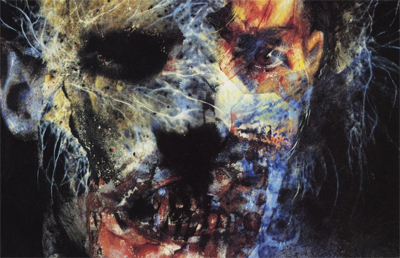
Redux II would be a lot better if the audience believed anything that the episode was saying.

In fact, Redux II would be a lot better if it seemed like the show itself believed anything that the episode was saying.

"Hm. That resolution is unsatisfying. Deeply unsatisfying."

“Hm. That resolution is unsatisfying. Deeply unsatisfying.”

Continue reading

The X-Files (Topps) – Afterflight (Review)

This May and June, we’re taking a trip back in time to review the fifth season of The X-Files and the second season of Millennium.

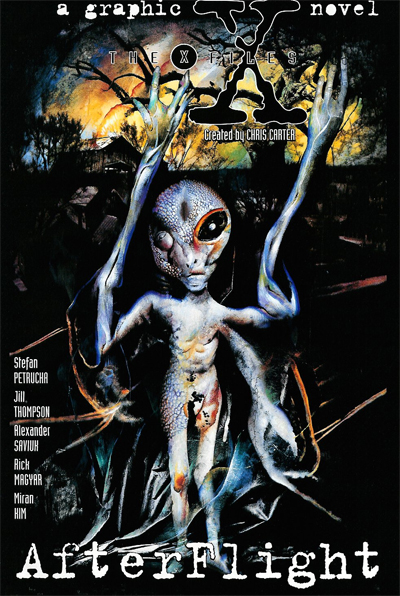
And so we reach the end of Stefan Petrucha’s work on The X-Files.

It is quite a delayed end. Petrucha had originally written Afterflight three months before Home of the Brave, his last script for the monthly tie-in comic book. It was published fifteen months after the publication of Home of the Brave. That meant a year and a half had passed between Petrucha finished and Topps actually publishing it. The delay was rooted in disagreements with Ten Thirteen over the artwork. Still, Afterflight offers just a hint of closure to the sixteen-issue (and more) run that launched Topps’ licensed X-Files comic book line.

The truth is up there...

The truth is up there…

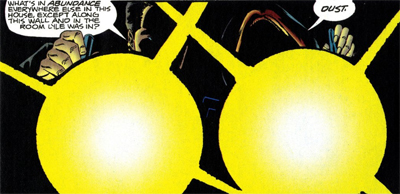
Afterflight is a mournful little comic, a story that takes a lot of the core themes of Petrucha’s X-Files work and distills them down to a single story. Interviewed about his work, Petrucha contended that his writing for The X-Files primarily meditated on themes of “memory, the self and what is reality.” All of these ideas are brought to the fore in Afterflight, a comic that offers a similar thematic resolution to Home of the Brave, suggesting the faintest hint of hope can be found beyond the world of men.

Afterflight is a beautiful piece of work, and a suitable conclusion to a fantastic run.

Aliens among us...

Aliens among us…

Continue reading

The X-Files – Redux I (Review)

This May and June, we’re taking a trip back in time to review the fifth season of The X-Files and the second season of Millennium.

Redux I hits on the same problem that haunted The Blessing Way. It is very hard to structure a three-parter that bridges two seasons of television. The biggest problem is the second episode, which has the unfortunate position of having to serve as a season premiere while carrying the baggage from the last season finalé and remaining unable to resolve anything. So the episode inevitably becomes an exercise in spinning wheels as the show saves all of its potential resolutions for the third episode.

A particular cynical commentator might suggest that Redux I plays as Chris Carter’s twisted take on Aaron Sorkin. Sorkin is famous for his sequences of characters walking through corridors while trading witty banter – a very nice way of keeping physical movement in the midst of largely dialogue-driven plots. This would become a defining feature of The West Wing, the show that Sorkin would launch in September 1999. Redux I seems to prefigure the style, albeit with a twist. There is lots of walking through corridors as characters talk to themselves in monologue.

"Wow, and I though my filing system was bad..."

“Wow, and I thought my filing system was bad…”

Redux I plays as a collection of voice-over monologues transposed over sequences of Mulder wandering through corridors in the Pentagon. One immediately wonders how the Department of Defence could have staged such a complex and convincing hoax against the American people when they cannot find one lost FBI agent inside the Pentagon. The drab setting makes for a shockingly dull episode; the majesty of the Yukon Mountains is lost, replaced by long sequences of grey walls and red doors.

Redux I has more than a few interesting ideas, but its structure is a mess. Sitting between Gethsemane and Redux II, the episode has no clear sense of purpose or momentum; no drive or ambition or excitement.

Don't worry, it could still make sense...

Don’t worry, it could still make sense…

Continue reading

The X-Files: Season One (Topps) #2 – Deep Throat (Review)

This February and March, we’re taking a trip back in time to review the fourth season of The X-Files and the first season of Millennium.

Season One feels like a very odd way to franchise The X-Files.

Topps had enjoyed tremendous success with their licensed tie-in comic book, so it made a certain amount of sense to try to milk the franchise as much as possible. After all, they had already tried a number of other promotions, like releasing “digests” to supplement that monthly series and releasing tie-in comics to appear with magazines like Wizard. So offering another series that would publish on a regular basis starring Mulder and Scully made perfectly logical sense.

The truth is up there...

The truth is up there…

About a year after the release of their adaptation of The Pilot, Topps decided to push ahead with a series of regular adaptations of first season episodes of The X-Files. They reissued their adaptation of The Pilot as the first comic in the series, and then began publishing new adaptations of those early episodes written by Roy Thomas and illustrated by a rotating team of artists. The comics would be about twice as long as the issues of the monthly series, but would only publish once every two months. The monthly series was priced a $2.50, with Season One priced at $4.95.

It is hard not to feel quite cynical about Season One, particularly in an era where these classic episodes of The X-Files stream of Netflix and entire seasons are available to purchase at very low prices.

The shape of things to come...

The shape of things to come…

Continue reading

The X-Files – Season 4 (Review)

This February and March, we’re taking a trip back in time to review the fourth season of The X-Files and the first season of Millennium.

The fourth season of The X-Files is a work of chaotic genius.

While the third season of The X-Files is one of the most consistently well-made seasons of television ever produced, the fourth season is a lot more uneven. There are a lot of reasons for this. Chris Carter was busy launching Millennium. Fox had decided to press ahead with The X-Files: Fight the Future. Behind the scenes, it was chaotic. Glen Morgan and James Wong hung around for half the season before leaving to work on their own pilot, a planned script from Darin Morgan fell through, Chris Carter’s attention was divided.
xfiles-musingsofacigarettesmokingman17

However, the fourth season represents something of a changing of the guard on the writing staff, a transition between two generations. The fourth season sees the permanent departure of writers Glen Morgan, James Wong and Howard Gordon. These were all writers who worked hard to give The X-Files its unique flavour and identity in the show’s earliest years. The X-Files would not be the same show without the input of those three writers. It is a shame to see them depart, although four years is a long time in the industry.

In contrast, the fourth season also sees younger talent rising up. It sees the first collaboration of Vince Gilligan, John Shiban and Frank Spotnitz. The trio would become one of the most consistent (and productive) writing ensembles on the series. The fourth season also saw the rapid ascent of Vince Gilligan, who had only contributed one script to the third season; Gilligan’s three solo scripts for the third season are iconic and influential in their own right. These are the voices that will steer The X-Files through to the end of its nine-year run.

xfiles-paperhearts22

As such, the fourth season feels transitional. It is a season that lacks the finely-honed efficiency that defined the third season, in favour of a more ambitious and even experimental style. The result is a season that feels wildly creative, a joyous cacophony rather than a harmonious symphony. The fourth season may not always hit the notes, but it is doing something very fresh and exciting. There is an energy and enthusiasm to the season that carries even some of the weaker episodes.

The fourth season is not consistently brilliant, but it is more than occasionally transcendental.

xfiles-max15

Continue reading

The X-Files (Topps) #32 – Crop Duster (Review)

This February and March, we’re taking a trip back in time to review the fourth season of The X-Files and the first season of Millennium.

Crop Duster feels rather generic.

That is a shame. After all, John Rozum’s script hits on all sorts of big themes related to The X-Files. It is a story about a small community that has its own secrets, haunted by the legacy of sins long past. The paranormal evil at work in the rural community of Kelly in Kentucky ultimately masks a more mundane story about human violence and betrayal. There is a sense that the basic ingredients of Crop Duster should add up to more than a disposable one-shot. Unfortunately, they don’t.

Alien bodies...

Alien bodies…

Continue reading

The X-Files – Gethsemane (Review)

This February and March, we’re taking a trip back in time to review the fourth season of The X-Files and the first season of Millennium.

Agent Mulder died late last night from an apparent self-inflicted gunshot wound to the head.

– Agent Dana Scully, 22nd October 1997

xfiles-gethsemane27 Continue reading

The X-Files (Topps) #30-31 – Surrounded (Review)

This February and March, we’re taking a trip back in time to review the fourth season of The X-Files and the first season of Millennium.

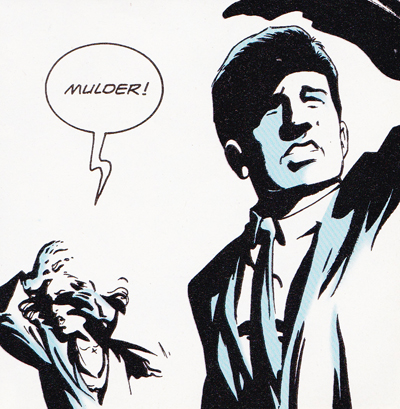
Surrounded marks the beginning of the end for Topps’ licensed X-Files tie-in comic book. There are only twelve issues remaining before Ten Thirteen would decided not to renew the contact, making this the last year for the comic. Of course, Topps would rather relentlessly milk the comic for whatever it was worth over the next year, publishing both a range of Season One adaptations and an adaptation of Kevin J. Anderson’s Ground Zero novel. They would also finally get around to releasing Stefan Petrucha and Jill Thompson’s AfterFlight graphic novel.

So there is a lot of content coming in the final year of Topps’ hold on that license. The X-Files was clearly a massive success for the newly-minted comic book wing of the company. Indeed, The X-Files was the last comic standing for Topps, and there is ample evidence that Topps was hoping to continue the line beyond The X-Files: Fight the Future, with several Season One adaptations solicited, but never published. Much like for the show itself, this was a boom time for Topps.

What's eating you?

What’s eating you?

However, the final year of the comic ultimately feels rather safe and generic. John Rozum is a competent comic writer; he understands the medium, and he knows how to play with other peoples’ toys. However, there is a sense that the comic book is really just marking time. There is very little that stands out about this last stretch of the comic; nothing which really demands to be read or to be added to the great X-Files canon. It is not bad, by any measure; it is just there.

Surrounded is a prime example of the comic book marking time. It feels like a retread of familiar ground – both for the comic book and for the parent show. When Stefan Petrucha and Charles Adlard set stories like Silent Cities of the Mind or Home of the Brave in militia compounds, they were very much ahead of the television. By the time that Surrounded was published at the end of the fourth season, the show itself had already told stories about this world in episodes like The Field Where I Died, Tunguska, Terma and Unrequited.

Shining some light on the matter...

Shining some light on the matter…

Continue reading

The X-Files – Demons (Review)

This February and March, we’re taking a trip back in time to review the fourth season of The X-Files and the first season of Millennium.

The fourth season of The X-Files is an oddity.

That is particularly true when it comes to the show’s mythology. Not only has any sense of narrative progression stalled after the “to be continued…” hook of Talitha Cumi, the fourth season seems to branch the mythology out in multiple directions that never really get anywhere. Tunguska and Terma introduce a Russian conspiracy that quickly becomes a footnote. Tempus Fugit and Max focuses on private military contractors who are never mentioned again. Memento Mori gives Scully cancer halfway through the season, and the rest of the year tries to catch up.

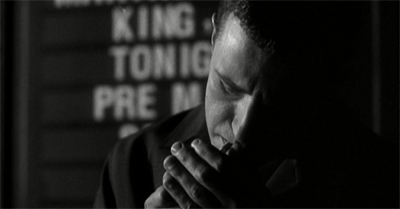
A cigarette-smoking spectre...

A cigarette-smoking spectre…

Demons is an episode that sits rather awkwardly as the penultimate episode of the season. An episode about Mulder undergoing aggressive therapy to recover lost memories seems a little out of place with everything else going on around him. After Memento Mori, you would imagine he would be worried about Scully. After Zero Sum, you imagine he would be wary about putting himself in a vulnerable position. Demons feels very much like it would make a good first season episode, a product of the time when Samantha Mulder was our lead’s primary driving motivation.

Instead, Demons sits awkwardly before the big season finalé with its own clear agenda. Scully’s closing monologue is clearly designed to lead into Gethsemane as almost a four-part season-bridging epic. However, the execution feels a little too haphazard, a little too casual, a little too disorganised. Demons feels less like the lead-in to an earth-shattering story and more like a script designed to plug a gap late in the season.

"Hey, look on the bright side, this time next year, you'll be in a psychiatric institution."

“Hey, look on the bright side, this time next year, you’ll be in a psychiatric institution.”

Continue reading

The X-Files – Elegy (Review)

This February and March, we’re taking a trip back in time to review the fourth season of The X-Files and the first season of Millennium.

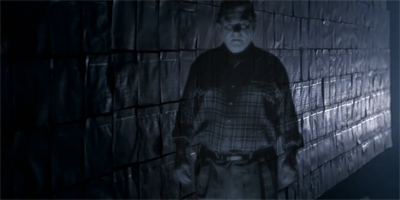
The first two-thirds of Elegy count as the best episode of The X-Files that John Shiban has written at this point of his tenure on the writing staff. Elegy starts out as an episode that leans into Shiban’s strengths. It is a very traditional and old-fashioned horror story, the first tried-and-tested ghost story that The X-Files has told in a while. The idea of a haunted bowling alley is so wonderfully weird and so quintessentially American that it fits The X-Files perfectly. For its first thirty minutes, Elegy is funereal and sombre, haunting and enchanting.

Elegy is a story packed with potentially interesting concepts. It is overflowing with clever ideas and memorable images. Shiban is a writer who has a great deal of affection for classic horror, and that affection shines through into Elegy. There is a slow and sorrowful atmosphere to the early stretches of the episode. Transparent grey spectres are a staple of the horror genre, but they work very well in this context. The X-Files has been quite reluctant to handle traditional monsters, so there is something rather strange and affecting about seeing such a classic depiction here.

Here there be ghosts...

Here there be ghosts…

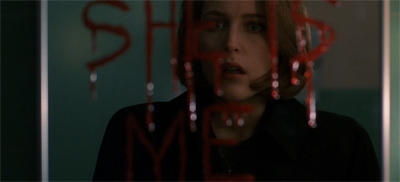
Then things go to hell. To be fair, the problems with the last fifteen of Elegy are very much suggested from the start; they are just pushed to the fore. It becomes quite clear that Elegy has no idea how to resolve a “haunted bowling alley” story, so the script hastily and clumsily transitions to an “abusive care home” plot. The first two thirds of Elegy are not that interested in the character of Harold Spuller beyond his use as a plot device; a fact that becomes quite apparent in how the final third callously disposes of him.

Elegy is an episode that brushes against greatness. Its best ideas rank with the highlights of the fourth season. Unfortunately, all of that is undercut by a truly terrible final act.

Blood on the mirror...

Blood on the mirror…

Continue reading