• Following Us

  • Categories

  • Check out the Archives


  • Awards & Nominations

“Mulder and Scully” by Catatonia (Review)

This May and June, we’re taking a trip back in time to review the fifth season of The X-Files and the second season of Millennium.

Things are getting strange, I’m starting to worry

this could be a case for Mulder and Scully…

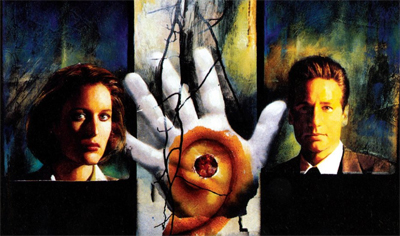
If you needed proof that The X-Files was a cultural juggernaut in the mid-to-late nineties, look no further than Mulder and Scully.

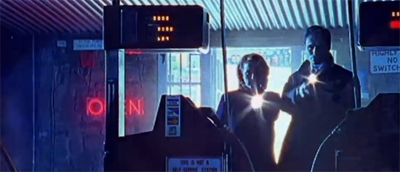
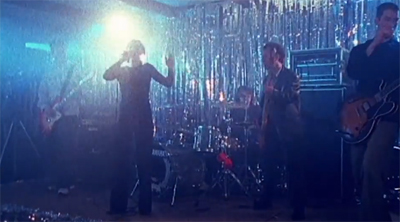
The first single off Catatonia’s International Velvet propelled the band to new heights of fame and fortune. Before the release of Mulder and Scully, the band had skulked around the bottom of the British charts; their biggest success before that point had been You’ve Got a Lot to Answer For, a song lucky to scrape the top forty. Indeed, reaching the third position in the United Kingdom charts, Mulder and Scully easily became the Welsh band’s largest pop hit. A month after the release of Mulder and Scully, its parent album would reach the top of the international charts.
catatonia-mulderandscully3

Having a Wales of a time…

Indeed, it could be argued that Catatonia’s success overlapped quite neatly with that of The X-Files. The core of the band’s “classic” line-up, Cerys Matthews and Mark Roberts, began writing songs together in 1992. The single Mulder and Scully and the album International Velvet represented the peak of their success. The band would release two more albums building off the success of International Velvet, before formally announcing the dissolution of the band in September 2001. It is an arc that roughly mirrors that of The X-Files – suggesting Catatonia were another nineties artifact.

Although Mulder and Scully was Catatonia’s biggest success, it is worth noting The X-Files had enjoyed a great deal of success in the British charts. Late in the show’s third season, the theme song had been released as a single in its own right. Mark Snow’s iconic opening credits music had climbed all the way to the number two slot. Nevertheless, Mulder and Scully is interesting because it is a massive hit about the show that came from outside the production office. The X-Files had conquered television, now it seemed to be laying claim to both cinema and the pop charts.
Sing when you're winning...

Sing when you’re winning…

Continue reading

The X-Files – Kitsunegari (Review)

This May and June, we’re taking a trip back in time to review the fifth season of The X-Files and the second season of Millennium.

Kitsunegari hits on a lot of fifth season anxieties for The X-Files.

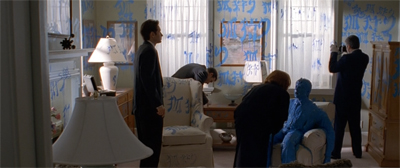
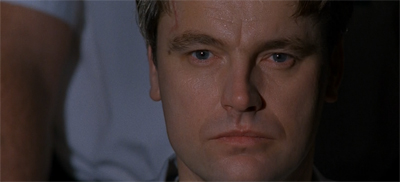
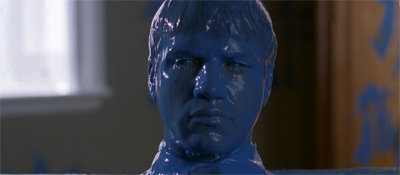
The episode is rather clearly a sequel to a beloved third season installment, featuring a returning monster of the week for the first time since Tooms brought back Victor Eugene Tooms. In this case, Kitsunegari is built around Robert Patrick Modell, the mind-controlling psychopath from Vince Gilligan’s first script as a staff writer. Given the level of Gilligan’s skill, the affection for the episode, and the charm of actor Robert Wisden, Kitsunegari really should be a “can’t miss” script for the series.

Painting the town...

Painting the town…

However, Kitsunegari proves to be a surprisingly joyless experience. The script hinges on incredibly coincidence and contrivance, everything feels a little too familiar, and even Robert Wisden seems relegated to a small supporting role. (It is telling he earns an “and” credit instead of heading the guest cast.) Kitsunegari has a host of memorable set-pieces and effective visuals, but it feels curiously hollow. It feels like a script going through the motions, rather than trying to say something new or intriguing.

Then again, there is a sense that this is the point. Kitsunegari plays beautifully as a self-aware critique of soulless sequels, of half-hearted follow-ups and cash-ins on popular monsters and villains. Kitsunegari is almost an ingenious parody of these conventions, teasing the viewer with what it might look like if The X-Files began to eat itself. It teases the audience with a trashy sequel to a classic episode, and then delivers exactly that. Kitsunegari does not just demonstrate the law of diminishing returns, it practically revels in it.

Pushing the Pusher...

Pushing the Pusher…

After all, Pusher was an episode about a man with complete control of his own story. Robert Patrick Modell was able to change the world using nothing more than mere words, crafting a new identity and persona for himself, casting himself in role of a criminal mastermind pursued by dogged investigators. It is no wonder that Kitsunegari portrays Modell as exhausted and strung out. Kitsunegari is essentially a story about how Modell has lost control of the narrative, how it has begun to control him. In a way, he gives voice to the same concerns that haunt The Post-Modern Prometheus.

Of course, all this postmodern self-awareness is ingenious, but it still leaves one sizable problem with Kitsunegari. Kitsunegari is so effective at mimicking a soulless sequel that is almost indistinguishable from the real thing. The result is a well-constructed and clever little episode, but one that is not particularly enjoyable or fun.

"I'm blue, dabba-dee-dabba-di."

“I’m blue, dabba-dee-dabba-di.”

Continue reading

The X-Files (Topps) #35-36 – N.D.E. (Review)

This May and June, we’re taking a trip back in time to review the fifth season of The X-Files and the second season of Millennium.

N.D.E. is a nice clever character-driven story, one that perhaps suggests a direction that John Rozum might have taken the monthly tie-in comic.

Ten Thirteen had made it quite clear that they did not want long arcs or ambitious storytelling from their licensed comic books. They wanted reliable straight-down-the-middle storytelling, with none of the playful self-awareness and meta-narratives that drove Stefan Petrucha and Charles Adlard’s work on the title. As a result, the comic has been rather more conservative in approach since John Rozum took over. His time on the title has not produced anything as cynical or grim as One Player Only or Home of the Brave.

Healing palm...

Healing palm…

While Rozum is undoubtedly limited by constraints imposed by Ten Thirteen, there is something disappointing about his run on the comic. Rozum has tended to favour done-in-one stories, single issue adventures that wrap up everything quite neatly within twenty-four pages. Rozum has grown quite efficient at this, but there is little room for nuance in stories like The Kanishibari, Silver Lining, Crop Duster or Soma. Rozum’s stories tend to work better when stretched out a little, with Be Prepared and Remote Control allowing room for nice character moments.

N.D.E. is another two-part story that takes advantage of that additional space to tell a story about Scully. N.D.E. has a fascinating central idea, and a number of clever twists, but it also allows room to explore Scully’s character and philosophy in more depth than the comic has really afforded her. N.D.E. is perhaps a bit clunkier than Be Prepared or Remote Control, but it is the strongest story of Rozum’s final year on the title. Looking at how well this approach works in those stories, it is a shame that Rozum did not employ it more frequently.

You can play the theme to The X-Files in your head if it helps...

You can play the theme to The X-Files in your head if it helps…

Continue reading

The X-Files – Emily (Review)

This May and June, we’re taking a trip back in time to review the fifth season of The X-Files and the second season of Millennium.

The biggest problems with Emily can be summed up in five words:

“… and then Mulder showed up.”

Sorry, Mulder.

Sorry, Mulder.

Continue reading

The X-Files – Christmas Carol (Review)

This May and June, we’re taking a trip back in time to review the fifth season of The X-Files and the second season of Millennium.

Part of the challenge of the fourth and fifth seasons is watching The X-Files adapt the speed of its mythology.

The mythology has a very clear momentum in the first three seasons. For all that Chris Carter and his writers loved teasing out new questions, there was a clear sense of momentum and movement. The show had gone from a series about an isolated alien abduction in The Pilot to a series with a date set for the alien colonisation of Earth in Talitha Cumi. For all that the series was accused of being ambiguous and mysterious, there was a sense that it was at least going somewhere.

And so this is Christmas...

And so this is Christmas…

Things changed during the fourth season, most likely as the prospect of The X-Files: Fight the Future loomed in the future. It was clear that Fox would not allow Carter to set an end date on the television show before transitioning to feature films, and that the series would have to stretch beyond Carter’s original roadmap for it. All of a sudden, the mythology started stalling. The fourth season’s mythology had no clear direction in which to go, as evidenced by the fact that the decision to give Scully cancer in Leonard Betts was an eleventh hour decision with no long-term planning.

The fifth season’s mythology comes with its own particular set of problems. The movie had been written during the fourth season and filmed during the gap between the fourth and fifth seasons. This is quite evident in the way that the movie carries over abandoned elements of the fourth season mythology like the bees, who do not register at all in the fifth season. However, this also meant that the end point of the fifth season was essentially set in stone for the production team. The End would have to lead into Fight the Future, no matter what happened in the intervening nineteen episodes.

Picture perfect...

Picture perfect…

This means a lot of things for the fifth season. It means that the fifth season is stuck with the “Mulder as a skeptic… sort of” setup until Fight the Future, even if the show generally ignores it as much as it can. It also means that the mythology episodes probably should not contain any earth-shattering revelations or introduce any major character who were not already written into the film. Although Patient X and The Red and the Black effectively throw out these constraints almost completely, Christmas Carol and Emily try to adhere to them.

The result is a mythology episode that adheres rather closely to the successful approach adopted by Tempus Fugit and Max, a story that takes the backdrop of what the show has already revealed about the conspiracy and then uses that as a setting in which it can tell a decidedly more intimate and personal story.

It's a Scully family Christmas...

It’s a Scully family Christmas…

Continue reading

The X-Files (Topps) #34 – Skybuster (Review)

This May and June, we’re taking a trip back in time to review the fifth season of The X-Files and the second season of Millennium.

There is an interesting divide in John Rozum’s work on The X-Files.

Half the time, it seems like Rozum is writing classic EC horror stories that just happen to feature Mulder and Scully. There are stretches of his work on the title where it seems like the stories might easily have been found in the desk drawer of some classic editor, tweaked and altered slightly so as to update them forty years, and published with the addition of Mulder and Scully. Stories like Silver Lining, Donor and Soma comfortably fit this classic pulpy horror mould. There’s nothing wrong with this approach, although it is quite striking.

Death from above!

Death from above!

When Rozum does write a story that feels particular to The X-Files, it often feels a little disconnected from the season unfolding around it. Scripts like Be Prepared, Remote Control and N.D.E. feel like they hark back to the first season of the show. The characterisation is familiar, if simplistic; shades of the mythology is present, but underdeveloped; there is a very traditional approach to big paranormal ideas like the Wendigo or “remote viewing.” It feels like these comics make a solid companion piece to the Season One comics written by Roy Thomas.

Skybuster is a pretty perfect example of this style of storytelling, offering an environmental parable about the arrogance of mankind’s tampering with nature.

Quoth the raven...

Quoth the raven…

Continue reading

The X-Files – Detour (Review)

This May and June, we’re taking a trip back in time to review the fifth season of The X-Files and the second season of Millennium.

Detour is a wonderfully traditional little episode in the middle of a somewhat eccentric season.

Although it lacks the off-kilter improvisational madness that drove much of the fourth season, the fifth season of The X-Files is a rather strange beast. With The X-Files: Fight the Future already filmed, the show was somewhat limited in what it could and couldn’t do in the fifth season – preventing the series from doing anything as dramatic as throwing Memento Mori into the middle of the run. Nevertheless, the fifth season features a variety of experimental and off-format episodes. Stephen King and William Gibson contribute scripts while Darren McGavin pops in as a guest star.

The woods are alive...

The woods are alive…

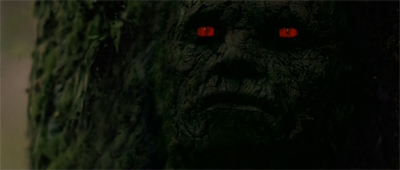
Detour was broadcast between Unusual Suspects and The Post-Modern Prometheus. Unusual Suspects was an episode headlined by the Lone Gunmen, while The Post-Modern Prometheus was broadcast in black-and-white as an homage to James Whale’s feature film adaptation of Frankenstein. As such, Detour feels like a rather conventional and old-fashioned episode, with Mulder and Scully encountering something strange in a rural setting, getting trapped in the wilderness, and encountering a monster threatened by the expansion of civilisation.

The beauty of Detour is that the episode’s decidedly traditional aesthetic feels out of place and almost novel amid all the off-format episodes surrounding it. Detour represents something of a literal detour – away from the more eccentric episodes of the season and towards something more familiar and safe. This allows Detour to have the best of both worlds – it feels at once traditional and quintessential, but also distinct from everything happening around it. Detour is a refreshingly old-fashioned episode of The X-Files, a reminder of just how much fun the show could have in its comfort zone.

Back to nature...

Back to basics…

Continue reading

The X-Files: Season One (Topps) #3 – Squeeze (Review)

This May and June, we’re taking a trip back in time to review the fifth season of The X-Files and the second season of Millennium.

There is an argument to be made that this is the perfect time to feel all nostalgic. The X-Files is one of the biggest shows on television, sitting just outside the top ten as it entered its fifth season. The climax of the fourth season generated a national conversation, something that very few season-ending cliffhangers can do. The X-Files: Fight the Future was filmed in the summer of 1997 and primed for release in the summer of 1998. If there was ever a time to look backwards and dig into the show’s history, this is it. However, Season One feels like a flawed exercise.

There are a lot of problems here that contribute to the sense that Season One is not everything that it could be; the price is a little too high, there’s no new content to justify the nostalgia, and the show was becoming more easily available on home media as Season One was being released. The relaxed release schedule meant that Season One (and, presumably, any follow-ups) would never keep pace with the show, let alone catch up. At nine issues a year, the comic would fall further behind the show, even allowing for the decision to cherry-pick episodes.

In a tight spot...

In a tight spot…

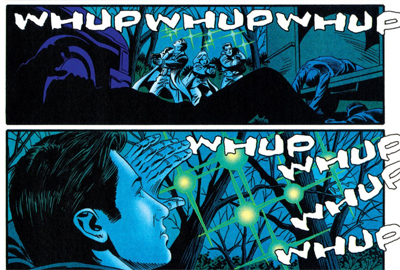
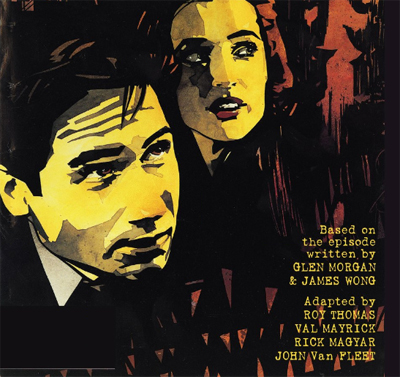
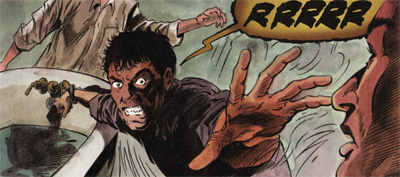
However, the adaptation of Squeeze demonstrates perhaps the biggest problem with the Season One line. While writer Roy Thomas was working from Glen Morgan and James Wong’s original script for Squeeze, and artist Val Mayerick can reference the finished episode, there is undeniably something missing from this adaptation. There is some part of Squeeze that is not replicable in the classic four-colour design, a vital part of The X-Files that seems lost in translation and seems to identify Season One as an inferior imitation.

Quite simply, Season One does not have access to David Duchovny and Gillian Anderson.

Closing in to seal your Tooms...

Closing in to seal your Tooms…

Continue reading

The X-Files – Unusual Suspects (Review)

This May and June, we’re taking a trip back in time to review the fifth season of The X-Files and the second season of Millennium.

On the surface, Unusual Suspects looks like quite a clean little episode.

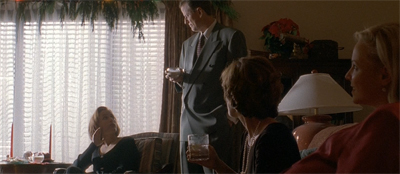
It is an obvious production save – a story thrown together when it became clear that David Duchnovny and Gillian Anderson’s commitments to The X-Files: Fight the Future meant that they would not be available to film even the shortened order of twenty episodes in the fifth season. Although Unusual Suspects aired as the third episode of the season, it was actually the first produced. With limited availability to David Duchovny, Unusual Suspects was constructed as an episode that could be built around a member (or members) of the supporting cast.

Hero shot!

Hero shot!

Five seasons in, this is not a radical concept. While Mulder and Scully are still very much the heart of the show, the supporting cast has been developed to the point where the show can turn over an episode to somebody who isn’t Mulder or Scully. The fourth season offered a glimpse of the (possible) secret history of the Cigarette-Smoking Man in Musings of a Cigarette-Smoking Man and allowed Walter Skinner to act out his own morality play in Zero Sum. After these two characters, the Lone Gunmen were likely candidates for their own episode.

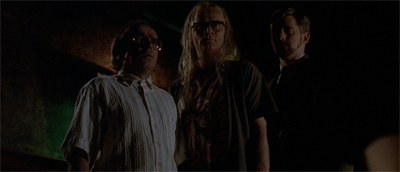
As such, Unusual Suspects also works quite well as “ground zero” for the eventual development of The Lone Gunmen during the eighth season of The X-Files. It is the episode that demonstrated that the trio could carry their own story with their eccentric little dynamic, while still being engaging and exciting. Given how The Lone Gunmen turned out, a particularly cynical commentator might suggest that Unusual Suspects very much over-sold the appeal. Nevertheless, Unusual Suspects is a logical and clear step forward in the evolution of the Lone Gunman.

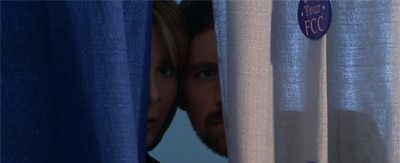
Peering through the curtain...

Peering through the curtain…

And yet, for all that these are the aspects of Unusual Suspects that generate discussion and debate, they are not the heart of the episode. What is most interesting about Unusual Suspects is the way that it allows writer Vince Gilligan to brush up against the show’s central mythology, albeit only fleetingly. Gilligan is fond of arguing that Memento Mori was his only credit on a mythology episode, but that sells Unusual Suspects rather short. Although it does not dabble directly with “black oil” or “alien bounty hunters”, it does allow Gilligan to play with the show’s big central story thread.

Unusual Suspects is not just positioned by Gilligan as the “secret origin” of the Lone Gunmen. The episode is decidedly more ambitious than all that. Without directly acknowledging it, and without explicitly coming out and saying it, Unusual Suspects presents itself as the roots of the show itself. Although nowhere near as boldly and triumphantly subversive as Jose Chung’s “From Outer Space” or Musings of a Cigarette-Smoking Man, the episode allows Gilligan to offer his own sly (and slightly stinging) commentary on the show’s central mythology.

Tonight we're gonna party like it's 1989.

Tonight we’re gonna party like it’s 1989.

Continue reading

The X-Files (Topps) #33 – Soma (Review)

This May and June, we’re taking a trip back in time to review the fifth season of The X-Files and the second season of Millennium.

Soma is a done-in-one story that fits quite comfortably with the rest of John Rozum’s work on The X-Files.

Indeed, like a lot of Rozum’s output, Soma feels like a story recovered from a fifties horror comic. It is a very traditional ghost story hinging on a number of absurd contrivances and building to a suitably impressive climax. This is not a low-key supernatural thriller – it features vengeful smoke demons who materialise in front of countless witness and almost murder Mulder and Scully at the climax. Despite the insistence on the final page that it was too smoky to see anything, Soma feels a little too loud and campy for the world of The X-Files.

Burnt out...

Burnt out…

The script is very familiar. In many ways, Soma plays like an update of the script to Donor. It is another supernatural “beyond the grave” revenge story, similar in tone to first season episodes like Young at Heart or Lazarus or Born Again. As with Donor, the malicious spirit is a husband who plots a horrific revenge on a wife who disregarded his dying wishes. However, while Donor had an enjoyable pulpy charm to sustain it as an unwilling organ donor attempted to reclaim his harvested organs, Soma feels just a little bit too mean-spirited and malicious in tone.

Soma is a functional and efficient X-Files comic, but one that feels just a little bit too rote and familiar for its own good.

Burning love...

Burning love…

Continue reading