• Following Us

  • Categories

  • Check out the Archives


  • Awards & Nominations

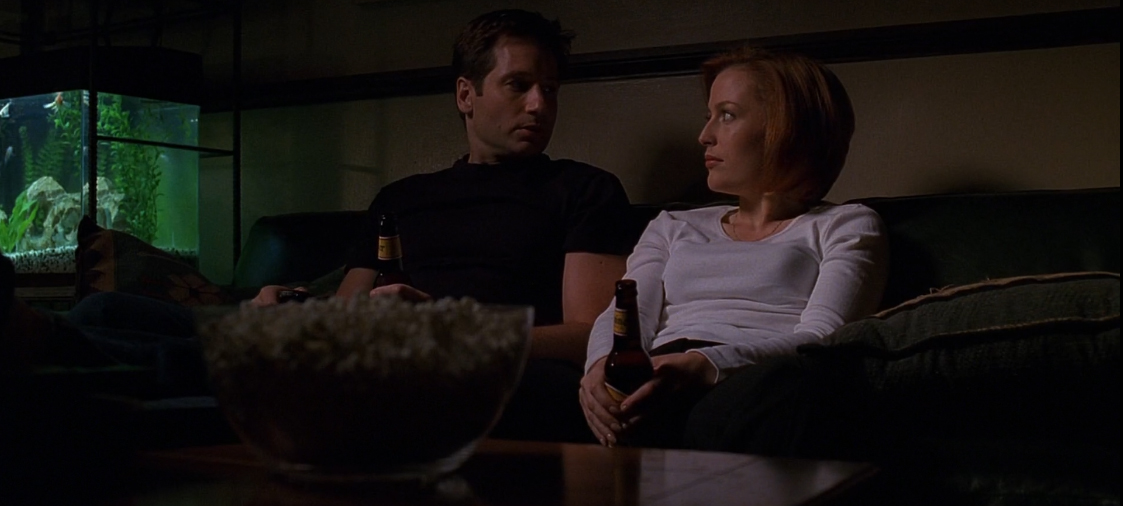
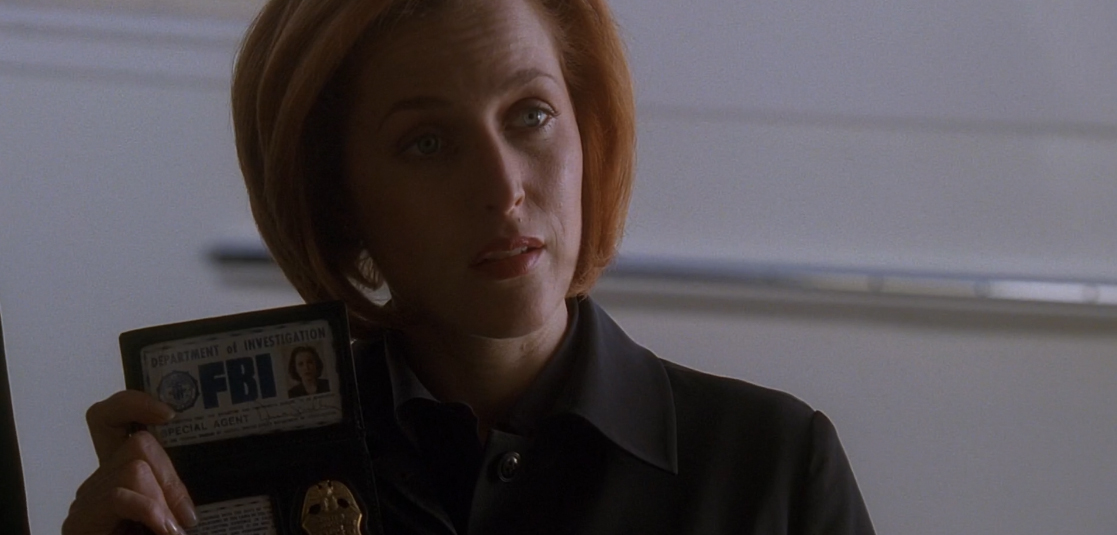
The X-Files – Patience (Review)

This October/November, we’re taking a trip back in time to review the eighth season of The X-Files and the first (and only) season of The Lone Gunmen.

Patience is necessary.

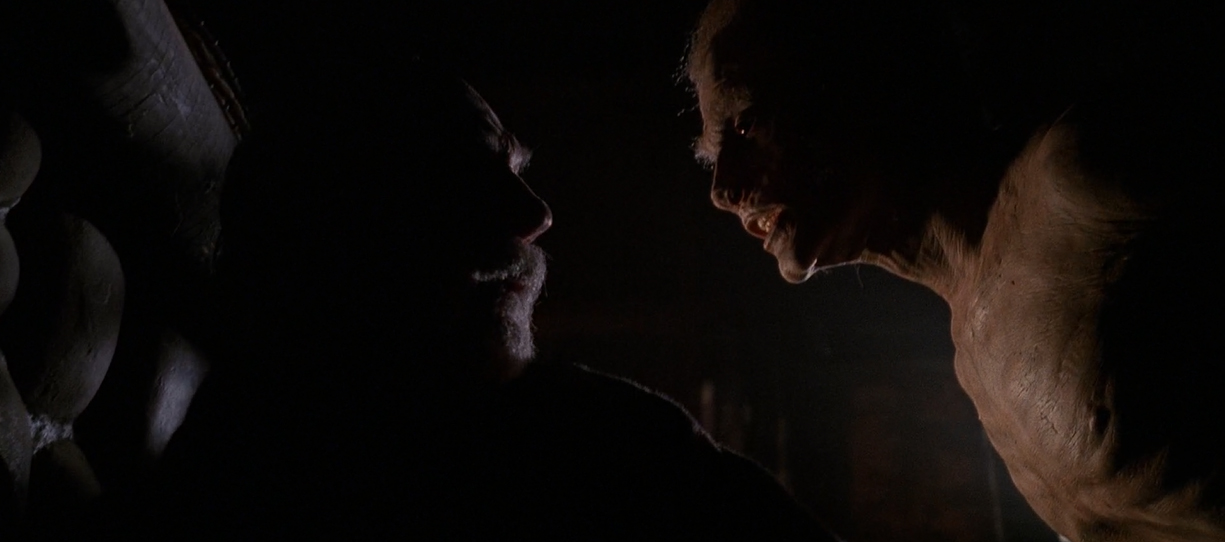
The eighth season of The X-Files is conservative. There are arguments to be made that this is true in a political sense, but it is certainly true in a narrative sense. The eighth season generally plays it quite safe when it comes to the structuring and plotting. The most structurally ambitious episode of the eighth season is perhaps Redrum, which feels a lot less “out there” than episodes like The Post-Modern Prometheus, Bad Blood, Triangle, X-Cops or First Person Shooter. Narratively, the eighth season plays it relatively “safe.”

Batsh!t crazy...

Batsh!t crazy…

There is a reason for this, of course. Losing David Duchovny for half the season and rotating in Robert Patrick represents perhaps the biggest risk that the show will ever take. Given how essential Duchovny had been to the show’s success, the eighth season is taking quite the gamble. With that in mind, it makes sense to play it safe. Without Mulder around, the show’s primary goal is to reassure fans that it is still The X-Files. This is not the time for experimental “event” episodes, because “Mulder is not in this episode” is an experimental event of itself.

As such, the eighth season feels largely like a return to a more traditional X-Files aesthetic, a “back to basics” approach. In that respect, Patience is essentially about kicking the tires and taking the show for a gentle test drive in its new configuration.

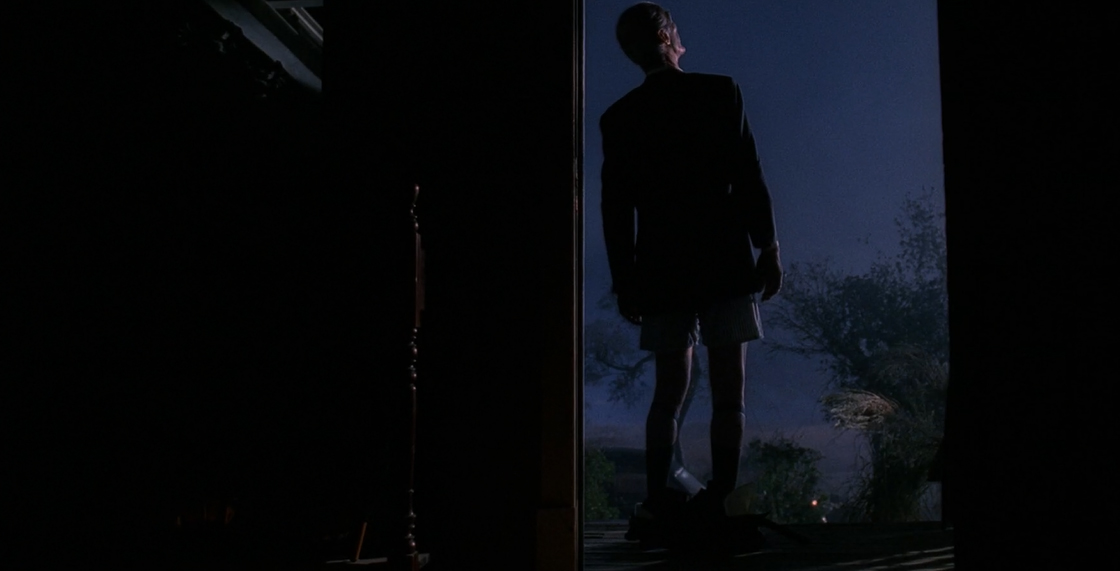
The show won't be caught with its pants down...

The show won’t be caught with its pants down…

Continue reading

The X-Files – Without (Review)

This October/November, we’re taking a trip back in time to review the eighth season of The X-Files and the first (and only) season of The Lone Gunmen.

Taken as a whole, the eighth season of The X-Files is remarkable.

It is not a perfect season of television, by any stretch. The eighth season doesn’t hit as many highs as the fourth, fifth or sixth seasons. As great as Robert Patrick is as John Doggett, and as skilfully as he is introduced, it is impossible to replace the easy dynamic between Mulder and Scully. The actual mythology of the season feels overcrowded and convoluted, with “supersoldiers” feeling a tad cliché and Mulder’s terminal illness going nowhere of note. The season’s recurring motifs of darkness, death and body horror are not for everybody.

I bet David Duchovny really missed working on The X-Files...

I bet David Duchovny really missed working on The X-Files

At the same time, there is a staggering consistency and reliability to the season. From the outset, the eighth season seems to know what it wants to be and where it wants to go. There is a stronger sense of purpose to the eighth season than to any other season of the show, with the possible exception of the third. Even the lead-up to the release of The X-Files: Fight the Future did not feel this single-minded and focused. In terms of consistency of theme and imagery, this is the closest the show ever came to pulling off a season-long arc.

It is tempting to credit this renewed vigour and energy to the absence of David Duchovny; the search for Mulder provides a solid and compelling hook for the season ahead. However, there is more to it than that. Mulder’s disappearance is a part of it, but the big thematic bow wrapped around the eighth season is Scully’s pregnancy. After all, David Duchovny returns to the show two-thirds of way through the season; it is Scully’s pregnancy that provides the season’s finalé.

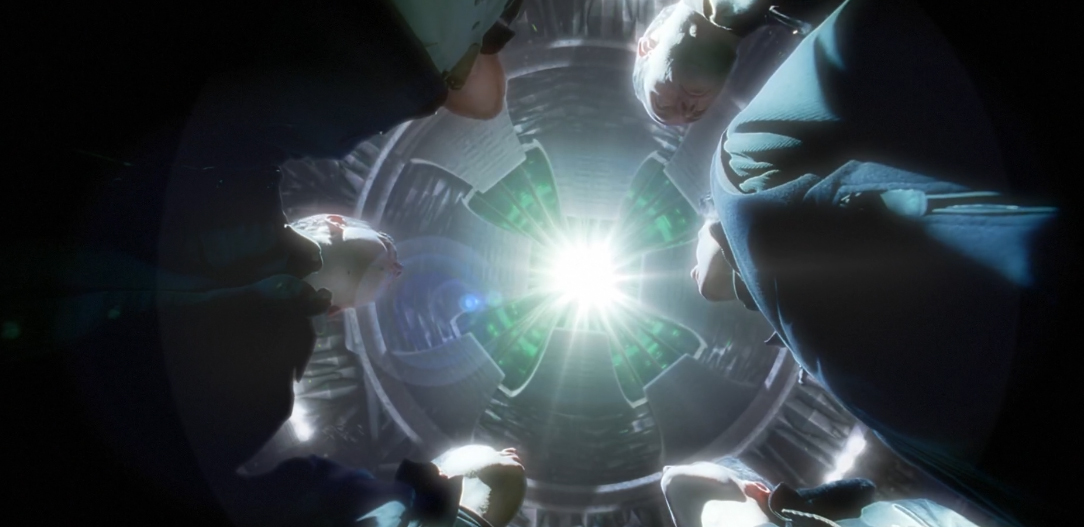
"Thank goodness we all wore different ties. That might have been awkward."

“Thank goodness we all wore different ties. That might have been awkward.”

Continue reading

The X-Files – Within (Review)

This October/November, we’re taking a trip back in time to review the eighth season of The X-Files and the first (and only) season of The Lone Gunmen.

What is The X-Files without Mulder? Can it even exist without Mulder?

The show entered its eighth season facing an existential dilemma. David Duchovny had renewed his contract with Fox at the last possible minute, three days before Requiem consigned his character to limbo. However, it was not necessarily the renewal that Fox would have wanted. Duchovny had agreed to reprise the role of Mulder in the eighth season of The X-Files, but only for eleven of the season’s twenty-one episodes. This meant that the character of Mulder could only actually appear in just over half of the season’s episodes.

Eye see...

Eye see…

This was a pretty significant blow to The X-Files. The title of the show referred to the procedural cases investigated by Mulder and Scully, but the series had long abandoned any pretense of focusing on those cases ahead of Mulder and Scully. David Duchovny and Gillian Anderson had elevated the characters to pop culture icons, with any pop savvy person capable of easily slipping a reference to Mulder and/or Scully into casual conversation. The chemistry between the two was so strong it forced the global conspiracy to second billing in The X-Files: Fight the Future.

Attempting The X-Files without Mulder (or with “just under fifty percent less Mulder”) was perhaps the most daring and ambitious decision of the show’s entire nine-season run.

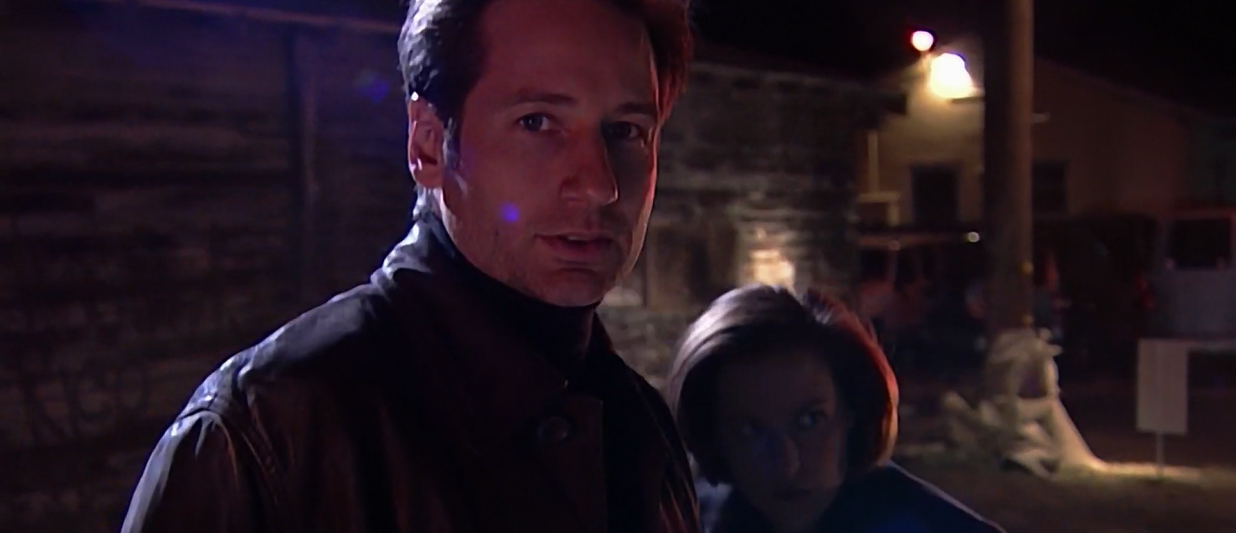
"And introducing Robert Patrick."

“And introducing Robert Patrick.”

Continue reading

The X-Files – Season 7 (Review)

This September, we’re taking a trip back in time to review the seventh season of The X-Files and the first (and only) season of Harsh Realm.

The seventh season of The X-Files feels like the end.

Indeed, going into the season, the production team were quite certain that it was going to be the end. Chris Carter and David Duchovny had signed two-year extensions to their initial five-year contracts that would expire at the end of the season. David Duchovny had signalled that he was unlikely to return for an eighth season. Frank Spotnitz suggested that the writing staff were approaching the seventh season like it was their last time working with these characters on this show.

xfiles-requiem37

Gradually, however, things changed. As the seventh season continued, it became more and more likely that it wouldn’t be the seventh season of the show. Most obviously, Fox endured one of its worst seasons on record; there was simply no show that could hope to replace The X-Files in the network’s line-up. As a result, there was a clear urge to continue the show into an eighth season. However, the production team could not commit to the possibility because David Duchovny was in the midst of an on-going lawsuit against Fox.

As a result, the entire seventh season occupies a hazily-defined realm between life and death. As the season goes on, it feels more and more like the seventh season is hedging its bets; that the production team might be happy to move on to other projects, but are not entirely ready to give up on The X-Files yet. Watching the season in hindsight feels weird; it often feels like the production team want to bring the curtain down, but are unwilling to definitively or conclusive wrap up all the threads.

xfiles-xcops8a

If the sixth season of The X-Files fixated on the show’s immortality and timelessness, the seventh season plays as a reaction against that. The seventh season is very keenly aware that everything must end and that The X-Files‘ cultural moment might be fading. There is something mournful and morose about the seventh season, as if The X-Files is watching itself slip away into history. After all, this was the point where the show became readily available on DVD and where Duchovny was engaged in a lawsuit over syndication; The X-Files was becoming a legacy concern.

The seventh season is about death and undeath.

xfiles-theamazingmaleeni15a

Continue reading

The X-Files – Requiem (Review)

This September, we’re taking a trip back in time to review the seventh season of The X-Files and the first (and only) season of Harsh Realm.

As with a lot of the seventh season, Requiem is an oddity.

It is an episode that exists in a weird limbo state, carefully designed and calibrated so that it might serve two – if not three – very different purposes. Requiem was written and filmed at a point where nobody knew what was going to happen next. Requiem could have been either a season or a series finalé; it could have been the last episode of the seventh season, the last episode of the series before the launch of a movie franchise, or even just the last episode ever. That is a lot of weight to put on a single episode.

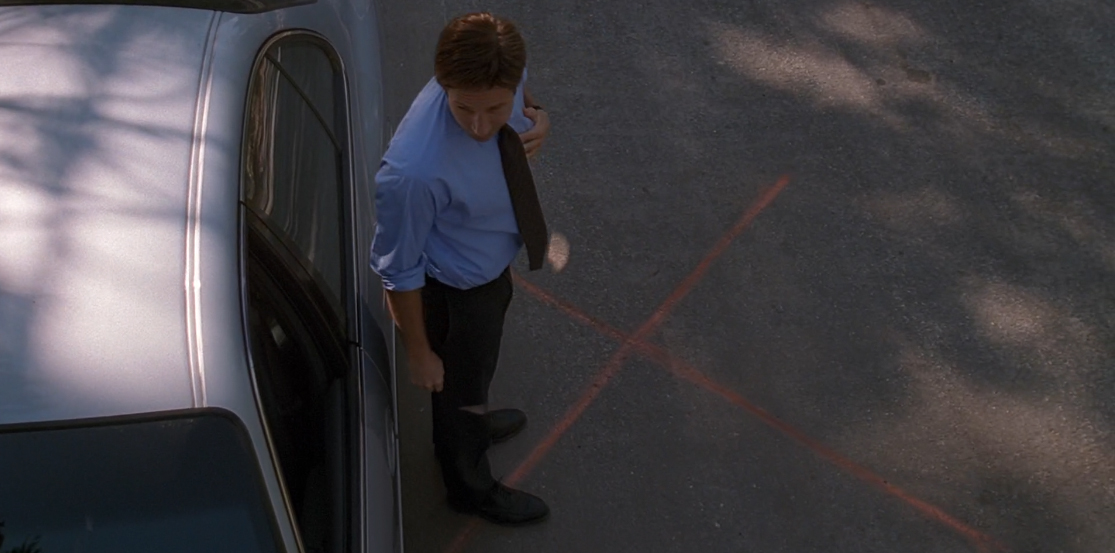
"X" marks the spot where it all began...

“X” marks the spot where it all began…

In essence, Requiem existed in a state of ambiguity and flux. It was never entirely sure what Requiem would be when Chris Carter wrote it or when Kim Manners directed it. Requiem had to be designed to be fluid and malleable; it had to support any context that might be heaped upon it in the editing suite or on broadcast. Stories like Jose Chung’s “From Outer Space” and Bad Blood had explored the blurred boundaries of reality and perception; Requiem is perhaps that idea applied to the show itself.

Chris Carter could tell you what happened in Requiem as it went through production. He could explain plot details and character motivation; he could outline the chain of events that bind Requiem together. However, it was impossible for anybody working on Requiem to actually assert what the episode was until three days before the episode aired. Until that point, Requiem was a shadow or a blur, just waiting for some larger context to bring it into proper focus.

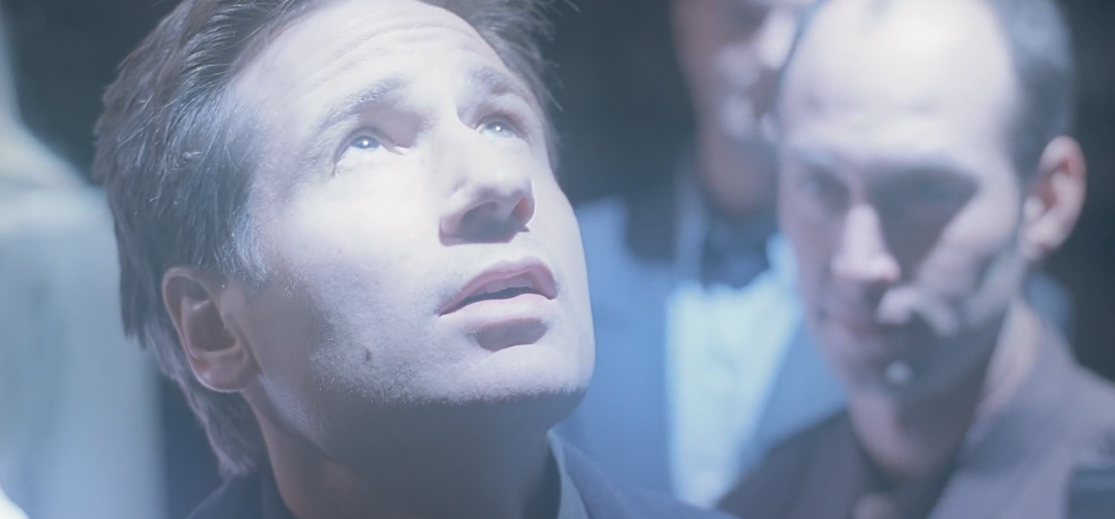
Things are looking up...

Things are looking up…

Continue reading

The X-Files – Je Souhaite (Review)

This September, we’re taking a trip back in time to review the seventh season of The X-Files and the first (and only) season of Harsh Realm.

The late seventh season has something of a twilight quality to it.

Even the show’s production staff are unsure whether the show will be coming back for an eighth season, so every episode takes on a special significance. Could this episode be “the last time that…”? Is Brand X the last time that the show does a traditional monster of the week? Is Hollywood A.D. the last time that David Duchovny writes and/or directs? Is Fight Club the last time that Chris Carter writes a non-mythology episode? Is Je Souhaite the last time that Mulder and Scully just investigate a weird standalone case together? There is a weight to it all.
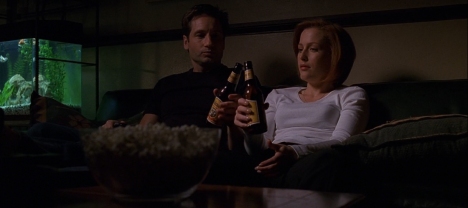
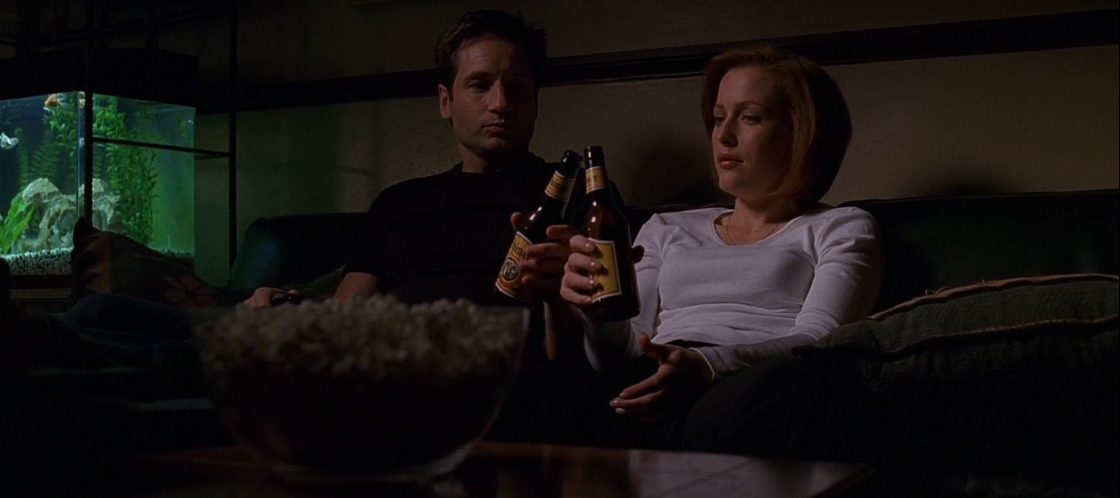
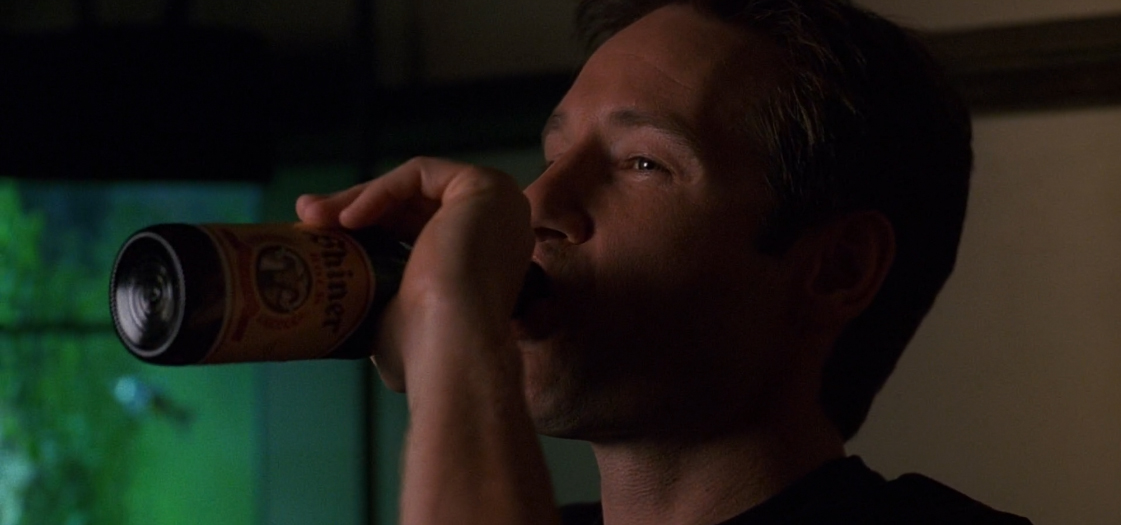
"I'll drink to that."

“I’ll drink to that.”

Of course, the show would come back for an eighth season. There would be lots of traditional monster of the week stories after Brand X. David Duchovny would enjoy another story and directorial credit after Hollywood A.D. Chris Carter would get to write non-mythology episodes after Fight Club, and even get to direct a much more successful whimsical adventure. Mulder and Scully would get to hang out together in the late eighth season and even at the very end of the ninth. In a very real way, this is not the end.

However, in an equally real way, this is the end. It has become hyperbole to suggest that something “… will never be the same again.” Even The X-Files has reinvented itself at least twice by this point, at the start of the third and sixth seasons. However, it is also perfectly reasonable to argue that The X-Files actually will never be the same again. The show changes on a very fundamental level after this point, with Je Souhaite serving as the very last glimpse of the show as it was. In many ways, this is the end of the road.
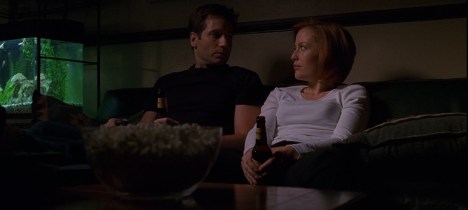
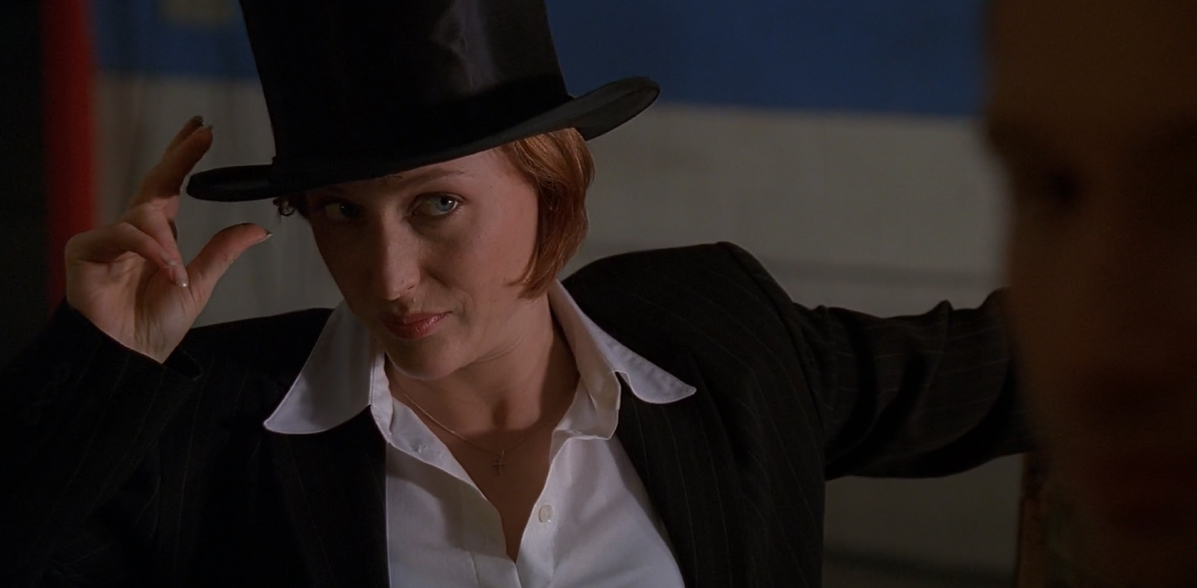
"So... meet up in about fifteen years?"

“So… meet up in about fifteen years?”

Gilligan would get to write and direct another episode of The X-Files before the show finally came to an end. In fact, there are a few thematic similarities between Je Souhaite and Sunshine Days, with both stories serving as affectionate and romantic finalés to Vince Gilligan’s version of The X-Files. There are still two full seasons ahead. Indeed, it is interesting to wonder what it would be like had Je Souhaite come earlier in the season, or even during the sixth season; it would be a light and fun episode, but would have the same heft and weight?

However, there is something different about Je Souhaite. In hindsight, it feels like a snapshot of an extended (seven-year-long) moment coming to end; it is a picture in an photo album that captures Mulder and Scully right on the edge of a transition. It is innocuous, yet profound. It is a picture of college friends sharing a drink at the end of the last term, unaware (or silently aware) of how things will change in the coming months. It is a picture of friends just hanging out before one gets married or has children.
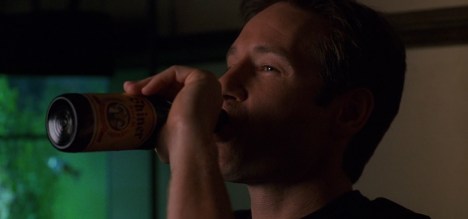
"I am outta here!"

“I am outta here!”

Of course, Mulder and Scully see each other after this point; there is the second half of season eight and the revival hanging in the future. (To say nothing of The X-Files: I Want to Believe or the comics.) College buddies still hang out. People with families maintain friendships. Still, those dynamics change. They are never quite the same. Not better, not worse. Just different. As weird as it is to describe an episode where Mulder encounters a genie as “the point before things got weird”, that’s exactly what Je Souhaite feels like.

What is most striking about Je Souhaite is how much the episode accepts that reality. It is not morose or melancholy; it is practically celebratory. Instead of eulogising the good times, it decides to have a good time. There is something very sweet about that.
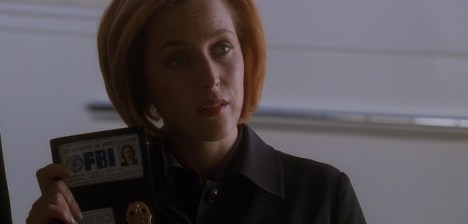
"I'm still here for two seasons..."

“I’m still here for two seasons…”

Continue reading

The X-Files – Fight Club (Review)

This September, we’re taking a trip back in time to review the seventh season of The X-Files and the first (and only) season of Harsh Realm.

Fight Club is an unpleasant episode of The X-Files.

It’s not “unpleasant” in a good way, like (arguably) Signs and Wonders or (definitely) Theef. It is “unpleasant” in a way that feels ill-judged and tone-deaf. Following on the charm and whimsy of Hollywood A.D., the script for Fight Club seems packed with forced charm and staged whimsy. At its most basic level, Fight Club is a comedy episode that simply isn’t funny. More than that, it’s an episode that isn’t particularly funny or clever to begin with, but then spends forty-five minutes insisting upon its own wit.

"Some of us are looking at the stars..."

“Some of us are looking at the stars…”

There is also a sense of unpleasantness about the themes and content of the episode in the context of the late seventh season. After all, it is no secret that the production team were facing considerable internal and external pressure. These pressures included a lawsuit involving the show’s lead actor and the show’s creator (not to mention the show’s network) and the fact that everybody on the production team was waiting for David Duchovny to determine if they would have a job the following season.

With all of this going on in the background, maybe an episode the implicitly features the show’s two lead actors knocking the stuffing out of each other for no good reason is not the best idea in the world.

"Hm..."

“Hm…”

Continue reading

The X-Files – Hollywood A.D. (Review)

This September, we’re taking a trip back in time to review the seventh season of The X-Files and the first (and only) season of Harsh Realm.

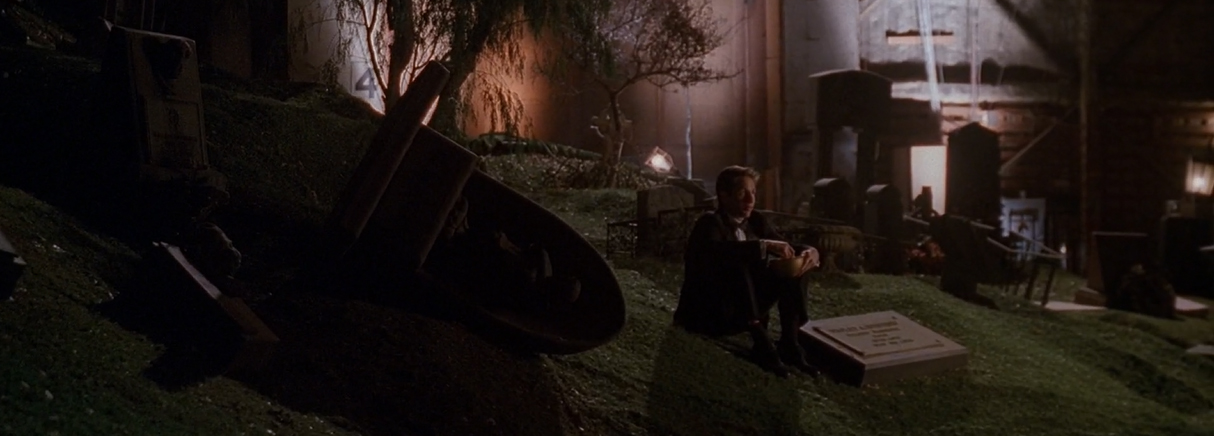
And now as we drift off the laughing agents and back to the graveyard , we see the Lazarus Bowl lying discarded beneath a tree.

A SWITCH, a broken tipped branch of the tree gets blown by the fan’s wind force down toward the plastic grooves of the replica as we move down toward it, we can read a “MADE IN ISRAEL” sticker on its bottom – the branch reaching toward the plastic,  like a woman’s arms to her lover —

Close on the splintered wood making contact on the colored plastic like a phonograph needle on vinyl —

And now MUSIC COMES UP – scratchy like an old record, the fourth track from BUENA VISTA SOCIAL CLUB, in a superior interpretation rendered by Mark Snow, called “PUEBLO NUEVO” – a beautiful stately cha cha instrumental —

We pull back wide as APPARITIONS appear to rise from their graves, rotting, but standing at atte ntion and then —

When the music kicks in, they begin to dance, all of them, in the round – dignified, changing partners… we hear the bones creaking, we see the gentlemanly half skulls smiling…

And now by the magic of Bill Millar & Co., the GREEN SCREEN becomes the rest of a HUGE GRAVEYARD with corpses dancing  stately and dignified upon it as we begin a slow pull out to a heavenly perspective…

This is what life’s about. This is what the dead would do if only they could. As we slowly fade to black, the band plays on.

And we end.

 – David Duchovny takes his bow

Everything ends.

Everything ends.

Continue reading

The X-Files – Brand X (Review)

This September, we’re taking a trip back in time to review the seventh season of The X-Files and the first (and only) season of Harsh Realm.

Watching the seventh season of The X-Files only reinforces the sense that the production team got extremely lucky with the casting of David Duchovny and Gillian Anderson. The chemistry between the two actors has carried more than a few weak scripts across the seventh season. Lighter shows like Rush, The Goldberg Variation and The Amazing Maleeni were all able to coast off the charm of the pair. It doesn’t matter that the plot resolution in an exposition dump from Mulder when you end on Scully attempting a magic trick. However, this works both ways.

It the seventh season coasts of the charisma of David Duchovny and Gillian Anderson, this means that their inevitable absences are keenly felt. As The X-Files had become more popular, the demand upon Duchovny and Anderson had grown greater; most obviously, the show had dropped its production order from twenty-four to twenty-two episodes. Even allowing for that, the show could no longer make the same demands of Duchovny and Anderson that it had made in the first four seasons. Nor could they simply produce less television.

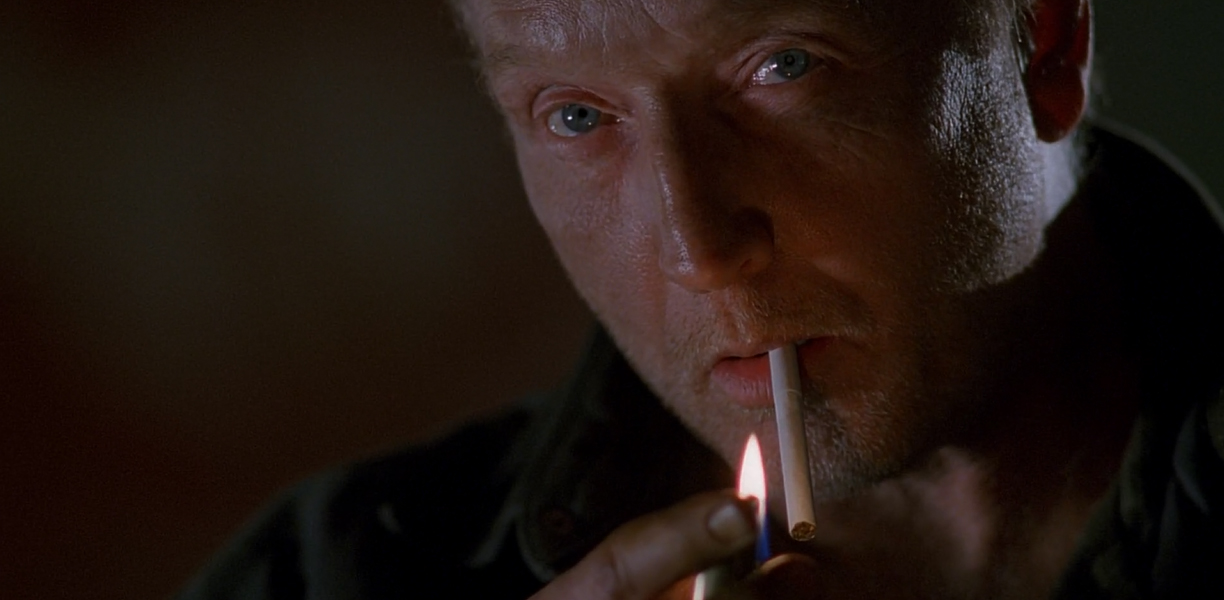
Smoke 'em if you got 'em...

Smoke ’em if you got ’em…

As a result, there are points in the show’s run when either (or both) David Duchovny and Gillian Anderson are unavailable. There are extended periods of the final two seasons that do not feature David Duchovny in any significant capacity. However, even within the seventh season, there are episodes where both leads are unable to fill the narrative space allocated to the lead characters. Gillian Anderson was largely absent from Chimera while working on all things; David Duchovny was largely absent from all things while working on Hollywood A.D.

It is these absences which suggest an uncomfortable truth about The X-Files. The show might have its own chemical dependencies. In a metaphor stretched in an effort to tie it all back to Brand X, the audience might rely on Duchovny and Anderson as surely as a smoker relies on their quick nicotine fix. Any attempt to genetically reengineer the show to ensure a healthier and longer life could easily end up creating a monster.

Talk about a looming legal face-off...

Talk about a looming legal face-off…

Continue reading

The X-Files – all things (Review)

This September, we’re taking a trip back in time to review the seventh season of The X-Files and the first (and only) season of Harsh Realm.

Say what you will about The X-Files, but the show was never afraid to be weird.

all things is a very odd piece of television. It is moody and atmospheric, philosophical and meandering. It is hard to contextualise, even within the framework of a season as eccentric and disjointed as the seventh season of The X-Files. It doesn’t really work, but that’s not a big problem. The seventh season is full of episodes that don’t quite work. There is definite ambition here, and a clear desire to say something that means something to actor (and director and writer) Gillian Anderson.

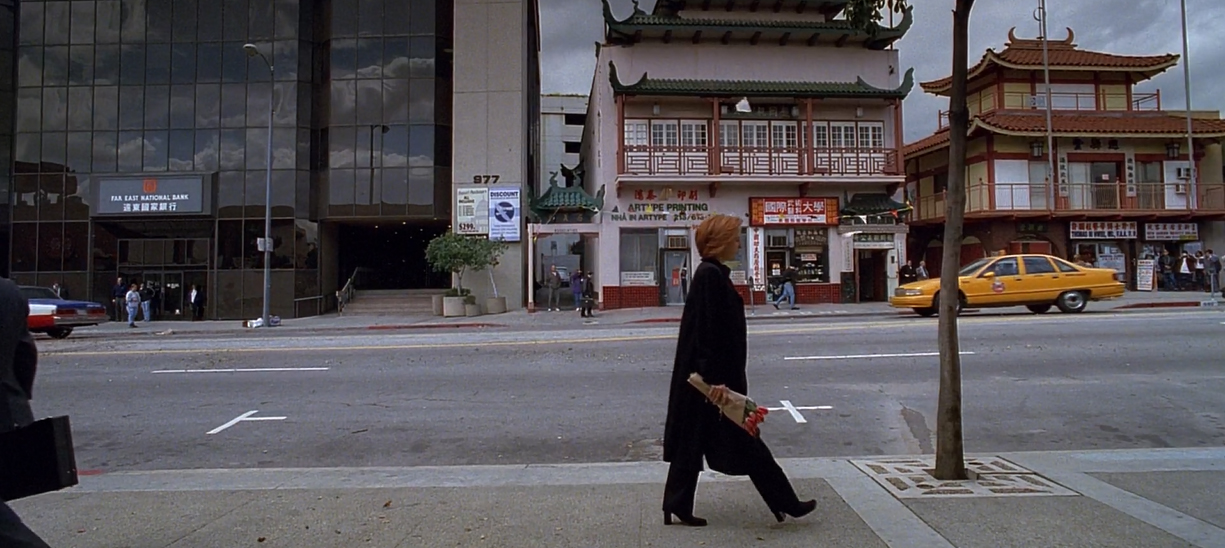
Walk o' life...

Walk o’ life…

Anderson exerts a very conscious gravity over all things. She is not the first actor to write and direct an episode of The X-Files, but she is the first to write and direct an episode centring on her character. all things is an episode written and directed by Gillian Anderson, with a heavy emphasis on Scully. This is as close to a treatise on the character as the actress is ever likely to produce. Perhaps this accounts for the heavy atmosphere and solemn tone of the piece.

all things is a mess of an episode, but it is an interesting mess. It is an episode that feels consciously at odds with both the show around it and the character at its centre. It is an awkward (and occasionally ridiculous) piece of television, but it looks and feels utterly unlike any other episode of The X-Files. That has to count for something.

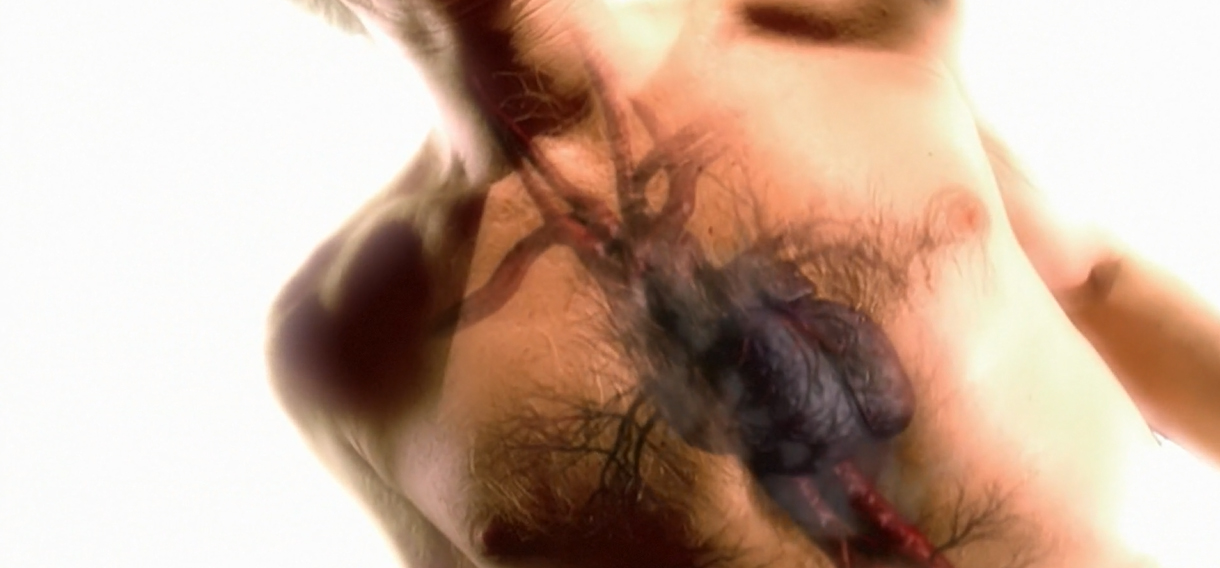
The beating of the world's heart...

The beating of the world’s heart…

Continue reading