• Following Us

  • Categories

  • Check out the Archives


  • Awards & Nominations

The X-Files: Year Zero (IDW) #1-5 (Review)

This June, we’re going to be taking a look at the current run of The X-Files, beginning with the IDW comic book revival and perhaps taking some detours along the way. Check back daily for the latest review.

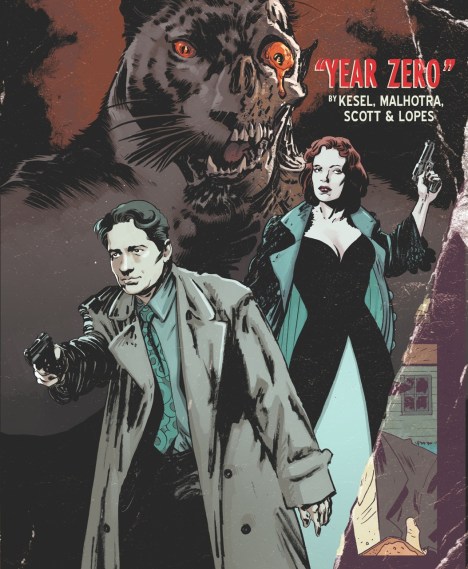
Year Zero is the best thing that IDW has done with the X-Files license.

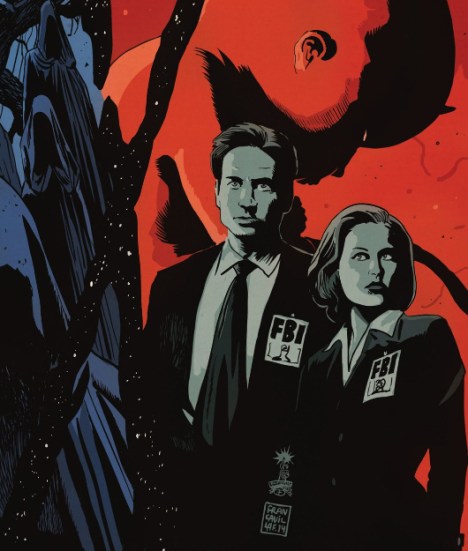
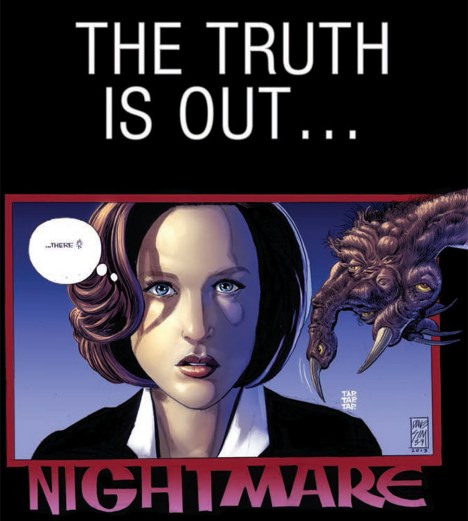
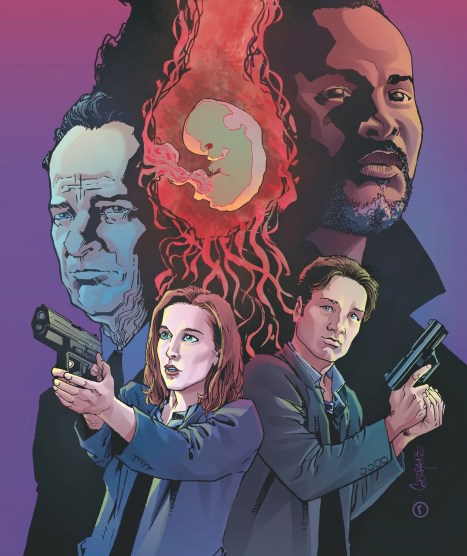
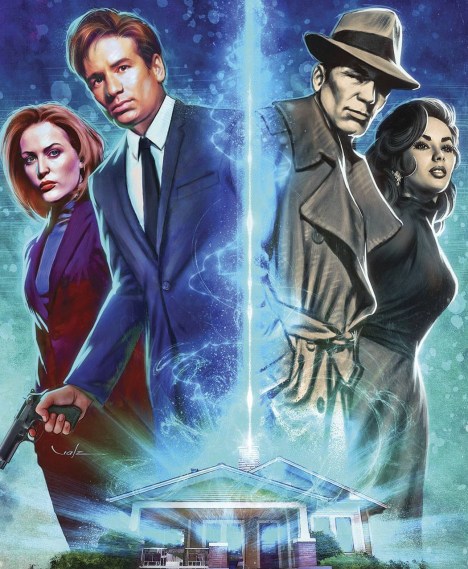
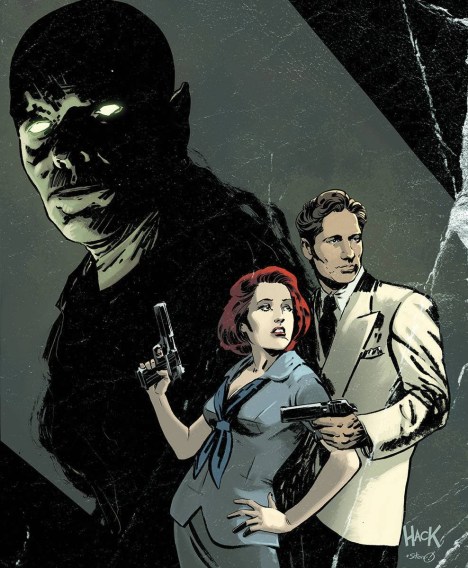
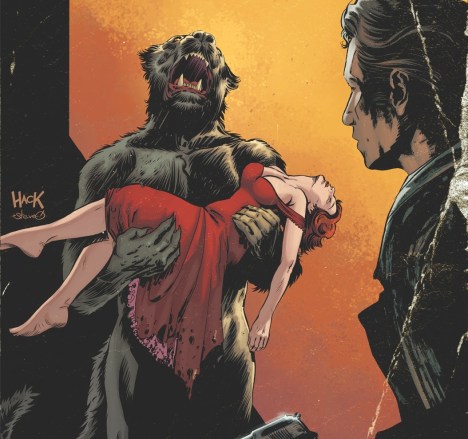
There are multiple reasons for that. Most obviously, the five-part miniseries is incredibly charming when taken on its own terms. Writer Karl Kesel offers in incredibly playful script, one full of teases and wordplay that holds together remarkably well without ever seeming heavy-handed or awkward. Artists Greg Scott and Vic Malhotra do an excellent job keeping the comic consistent while clearly distinguishing between its two time periods. The modern day sequences as scratchy and detailed, while the flashbacks are illustrated more like cartoons.
X-over appeal.

X-over appeal.

There is also a clever metafictional commentary underpinning the story that feels like something of a companion to the larger mythology of The X-Files. If the mythology of The X-Files can be read as a secret history of the United States filtered through folklore about aliens and UFOs, then Year Zero positions itself as an origin story for that folklore. It places the origin of The X-Files at the moment those narratives began to change, tying the series into the aftermath of the Second World War in a manner distinct from (but still compatible with) that featured on the show.

More than that, Year Zero is a story that unfolds without a heavy reliance on the mythology or continuity. Given the way that Joe Harris has approached The X-Files: Season 10 and The X-Files: Season 11, it is a welcome surprise that the comic does not feature a guest appearance from William Mulder or C.G.B. Spender. There are lots of little winks and nods to the finer details of the show, but Year Zero is more than just a story carved out from a throwaway line of dialogue in Shapes or as an extension of Travelers.
Holding out for a Zero.

Holding out for a Zero.

In fact, Year Zero practically revels in the discontinuity of it all. References to existing stories seem to exist primarily to emphasise the disconnect that exists between them. Given the care the IDW have taken in trying to craft and shape a consistent X-Files continuity, there is something quite refreshing in the cheeky approach taken by Karl Kesel to Year Zero. This is a book that could easily be handed to a casual fan who stopped watching the show around the fifth season, or even to somebody who had only seen a handful of episodes.

However, Year Zero does something far more important. The IDW comics have placed a heavy emphasis on the idea of legitimacy and canon. The comics have worked hard to present themselves as a viable continuation of the franchise. However, a lot of that has involved looking backwards and evoking nostalgia. The Cigarette-Smoking Man returns, Mister X reappears, Alex Krycek is revived. Even the other tie-in miniseries exist to market existing aspects of the brand. Conspiracy is a companion to The Lone Gunmen. Millennium brings back Frank Black.
A beast of a man...

A beast of a man…

Year Zero gives the IDW comics something unique and novel. It creates something fresh and exciting rather than simply repackaging recognisable moments or iconic characters. It gives the IDW line something that never existed in any prior incarnation of The X-Files. The characters of Humility Ohio and Bing Ellinson might be familiar archetypes, but they represent something intriguing. Instead of simply repackaging material and elements that fans loved, Year Zero slots in something exciting and intriguing.

The fact that all of this is done as through what is effectively positioned as a clichéd “origin story” makes it all the more exciting.
Madame X.

Madame X.

Continue reading

The X-Files: Season 10 (IDW) #16-17 – Immaculate (Review)

This June, we’re going to be taking a look at the current run of The X-Files, beginning with the IDW comic book revival and perhaps taking some detours along the way. Check back daily for the latest review.

Immaculate is perhaps most notable for reintroducing the character of Frank Black.

One of the more interesting ironies of Millennium is the fact that show had a smaller fanbase than The X-Files, but also a much more vocal campaign to resurrect the series. Outside of a few die-hards eagerly hoping for a third film, X-Files fans had only really begun to clamour for the series to return following the hype around the show’s twentieth anniversary. In contrast, fans of Millennium had been angling for a continuation of their beloved series for years in a number of high-profile ventures.

Familiar demons...

Familiar demons…

Perhaps the most obvious of these campaigns was the Back to Frank Black campaign, which was even endorsed by series star Lance Henriksen providing an introductory voiceover to the Millennium Group Session podcasts urging listeners that “the time is now” and which put out a wonderful series of critical essays and interviews concerning the series in October 2012. As recently as August 2015, they were organising a campaign to bring a revival to Netflix. When the return of The X-Files was announced, one of the big recurring questions was “what about Frank Black?”

As such, it seemed like it was only a matter of time before Frank Black turned up in IDW’s monthly X-Files comic book series.

Baby on board.

Baby on board.

Continue reading

The X-Files Files (Review)

This June, we’re going to be taking a look at the current run of The X-Files, beginning with the IDW comic book revival and perhaps taking some detours along the way. Check back daily for the latest review.

For anybody looking to chart the return of The X-Files to television, The X-Files Files is a hugely important milestone.

The podcast launched in June 2014, a little over half a year following the massive twentieth anniversary celebrations in October 2013 and at a point where everybody involved in the revival was talking seriously about the prospect of bringing The X-Files back in some official capacity. Hosted by comedian and actor Kumail Nanjiani, the podcast offered in-depth discussions and explorations of the classic show with a wide variety of fans drawn from a wealth of different background digging into the show and its history.

xfilesfiles

The podcast became a breakout hit. Not only did the caliber of guest speak to the enduring appeal of The X-Files, but the podcast’s immediate success also spoke to a hunger for more media connected to the show. Even before the revival was announced, the podcast generated a significant amount of media coverage from sources as diverse as The A.V. Club and The Globe and Mail. Part of this was a reaction to the quality of the podcast itself, with Nanjiani serving as phenomenal host, but part of it was down to the fact that it tapped into the cultural mood.

The X-Files Files speaks to the massive positive influence of fandom and as a testament to the role that this fandom played in bringing the show back to television.

xfilesfiles1

Continue reading

The X-Files: Season 10 (IDW) #11-15 – Pilgrims (Review)

This June, we’re going to be taking a look at the current run of The X-Files, beginning with the IDW comic book revival and perhaps taking some detours along the way. Check back daily for the latest review.

Pilgrims is essentially an attempt to do a mid-season mythology episode in the style of Colony and End Game or Tunguska and Terma, a big sprawling epic populated by familiar faces and impossible scale that is driven more by questions and mysteries than by answers or revelations. It is in many ways a testament to writer Joe Harris’ desire to emulate the basic structure and framework of The X-Files, right down to the manner in which he structures The X-Files: Season 10.

There are a lot of obvious markers and touches that help Pilgrims to feel like a classic mid-season mythology episode. There is an international scope, as seen in the trip to the Arctic in End Game or to Hong Kong in Piper Maru or to Russia in Terma. The first half of Pilgrims unfolds in Saudi Arabia, with Mulder and Scully dispatched to investigate what initially appears to be a terrorist attack on an oil operation but is promptly revealed to be something far more sinister.

The red and the black.

The red and the black.

Similarly, in keeping with the style and tone of many of the best mythology two-parters, the basic plot is relatively straightforward even as complications appear at the edge of the frame. In End Game, Mulder is racing to recover his lost sister as details about secret cloning experiments spill out around him. In Nisei, Mulder is trapped in a traincar with a ticking time bomb and a dangerous assassin as he digs away at the conspiracy. In Apocrypha, the black oil just wants to go home. The same is true in Pilgrims, which follows an alien trying to escape.

Even the structure of the five-issue arc recalls that of many X-Files two-parters, with a massive pivot coming between the third and fourth issues in the same way that many two-parters would switch premises at the half-way point. The Saudi Arabia plot wraps up at the end of the third issue, while Gibson Praise is introduced at the start of the fourth. The first three issues focus on the mystery of the Saudi attack, while the final two put a much greater emphasis on the traditional trappings of the X-Files mythology including the conspirators and Skyland Mountain.

Lone survivors.

Lone survivors.

It is remarkable how faithful Joe Harris is to the format of those classic X-Files mythology episodes. Of course, this is something of a double-edged sword. As with a lot of The X-Files: Season 10, the biggest weakness of Pilgrims is the fact that it all feels a little overly familiar and a little too indulgent. Krycek was one of the most popular supporting characters from the nine-season run of The X-Files, but bringing him back at the centre of a five-part epic mythology story feels like pandering and fan service. Harris is not inventing his own mythology, but resurrecting an old one.

Then again, that might seem to be the point. The black oil discovered in Pilgrims is compared to the oil resting beneath Saudia Arabia. In that respect, it is the remains of long-dead organisms compressed and decayed and converted into fuel. There is something more than a little appropriate about that.

Eye see.

Eye see.

Continue reading

The X-Files (IDW) Annual 2014 (Review)

This June, we’re going to be taking a look at the current run of The X-Files, beginning with the IDW comic book revival and perhaps taking some detours along the way. Check back daily for the latest review.

The X-Files: Season 10 was a massive success for IDW publishing.

Although the monthly series had been announced in January 2013, it hit the stands in June 2013. That meant that the opening arc, Believers, basically ran through the summer season and towards the big twentieth anniversary coverage in October 2013. The X-Files: Season 10 was one of the first indicators that there was a public appetite for The X-Files, with behind-the-scenes talks about a live action revival only really coming to a head after that first issue hit shelves.

... and so is the fact that they let Dave Sim write a Scully story.

… and so is the fact that they let Dave Sim write a Scully story.

It is perhaps too much to credit The X-Files: Season 10 for building or sustaining momentum towards the revival. However, the monthly comic series spoke very clearly to the series’ continued relevance and to the audience very eagerly invested in the idea of more stories built around these iconic characters. IDW moved to capitalise on the hunger quite quickly, and it is telling that the publisher moved to publish at least two X-Files books per month for most of the comic’s run. Fans wanted more X-Files, and IDW wanted to give it to them.

This explains The X-Files Annual 2014, a book published outside the monthly schedule of The X-Files: Season 10 and drawing two big-name creators to draft their own short stories focusing on Mulder and Scully. Neither of these stories is particularly brilliant or insightful, and neither feels like it really needed to be told, creating the impression that the comic exists mainly so that fans can have more Mulder and Scully in their lives.

"Have you seen The Exorcist?" "No, but I've seen The Calusari."

“Have you seen The Exorcist?”
“No, but I’ve seen The Calusari.”

Continue reading

The X-Files: Season 10 (IDW) #10 – More Musings of a Cigarette-Smoking Man

This June, we’re going to be taking a look at the current run of The X-Files, beginning with the IDW comic book revival and perhaps taking some detours along the way. Check back daily for the latest review.

More Musings of a Cigarette-Smoking Man is certainly an ambitious story.

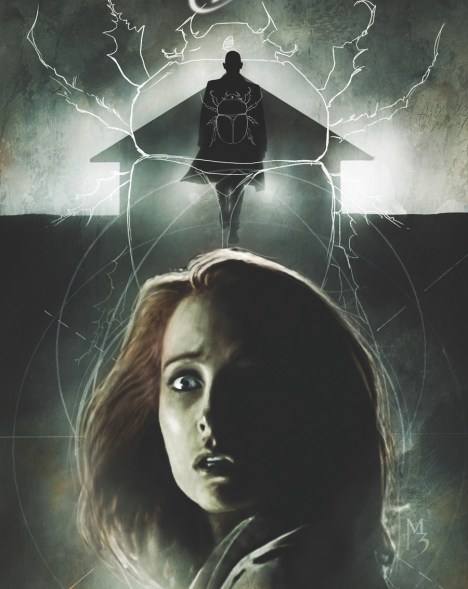
As the title suggests, writer Joe Harris and artist menton3 position this one-shot as a spiritual sequel to Musings of a Cigarette-Smoking Man, the controversial fourth season episode written by Glen Morgan and directed by James Wong. Musings of a Cigarette-Smoking Man offered a window into the past of the Cigarette-Smoking Man, a possible glimpse of who he had been and how he had come to be. It was also one of the most consciously stylised and ambiguous episodes in the entire nine-year run of the show.

Wheels within wheels.

Wheels within wheels.

Writing a spiritual sequel to that classic episode is a bold decision from the creative team. As with a lot of the big creative decisions concerning The X-Files: Season 10, More Musings of a Cigarette-Smoking Man seems too focused on the past. There is a sense that the monthly series is a little too beholden to what came before, too rooted in continuity, too dedicated to revisiting the iconography of the series. Writing a single-issue standalone story positioned as a sequel to on of the most unique episodes of the original run only emphasises this unease.

And, yet, in spite of these legitimate concerns, More Musings of a Cigarette-Smoking Man works reasonably well. It is indulgent and obsessive, but it is also rich and mysterious. It is disjointed and uneven, but that feels like the point. In keeping with the spirit of Musings of a Cigarette-Smoking Man, it feels like More Musings of a Cigarette-Smoking Man is a reflection on the comic book itself. This is a comic book contemplating its own identity and purpose, even as it finds itself being made redundant.

X marks the spot.

X marks the spot.

Continue reading

The X-Files: Conspiracy (IDW) (Review)

This June, we’re going to be taking a look at the current run of The X-Files, beginning with the IDW comic book revival and perhaps taking some detours along the way. Check back daily for the latest review.

IDW is quite different from Topps and Wildstorm, the two prior comic book companies to hold the license for The X-Files.

Part of that simply reflects changes in the comic book industry over time, with a greater fixation on concepts like shared universes and continuity, along with an increased emphasis on the importance of “the canon.” Part of that is simply down to the way that IDW operates as a publisher. The company is the fourth-largest comic book publisher in America, behind Marvel, DC and Image. While the company publishes a number of creator-owned properties, its success has largely been based around licensing properties.

A mutant phenomenon...

A mutant phenomenon…

In doing so, the company has adopted a model quite close to that of Marvel or DC. It tends to organise its books around these properties in the same way that Marvel or DC might organise themselves around the so-called “families.” Much like books like Detective Comics, Nightwing or Batgirl are considered part of the “Batman” family or books like Wolverine, Namor and X-Force fall under the X-Men banner, IDW tends to group its books into familiar families based around licensed properties. Transformers, G.I. Joe, Teenage Mutant Ninja Turtles.

It is not uncommon for each of those lines to support multiple books. For example, the company would publish a number of miniseries as companion pieces to their monthly Star Trek or Doctor Who comics. The same would be true of The X-Files: Season 1o, with the company publishing a number of tie-in books around that. Year Zero and Millennium are the most obvious example, providing the company with the opportunity to publish several branded X-Files books within the same month.

I bet super soldiers wish that they could do this.

I bet super soldiers wish that they could do this.

At the same time, the company engages with its properties in much the same way that Marvel or DC might. Marvel and DC tend to fall into a pattern of massive so-called “events” that serve to draw particular books away from their own internal narratives and towards a more “epic” story. Civil War focused on a fight between Captain America and Iron Man, but crossed over into over one hundred comic book issues published over seven months. There are countless other examples, from House of M to Crisis on Infinite Earths to Siege to Final Crisis.

IDW has organised several of its own blockbuster events to tie together its own licensed properties; Infestation and and Infes2ation come to mind. To celebrate the landing of the license, it was decided that the 2014 crossover would be themed around The X-Files. It is just a shame that the result was terrible.

We ain't afraid of no ghosts...

We ain’t afraid of no ghosts…

Continue reading

The X-Files: Season 10 (IDW) #9 – Chitter (Review)

This June, we’re going to be taking a look at the current run of The X-Files, beginning with the IDW comic book revival and perhaps taking some detours along the way. Check back daily for the latest review.

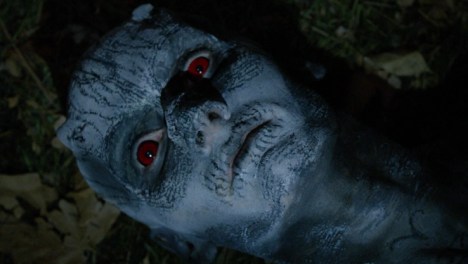
Chitter is an interesting single-issue story.

In many ways, Chitter feels very much like a throwback. It is a “monster of the week” story, the first such story to be written by Joe Harris focusing on an original creation. In fact, Harris acknowledged as much on his blog, remarking, “It’s my first, original ‘Monster of the Month’ (a term I’m taking sole credit for) story and it’s utterly disgusting, I’m sorry.” Although the plot includes a few nods towards the overarching themes of The X-Files: Season 10, the story stands almost completely alone. It would be possible to skip the issue entirely without missing much of importance.

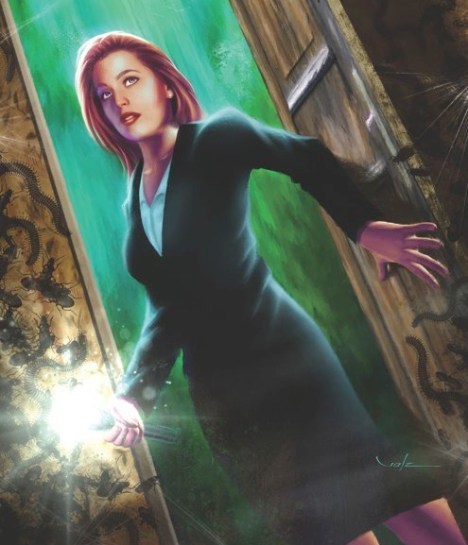
Bugging out...

Bugging out…

This is very much an oddity in terms of The X-Files: Season 10, a monthly comic book series that has been very focused on the mythology and continuity of The X-Files. The first eight issues of the series were given over to threads dangling from the original show, whether the continuation of the mythology in Believers or the fate of the Fluke Man in Hosts or the origin of Mister X in Being for the Benefit of Mister X. This is the first time that the comic book has told a story that feels self-contained and truly standalone.

There is something very refreshing in that, with Harris constructing a story that feels very much in keeping with the tone and mood of The X-Files without relying on specific details. In many ways, it feels more like a classic episode than any of the previous issues. More than that, it actually feels very much like one of the early X-Files comics written for Topps by writers like Stefan Petrucha or John Rozum. It is a very strong piece of work.

Crawl good...

Crawl good…

Continue reading

The After – Pilot (Review)

This June, we’re going to be taking a look at the current run of The X-Files, beginning with the IDW comic book revival and perhaps taking some detours along the way. Check back daily for the latest review.

And I to him: “Poet, I thee entreat, 

By that same God whom thou didst never know,  

So that I may escape this woe and worse, 


Thou wouldst conduct me there where thou hast said,  

That I may see the portal of Saint Peter,  

And those thou makest so disconsolate.”


Then he moved on, and I behind him followed.

Devil's in the details...

Devil’s in the details…

Continue reading

The X-Files: Season 10 (IDW) #8 – Being for the Benefit of Mr. X (Review)

This June, we’re going to be taking a look at the current run of The X-Files, beginning with the IDW comic book revival and perhaps taking some detours along the way. Check back daily for the latest review.

Being for the Benefit of Mr. X is effectively another origin story, following on from Hosts.

While Hosts explained exactly how the Fluke Man came to be, and even gave the character tangible motivation, Being for the Benefit of Mr. X is largely driven by flashbacks that proceed to explain and elaborate upon Mulder’s second informant. Mister X has long been one of the franchise’s most interesting and underdeveloped character, in part owing to the fact that the show fleshed out very little about him and in part due to Steven Williams’ performance. While the show revealed a lot about Deep Throat or the Cigarette-Smoking Man, Mister X remains a mystery.

Marking the spot.

Marking the spot.

The question, of course, is what this actually adds to the story being told. It is fun to revisit the origin of Mister X, but he is very much an outdated concern at this point in the show’s life. In fact, the character’s last appearance was in flashback in Unusual Suspects at the start of the fifth season, following his death in Herrenvolk at the start of the fourth season. Unlike the Cigarette-Smoking Man, Mister X was never literally resurrected. Unlike Deep Throat, he never turned up to haunt Mulder in episodes like The Blessing Way or The Sixth Extinction II: Amor Fati.

It is not as if writer Joe Harris has constructed a particularly compelling origin story for Mister X. The story told in Being for the Benefit of Mr. X is solid and sturdy, integrating quite smoothly with the continuity of the show and the character as we understand it. However, there are no real surprises or tangents, no twists or surprises. Being for the Benefit of Mr. X is a solid “done in one” story. It just feels a tad unnecessary.

In too Deep (Throat)...

In too Deep (Throat)…

Continue reading