• Following Us

  • Categories

  • Check out the Archives


  • Awards & Nominations

Star Trek – Dwellers in the Crucible by Margaret Wander Bonanno (Review)

This August, to celebrate the upcoming release of Star Trek: Into Darkness on DVD and blu ray, we’re taking a look at the Star Trek movies featuring the original cast. Movie reviews are every Tuesday and Thursday.

We’ll be supplementing our coverage of the movies with tie-ins around (and related to) the films. We’ll be doing one of these every week day. This is one such article.

The state of Star Trek tie-ins in 1985 was radically different than it is today. While the film series was at height of its popularity, generating a great deal of attention for the franchise, authors working on the associated tie-in novels were granted a great deal of freedom. Books from this era tend to be a great deal looser, adapting a sort of “devil may care” attitude towards the type of restrictions one might impose on a Star Trek story. Novels could be dedicated to new characters or to existing aliens, or offer radical twists on the show’s rich mythology. It was almost free-style Star Trek, with authors afforded the freedom to tell the stories that they wanted to tell, no matter how difficult it might be to fit that within the confines of “Star Trek.”

Dwellers in the Crucible captures a lot of the spirit of this era quite well. It’s Margaret Wander Bonanno’s first Star Trek tie-in book, but it’s also her strangest. It’s a rather high-concept piece of trashy “women in prison” fiction that dares to ask a question that nobody in their right mind had ever broached before: what if Kirk and Spock were lesbians?
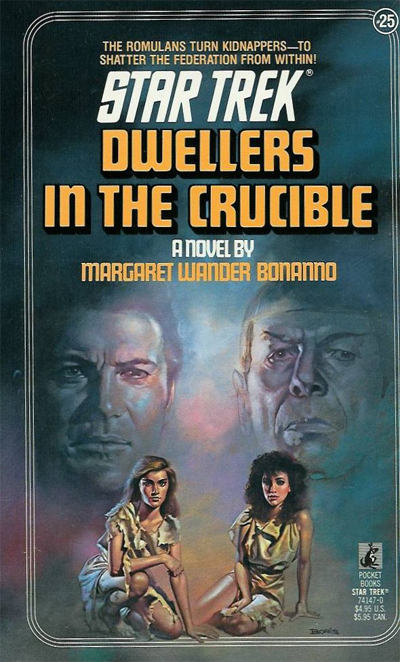
st-dwellersinthecrucible

Continue reading

Star Trek – The Ashes of Eden by William Shatner et al (DC Comics) (Review)

This August, to celebrate the upcoming release of Star Trek: Into Darkness on DVD and blu ray, we’re taking a look at the Star Trek movies featuring the original cast. Movie reviews are every Tuesday and Thursday.

We’ll be supplementing our coverage of the movies with tie-ins around (and related to) the films. We’ll be doing one of these every week day. This is one such article.

The Ashes of Eden is effectively professionally published Star Trek fan fiction, written by William Shatner. The actor gets some assistance from veteran Star Trek writers Judith and Garfield Reeves-Stevens, but it’s clear that Shatner is the driving force behind The Ashes of Eden. Indeed, an astute reader will spot quite a few thematic overlaps with Shatner’s much-maligned directorial effort, only without the rest of the cast around to temper his efforts to make this a story about Kirk and Kirk alone.

Still, The Ashes of Eden isn’t as bad as it might be. After all, just because something is fan fiction – professionally published or otherwise – says nothing of its quality. The story is probably best read as an exploration between Shatner and his alter ego, but it holds together quite well, providing a much more solid (if still far from perfect) exploration of the themes hinted at in Shatner’s Star Trek V: The Final Frontier.

The dusk of an era...

The dusk of an era…

Continue reading

Star Trek – Music of the Spheres by Margaret Wander Bonanno (Review)

This August, to celebrate the upcoming release of Star Trek: Into Darkness on DVD and blu ray, we’re taking a look at the Star Trek movies featuring the original cast. Movie reviews are every Tuesday and Thursday.

We’ll be supplementing our coverage of the movies with tie-ins around (and related to) the films. We’ll be doing one of these every week day. This is one such article.

Music of the Spheres is something of a legend in Star Trek circles. It’s not quite a ghost story, spoken of in hushed whispers. Indeed, author Margaret Wander Bonanno has made the manuscript available to interested fans via her website, and has used it to raise money for a variety of worth causes. She’s documented the difficult story of how her original novel warped in Probe in a wonderfully wry and insightful essay, offering a glimpse at the inner workings of Pocket Book and Paramount towards the end of the eighties.

It’s a rare peek behind the curtain, with Music of the Spheres serving as a compelling vehicle to explore just what was going on inside Star Trek licensing in the late eighties and early nineties.

startrek-voyagehome8

Continue reading

Star Trek – Unspoken Truth by Margaret Wander Bonanno (Review)

This August, to celebrate the upcoming release of Star Trek: Into Darkness on DVD and blu ray, we’re taking a look at the Star Trek movies featuring the original cast. Movie reviews are every Tuesday and Thursday.

We’ll be supplementing our coverage of the movies with tie-ins around (and related to) the films. We’ll be doing one of these every week day. This is one such article.

Saavik is an interesting character, for several reasons. Most obviously, there’s the behind the scenes manoeuvrings involving the new character. Everything from her origin to the recasting of the role between Star Trek II: The Wrath of Khan and Star Trek III: The Search for Spock. There’s the inclusion of a short scene in Star Trek IV: The Voyage Home, and the fact that the last time we see Saavik, she’s watching the reunited cast of the original Star Trek continue their galactic adventures.

There’s her complete absence from Star Trek V: The Final Frontier and then the weird pseudo-return of the character in Star Trek VI: The Undiscovered Country, where the role that would become Valeris was originally considered for Saavik, before being cast with Kim Cattrall, an actress who had originally been considered to play Saavik. It’s interesting to consider the conceptual history of the character, given what she was supposed to represent upon her introduction in The Wrath of Khan.

Margaret Wander Bonanno does an excellent job exploring Saavik’s life in the wake of her decision to remain on Vulcan in The Voyage Home, with Unspoken Truth doing an excellent job playing with the character in the grand scheme of the shared Star Trek universe.

startrek-unspokentruth

Continue reading

Star Trek Special #1 (1994) – The Needs of the One (Review)

This August, to celebrate the upcoming release of Star Trek: Into Darkness on DVD and blu ray, we’re taking a look at the Star Trek movies featuring the original cast. Movie reviews are every Tuesday and Thursday.

We’ll be supplementing our coverage of the movies with tie-ins around (and related to) the films. We’ll be doing one of these every week day. This is one such article.

In many ways, the Star Trek movies feature more character development and exploration for the cast than the entire three seasons of the television show. Star Trek III: The Search for Spock and Star Trek IV: The Voyage Home are true ensemble pieces, but there’s also more of a sense that this is a family rather than a bunch of people who just hang out together. I’d argue that the cast of Star Trek: The Next Generation remain the tightest ensemble that the franchise has ever produced, but the first six movies portray the crew of the original Enterprise as a bunch of people who have been to hell and back together.

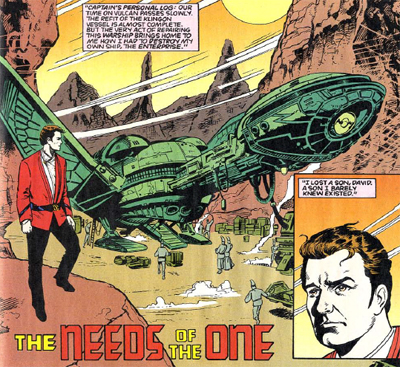
Michael Collins’ The Needs of the One represents a bit of an interlude between The Search for Spock and The Voyage Home, taking place during the crew’s three month “Vulcan exile.” While Collins’ script suffers from its inability to decide whether it’s a Spock-centric character drama or a day-in-the-life of the renegade crew, it’s a fascinating story situated in a lacuna of the movies’ chronology. It cements the idea that Spock has been radically altered over the course of the film series, and that his character arc spans the first four films.

Indeed, Collins’ opening sequence tying together his failure to achieve Kolinahr in Star Trek: The Motion Picture with his decision to once again rejoin the crew in The Voyage Home.

When all Kirk asked for was a tall ship, he probably should have been more specific...

When all Kirk asked for was a tall ship, he probably should have been more specific…

Continue reading

Star Trek (DC Comics, 1984) #28 – The Last Word (Review)

This August, to celebrate the upcoming release of Star Trek: Into Darkness on DVD and blu ray, we’re taking a look at the Star Trek movies featuring the original cast. Movie reviews are every Tuesday and Thursday.

We’ll be supplementing our coverage of the movies with tie-ins around (and related to) the films. We’ll be doing one of these every week day. This is one such article.

Star Trek II: The Wrath of Khan, Star Trek III: The Search for Spock and Star Trek IV: The Voyage Home form a trilogy that tells a single story, covering Spock’s death and resurrection, the loss of the Enterprise and the construction of its replacement and Kirk’s journey from washed-up old commander to saviour of the planet Earth. Although the three films weren’t planned as a single story, they worked out surprisingly well as a Star Trek epic told across three films and four years.

Four years is a remarkable turn-around for three franchise films, let alone three well-received franchise films. However, it’s worth conceding that the storyline had a fairly significant impact on the tie-in media. Books could be published set in the existing gaps in chronology, but DC’s plan for their first volume of Star Trek comics was to feature stories set in the contemporary film universe. Since that universe was in the middle of its own story, and the comic publishers had no idea how it would play out, the results are interesting.

Lighten up...

Lighten up…

Continue reading

Star Trek – The Klingons: Starfleet Intelligence Manual (FASA) (Review)

This August, to celebrate the upcoming release of Star Trek: Into Darkness on DVD and blu ray, we’re taking a look at the Star Trek movies featuring the original cast. Movie reviews are every Tuesday and Thursday.

We’ll be supplementing our coverage of the movies with tie-ins around (and related to) the films. We’ll be doing one of these every week day. This is one such article.

The sheer wealth of supplemental material which exists for Star Trek is often quite stunning. While nowhere near the marketing juggernaut that Star Wars is, the depth of the Star Trek brand can’t help but seem impressive. On top of the television show and movies, there are novels and comics, but it goes even further than that. Models, blueprints, Christmas decorations, action figures, and even china dinner sets. It is occasionally awe-inspiring, but also quite intimidating.

Still, it’s interesting to witness how this extended material has come back to influence the “core” of the franchise. It’s not unheard of for spin-offs and tie-ins to help develop a core property. Kryptonite and Jimmy Olsen were added to the Superman mythos, for example, following their popularity on the radio show. Here we have some background material prepared for the FASA Star Trek role-playing game that was popular during the 1980s. As with a lot of this sort of stuff, it’s not really “canon” or “continuity” in anyway that seems to count.

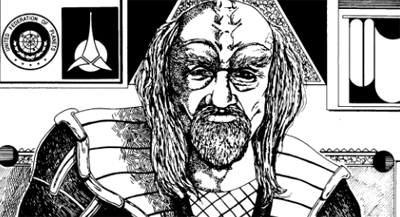
However, The Klingons: Starfleet Intelligence Manual is interesting because it world-builds the franchise, explicitly in reference to John M. Ford’s vision of Klingon culture in The Final Reflection.

st-klingons-fasa

Continue reading

Star Trek: Myriad Universes – Echoes and Refractions: The Chimes at Midnight by Geoff Trowbridge (Review)

This August, to celebrate the upcoming release of Star Trek: Into Darkness on DVD and blu ray, we’re taking a look at the Star Trek movies featuring the original cast. Movie reviews are every Tuesday and Thursday.

We’ll be supplementing our coverage of the movies with tie-ins around (and related to) the films. We’ll be doing one of these every week day. This is one such article.

The death of Spock at the climax of Star Trek II: The Wrath of Khan is one of the definitive Star Trek moments. Pop culture has assimilated the moment, to the point where any half-decent nerd will identify “the needs of the many…” or “I have been and always shall be…” or maybe even “of all the souls I encountered…” It’s an absolutely massive moment for the franchise, where the film series dared to kill off the show’s most iconic and best-loved character.

It’s no wonder that the moment is such a strong focal point for those seeking to explore Star Trek. Star Trek: Into Darkness riffs mercilessly on that iconic scene, inverting it and counting on the iconography to generate enough emotional resonance for the film to get away with a fairly half-hearted homage. (The effects of The Wrath of Khan last until Star Trek III: The Search for Spock, while the consequences of the climax of Into Darkness don’t even last until the closing credits.)

So that famous sequence serves as an effective focal point of Geoff Trowbridge’s The Chimes at Midnight, which offers a parallel continuity of the Star Trek films in a universe where Spock died after the events of Yesteryear.

st-myriaduniverses

Continue reading

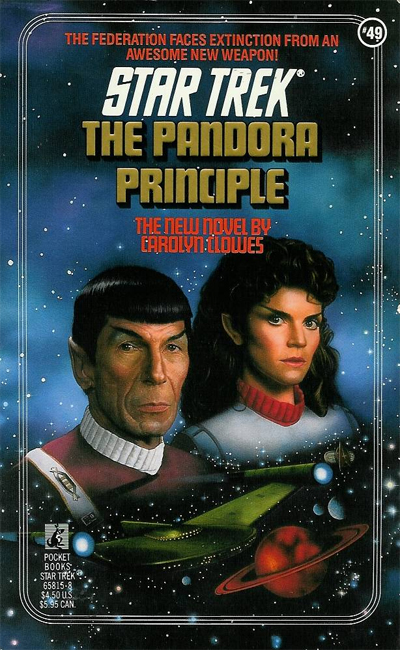
Star Trek – The Pandora Principle by Carolyn Clowes (Review)

This August, to celebrate the upcoming release of Star Trek: Into Darkness on DVD and blu ray, we’re taking a look at the Star Trek movies featuring the original cast. Movie reviews are every Tuesday and Thursday.

We’ll be supplementing our coverage of the movies with tie-ins around (and related to) the films. We’ll be doing one of these every week day. This is one such article.

It’s amazing to think how much tie-in material the character of Saavik has generated, considering that she only appeared in three Star Trek films. There are regular characters who have never attracted the same degree of attention as Saavik. There’s probably a reason for this. After all, Saavik was introduced as an important character in Star Trek II: The Wrath of Khan. There’s even some speculation that she might have been originally intended as a replacement for Spock, had Leonard Nimoy decided not to return to the franchise. As such, she was introduced as a surprisingly developed character with a background rife with storytelling potential.

It’s a bit of a disappointment, then, that she was first re-cast as Robin Curtis in Star Trek III: The Search for Spock and then she was quietly shuffled off-stage at the start of Star Trek IV: The Voyage Home, never to be seen again. Perhaps that squandered potential is at the root of the fascination with Saavik. The Pandora Principle, the only Star Trek novel from author Carolyn Clowes, offers us an origin and a history for the character, building off hints and character attributes that were never even mentioned on-screen.

startrek-thepandoraprinciple

Continue reading

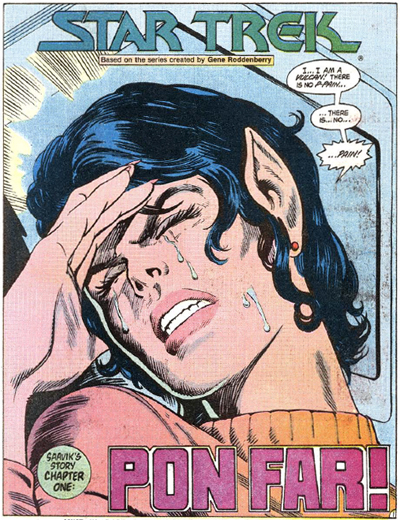
Star Trek (DC Comics, 1984) #7-8 – Saavik’s Story (Review)

This August, to celebrate the upcoming release of Star Trek: Into Darkness on DVD and blu ray, we’re taking a look at the Star Trek movies featuring the original cast. Movie reviews are every Tuesday and Thursday.

We’ll be supplementing our coverage of the movies with tie-ins around (and related to) the films. We’ll be doing one of these every week day. This is one such article.

Star Trek comics are an interesting way of catching a glimpse at the franchise one-step away from the heart of production. While there are other forms of tie-in media, comics are produced on a monthly schedule. While scripts need to be written and art needs to be drawn, there’s less lead-in time required, meaning that contemporary Star Trek comics are often able to react dynamically to on-screen events. While novels might take up to a year from original pitch to the time they hit the stands, there’s something rather more urgent about tie-in comic books.

This is an issue for many tie-ins comics. For example, the syndicated Star Trek newspaper strip launched shortly before the release of Star Trek: The Motion Picture made a point to feature Ilia as a bridge officer on a relaunched USS Enterprise. She rather suddenly disappeared after those involved actually saw the movie and realised that she didn’t quite survive the adventure. Similarly, when it came to detailing the adventures of Kirk and company in the wake of Star Trek III: The Search for Spock, writer Mike W. Barr moved the crew over to the USS Excelsior, in accordance with writer Harve Bennett’s original plan.

That said, Mike W. Barr’s comic book origin story for Lt. Saavik holds up rather well, fitting quite comfortably with Carolyn Clowes’ origin for the character offered in the superb 1990 book The Pandora Principle. Of course, Barr’s origin sketches the broadest of outlines, and is clearly more preoccupied with crafting a pulpy space opera adventure.

Saving Saavik!

Saving Saavik!

Continue reading