• Following Us

  • Categories

  • Check out the Archives


  • Awards & Nominations

Star Trek: Voyager – Alliances (Review)

This September and October, we’re taking a look at the 1995 to 1996 season of Star Trek, including Star Trek: Deep Space Nine and Star Trek: Voyager. Check back daily for the latest review.

One of the more persistent and convincing criticisms of Star Trek: Voyager is the idea that it was very narrative conservative; that the show got comfortable playing out the familiar formula that had been established by Star Trek: The Next Generation, and so never attempted to innovate or experiment in the way that Star Trek: Deep Space Nine (or eventually Star Trek: Enterprise) did. This is a perfectly valid criticism of the show as a whole, but it does ignore some of the weird tensions that played out across the first two seasons.

It is fair to say that Voyager never truly experimented. However, there are several moments in the first two seasons where it looks like the show was considering doing something unique or unprecedented. The show walked up to the edge, looking up and down; it never quite made the leap, but it seemed to weigh the possibility of jumping headlong into uncharted territory. However, it ultimately only dipped its toes in the water before getting cold feet and returning to the comfort of the familiar.

"Everyone liked Godfather III, right?"

“Everyone liked Godfather III, right?”

The sad truth about the second season of Voyager is that the show made a number of attempts to do something different or unique, only to botch each and every one of those attempts so completely that the production team learned not to even try. The second season’s more adventurous creative decisions all ended in humiliation and farce, explaining why the show desperately sought the warm blanket of a familiar format and an established template. After all, it was the more conventional episodes of the second season that had been (relatively) well received.

The second season of Voyager turned the process of trying something moderately ambitious and failing spectacularly into something of an artform. Of course, given the simmering tensions behind the scenes, it often seemed like the show wanted to fail. Michael Piller desperately wanted to do new things, only to meet resistance from his fellow producers and writing staff. Writers like Kenneth Biller would publicly criticise assignments they had been handed, offering a sense of just how much faith the staff had in these ideas.

"You wouldn't like me when I'm angry..."

“You wouldn’t like me when I’m angry…”

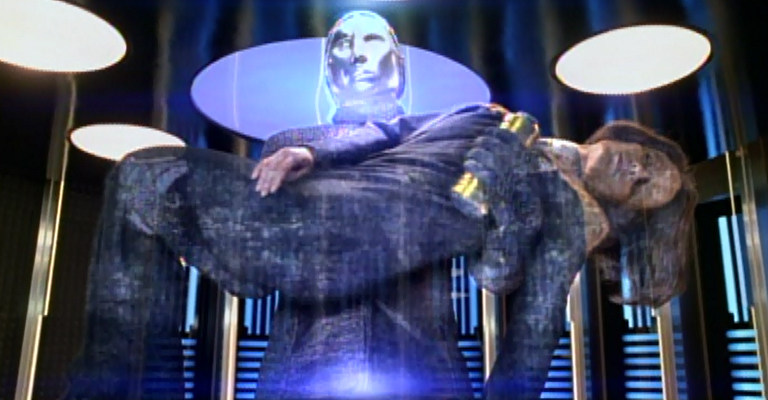
Alliances marks perhaps the most ambitious element (and most spectacular failure) of the second season of Voyager. It is the centrepiece of Michael Piller’s attempts to develop the Kazon into a credible (and convincing) alien threat, while also setting up a recurring arc that will allow Piller to push Tom Paris into the role of “lovable rogue” of which Piller was so fond. These were elements that excited Piller a great deal, but left most of the rest of the production team relatively cold.

So there is a great deal of irony in the fact that Alliances is ultimately written by Jeri Taylor, who was increasingly at loggerheads with Piller over the direction of Voyager. In light of that context, it makes sense that Alliances is an episode that aggressively critiques its own existence. Janeway spends most of the episode frustrated at the fact that the story is happening at all, and Alliances builds towards a climax that seems designed to convince the viewer that this whole idea is misconceived on just about every possible level.
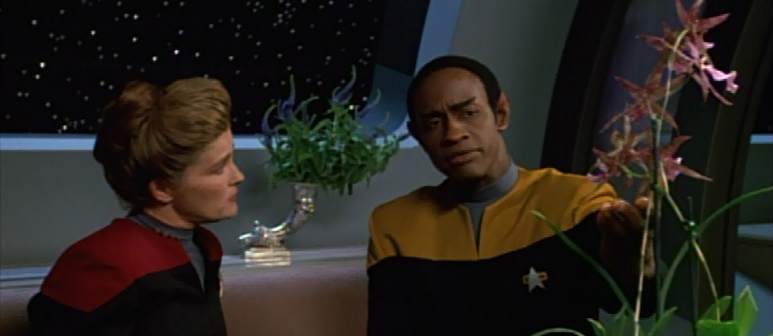
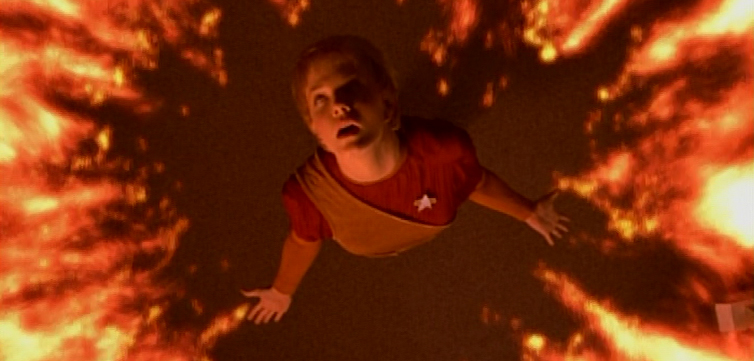
Blooming disaster...

Blooming disaster…

Continue reading

Star Trek: Voyager – Prototype (Review)

This September and October, we’re taking a look at the 1995 to 1996 season of Star Trek, including Star Trek: Deep Space Nine and Star Trek: Voyager. Check back daily for the latest review.

In what is becoming a recurring theme for the second season of Star Trek: Voyager, Prototype is a mess.

As with a lot of the surrounding episodes, its production was fraught and tense; tensions seemed to be building among the production team as the season progressed. Prototype was an episode that was largely driven by Michael Piller, and one opposed by Jeri Taylor. Kenneth Biller was responsible for tweaking and rewriting Nicholas Corea’s script, but he does not seem particularly fond of the episode. These tensions and disagreements would build to a climax in the second half of the year.

Bride of 4739...

Bride of 3947…

Prototype is not a good episode, by any measure. There are a lot of elements that are interesting on their own terms, but there is also something quite nasty and uncomfortable sitting at the heart of the hour. It is a story about motherhood, but one which suggests that unconventional motherhood must be monstrous and grotesque. Even beyond the awkward subtext of the episode, there are problems. Despite Piller’s attempts to energise storytelling on Voyager, the pacing of Prototype is atrocious.

Prototype is not the biggest misfire of the season. Given the season around it, this should not be misconstrued as an endorsement.

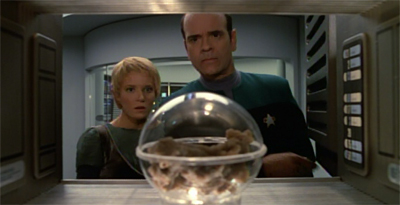
(Warp) core values...

(Warp) core values…

Continue reading

Star Trek: Deep Space Nine – Paradise Lost (Review)

This February and March, we’re taking a look at the 1995 to 1996 season of Star Trek, including Star Trek: Deep Space Nine and Star Trek: Voyager. Check back daily Tuesday through Friday for the latest review.

Part of what is so remarkable about Star Trek: Deep Space Nine is how prescient it seems.

The Star Trek franchise is renowned for its central metaphors and allegories, its fondness for addressing contemporary issues through abstract philosophical discussions. Even the most casual of television fans can point to episodes like Let That be Your Last Battlefield or A Private Little War as examples of the franchise’s engagement with contemporary social issues. (Of course, they may not be able to actually name those episodes.) Of course, the reality was always more complicated than that, but this social engagement is part of the popular memory of the franchise.

Armed and dangerous...

Armed and dangerous…

While there is a tendency to overstate the importance of social commentary and engagement in the history of the Star Trek franchise, it is a massive part of the cultural behemoth. Although not every (and arguably not even most) Star Trek episodes are explorations of moral philosophy that apply to the contemporary world, they are an essential part of each and every Star Trek series. Sometimes these episodes are brilliant, and sometimes they are heavy-handed. Sometimes they are earnestly sincere, and sometimes they are hopelessly misguided.

However, Deep Space Nine stands out in comparison to its contemporaries. Even twenty years after the show aired, it seems like Deep Space Nine speaks to contemporary anxieties and uncertainties.

The Changeling Face of Evil...

The Changeling Face of Evil…

Continue reading

Star Trek: Deep Space Nine – Homefront (Review)

This February and March, we’re taking a look at the 1995 to 1996 season of Star Trek, including Star Trek: Deep Space Nine and Star Trek: Voyager. Check back daily for the latest review.

Homefront and Paradise Lost are a fascinating example of what Star Trek: Deep Space Nine does best, both in terms of theme and storytelling.

In many ways, Homefront and Paradise Lost are among the most culturally relevant episodes produced during the series’ seven-season run. The two-parter speaks to a lot of concerns and anxieties that were part of the public consciousness during the nineties, but exploded in the early years of the twenty-first century. Homefront and Paradise Lost feel more powerful in the era of airport security screenings and extraordinary powers than they did on their original broadcast. These are among the most important episodes the franchise ever produced.

Broken link...

Broken link…

However, the two-parter is also a great example of how the production team on Deep Space Nine approach storytelling. Not just in terms of arc-building and serialisation, but also in terms of structure and pacing. Unlike The Way of the Warrior, which was very clearly a single ninety-minute episode of television, Homefront and Paradise Lost are very clearly structured as two separate episodes of television. It is a subtle distinction, but one which has a significant impact in how the creative team tell their story.

More than that, Homefront and Paradise Lost represent a great example of the strengths of the production team’s improvisational approach to long-form plotting.

More like Starfleet INsecurity, amirite?

More like Starfleet INsecurity, amirite?

Continue reading

Star Trek: Voyager – Resistance (Review)

This February and March, we’re taking a look at the 1995 to 1996 season of Star Trek, including Star Trek: Deep Space Nine and Star Trek: Voyager. Check back daily Tuesday through Friday for the latest review.

Resistance is a very episodic instalment of Star Trek: Voyager.

It begins with the ship facing a convenient plot-generating fuel-shortage, the type of problem that the ship had encountered near the start of Phage or The Cloud or Tattoo. It is the kind of problem that was not mentioned in previous episodes, and which will never be presented as a potentially recurring problem. In fact, Resistance is the only episode of Voyager (or Star Trek) where the word “Tellerium” is mentioned. Many of the stock criticisms of Voyager apply here.

Fifty shades of Joel Grey...

Fifty shades of Joel Grey…

At the same time, Resistance is proof that the episodic model is not entirely without merit. For all that modern television has tended towards serialisation and arcs and long-form storytelling, there is nothing inherently wrong with a good old-fashioned done-in-one adventure. On a purely cosmetic level, Resistance is the typical Voyager episode; it relies on contrivance, it features a host of guest characters who will never appear (or be mentioned) again, it has no lasting impact. And yet it works better than any episode to this point in the second season.

As easy as it is to get distracted by arguments about serialised and episodic storytelling, or about arcs and standalones, the truth is that Voyager‘s problems are at once more simple and more complex than that. The grand irony of the second season is that it is the only season of Voyager to attempt a storytelling arc, but that storytelling arc is pretty universally derided as one of the worst things that the show ever did. (It isn’t really, but it’s still pretty bad.) The truth is that it doesn’t matter how Voyager chose to tell its stories, as long as it told them well.

Mellon head...

Mellon head…

Resistance is a fairly standard episode of Voyager, but it is elevated in the telling. The story seems unlikely to rank among anybody’s favourite Voyager episodes, but it is an efficient and effective character study with a solid script and a great central performance. The production team were able to recruit Oscar-winning actor Joel Grey as the primary guest star, lending the story an incredible level of pathos. Lisa Klink also makes quite an impression with her debut teleplay, providing a story that is careful to give most of the cast something to do.

The result is proof that there’s nothing inherently wrong with a largely episodic approach to Star Trek storytelling, as long as the material is up to scratch.

"This is knife reunion, no?"

“This is knife reunion, no?”

Continue reading

Star Trek: Deep Space Nine – Our Man Bashir (Review)

This February and March, we’re taking a look at the 1995 to 1996 season of Star Trek, including Star Trek: Deep Space Nine and Star Trek: Voyager. Check back daily Tuesday through Friday for the latest review.

Our Man Bashir is an underrated masterpiece.

It is possibly the best holodeck (or holosuite) episode in the history of the franchise; only Ship in a Bottle can really compete. A lot of this is down to the production value of the episode; Our Man Bashir looks and sounds beautiful, a delightfully detailed throwback to its source material. The production team on the Star Trek franchise seldom get enough credit for their skill at realising alien worlds and cultures from scratch, but their beautiful evocation of sixties design is breathtaking. Our Man Bashir is a clear forerunner to Trials and Tribble-ations, less than a year away.

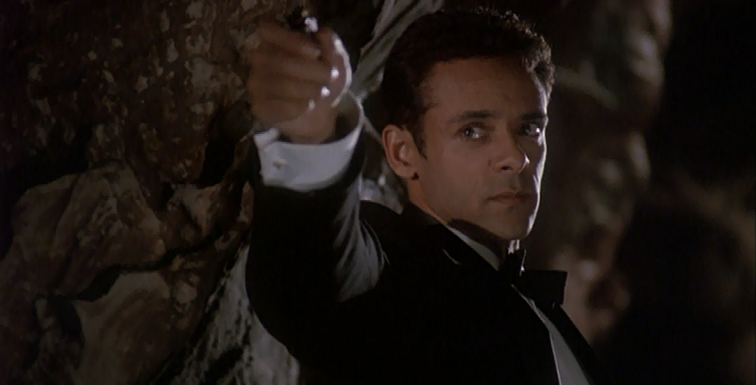
"The name's Bashir, Julian Bashir..."

“The name’s Bashir, Julian Bashir…”

However, there is more to it than that. Like Little Green Men, Our Man Bashir succeeds as a (relatively) light-hearted run-around that never loses track of its characters. The first three seasons of Star Trek: Deep Space Nine struggled with the character of Julian Bashir; audience members could wait entire seasons for a good Bashir episode. With the fourth season, three come along at once. Our Man Bashir might look light and fluffy – and it largely is – but it never loses sight of its core character dynamics in the midst of all the fun unfolding around them.

More than that, Our Man Bashir plays into the broader themes and strengths of the fourth season. The climax of the episode feels like Deep Space Nine is ruminating on its new-found place dictating the direction of the Star Trek canon. Bashir’s decision to “save the day by destroying the world” feels oddly prophetic. The fifth season of the show would find the writers destroying some of the most fundamental rules of the franchise in an effort to keep things vital.

Got some bottle...

Got some bottle…

Continue reading

Star Trek: Deep Space Nine – The Sword of Kahless (Review)

This February and March, we’re taking a look at the 1995 to 1996 season of Star Trek, including Star Trek: Deep Space Nine and Star Trek: Voyager. Check back daily Tuesday through Friday for the latest review.

The Sword of Kahless is the first episode of Star Trek: Deep Space Nine to focus primarily on Worf.

The character arrived on the show (and the station) in The Way of the Warrior, but his development since then had largely been confined to secondary plots. In Hippocratic Oath and Starship Down, Worf learned that life on Deep Space Nine would not be the same as life on the Enterprise. However, he had not really been the centre of any given episode before this point. (Even in The Way of the Warrior, Worf’s arrival and crisis of conscience was just one facet of a larger political situation.)

Sword of destiny...

Sword of destiny…

This is quite remarkable, and a result of a number of unique factors. Most obviously, Worf was not just any new cast member. Worf was a character who had arrived over from Star Trek: The Next Generation, and so was something of a known quantity to fans. There was less of a need to establish who Worf was, because most fans already knew. More than that, a lot of the early fourth season episodes had been in development before Michael Dorn had been confirmed to be joining the ensemble. As such, they tended to focus on other characters.

Nevertheless, it is remarkable that the fourth season is almost one-third of the way through its run before the production team devoted an episode to the newest member of the cast. It is a testament to the production team that the show had the confidence and restraint to adopt such an approach to such an obviously popular character. More than that, The Sword of Kahless is undoubtedly a Worf-centric episode, but it is a Worf-centric episode that makes it quite clear that Worf is a Deep Space Nine character now.

"Thank you, sir. May I have another?"

“Thank you, sir. May I have another?”

Continue reading

Star Trek: Voyager – Manoeuvres (Review)

This February and March, we’re taking a look at the 1995 to 1996 season of Star Trek, including Star Trek: Deep Space Nine and Star Trek: Voyager. Check back daily Tuesday through Friday for the latest review.

It is weird to think that the much-maligned Kazon provided perhaps the closest thing that Star Trek: Voyager had to a long-form story arc.

That probably says more about Voyager than it does about the Kazon. In storytelling terms, Voyager was firmly episodic. There were some loose threads that would span and connect multiple episodes, but the bulk of the show was comprised of very traditional “done in one” adventures. It seems fair to observe that Voyager represented something of a backslide for the franchise. It was much more episodic than Star Trek: Deep Space Nine, but also less interested in long-form storytelling than the later years of Star Trek: The Next Generation.

"This is still more enjoyable than Tattoo!"

“This is still more enjoyable than Tattoo!”

One suspects that the Kazon arc running through the second season had something to do with this storytelling choice. Michael Piller pushed really hard to make the Kazon a recurring threat to Voyager and to place them at the centre of the second season. As a result, they become a loose thread that runs through several of the season’s “big” episodes. They place a traitor on board Voyager in Alliances. They provided Tom Paris with a character arc culminating in Investigations. They provided the season-ending cliffhanger in Basics, Part I.

The arc was not well-received, whether by the fans or by the staff. It is not too difficult to understand why. Even before considering the quality of the arc itself – or the storytelling involved – the Kazon are hardly the most compelling Star Trek villains. Allowing for that, it seemed like the writing staff had no real idea how to serialise a story arc across a season, making all manner of clumsy mistakes along the way. The arc never gathered momentum and it never paid off, which are very real problems when trying something that ambitious.

Either you Kazon... or you be gone...

Either you Kazon… or you be gone…

Manoeuvres effectively kicks off the arc. Although the Kazon had appeared in Initiations earlier in the second season, Manoeuvres features the first reappearance of Seska and Cullah since State of Flux midway through the first season. The episode is perhaps the strongest of the “Kazon” shows, with a sense of momentum driving the first half of the script. However, things rather quickly come off the rails in the second half of the story. Already, the production team’s inexperience with serialised storytelling is showing.

Manoeuvres is perhaps as good as the Kazon ever got. It is nowhere near good enough.

So that's why they call them raiders...

So that’s why they call them raiders…

Continue reading

Star Trek: Voyager – Cold Fire (Review)

This February and March, we’re taking a look at the 1995 to 1996 season of Star Trek, including Star Trek: Deep Space Nine and Star Trek: Voyager. Check back daily Tuesday through Friday for the latest review.

Cold Fire is an episode that exemplifies the feeling that second season’s treading water.

Cold Fire opens with a somewhat unconventional recap of Caretaker. Unlike most “previously on…” sections of Star Trek: Voyager (or the Star Trek franchise as a whole), this block is narrated by Majel Barrett in-character as the ship’s computer. It becomes clear that Cold Fire is interested in following up on the dangling threads left by Caretaker, with the crew of Voyager encountering the female mate alluded to in Janeway’s conversations with the eponymous Nacene character from Caretaker.

Everything burns...

Everything burns…

This should be a big deal. After all, the Caretaker is the character responsible for plucking Voyager and the Val Jean out of the Alpha Quadrant and depositing them on the other side of the galaxy. Finding another being with a similar amount of power presents a very real and tangible opportunity for Janeway to get her crew home. If the Caretaker could pull them all the way across the Milky Way, then it stands to reason that Suspiria could send them all the way back. Cold Fire presents a potential end to Voyager’s journey.

Unfortunately, Cold Fire never really does anything with that storytelling angle. Even when Janeway comes face-to-face with Suspiria at the climax of the episode, she never asks the powerful entity to send her crew home. So Cold Fire feels like an episode that spends forty-five minutes walking in circles, accomplishing little of note.

"It's probably just the inertial dampeners acting up..."

“It’s probably just the inertial dampeners acting up…”

Continue reading

Star Trek: Deep Space Nine – Little Green Men (Review)

This February and March, we’re taking a look at the 1995 to 1996 season of Star Trek, including Star Trek: Deep Space Nine and Star Trek: Voyager. Check back daily Tuesday through Friday for the latest review.

Little Green Men might just be the best Ferengi episode from the seven-year run of Star Trek: Deep Space Nine.

It helps that the episode is very clearly a passion project for writers Ira Steven Behr and Robert Hewitt Wolfe. More than any other Star Trek show, Deep Space Nine had a deep and abiding affection for classic cinema. Michael Piller might have tried to steer the first two seasons of Star Trek: Voyager back to classic western storytelling tropes, while Rick Berman and Brannon Braga might have promised that Star Trek: Enterprise would be a “back to basics” reimagining of the show, but Deep Space Nine was a show that adored old-school Hollywood.

Quark's Family Vacation...

Quark’s Family Vacation…

This was reflected in a number of ways. In Past Tense, Part II, B.C. planned to escape to Tasmania because Errol Flynn was born there. There was also the fact that Ira Steven Behr could never resist the lure of a good homage to classic cinema – even when it was not the best of ideas. Meridian was written as an attempt to adapt Brigadoon to the Star Trek universe; Fascination was based on the 1935 adaptation of A Midsummer Night’s DreamRules of Acquisition was basically YentlProfit and Loss was Casablanca.

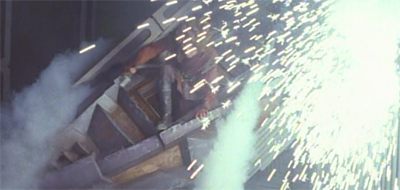
It seemed almost inevitable that at some stage the cast and crew of Deep Space Nine would find themselves colliding with classic Hollywood.

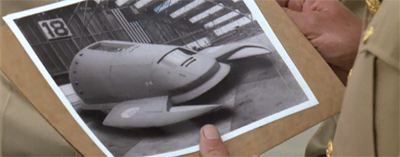
"Well, it's not a saucer..."

“Well, it’s not a saucer…”

Continue reading