• Following Us

  • Categories

  • Check out the Archives


  • Awards & Nominations

Luke Cage – DWYCK (Review)

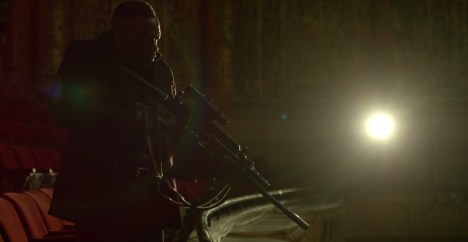
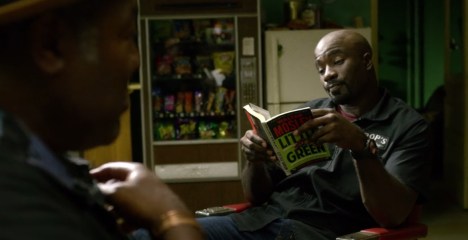
DWYCK opens with a long take, staring at Misty Knight.

As brought to life by Simone Missick, Misty Knight is another example of just how carefully and how effectively Luke Cage draws its characters. Missick has earned a lot of praise for her work in the role, with many fans and commentators even calling for a solo vehicle built around the detective. Knight is a fascinating and well-drawn character. She has been so since her first appearance in the show, flirting with Luke Cage over the bar in Moment of Truth. However, the show has given the character more to play with as it progresses.

lukecage-dwyck

In fact, the second half of the show represents something of a pivot towards the female members of the ensemble. Following the death of Cornell in Manifest and the arrival of Stryker in Blowin’ Up the Spot, the series has taken a renewed interest in its female characters. Indeed, the last six episodes of the season take a create deal of pleasure in throwing actors like Simone Missick, Rosario Dawson, Alfre Woodard and Karen Pittman into scenes together. Indeed, with the conflict between Luke and Stryker feeling rather generic, these scenes are where the spark lies.

DWYCK does an excellent job setting the tone for the second half of the season.

lukecage-dwyck6a

Continue reading

Star Trek: Voyager – Future’s End, Part II (Review)

In a very real way, the Rick Berman era of Star Trek ends with Future’s End, Part I and Future’s End, Part II.

Future’s End, Part I and Future’s End, Part II marks the point at which Star Trek: Voyager stops moving forward. It is the point at which the show decides that it has accomplished just about everything that it could ever want to accomplish, and that it has crystalised into its final form. There are some changes still to come, with the introduction of Jeri Ryan in Scorpion, Part II and the departure of Jeri Taylor following Hope and Fear, but (by and large) the show has pretty much figured out the kinds of stories that it wants to tell and the ways in which it wants to tell those stories.

More like a hole-o deck character...

More like a hole-o deck character…

Future’s End, Part I and Future’s End, Part II feels like an appropriate place at which to draw that line in the sand. It is the two-parter that really introduces the concept of big blockbuster storytelling to Voyager, and which restructures the series as a mechanism through which generic Star Trek stories might be told. The template for the remaining three-and-a-half seasons can be found in this episode, from the “everything is back to normal” ending through to the idea of giving Janeway a a singular action-movie antagonist against which she might define herself.

The two-parter seems to freeze Voyager in amber, and set its storytelling sensibilities in stone. There will be no more experimentation, no more evolution. This is how things are to be from this point onwards. Appropriately enough, Future’s End, Part I and Future’s End, Part II mark the future’s end.

Tom and Tuvok's Bogus Journey...

Tom and Tuvok’s Bogus Journey…

Continue reading

Luke Cage – Blowin’ Up the Spot (Review)

Blowin’ Up the Spot renews the emphasis on Luke Cage as a blaxploitation superhero, to an extent not seen since Step in the Arena.

Cornell Stokes was shuffled off the stage at the end of Manifest to make room for Willis Stryker. Stryker has lurked at the edge of Luke Cage‘s narrative since Moment of Truth, nominally represented by the mysterious gangster known as “Shades.” Stryker has been a mysterious and ominous presence, a business associate of Cornell’s with designs upon Harlem. His name is whispered in conversations, the characters sharing some unspoken understanding of who he is and what he does in a way that evokes the way criminals spoke of Wilson Fisk in the early episodes of Daredevil.

lukecage-blowinupthespot4

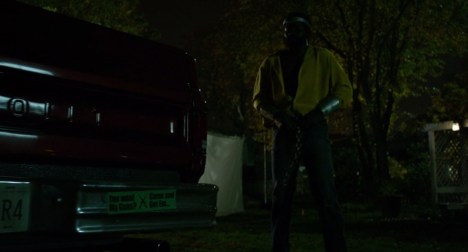
However, Blowin’ Up the Spot wastes no time in establishing Stryker as a new antagonist for Luke Cage. The character was teased in the closing minutes of Manifest, offering Luke “one Judas for another.” He is very much front and centre in Blowin’ Up the Spot. The episode’s teaser closes on the image of Stryker dressed in a bulletproof vest, standing beside a humvee and carrying a grenade launcher. There is no ambiguity there, no subtlety. Stryker has arrived in force, and is ready to take centre stage.

After all, Luke Cage is a superhero story. And every superhero story needs a super villain.

lukecage-blowinupthespot31a

Continue reading

Luke Cage – Manifest (Review)

By and large, the first season of Luke Cage is not a radically subversive superhero tale.

Indeed, a lot of the show’s strengths come from how steadily and reliably it hits on the expected superhero plot beats while reconfiguring them for this particular hero at this particular time: Pop as Uncle Ben in Code of the Streets; the superhero origin story in Step in the Arena; the hero hunted by the authorities in Soliloquy of Chaos; the secret family tree drama in Take it Personal; the throwdown with the super villain ascendant in the streets in You Know my Steez.

lukecage-manifest33a

These are all familiar elements of the archetypal superhero story, but pivoted around the idea that Luke Cage is fundamentally a black superhero story and rooted in those experiences as well. As such, Manifest represents the sharpest and most subversive twist on the format of the first season. After spending six episodes establishing the character of Cornell “Cottonmouth” Stokes and elevating him to the status of primary antagonist in Luke’s battle for the heart and soul of Harlem, Cornell is unceremoniously and brutally murdered. And not even by Luke Cage.

It is a wry and a clever twist, perhaps the most daring storytelling decision of the entire season. It is visceral, and enough to jolt the series back to life after Luke reached the climax of his own emotional arc in Just to Get a Rep. Of course, this bold decision to kill off the presumptive primary antagonist half way through the season causes its fair share of problems in the season’s troubled second half, but it is still a striking and bold choice for a series that largely played by the rules to this point.

lukecage-manifest4

Continue reading

Luke Cage – Suckas Need Bodyguards (Review)

This all looks very familiar.

There is a gangster, who does not like to be called a gangster. He is involved in real estate in Manhattan. He dressed in fancy suits, but deep down is an emotionally stunted manchild. Over the course of putting together a big real estate deal, this gangster crosses paths with a superhero. The superhero becomes an obsession. Things escalate. The mobster’s friends on the police force turn against him. It all comes down to one dirty cop with enough details to blow the whole case wide open and finally put this mobster behind bars where he deserves to go.

lukecage-suckasneedbodyguards23a

This is the basic plot outline of Suckas Need Bodyguards, in which Detective Raphael Scarfe has enough evidence in a little black note book to put Cornell “Cottonmouth” Stokes in prison for a very long time, with Luke Cage tasked with delivering Scarfe and the note book to authorities. It is also the basic plot outline of Daredevil, the first season finale of Daredevil, in which Detective Carl Hoffman has enough evidence to put Wilson “Kingpin” Fisk in prison for a very long time, with Matt Murdock tasked with delivering Scarfe and the note book to authorities.

Imitation might be the sincerest form of flattery, but it seems a strange choice to imitate the weakest of that otherwise very strong first season.

lukecage-suckasneedbodyguards25a

Continue reading

Luke Cage – Just to Get a Rep (Review)

In many ways, Just to Get a Rep wraps up the big character arc that spans the first half of Luke Cage.

It builds upon Step in the Arena by allowing Luke to embrace his superhero persona and craft something bigger than himself. This is the point at which Luke fulfils the character arc established in those early scenes with Pop back in Moment of Truth, using his gifts to make the world a better place for other people. Appropriately enough, Luke publicly accepts the mantle of hero at the memorial service held in honour of Pop. Standing up to Cornell; standing up for the community; rallying the church. This is really the end of Luke’s hero’s journey.

lukecage-justtogetarep3a

There is just one slight problem with this, and it comes down to the biggest problem with this thirteen-episode season as a whole. There is simply too much storytelling real estate to fill with the character and story arcs. So, although Luke has effectively completed his hero’s journey, this story continues for two more episodes. To be fair, Manifest is an episode clever enough to work on its own terms as a coda to this opening half of the season, but it does leave Suckas Need Bodyguards feeling rather redundant.

This is a shame, because Just to Get a Rep has the makings of a great season (or even mid-season) finale. Unfortunately, the season order means that there are still two whole episodes to go.

lukecage-justtogetarep7a

Continue reading

Star Trek: Deep Space Nine – Let He Who Is Without Sin… (Review)

It would be tempting to treat Let He Who Is Without Sin… as an anomaly.

After all, it is very much the worst episode of the fifth season. There is a very strong argument to be made that it is the worst episode between Meridian and Profit and Lace, which makes it easier to forgive. After all, it is not as though Star Trek: Deep Space Nine has been regularly churning out episodes like Twisted, Tattoo, Alliances, Threshold and Investigations. The second worst episode of the fifth season is The Assignment, and the biggest problem with that episode is that it is both painfully generic and ground zero for a set of major future problems.

This episode is pants.

This episode is pants.

Still, it is important not to gloss over just how terrible Let He Who Is Without Sin… actually is and the very specific ways in which it is terrible. While these sorts of misfires are quite rare in the context of the series’ fourth and fifth seasons, Let He Who Is Without Sin… is not a fluke. The episode did not materialise from nowhere. It is very much the result of a number of creative impulses within Deep Space Nine firing in the worst possible ways. Unlike The Assignment, this episode does not fail because the concept and execution is an awkward fit for Deep Space Nine.

Let Who Is Without Sin… fails in ways that are very specifically tied to Deep Space Nine.

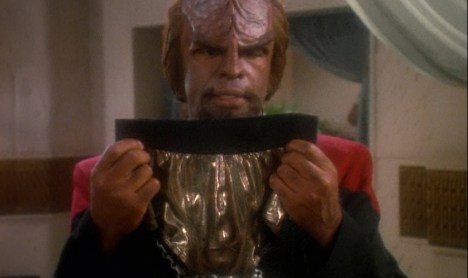
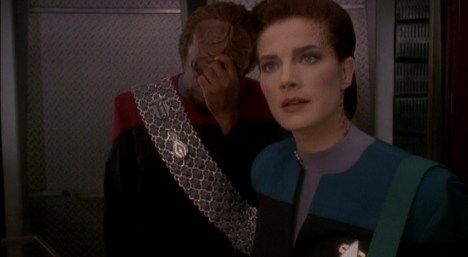
"It's okay, Worf. The writers promised that was only the first draft they sent through."

“It’s okay, Worf. The writers promised that was only the first draft they sent through.”

Continue reading

Luke Cage – Step in the Arena (Review)

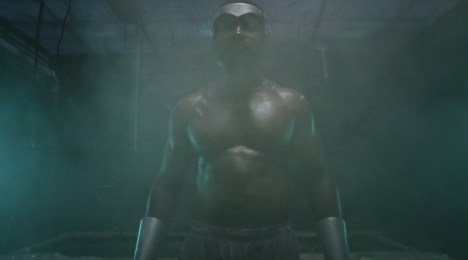
My name is Luke Cage.

Step in the Arena is the obligatory origin episode. It is also the strongest episode of the season.

One of the most striking aspects of Luke Cage is the thrill that the show takes in being a superhero story. It isn’t simply that showrunner takes an established set of plot and character beats and stretches them over thirteen episodes, much like the first season of Daredevil seemed to do with the structure of Batman Begins. After all, Luke Cage messes with the superhero story structure in a few interesting ways, particularly with regards to the character of Cornell Stokes.

lukecage-stepinthearena29a

Luke Cage adores the trappings of superhero storytelling. It thrives on comic book iconography. It revels in the familiar tropes. It embraces the goofy concepts. It latches on to the absurd coincidences. Step in the Arena is a very familiar superhero origin story, populated with familiar beats like the suspect human experimentation or the dead best friend or the fugitive status. However, the film executes those story beats with an incredible and infectious energy. There is no hesitation here, no deconstruction, no undermining.

However, the beauty of Step in the Arena lies in how it subtly shifts the emphasis of these familiar storytelling beats in a way that emphasises its status as a black superhero origin story. A lot of the charm of Luke Cage lies in realising that the writers do not have to choose between telling a story that speaks to the black experience in contemporary America or offering an archetypal superhero television series. Luke Cage never has to compromise, using broth threads to illuminate and inform one another.

lukecage-stepinthearena33a

Continue reading

Luke Cage – Who’s Gonna Take the Weight? (Review)

Who’s Gonna Take the Weight? is largely shaped and defined by its central hall way fight sequence.

The hallway fight sequence was hyped in the first teaser trailer for Luke Cage, which set an abridged version of the scene to Shimmy Shimmy Ya by Dirty Ol’ Bastard. However, a scene like this seemed inevitable even before that trailer landed. After all, the extended one-take hallway fight sequence from Cut Man, the second episode of Daredevil, had been a watershed moment for the Marvel Netflix properties; that impressively choreographed centrepiece really demonstrated what the shows could accomplish from a technical and action-driven perspective.

lukecage-whosgonnataketheweight25a

Indeed, the second season of Daredevil treated the hallway fight sequence as something approaching a holy artifact, offering two extended homages to the brawl. The multi-level fight sequence in New York’s Finest was a rather blatant (and awkward) attempt to maintain the one-take conceit while escalating the action to an absurd degree. The prison corridor brawl in Seven Minutes in Heaven shrewdly dropped the insistence on maintaining a single take while increasing the carnage exponentially. The hallway fight sequence is a sacred moment for the Netflix properties.

Jessica Jones notably avoid a tribute to the sequence, but that could be explained any number of ways; from the fact that Jessica Jones would have been in production before the response to the fight sequence hit through to Jessica Jones‘ reluctance to embrace the conventional and expected story beats from a superhero story. In contract, Luke Cage is very keen to deliver upon all these expectations. The extended corridor sequences in Who’s Gonna Take the Weight? are a way for Luke Cage to embrace its superhero stylings, but on its own terms.

lukecage-whosgonnataketheweight27a

Continue reading

Luke Cage – Code of the Streets (Review)

What does it mean for Luke Cage to be the first entry in the so-called Marvel Cinematic Universe to focus on an African American character?

Of course, there have been superhero films built around black characters. Shaq starred in Steel and Halle Berry starred in Catwoman. The most successful example of black superhero cinema is probably the Blade trilogy, which launched slightly before Sam Raimi’s Spider-Man and Bryan Singer’s X-Men reinvented the comic book movie for the new millennium. However, Wesley Snipe’s half-vampire vampire hunter is frequently forgotten in these discussions, perhaps because the films are generally pitched as action horror movies rather than superhero films.

lukecage-codeofthestreets

It is astonishing that it has taken so long for the superhero boom to encompass stories focusing on protagonists that are not white men. So Luke Cage arrives with a lot of expectations. The series is keenly aware of this fact, never shying away from the Luke’s cultural perspective. Then again, this makes a certain amount of sense. Luke Cage is a black superhero whose superpower is his own skin. The opening credits make this quite clear, projecting evocative images of Harlem on to that skin so as to reaffirm that connection.

Luke Cage is a black superhero. Luke Cage is a black superhero television show. The result is a fascinating piece of television that finds something new to say about a long-established genre by looking beyond the stock perspective.

lukecage-codeofthestreets3a

Continue reading