• Following Us

  • Categories

  • Check out the Archives


  • Awards & Nominations

Doctor Who: Resolution (Review)

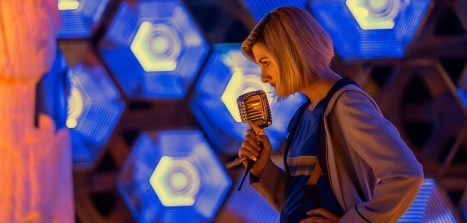
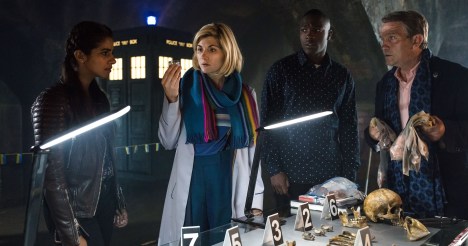
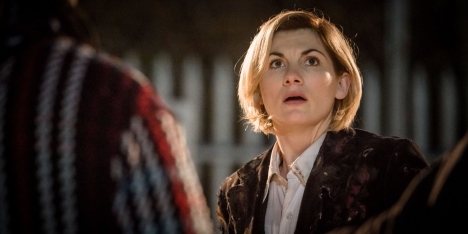
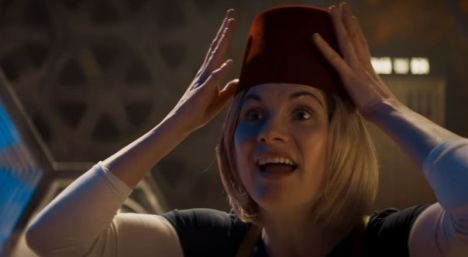
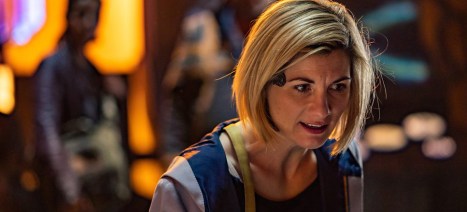
Despite being positioned as a New Year’s Special and being the only episode of Doctor Who broadcast in 2019, Resolution functions as a season finale to the eleventh season.

This is both a good thing and a bad thing. In terms of working relatively well, Resolution helps to compensate for the damp squib that was The Battle of Ranskoor Av Kolos. It provides a sense of spectacle and threat that was sorely lacking from the last episode of the broadcast season. It also wraps up a number of thematic threads from the season and even provides a much more effective bookend to The Woman Who Fell to Earth than simply bringing back an underwhelming antagonist.

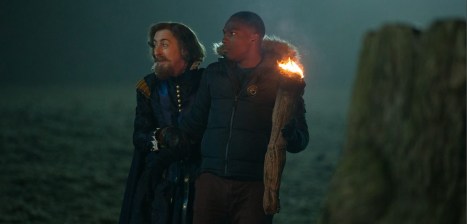
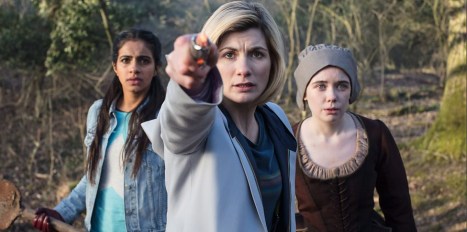
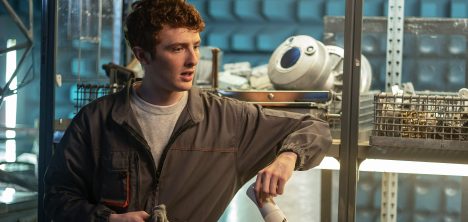
Calling the Dalek out.

However, there are also problems. Most obviously, the fact that Resolution functions as a slightly-delayed series finale makes The Battle of Ranskoor Av Kolos seem even more pointless. There was no need for The Battle of Ranskoor Av Kolos to serve as such a half-assed bookend to The Woman Who Fell to Earth, given Resolution would do a much better job. The storytelling real estate in The Battle of Ranskoor Av Kolos could easily have been given over to literally anything but the episode that was broadcast. That’s deeply frustrating.

There is another issue as well. Writing a New Year’s Special that also serves as a season finale is a risky move. The End of Time, Part II attempted this, and struggled to find the right balance, mostly be eschewing the holiday elements in favour of providing closure with the larger Davies Era as a whole. Resolution tries to strike a more effective balance between being an epic season finale and an episode that can be watched by the whole family after gorging on a massive dinner. This creates an internal tension that Resolution never quite resolves.

Digging deep.

Continue reading

Black Mirror – Bandersnatch (Review)

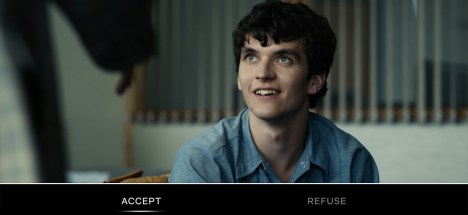
What exactly is Bandersnatch?

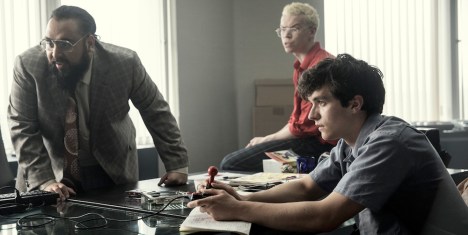
In narrative terms, it is very difficult to describe Bandersnatch, given the structure and format of the latest installment of Black Mirror. After all, two people consuming Bandersnatch might have very different experiences of it. It is possible for certain audience members to experience the narrative fundamentally different ways. Conversing about Bandersnatch largely involves defining what each participant experienced of the narrative, establishing a frame of reference for discussion. It is fascinating in this regard.

However, that is arguably an even bigger question. Is Bandersnatch an episode of television, given that it is being released under the Black Mirror brand by Netflix, even though it is being released on its own terms? Is Bandersnatch a film, given that it is a self-contained narrative? Is Bandersnatch just a video game, given how much it relies on audience participation? These are three very different classifications, and Bandersnatch blurs the line between each of the three.

Marshall McLuhan famously argued that “the medium is the message”, but Bandersnatch takes that a little further. What if we’re not sure what the medium is at all?

Continue reading

Into the Dark: New Year, New You (Review)

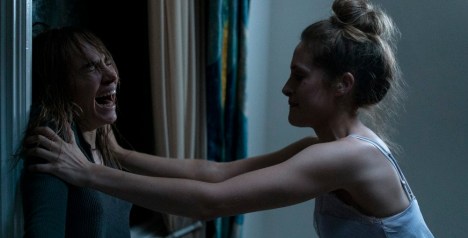
Into the Dark is the new anthology series from Blumhouse.

A horror anthology series seemed inevitable. There is a rich tradition of television series built around using the anthology format to tell horror stories; The Twilight Zone, The Outer Limits, Tales from the Crypt. More than that, recent years have seen a resurgence in the popularity of anthology television. This is most obvious in the seasonal anthology structure of series like American Crime Story or American Horror Story, but is also reflected in the popularity and success of series like Black Mirror or Philip K. Dick’s Electric Dreams.

New year is the perfect time for… don’t make me say it

Horror is particularly suited to the anthology format. After all, having regular characters in a familiar setting tends to dilute both the suspense and the dread that runs through so much horror. The anthology format allows for a variety of characters, locations, formats and themes. Beyond that, Into the Dark is built around ninety-minute episodes, meaning that the series functions as an anthology of holiday-themed horror stories all telling self-contained tales.

Into the Dark is an effective reminder of just how much the medium of television has changed in recent years. Is Into the Dark best thought of as a television series or six feature films? The episodes are released online at Hulu. Unlike other net-native series Into the Dark eschews both the “all at once” binge model favoured by Netflix and the “one week at a time” approach that defines network television. Episodes are released when appropriate, rather than adhering to a rigid structure. It is an illustration of how fluid media is at the moment.

Pushed to the edge.

As the title implies, New Year, New You is the New Year entry in the series. Pooka! had been released for Christmas earlier in the month. New Year, New You is anchored in the themes of the holiday, in the ideas of renewal and reinvention. This is an interesting and audacious approach for a horror story to take. Certainly, New Year is a holiday that does not lend itself to horror as readily as Halloween or even Thanksgiving, and lacks the heightened irony of building a horror story around Christmas.

Perhaps accounting for this, New Year, New You leans heavily into dark comedy. The film does not work entirely consistently, effectively transitioning between three separate modes of horror within its ninety-minute runtime. There is very little novel or innovative to be found structurally in New Year, New You, which blazes through the familiar horror movie clichés with little in the way of insight or energy. There are moments when New Year, New You works rather well, particularly as it embraces absurdity in its third act. However, it is just too unfocused and uneven.

Deal with it.

Continue reading

Doctor Who: Series Eleven (or Thirty-Seven) (Review/Retrospective)

And so the Chris Chibnall era begins.

Any discussion of the Chris Chibnall era must begin with an acknowledgement that it is, by any measure, a commercial success. Even allowing for erosion over the course of the season, the overnight ratings are appreciably up on where they were during the Moffat era. This is particularly true in the United States, where the show is thriving on BBC America. More than that, these new viewers are younger and female, indicating that the efforts to revitalise the show have been largely successful in attracting a new audience to a series that has been on the air for ten seasons (over one hundred and forty episodes) over thirteen years.

More than that, the series has survived an incredible transition. In theory, the casting of a female lead in a major long-running science-fiction property really shouldn’t be that big a deal. (After all, the advertising neatly summarised it as “about time.”) However, one need only look at the controversy around things like increasing the diversity in mainstream comic books or even the backlash over Star Wars: Episode VIII – The Last Jedi in order to see how easy it is to start a culture war. Jodie Whittaker is the Doctor, and her widespread acceptance speaks well to Whittaker and Chibnall, and to fans as a whole.

There is a catch, however. As much as the eleventh season has been a commercial success by any measure, it has also been a massive creative disappointment. The eleventh season of Doctor Who is very stylishly produced. There is a credible argument to be made that these ten episodes are the best that the show has ever looked. However, it is also the most generic that the series has ever been. From its earliest days, the series has been defined by a hint of madness and insanity, wonder and awe. The eleventh season of Doctor Who strips all of that out, looking like any other successful science-fiction series. That’s disappointing.

Continue reading

Doctor Who: The Battle of Ranskoor Av Kolos (Review)

The Battle of Ranskoor Av Kolos ends the eleventh season on something of a damp squib.

To be fair, there were a lot of hurdles facing The Battle of Ranskoor Av Kolos from the outset. Most obviously, the expectations of a season finale. Unlike when Doctor Who was first broadcast, season finales are a big deal. They are part of the structure and rhythm of a season of television in a highly competitive market place. Indeed, one of the big innovations of the Davies era was understanding this, with Russell T. Davies building all of his season to bombastic blockbuster season finales.
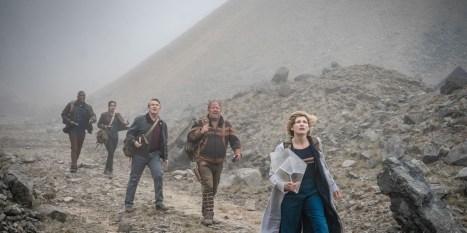
Hunting their quarry.

There are a lot of expectations heading into a season finale. The episode has to at once exist in the context of what came before and gesture towards the future, satisfy the audience who watched every episode leading into it and offer a compelling reason to stick with the show through a long hiatus. That reason to stick around does not have to be a hook or a plot point, it can simply be, “this show does stuff that nothing else on television is doing.”

However, The Battle of Ranskoor Av Kolos faces a number of problems in this regard. Most obviously, it is only a single episode long, which means it is formally indistinct from the nine episodes before it. More than that, it has to cram a host of plot and character work into that space, which needs to be “bigger” (or even just “more”) than the rest of the season. The Battle of Ranskoor Av Kolos has to be a blockbuster episode despite being indistinguishable from Kerblam! or The Witchfinders or It Takes You Away.
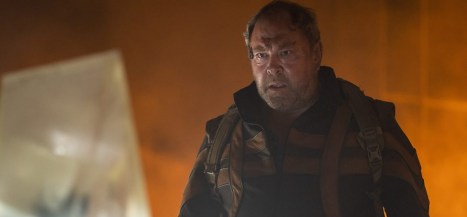
Actually, more like Paltraking down their quarry…

There is a reason that Moffat’s two single-episode season finales are among his most divisive, and those were consciously designed to defy the formal expectations of the season finale. Although The Wedding of River Song did not quite work, it was structured more as a fun run-around season opener than an epic season finale, most of its questions long answered. The Name of the Doctor was less of a season finale and more a springboard to The Day of the Doctor and The Time of the Doctor. Even then, Moffat returned to two-part finales in the Capaldi era.

To be fair, The Battle of Ranskoor Av Kolos might be able to get away with this if the show had been seeding momentum leading into the finale in earlier episodes so that story begins with a sense of stakes. Think about the way that The Long Game set up Bad Wolf and The Parting of the Ways, or the way that Tooth and Claw or Rise of the Cybermen and Age of Steel built to Army of Ghosts and Doomsday. More applicable to The Battle of Ranskoor Av Kolos, consider the repeated references to missing planets in the lead-in to The Stolen Earth and Journey’s End.
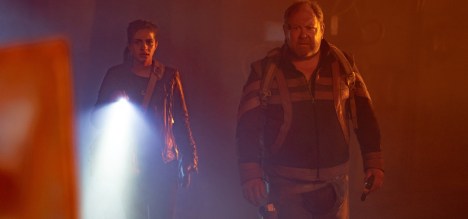
“Orange-a glad it isn’t the stinkin’ Daleks?”

There are undoubtedly aspects of The Battle of Ranskoor Av Kolos that were seeded earlier in the season. Tim Shaw from The Woman Who Fell to Earth, the Stenza weapons testing in The Ghost Monument, the lost world in The Demons of the Punjab. However, none of these were developed with any sense of urgency, nor maintained across the length the season. None of them make any lasting impression. It is a minor miracle that any of the characters remember Tim Shaw, as he was never a compelling villain in the first place.

The result is a season finale that aspires towards a sense of scale that never feels earned, that never pays off, that never engages. It is a good thing that Resolutions will arrive in a little over three weeks, as it’s very hard to imagine The Battle of Ranskoor Av Kolos sustaining audience interest until the series returns in 2020.
“Battlefield: Ranskoor Av Kolos.”

Continue reading

Doctor Who: It Takes You Away (Review)

It Takes You Away is a strong contender, along with Demons of the Punjab, for the strongest story of the eleventh season of Doctor Who.

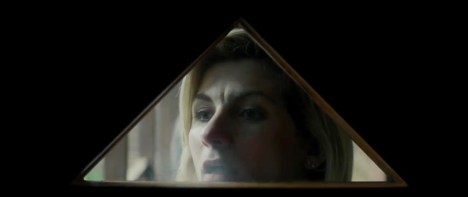
It Takes You Away plays as an allegory. It is something of a fairy tale. It is perhaps the closest that the eleventh season of Doctor Who has come to feeling like a fairy tale, particularly given the conscious choice to root The Woman Who Fell to Earth in a more gritty and grounded universe. It Takes You Away seems like it could have been commissioned during the Moffat era, a lyrical meditation on the idea of loss and mourning. It Takes You Away is a story about needing to let go of trauma, rather than holding on it or carrying it inside.

Reflections and symbols.

To be fair, It Takes You Away is not perfect. There are still some minor pacing issues, particularly with how long the episode takes to get to the meat of the story; there is a sense in which It Takes You Away is three stories stitched together, with the middle segment particularly inessential. There is also the same over-reliance on weirdly specific and overly detailed nonsense techno-babble and mythology that stood out in episodes like The Ghost Monument or The Tsuranga Conundrum.

Still, It Takes You Away has some big ideas, a clever execution, and a strong central theme upon which both might be placed.

Mind the gap.

Continue reading

Star Trek: Voyager – Body and Soul (Review)

Body and Soul is the old science-fiction staple, the body swap episode.

There are any number of iconic examples of the genre, even within the larger Star Trek franchise. Although the original series was populated with duplicates and doppelgängers and surrogates and clones in episodes like The Enemy Within, Mirror, Mirror, Whom Gods Destroy and even What Are Little Girls Made Of?Turnabout Intruder might be the most straightforward example. Star Trek III: The Search for Spock featured sequences in which McCoy was channelling Spock. Star Trek: Deep Space Nine had all the cast take on the personalities of Dax’s past hosts in Facets.

Insert your cheesecake jokes here.

Often, these sorts of stories exist to showcase the dramatic range of key performers and to offer a little variety to the weekly routine of playing the same character for years and years on end. On Star Trek: The Next Generation, Brent Spiner would occasionally find himself tasked with playing Data’s “brother” Lore or his “father” Noonien Soong in episodes like Datalore, Family, Descent, Part I, Descent, Part II and Inheritance. The cast on Deep Space Nine would play their mirror counterparts in stories like Crossover, Through the Looking Glass and Shattered Mirror.

Even Star Trek: Voyager has done its own body swap and possession narratives before, like with Tuvok in Cathexis or with Paris in Vis à Vis. However, the success of these sorts of episodes largely rests in the execution, in the question of whether it is worth watching a familiar actor playing an unfamiliar role for forty-five minutes. This is a tough challenge, and many episodes falter trying to hit that mark. Body and Soul has a lot of very fundamental issues with it, but it at least has the common sense to ask one of the cast’s best actors to impersonate another of the cast’s best actors.

“Next week is a Kim episode?”

Continue reading

New Podcast! Standard Orbit #246 – “A Tale Of Three Producers “

I was thrilled to be invited to join the great Zach Moore on Standard Orbit, a Star Trek: The Original Series podcast hosted over at Trek FM. I appeared on the show last year to discuss the third season of the series, and so it makes sense that I should be back to discuss the second season.

Zach got in touch after reading some of my reviews for the second season from several years back. He was particularly fascinated with my breakdown of the season between three producers: Gene L. Coon, John Meredyth Lucas and Gene Roddenberry. Each of those three producers had their own unique style and each brought their distinct sensibility to the series. In fact, watching the season in production order, there a discernible shift between the three talents involved. Coon was much more interested in playing with the tropes and conventions of the young series, while Lucas was engaged with more traditional science-fiction storytelling and Roddenberry had his own strong idea of what the series could be.

Zach was, as ever, a very gracious host. I had great fun discussing it. You can hear the full discussion below or visit the episode page here.

Continue reading

Doctor Who: The Witchfinders (Review)

The Witchfinders is perhaps the closest that the eleventh season of Doctor Who was come to delivering a conventional celebrity historical.

It is an episode that is much closer to the traditional mode of science-fiction adventure than Rosa or Demons of the Punjab, and not just because it is the first historical episode to be set in British history. As with Arachnids in the U.K., the format of The Witchfinders harks back to the structure and rhythms of the Davies era, feeling like a companion piece to episodes like The Unquiet Dead, The Shakespeare Code or The Unicorn and the Wasp. (There are a handful of examples from the Moffat era, notably Victory of the Daleks and Vincent and the Doctor, but they are appreciably fewer.)

The King’s Demons.

This is a broad episode set in the distant path in a manner that evokes the popular folk history of the United Kingdom. It evokes a particular period of history that tends to be well known in a general sense, but less familiar in any specific detail. The Witchfinders focuses on the Doctor and the TARDIS wading into the witch trials that took place during the seventeenth century, overseen by King James I. There is even a nice tie-in to The Shakespeare Code, with the historical connection between those witch trials and William Shakespeare’s Macbeth.

The Witchfinders often finds itself trapped between two extremes. The idea of sending the first female Doctor back into these witch hunts is ripe for social commentary, arguably even more directly than that with which the historical episodes like Rosa and Demons of the Punjab have engaged. Indeed, there is something slyly subversive in the episode’s portrayal of its celebrity figure – in this case King James I – as a deeply flawed figure rather than somebody to be venerated.

Screwed.

On the other hand, The Witchfinders is very much a typical modern-era historical adventure. The Doctor inevitably discovers that there are sinister aliens at work in a historical setting, plotting an invasion and threatening to derail the entire course of history. These aliens serve to provide an explanation for a historical event, and even allow the Doctor to have a more direct impact on the life of an important historical figure, before disappearing into the TARDIS. This is very much of a textbook example of the kind of story codified by The Visitation or The Mark of the Rani.

These two extremes pull within the episode, holding The Witchfinders back from greatness. It is too serious to be enjoyed purely as a fun runaround, but too winkingly mischievous to work as an insightful piece of social commentary. The result is mostly satisfying, even if it is hardly filling.

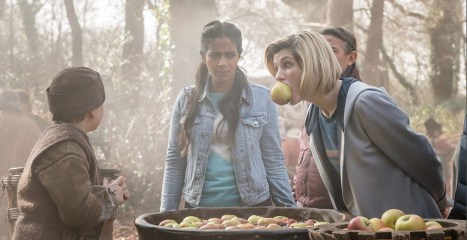
Apple of her eye.

Continue reading

Doctor Who: Kerblam! (Review)

Watching Kerblam! makes for a very strange sensation.

As with the earlier stretch of the eleventh season, there is a sense that Chris Chibnall is consciously harking back to the era overseen by Russell T. Davies. This explains the opening present-future-past triptych of The Woman Who Fell to Earth, The Ghost Monument and Rosa. It also accounts for the positioning of Arachnids in the U.K. as an opportunity to spend time in the contemporary United Kingdom for the twin purposes of character development and broad political commentary.

A clean record.

Kerblam! is the kind of futuristic story that Davies would frequently tell early in his own seasons, like New Earth, Gridlock or Planet of the Ood. It might also be reflected in episodes like The Long Game or Midnight. Interestingly, the episode is populated with the sort of politically-coded iconography that defined those stories, iconography that had largely been stripped out of The Ghost Monument in favour of some broad asides about how late-stage capitalism is a destructive rat race without any real depth to them.

Kerblam! is very overtly a story about hypercapitalism, with the eponymous company obviously standing in for Amazon. This is much more overtly political than any subtext that could be read into the season’s other “future” stories like The Ghost Monument or The Tsuranga Conundrum. Following on from episodes like Arachnids in the U.K. and Demons of the Punjab, it seems like Kerblam! might be positioned as bit of biting social commentary, using the broadly drawn science-fiction future in the same way as even Moffat era tales like The Beast Below, Smile or Oxygen.

Doesn’t scan.

On a purely surface level, Kerblam! looks like it might engage with the legacy of the Davies era as more than just a production aesthetic, understanding the potential to use a cartoonish and exaggerated science-fiction framework to slip in some genuinely provocative social commentary for family consumption. One of the great ironies of the Chibnall era has been the narrative that it is “too PC!”, despite the fact that it has actually been surprisingly moderate in its political ambitions. The surface level design of Kerblam! looks like a breath of fresh air in that context.

Unfortunately, the episode takes a number of very sharp swerves and veers crazily off course, featuring the surreal assumption that “the systems aren’t the problem.”

Difficulty Fezzing up to reality.

Continue reading