• Following Us

  • Categories

  • Check out the Archives


  • Awards & Nominations

Non-Review Review: Sully – Miracle on the Hudson

Sully: Miracle on the Hudson has a certain Frank Capra quality to it.

To be fair, a lot of that comes from the casting of Tom Hanks in the title role. Hanks radiates a certain ineffable integrity, a “Hanksian Decency” that informs his performances in films as diverse as Bridge of Spies and Inferno. It is tempting to think of him as “America’s Dad”, particularly given the grey hair and the moustache that he donned for the title role here. However, it is also tempting to think of him as a latter-day Jimmy Stewart, the embodiment of a certain type of fundamental American decency that lends itself to this sort of narrative.

Hanks for the memories.

Hanks for the memories.

Similarly, director Clint Eastwood has a similar philosophy. Eastwood’s films tend to be organised around strong moral principles. Often those principles are articulated in terms of personal responsibility, particularly the responsibility that individuals have for others whether in a professional capacity (J. Edgar) or a personal capacity (Million Dollar Baby) or simply by virtue of being there (Gran Torino). Eastwood’s recurring fascination with individual responsibility makes him a quintessentially American director.

This combination is ideally suited to Sully, which is constructed as something akin to a modern-day American fairytale.

"Mr. Sullenberger goes to the NTSB Debriefing."

“Mr. Sullenberger goes to the NTSB Debriefing.”

Continue reading

Non-Review Review: Moana

Moana is a fantastic demonstration of the timeless appeal of the long-standing Disney formula.

At first glance, Moana seems very much like an archetypal animated Disney film. It is the story of a young woman who is forced to adventure outside of her comfort zone, surrounded by adorable animal sidekicks and trickster mentors on an archetypal hero’s journey that is set to a toe-tapping soundtrack. It is a template that has served Disney very well, producing any number of beloved family classics over the year. Moana is very much a celebration of that template, and an example of why it works so well.

Islands in the Pacific... That is what we are...

Islands in the Pacific…
That is what we are…

At the same time, there is a faint layer of self-awareness to the script that serves it well. Moana might appear to be an archetypal Disney fairytale story, but that is largely down to its central character. Moana is a celebration of its title character, to the point that it frequently seems like she is propping up the narrative. This is not to suggest that Moana is a deconstruction or subversion in anyway. Instead, the movie almost as a distillation of the appeal of the classic “princess” narrative. It is a story that trusts its lead character to hold a disorganised story together.

Surrounded by dysfunction and chaos, Moana is an affectionate tribute to these sorts of stories.

Good (demi-)god, man!

Good (demi-)god, man!

Continue reading

Non-Review Review: Allied

There is something of the uncanny about Allied, a pervading sense of “not-quite-right-ness” that pervades the film.

In some ways, that vague feeling of uncanniness recalls director Robert Zemeckis’ work in stop-motion computer animation in the earlier years of the century. There was something deeply uncomfortable about the director’s work on films like The Polar Express or A Christmas Carol, a sense of strange lifelessness beneath meticulously and painstakingly crafted exteriors. Zemickis’ computer-generated experiments often felt like they were trying too hard to mimic something organic and spontaneous.

Casa closed.

Marryin’ Marion

There is a similar sentiment to Allied, which plays very much as a love letter to classic Hollywood cinema. Indeed, the opening forty minutes of the film are dedicated to a very stylish couple operating out of “French Morocco.” Inevitably, their clandestine dealings bring them to a version of Casablanca that seems rooted more in Hollywood history than in reality. Unfolding against the backdrop of the Second World War, dealing with themes of love and betrayal, and starring a bona fides movies star, Allied feels very much like an approximation of a classic movie.

However, it never quite gets there.

Marryin' Marion.

Casa closed.

Continue reading

Non-Review Review: The Edge of Seventeen

The Edge of Seventeen is a fantastic coming of age film from writer and director Kelly Fremon Craig.

The script sparkles, the casting is spot-on, the humour is well-observed. Like so many great coming of age comedies, The Edge of Seventeen understands that familiar teenage angst where the entire world seems to have been constructed as a sadistic (and highly targetted) Rube Goldberg machine for the sole purpose of torturing one single individual. The Edge of Seventeen balances this all very deftly, creating a set of circumstances that understandably feel like the end of the world to the lead character, but which seem comical to a more matured detached audience.

Teenage wildlife.

Teenage wildlife.

However, the true strength of any coming of age film lies in the casting. Easy A was a fantastic film, but it was cleverly elevated by the shrewd casting of Emma Stone as its wry protagonist. The Edge of Seventeen places Hailee Steinfeld at the centre of its teenage universe. Steinfeld delivers a pitch-perfect performance that meticulously walks the line between sardonic and vulnerable. The Edge of Seventeen has the luxury of a well-crafted and well-observed script, but it lives or dies by its central performance.

Steinfeld is phenomenal.

Animated discussion.

Animated discussion.

Continue reading

Non-Review Review: Fantastic Beasts and Where to Find Them

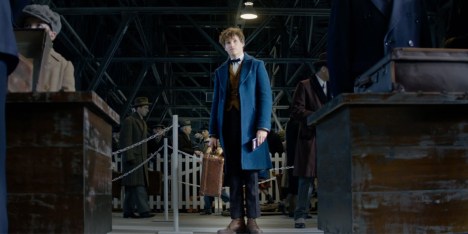
Fantastic Beasts and Where to Find Them is a solid piece of popcorn entertainment.

It is, to be clear, just a little overstuffed. Its cast is so large that it borders on unwieldy. Its runtime is just a little bit bloated. It devotes far too much time and energy to setting up movies that will be released over the next couple of years. It is a surprisingly dark movie for a film that seems to set a whimsical tone. Its central metaphors get a little muddled. Its version of America feels like it has been stitched together by a collection of anthropologists who have access to well-worn copies of King Kong and Citizen Kane.

Suits you, sir!

Suits you, sir!

Still, there is an undeniable charm to Fantastic Beasts and Where to Find Them, a movie that luxuriates in the chance to explore a familiar universe through a different perspective. Given the success of the franchise in all media, it was inevitable that audiences would get “an American Harry Potter.” In fact, it could be argued that there have been any number of ill-fated attempts over the years including films like Mortal Instruments. If “an American Harry Potter” was to be inescapable, there are worse options than Fantastic Beasts and Where to Find Them.

Fantastic Beasts and Where to Find Them never quite matches the height of its parent franchise, but occasionally manages to recapture some of the magic.

Wizzing around the world.

Wizzing around the world.

Continue reading

Non-Review Review: La La Land

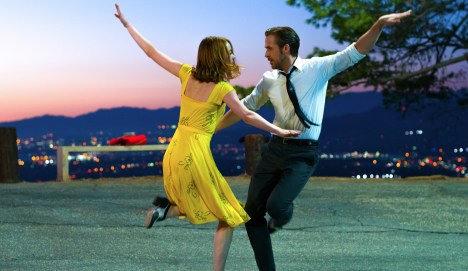
La La Land is a beautiful piece of work, a film destined to leave the audience smiling and humming.

Damien Chazelle constructs an affectionate and old fashioned ode to Hollywood, to the magic of movies in particular and art in general. La La Land is a romance in just about every sense of the word, a tale of two young lovers chasing their dreams in the City of Angel with little more than the belief that they might one day find contentment and fulfilment. The result is a joyous celebration of film and music, a loving tribute to its emotive and transformative power that refuses to buckle beneath the demands of cynicism.

Song and dance about it.

Song and dance about it.

La La Land is endearing in its optimism, its embrace of musical fantasia and its belief in Los Angeles as a place where everyone can chase their dreams… and sometimes, if they’re lucky, those dreams might come true. It is an unapologetically romantic look at Tinseltown, one that could easily be dismissed as trite. Indeed, the most stinging criticism of the film is the most obvious; that La La Land is a movie that runs the risk of cruising to a Best Picture win by virtue of being a film by Hollywood about the romance of Hollywood. Argo and The Artist redux.

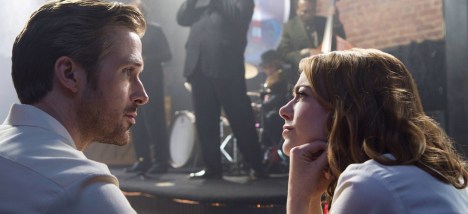
La La Land is very much aware of that criticism. And it does not care. “You say romantic like it’s a bad word,” complains soulful jazz pianist Sebastian at one point early at the film. It seems like the characters in La La Land refuse to live in a world smothered by cynicism and suffocated by self-awareness. Luckily enough, La La Land has little time for such vice and commits wholeheartedly to its dreamscape. If romance is a bad word, La La Land doesn’t even blush.

All that jazz...

All that jazz…

Continue reading

Non-Review Review: The Accountant

If the default summer blockbuster is a “comic book” movie, then The Accountant is an “airport paperback” movie.

Although The Accountant is based upon an original idea by screenwriter Bill Dubuque, it feels very much like something adapted from some pulpy thriller. It has all the ingredients. Like so many John Gresham best sellers, it has a title comprised of a noun used as the definitive article. It has a pithy high concept that can be summarised in a nice tagline. It is packed full of ridiculous twists. It has a plot that is largely just something on which it can hang all manner of goofy ideas. It even has a fondness for absurd (and contrived) exposition delivered via monologue.

Unaccountable variables.

Unaccountable variables.

This is both the best and the worst thing about The Accountant. By just about any measure, The Accountant is a ridiculous film with a fairly thin concept and with a variety of twists that will seem inevitable to any genre-savvy observer. However, there is something quite enjoyable in watching The Accountant bounce between these crazy twists. The Accountant works best when it embraces its pulpier attributes, rolling with each crazy development after the last and never stopping to catch its breath.

The Accountant is a very weird and dysfunctional film, but that dysfunction becomes part of the charm. Much like those page-turners picked up to help pass long flights, it is unlikely that much of The Accountant will remain with audiences after the credits roll. However, there is still some fun to be had.

You can make a killing in this field.

You can make a killing in this field.

Continue reading

Non-Review Review: Doctor Strange

Some Marvel films succeed by pushing against the house style to provide a clear and unique artistic sensibility, like Iron Man III and Guardians of the Galaxy, films that are undeniably informed by the stylistic sensibilities of their directors as much (if not more than) the concerns of the shared universe. Those films are never distinctive enough to compare to the work done by Tim Burton or Christopher Nolan, but they stand out from the rest of the Marvel production slate for their willingness to tell a different story in a different style.

Some Marvel films suffer from their adherence to the production company’s house style. Just about anything interesting was smothered out of Thor: The Dark World, which frequently seemed to have been written and edited by a computer algorithm designed to amplify the well-received elements of the first film and graft them on to a familiar structure. Even some of the relatively strong films on the slate are not immune, with Captain America: The Winter Soldier and Captain America: Civil War unable to follow their bolder ideas to conclusion.
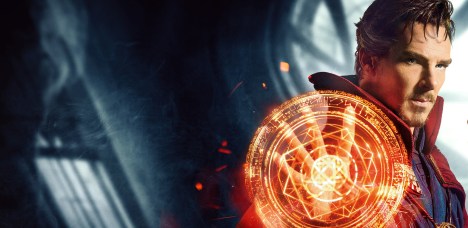
It's a kind of magic...

It’s a kind of magic…

However, there are also films that succeed through their understanding of the studio’s house style and sensibilities, working firmly within the structures and boundaries of what might be termed “the Marvel Cinematic Method.” These films do not just acknowledge the expectations imposed upon these blockbusters, they play towards them. In doing so, they embrace the stability and consistency that such a tried-and-tested approach affords, affording the production team the opportunity to craft enjoyable adventures starring likable actors doing fun things.

The original Thor is perhaps the best example of this approach. Often underrated and overlooked in assessments of Marvel’s cinematic output, Thor ranks among the very best of the company’s feature film slate by virtue of its willingness to embrace the stock superhero story at the heart of the script and focus upon making its cast likeable and its plot moving. There is a solid argument to be made that Thor is the purest solo superhero movie produced in quite some time, dating back to Richard Donner’s Superman. No irony or deconstruction in sight. Just simplicity.

Hair today...

Hair today…

Doctor Strange wisely opts for a similar approach. There are very few surprises to be found in the plotting and structuring of the film. The movie unfolds almost exactly as the audience expects. All the pieces are there, and they are assembled with the reliability of the very expensive watch that the title character chooses to carry around as a memento. The arrogant lead character humbled by tragedy. The nihilistic opponent who embraces the end of all things. The romantic co-lead. The stoic supporting character immune to our hero’s charm. The fallen mentor.

Doctor Strange is not particularly interested in subverting or twisting these stock elements. Instead, it focuses on honing them to a fine point, executing them with the help of a spectacular cast and a knowing grin. More than that, the relative simplicity of the plot framework allows director Scott Derrickson to hang some really impressive choreography and set pieces. The Marvel films have been (fairly) criticised for a certain textural “sameness”, and so the visual and aural stylings of Doctor Strange come as a breath of fresh air.

Strange fascination.

Strange fascination.

Continue reading

Non-Review Review: Arrival

Arrival has a number of great central ideas, and a fantastic central performance.

Those ideas get the film relatively far. Arrival is a film strong enough to stand on the basis of its high concepts and its leading performance. Arrival plays with a whole host of big and bold science-fiction ideas that hint at powerful philosophical questions about humankind’s place in the universe and their perception of their very existence. These ideas are clever and thought-provoking, capable of sparking many late-night conversations over pizza or refreshments in the way that great movies tend to do. Amy is simply wonderful as the movie’s primary character.

Going in circles.

Going in circles.

Unfortunately, Arrival hits something of a wall once it fully maps out its big ideas and its bold premises. The film has these sometimes clever notions, but never expends the necessary energy to tie them into a coherent plot or a logical character arc. Arrival seems to think that these ideas are smart enough that there is no thought required in how best to use them. The result is a muddled film, one that seems as likely to conjure frustrated questioning of its underlying logic as much as of its big ideas

Ironically, Arrival charts an interesting course but never quite gets there.

Falling to Earth.

Falling to Earth.

Continue reading

Non-Review Review: The Light Between Oceans

There are times when The Light Between Oceans almost makes sense.

At certain moments in the film’s two-hour-plus runtime, the clouds part and the sky clears. In these fleeting seconds, it becomes clear what The Light Between Oceans is trying to do and what it wants to be about. A beacon seems to shine through the film, reaching out to the audience and guiding them towards the heart of the film. There are moments when things seem to align and The Light Between Oceans almost gels into the melodramatic morality play to which it aspires, much like the withdrawing might reveal some hidden treasure.

All at sea.

All at sea.

Inevitably, the tide comes rushing back in. The Light Between Oceans becomes cluttered and clumsy. The film aspires to be a profound commentary on grand themes like loss and responsibility, a story about love and forgiveness. However, the narrative is clunky. The film strives for a moral weight that it never quite manages to attain, contorting its narrative and characters in strange directions that serve vague notions while undercutting a sense of coherence.

The Light Between Oceans might consider itself to be the stoic and restrained lighthouse keeper at its core, a character who tries his best to be the moral centre as the sea tosses and the heaven rages around him. Unfortunately, it feels more like the rowing boat discovered towards the end of the first act, one lost and adrift, driven not by purpose but contrivance.

Somewhere... beyond the sea...

Somewhere… beyond the sea…

Continue reading