• Following Us

  • Categories

  • Check out the Archives


  • Awards & Nominations

Non-Review Review: Alien – Covenant

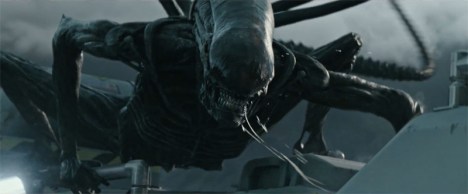
Alien: Covenant feels as though somebody facehuggered Prometheus and ended up with Alien.

It is a very messy, very awkward, very clever piece of film. It is a genre movie that understands both what it wants to be, and also the reasons why it cannot be what it wants to be. It is a film aware of its own grotesque attributes, of the way that it has been warped and deformed in its journey from original idea to concept to screen. It is a movie very much aware of what it wants to be, but it is also cognisant of the fact that it cannot be that film. Alien: Covenant is the result of any number of compromises, but it is very pointed on the subject of those compromises.
Alien DNA.

Most likely driven by the critical and audience reaction to Prometheus, the sequel is a decidedly more conservative affair. For all intents and purposes, Covenant is wed more tightly to the Alien franchise than to its direct predecessor. Although one main character (and performer) carries over from Prometheus to Covenant, most of the major characters from Prometheus are relegated to small supporting roles and cameos. Even the Engineers, the alien race at the centre of Prometheus, are primarily relegated to an extended flashback sequence.

In contrast, Covenant embraces the trappings of the familiar Alien franchise. The soundtrack repeatedly samples Jerry Goldsmith’s iconic score from the original Alien. The climax devolves into a hybrid of the most iconic action beats from the first two Alien films. The film lingers on the dramatic reveals of familiar Alien iconography, only barely teasing audience expectations before fulfilling them. It seems fair to argue that Covenant is a movie more consciously designed to appeal to fans of the Alien franchise than Prometheus was. The clue is in the title.

Bursting at the seams.

However, Covenant is most interesting when it plays up the tension between what it clearly wants to be and what it actually is, when the script throws the concept of sequel to Prometheus into conflict with the demands of a prequel to Alien. There is a strong sense of disillusionment and frustration in Covenant, particularly as explored through the story of David. Michael Fassbender’s enigmatic android is the only major returning character from Prometheus, and in many ways the central character. He reappears after being lost in the wilderness, angry and resentful.

Covenant is a big ball of Oedipal rage. It’s clever, awkward, messy and disjointed, but also entirely in keeping with the themes of the larger series.

The wilderness years.

Continue reading

Non-Review Review: Snatched

Snatched is a collection of comedy sketch pieces arranged around some of Amy Schumer’s favourite themes.

Some of these gags land very well. Indeed, Snatched works best as a genre spoof, riffing on the tropes and expectations of the standard “Americans have an adventure abroad” film as a mother and daughter team become embroiled in a heated pursuit across South America. There are individual characters, actors, and jokes that work very effectively within that framework. More to the point, Snatched offers a veritable smorgasbord of gags.

They haven’t a leg to stand on.

The problem is that many more of these jokes miss. They miss for a variety of reasons, but there are two big recurring problems. The most obvious issue is that many of the jokes are entirely predictable and follow the path of least resistance. In quite a few scenes, it is very easy to tell where the set-up is leading before the pay-off arrives. Snatched is a very conventional and very safe comedy adventure.

There is also the slight problem that Snatched is trying to have its cake and eat it with some of its central ideas. Schumer’s comedic targets tend to be white middle- and upper-class Americans, the joke being their reaction to the outside world; although Schumer is not credited on the script, Snatched is very clearly trying to play into that. However, Snatched repeatedly goes for the low-hanging fruit and often seems to be playing its more reactionary gags entirely straight.

Things went South fast.

Continue reading

Non-Review Review: King Arthur – Legend of the Sword

The most striking aspect of King Arthur: Legend of the Sword is how little interest it has in being a “King Arthur” film.

King Arthur is the latest blockbuster from Guy Ritchie, and contains much of the director’s signature style. Indeed, King Arthur works best when it indulges these stylistic quirks, as cockney characters construct winding non-linear narratives that double back upon (and trip over) one another in a decidedly playful manner. The best and most enjoyable segments in King Arthur feel almost throwaway, as if they might easily have been lifted from (or perhaps even dropped into) a completely different feature film without causing any significant problems.

Set in stone.

King Arthur runs into trouble when it comes to the meat-and-potatoes business of constructing a blockbuster franchise-starter. To be fair, the formula has been relatively well established to this point, with audiences very familiar with the expected plot beats. Even still, King Arthur has little enthusiasm for hitting or expanding these beats. Many of the bigger moments in King Arthur feel like an exercise in box-ticking, elements that exist largely because they are expected in a film like this and with a minimum amount of set-up or panache.

The result is a deeply uneven film that feels very much at odds with itself and no real engagement with the movie’s central driving narrative. King Arthur works best as a series of engaging diversions, but underwhelms as a functional narrative in its own right.

Going out in a blade of glory.

Continue reading

Non-Review Review: Guardians of the Galaxy, Vol. 2

The most appealing aspect of the original Guardians of the Galaxy was its awareness of its arrested development.

James Gunn and Nicole Perlman crafted an ode to juvenile nostalgia, anchored in a protagonist who found himself drifting away from Earth following the loss of his mother. Superhero movies work best as extended metaphors or homages, as a vehicle to render the human experience in operatic terms. Guardians of the Galaxy was the tale of a young man who had lost touch with reality in the moment that he lost his mother, and who had escaped into an acid dream of eighties space opera tropes.

Mohawking his wears…

Guardians of the Galaxy, Vol. 2 works best when it remembers this. If the first film explored Peter’s retreat from the death of his mother, then the second explores his relationship with his absentee father. Once again, the film is saturated with eighties iconography. Early in the film, Peter confesses that he used to pretend that David Hasselhoff was his father. It is hard to tell whether he is trading up or trading down when he meets a bearded Kurt Russell.

Guardians of the Galaxy, Vol. 2 has a very straightforward set of character and thematic arcs. The movie maintains a clear throughline, focusing on the relationship between fathers and sons. The film is not subtle, even working in Cat Stevens’ Father and Son. Of course, that archetypal relationship has been explored repeatedly and thoroughly within mainstream pop culture and particularly superhero cinema. Nevertheless, it provides a clear focus to Guardians of the Galaxy, Vol. 2, a sense of momentum and direction.

Turn up the volume.

This throughline is essential, because Guardians of the Galaxy, Vol. 2 suffers from significant bloat. The second act of the film is a mess, one compounded by a number of questionable creative decisions that seem to have been made because these beats are expected from the second film in a blockbuster franchise. Guardians of the Galaxy, Vol. 2 follows the science-fiction sequel playbook just a little too well, occasionally losing sight of its characters and the chemistry between them.

Guardians of the Galaxy, Vol. 2 does not work as well as Guardians of the Galaxy. In large part, this is because it feels like a self-conscious sequel rather than an organic extension of the original film. James Gunn never forgets what worked about the original film, but he also cannot resist the urge to go larger with it.

A hole lot of trouble…

Continue reading

Non-Review Review: The Promise

The Promise is made in earnest, even if it cannot honour all of its commitments.

The Armenian Genocide remains one of the most horrifying atrocities of the twentieth century, which is saying something. The horror of that systematic extermination is compounded by a refusal to acknowledge the violence committed by the Ottoman Empire. Modern Turkey refuses to acknowledge, or take responsibility, for those crimes. Political realities prevent other major powers from holding the government to account. It is a shameful situation, all around.

The Promise is made with the intent of shedding some light on that atrocity and bringing it to international attention. It is clearly a passion project, made with the best intentions. The film undoubtedly captures the horror of the violence inflicted upon the Armenian Christians and the systemic nature of the attempt to wipe out an entire civilisation. There are points at which The Promise plays as a travelogue into terror, a sequence of harrowing images set against a journey across Turkey during the First World War.

However, The Promise is also very much modeled on an old-school Hollywood adventure movie, complete with daring stunt work and tangled romantic subplots. The Promise evokes the feel of “classic” Hollywood, with its broad themes and its impressive scale. This sleek approach to the material jars with the horror being inflicted, the movie’s character arcs pasted over a nightmarish true story just a little too smoothly. The Promise is well-intentioned, if clumsy in execution.

Continue reading

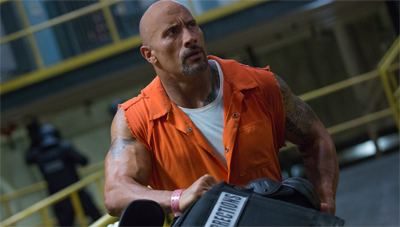
Non-Review Review: The Fast & The Furious 8 (aka The Fate of the Furious)

Seven cars crowd out an otherwise empty New York street.

In the midst of the carnage, all law-abiding citizens have taken cover. Only the outlaws remain, the powerhouses that rule the street. One black muscle car sits at the centre of this chaos. It stars menacingly at the five cars blocking its path. Behind that black car lurks the vanguard. Inside, a scruffy stubbled Englishman cracks his neck impatiently, waiting for action. The target car revs its engine. The drivers all kick into gear, and it becomes a game of reflexes.

Present and corrected.

There is an endearing charm to The Fast and the Furious as a blockbuster movie franchise. In many ways, it has become Universal’s own home-grown superhero franchise, albeit one that swaps out the capes for cars. A wry observer might suggest that the series is Diesel-powered, but that is not entirely true. The franchise runs on sheer main-lined ridiculousness, on the blurry line that falls somewhere between awesome and absurd. “High noon, but with cars…” is far from the most audacious scene in The Fast and the Furious 8, but it might be the most indicative.

Like a driver wrestling with a powerhouse engine, the series works best when it actively turns into the spin. Fast Five revived the franchise by removing the throttle and setting in motion a sense of escalation that threatens to send the characters into space before the conclusion of the series. In the meantime, The Fast and the Furious 8 settles for a neon orange Lamborghini being chased over ice by a nuclear submarine. There are points at which the whole thing threatens to fall apart like that surface ice, but the film moves just quick enough to stay above water.

Dominating Dom.

Continue reading

Non-Review Review: Miss Sloane

Like its central character, Miss Sloane is an interesting beast.

The movie’s central conflict is not the clash of egos between the rival lobbyists played by Jessica Chastain and Michael Stuhlbarg. Nor is it the philosophical conflict over gun control that drives so much of the plot. It is not even the conflict of interest that bookends the movie, the clash between the democratic ideal and the pragmatic reality of contemporary politics, although that perhaps comes closest to expressing the battle raging at the heart of the film.

Miss Sloane Goes to Washington.

The crisis that plays out across Miss Sloane is the gap between the perceived gap between personal and the political. For most of the film’s runtime, the eponymous character’s motivations remain engagingly opaque. Why has the cold and rational Elizabeth Sloane taken up a cause as ill-fated as tighter gun control regulations? The characters in the movie pick at the idea. Several wonder if she knew somebody involved in some traumatic incident of gun violence. It seems impossible to reconcile the calculated decisions of this political operator with a sense of moral righteousness.

Miss Sloane cleverly plays with this idea, teasing and goading the audience across its runtime. That implied conflict between the canny lobbyist and the just cause bubbles throughout the film. Most successfully, it plays out in Jessica Chastain’s superb central performance as the eponymous character; a keen observer of human nature who often seems to be battling with herself as much as with any singular rival. However, it also plays out in the film’s conflicted tone, with Miss Sloane often at odds with itself as it tries pitch itself at the right level.

Liz and let Liz.

Continue reading

Non-Review Review: Going in Style

At one point in Going in Style, octogenarian would-be bank robber Albert decides to craft an alibi for an elaborate bank robbery while working at a cotton candy stand.

This image might just encapsulate Going in Style, a very light and fluffy bank robbery film about a trio of senior citizens who embark upon a bank robbery in order to balance the books. The movie is consciously (occasionally suffocatingly) feel good story of a bunch of cynical wise-cracking pensioners embarking upon wish fulfillment revenge against the banks that have taken so much from hard-working and decent Americans. Think of it as Hell or High Water that swaps the moral ambiguity for a clumsy score.

Dinner of champions.

Going in Style is not an especially complicated film. It never pauses to evaluate what is happening, or why. It is anchored in the assumption that people are basically decent, even when pushed to extremes. It goes for as many obvious jokes as it can cram into its ninety-six-minute run-time, from a few cheap laughs about the embarrassment factor of old-age sex to other jokes about bodily functions. But its heart is in the right place, as it goes out of its way to repeatedly assure the audience.

The extent to which Going in Style could be said to work rests in the easy charm of its three leads, in the pleasure of seeing Michael Caine, Morgan Freeman and Alan Arkin play off one another. None of the trio is pushing themselves. All three leads are essentially offering some minor variation on an established schtick, with no nuance or strain. The result is a heist thriller that never feels like it is racing against the clock, more ambling in its own time.

Benched.

Continue reading

Non-Review Review: Handsome Devil

Handsome Devil is a charming coming of age tale set against the backdrop of a South Dublin Rugby School.

The film follows loner and outcast Ned, who finds himself shunned at boarding school because he lacks the ability and interest to play rugby. Ned keeps to himself, even isolated from the other boys via his private room. However, Ned’s world is thrown into upheaval when the school receives a new student. Suddenly, Ned finds himself sharing the space with Conor, a promising young rugby prospect who might have the capacity to lead the team into the finals.

Seaing red.

The plot beats and themes in Handsome Devil are fairly standard, keeping very much consistent with the genre of coming of age secondary school tales; the notion of self and identity play into, juxtaposed with the urge towards conformity. There are inspiring teachers and tough decisions, eroding cynicism and brutal betrayal. Handsome Devil is aware of these expectations, to the point that all of this is laid out in the exposition-driven framing device at the start of the film.

However, Handsome Devil is elevated by a sense of genuine warmth beneath this very familiar exterior. The script is well-observed, and the direction is light enough to let a charming cast play well off one another. Like Ned, Handsome Devil is nowhere near as cynical as it appears, and it plays best when it drops the wry irony in favour of an endearing humanism.

That’s grass.

Continue reading

Non-Review Review: Ghost in the Shell

Ghost in the Shell is a fascinating, deeply flawed, film.

The movie is vibrant and vivid, rich both textually and texturally. Its style, as much riffing on American films inspired by Japanese cyberpunk as by Japanese cyberpunk itself, is simply breathtaking. The hypersaturated colours leap off the screen, which is somewhat ironic given that the 3D rendering mutes them ever-so-slightly. Those bright blues, those glowing greens, those rich reds, they combine to create a sensation that might be described as “bubblegum noir”, a reworking of the noir trappings of cyberpunk with the colour turned way up.

Putting the pieces together.

It is almost too much handle. There is an appealing aura of sensory overload to the world of Ghost in the Shell, as if the film might best be experienced by passively allowing the world to wash over the audience, to sink into the movie in the same way that several members of the cast threaten to sink into virtual networks. Ever frame is saturated with detail, creating a sense that the audience might drown in all the little touches that suggest this neon fantasia dystopia. Ghost in the Shell works best as a mood, a visual lava lamp of shapes in motion.

The problems only really emerge when the story and characters come into focus, the film struggling to grapple with its themes through dialogue and exposition as readily as it does through steadicam tracking shots and computer-generated establishing sequences. Every character in Ghost in the Shell speaks as if preparing for a freshman philosophy tutorial, ruminating on the threads that bind identity and memory together. Characters have little time for metaphor, often bluntly over-explaining their world and their emotional state.

Neural network.

Ghost in the Shell feels at once too smart and too dumb for its own good. This is perhaps most obvious in the allegations of whitewashing that hang over the film, the wry irony of casting Scarlett Johansson as the central character in a big-screen adaptation of a beloved piece of Japanese culture. Johansson’s presence has sparked debate about cultural appropriation and representation. To its credit, Ghost in the Shell makes an earnest attempt to engage with this idea, turning audience frustration into theme. It is a very clever way of dealing with the issue.

The only problem is that Ghost in the Shell simply cannot talk its way around this core concern. Ghost in the Shell tries to recast itself as a narrative that is fundamentally about cultural appropriation, but in doing so it cannot escape the fact that it is also an example of cultural appropriation. Like those circular debates about identity and memory, these is a sense that Ghost in the Shell is attempting to trap the audience in echoes and reflections, a glitch that betrays a fundamental flaw.

Manufactured.

Continue reading