• Following Us

  • Categories

  • Check out the Archives


  • Awards & Nominations

Rick Remender’s Venom (Review/Retrospective)

This April, to celebrate the release of The Amazing Spider-Man 2, we are taking a look at some classic and modern comics featuring Spider-Man (and friends). Check back daily for the latest review.

Venom demonstrates Rick Remender’s talent with nineties comic concepts. Like Remender’s work on Uncanny X-Force, there’s a sense that the author is taking a dysfunctional and somewhat outdated comic book concept and finding a way to make it work. Uncanny X-Force is the best use of the “X-Force” concept ever put on paper, and Remender’s Venom stands out as the best work to feature the Spider-Man baddie as a protagonist.

Venom doesn’t work quite as well as Uncanny X-Force. The run is a bit shorter and less well developed, and gets caught in a couple of crossovers that split focus a little. Still, the twenty-odd-issue run is a fascinating piece of work from Remender, who was one of Marvel’s most promising emerging talents at the time. Like Uncanny X-Force, it is fundamentally a story about fathers and sons. However Venom also feels like an examination of also-rans, a look at those characters who tend to get a little lost in the crossfire.
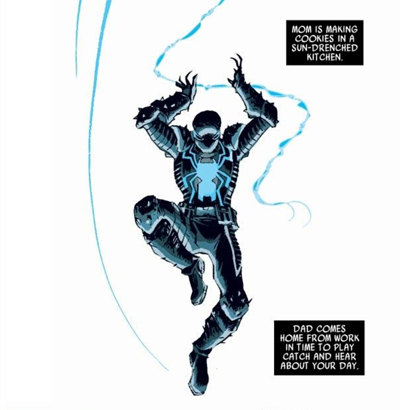
Can he swing from a web?

Can he swing from a web?

Continue reading

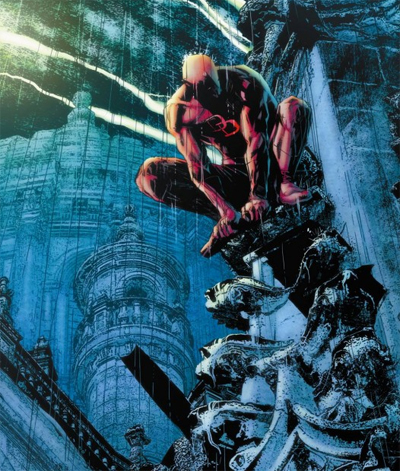
Andy Diggle’s Run on Daredevil (Review/Retrospective)

This April, to celebrate the release of The Amazing Spider-Man 2, we are taking a look at some classic and modern comics featuring Spider-Man (and friends). Check back daily for the latest review.

One of the most remarkable things about Daredevil was how consistent the quality of the title had been. Andy Diggle inherited Daredevil at the height of its popularity. Ed Brubaker’s Daredevil was well-loved and enjoyed, climaxing on a celebratory 500th issue. Brubaker had come on after Brian Michael Bendis’ much-lauded run on the title. The two are considered among the best writers to work on the character since Frank Miller redefined the Man Without Fear. Diggle was succeeded by Mark Waid, who has made a reinvigoured and nostalgic Daredevil into one of Marvel’s best-reviewed and best loved books.

These are all great runs. Andy Diggle’s Daredevil run is not well-remembered. Diggle essentially wrote twelve issues of the main title, and almost the same number of crossover tie-ins, miniseries and one-shots. Whereas those other successful runs of Daredevil existed with their own space and freedom, Diggle’s Daredevil was very much event-driven. The big moment in all of Diggle’s Daredevil writing is the street-level crossover event Shadowland. It’s a problematic event, and quite a few of those problems reverberate back into Diggle’s work on the main title.

And yet, despite that, what’s most frustrating about Diggle’s Daredevil run is that it really could (and should) have been so much better.

The Devil you know...

The Devil you know…

Continue reading

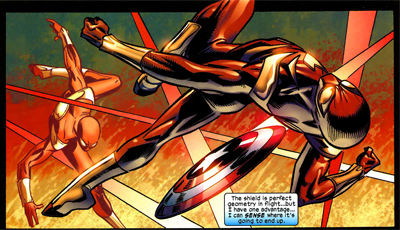
J. Michael Straczynski’s (and Ron Garney’s) Run on the Amazing Spider-Man – Civil War (Review/Retrospective)

This April, to celebrate the release of The Amazing Spider-Man 2, we are taking a look at some classic and modern comics featuring Spider-Man (and friends). Check back daily for the latest review.

Spider-Man is a pretty important character in the whole Civil War event. Indeed, he’s probably the event’s third most important character – aside from Captain America and Iron Man. So it makes sense that J. Michael Straczynsi’s extended run on The Amazing Spider-Man would stop and engage with the massive crossover spanning the entire Marvel Universe. And, from a logistical “structuring a comic book crossover tie-in so it makes any sense to a reader picking up the book” point of view, Straczynski does a great job. You can read The Amazing Spider-Man without needing to even pick up the Civil War miniseries.

However, as a piece of writing on its own merits, Straczynski’s Amazing Spider-Man tie-in is a mess. Straczynski’s Amazing Spider-Man run has been collecting trouble aspects for quite some time, particularly when Straczynski seemed to brush up against the editorial demands for the book. Sins Past was perhaps the most obvious example, but with Civil War the comic entered a phase where it was pretty much an editorial means to an end. Everything from this point on was pushing towards One More Day, an event that would wipe decades of continuity from the title. (Including Straczynski’s run.)

Civil War really gets the ball rolling on these sweeping editorially-mandated changes, but that’s not the only problem with the story arc. Given Spider-Man’s importance to Civil War, and his role as defector from one side to the other, it seems like Spider-Man would really be the perfect lens through which Straczynski could explore the issue. Unfortunately, it quickly becomes clear upon which side of the issue Straczynski comes down.

A tangled web...

A tangled web…

Continue reading

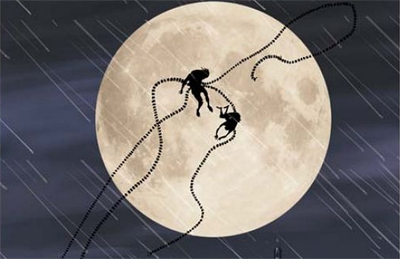
Spider-Man: Reign (Review/Retrospective)

This April, to celebrate the release of The Amazing Spider-Man 2, we are taking a look at some classic and modern comics featuring Spider-Man (and friends). Check back daily for the latest review.

Spider-Man is not Batman.

This really should be self-evident, but it doesn’t seem to be. The biggest problem with Marc Webb’s The Amazing Spider-Man was that it wasted a lot of time telling audiences an origin story they all knew and had last seen a decade earlier. The second biggest problem was that the movie seemed to want to be a Batman film. There are a variety of tropes and conventions that work much better in a Batman story than they ever will in a Spider-Man story, and vice verse.

Unfortunately, The Amazing Spider-Man is far from the only Spider-Man story to make this mistake. Spider-Man: Reign, written and illustrated by Kaare Andrews, is essentially an attempt to use Spider-Man to tell another version of The Dark Knight Returns. It goes about as well as you might expect. (That is: not at all.)

Swinging through the night...

Swinging through the night…

Continue reading

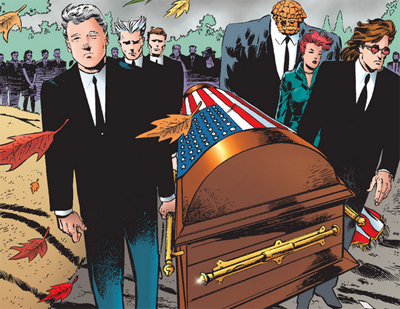
Mark Waid and Ron Garney’s Run on Captain America (Review/Retrospective)

This March, to celebrate the release of Captain America: The Winter Soldier, we’ll be taking a look at some classic and not-so-classic Avengers comic books. Check back daily for the latest updates!

Mark Waid and Ron Garney’s ten-issue run on Captain America is a bit of an oddity. The run follows an impressive ten-year stint by writer (and editor) Mark Gruenwald, but is situated right before Marvel’s attempt at a mid-nineties reboot with Heroes Reborn. As a result, the run feels like it is over before it begins, more of a blip on the radar than a bold new beginning for the character – indeed, it is very much a bold new beginning right before another bold new beginning.

Mark Waid is probably one of the most easily overlooked writers to work on Captain America. He has written over fifty issues featuring the character, but his work has been scattered across multiple volumes and divided by editorial decisions. His longest unbroken stint on the character is thirteen issues of the same comic book. It’s a very weird relationship to have with a character, and there’s a sense that Waid’s take on Captain America was never as developed as it might have been. It feels like scattered snapshots rather than an entire mosaic.

Funeral for a friend...

Funeral for a friend…

Continue reading

Punisher MAX by Jason Aaron and Steve Dillon (Review/Retrospective)

This March, to celebrate the release of Captain America: The Winter Soldier, we’ll be taking a look at some classic and not-so-classic Avengers comic books. Check back daily for the latest updates!

“This was the only way Frank’s story was ever gonna end,” Fury remarks in the closing issue of Jason Aaron and Steve Dillon’s Punisher MAX run. Picking up the threads from Garth Ennis’ celebrated run, Aaron decides to offer a definitive account of the end of Frank Castle’s one-man war on crime. It’s interesting that this is a story that had never really been told before. Even Ennis’ The End was set in a dystopian post-apocalyptic future to write an allegorical conclusion to Frank Castle’s campaign of terror.

Aaron might not have as firm a grip on Castle as Ennis, but he has a pretty compelling hook. More than that, though, Aaron’s irreverent and playful style suits the book quite well. Aaron has a tendency to write cartoonish and larger-than-life characters in his mainstream superhero work, and Punisher MAX is decidedly cartoonish and larger-than-life. That’s part of the appeal. In many ways – and not just in his choice of artistic collaborator – Aaron’s Punisher MAX feels rather like Garth Ennis’ Marvel Knights: Punisher run written with the sex, violence and brutality of his Punisher MAX work.

It’s a potent cocktail.

Very armed and very dangerous...

Very armed and very dangerous…

Continue reading

Kieron Gillen’s Journey Into Mystery – Fear Itself (Review/Retrospective)

This March, to celebrate the release of Captain America: The Winter Soldier, we’ll be taking a look at some classic and not-so-classic Avengers comic books. Check back daily for the latest updates!

Whatever about the quality of big “event” comics like Secret Invasion or Fear Itself, they typically serve as the launching pad for a variety of new series. Using the sales power of a tie-in to a big event, comic book publishers are more likely to convince readers to try something a bit new or a little outside the norm. It doesn’t always work, but – if used cleverly – these tie-ins can serve to draw attention to low-key books that might otherwise be flying under the radar. Or, you know, “Loki books.”

Kieron Gillen’s Journey Into Mystery is a contemporary classic. Even if one is unsatisfied with Fear Itself – and I’m quite fond of it, to be honest – Gillen’s Journey Into Mystery is enough to justify that juggernaut of an event.

Ghosts of gods of mischief past...

Ghosts of gods of mischief past…

Continue reading

Marvel 1602: The New World (Review/Retrospective)

This March, to celebrate the release of Captain America: The Winter Soldier, we’ll be taking a look at some classic and not-so-classic Avengers comic books. Check back daily for the latest updates!

One of the more frustrating things about the major comic book producers is the general reluctance to let any potential franchise or brand die with dignity. Marvel Zombies was an amusing gag, but the company ran it into the ground fairly quickly – although they did work to keep Robert Kirkham and Sean Phillips around for at least one of the sequels. Marvel Apes went from a vaguely witty cover gag into a spin-off universe of its own. Those two side projects eventually (and inevitably) overlapped.

Neil Gaiman’s Marvel 1602 was a curiosity. It was a rather simple gimmick, transposing the modern-day Marvel Universe to the seventeenth century. It afforded Gaiman to make some of his typical meta-commentary and was an excuse to play around with novel twists on classic characters. The Marvel Universe is big enough and vast enough that even a rather basic concept like that can be maintained across eight issues.

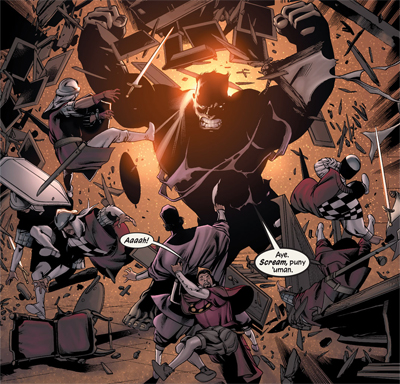
A smashing time...

A smashing time…

Continue reading

Red Skull: Incarnate (Review/Retrospective)

This March, to celebrate the release of Captain America: The Winter Soldier, we’ll be taking a look at some classic and not-so-classic Avengers comic books. Check back daily for the latest updates!

Incarnate is something of a companion piece to Greg Pak’s Testament. Testament was a miniseries following the life of a young boy named Erik during the Holocaust. Of course, Erik would grow up to become the supervillain known as Magneto, but Pak was more fascinated in the history surrounding the character – his origins as a Holocaust survivor. The series was beautifully written and well received, prompting Marvel to hire Pak to produce a companion piece.

Incarnate is effectively the origin story of the Red Skull, Captain America’s arch-enemy and a character Pak himself describes in the afterword as “the Marvel Universe’s most evil villain.” Setting the story in late twenties and thirties Germany, Pak sets the character’s origins against the rise of Nazism and the decline of the Weimer Republic.

A slice of life...

A slice of life…

Continue reading

Avengers: Endless Wartime by Warren Ellis, Mike McKone & Jason Keith (Review)

This March, to celebrate the release of Captain America: The Winter Soldier, we’ll be taking a look at some classic and not-so-classic Avengers comic books. Check back daily for the latest updates!

Warren Ellis is one of the great comic book writers. Ellis works in a bombastic larger-than-life style that is never too beholden to the current continuity of whatever company for which he is currently working and which remains accessible to just about anybody who might want to pick it. His Extremis remains the perfect introduction to Iron Man, while Ultimate Human is the most syner-tastic marketing tie-in ever written, its release coinciding with that of Iron Man and The Incredible Hulk.

At the same time, Ellis’ work-for-hire can occasionally feel a little reigned in, a little too relaxed and too casual – lacking the energy and enthusiasm of his stronger work. Sadly, Avengers: Endless Wartime is a book that never quite measures up to its potential. An original graphic novel written by Ellis and illustrated by Mike McKone, Endless Wartime has a wealth of clever ideas, but never manages to get too excited about any of them.

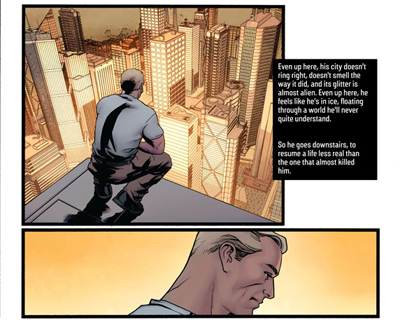
Some men just want to watch the world...

Some men just want to watch the world…

Continue reading