• Following Us

  • Categories

  • Check out the Archives


  • Awards & Nominations

The Dark Knight Rises (and Falls) in 2016

As it draws to a close, there has been considerable reflection on the fact that 2016 has been a very “strange” year.

Of course, “strange” is perhaps a polite way of phrasing that sentiment. “Harrowing” might be another. “Depressing” could also fit. The year has been physically and emotionally draining for virtually everyone. It was the year that audiences around the world bid farewell to talents as diverse as David Bowie, Prince and Leonard Cohen. When it was determined that December 2016 would receive a “leap second”, it felt almost like an insult. Why should 2016 last one second longer than it absolutely has to? (Not that 2017 promises to be better.)
The hole in things.

The hole in things.

However, the biggest shocks of 2016 were political. Brexit and the election of Donald Trump shook the world to its core, and not just because the pollsters somehow failed to predict them. Those public votes were seen as stern rejections of liberalism and progressivism, of an angry and disenfranchised class striking back at what had been seen a disconnected and aloof elite. It was presented as a strike back against the establishment, against vested interests, an expression of rage – whether racial or economic.

Some of the best films of the year helped to capture that sense of anxiety and resentment. The Hateful Eight suggested that perhaps the United States had never reconciled itself following the end of the Civil War and perhaps it never would. Green Room suggested that there was still a primitive savagery lurking just off the main roads, nestled snugly in the heart of the country. The Girl With All the Gifts dared to suggest that those who reacted with panic and fear to change were likely to find themselves consumed by it.
Everything falls apart.

Everything falls apart.

However, the movie that most successfully embodied 2016 was not released in 2016. It was released four years earlier. That film was Christopher Nolan’s The Dark Knight Rises, the conclusion to his groundbreaking Batman trilogy of films. Batman Begins had been released in 2005, and its meditations on fear made for a potent superhero story in the midst of the War on Terror. The Dark Knight was released in 2008, and seemed the perfect film to close out the Bush era. It was even described as “the first great post-Sept. 11 film.”

In some respects, The Dark Knight Rises was lost on its initial release. It seemed rather out of place, with audiences unsure how best to read the film. It was not the sequel that anybody had been expecting. Indeed, it seems fair to observe that it was not the sequel that Christopher Nolan would have been expecting as he worked on The Dark Knight. That had been a crime epic with political undertones. The Dark Knight Rises was a revolutionary epic and war movie, an odd combination for a film released in 2012. And yet it feels perfectly in step with 2016.
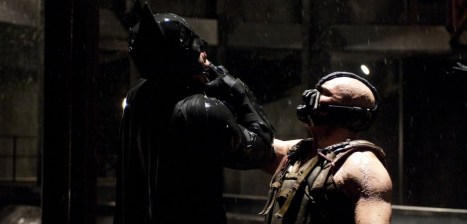
"Okay, maybe Batman vs. Superman wasn't everything that it could have been."

“Okay, maybe Batman vs. Superman wasn’t everything that it could have been.”

Continue reading

Non-Review Review: Why Him?

Why Him? is perhaps a little over-stretched.

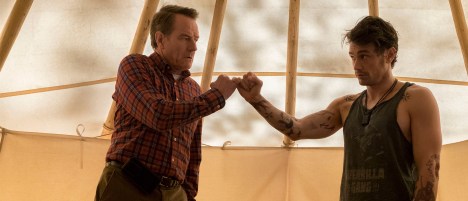
Why Him? is built around a very stock comedy template. A hard-working old-fashioned father finds himself at odds with his daughter’s new boyfriend, leading to a clash of competing masculine egos. The most innovative aspect of Why Him? is the decision to filter this standard comedy plot through two more filters. Why Him? is simultaneously a raunchy R-rated comedy full of profanity and bodily-function jokes. It is also framed as a Christmas comedy, as much as a comedy set in and around Los Angeles can seem like a Christmas comedy.

Guess who's coming to (Christmas) dinner.

Guess who’s coming to (Christmas) dinner.

These are hardly the boldest of innovations. Why Him? is a paper-thin comedy that is somehow stretched out to run over one hour and fifty minutes. There are any number of gags that work and a solid cast that never rises to exceptional, but the fact is that all of these elements overstay their welcome by at least a good twenty minutes. It is telling that one of the biggest issues with Why Him? is repetition, where the movie attempts to spin out slight jokes that prompt a knowing smile into running gags that exhaust all good will.

Ironically enough, given the title, Why Him? never makes a compelling case for its own scale and length.

Fists of fury.

Fists of fury.

Continue reading

Star Trek: Voyager – Distant Origin (Review)

Like Remember before it, Distant Origin is a really great example of how Star Trek: Voyager‘s efforts to build a “generic Star Trek series can produce memorable and satisfying episodes of television.

There is very little about Distant Origin that demands to be set in the Delta Quadrant. In fact, Distant Origin arguably makes less sense as an episode set in the Delta Quadrant than it would as an episode set in the Alpha or Beta Quadrants. Episodes like The 37’s and Distant Origin (and the lies at the heart of Favourite Son) seem to suggest a lot of traffic between Earth and the Delta Quadrant beyond the Caretaker. It seems strange the Voth would migrate so far in search of a place to call home.

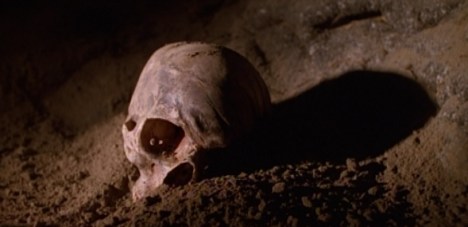
Skullduggery.

Skullduggery.

However, for all that Distant Origin feels like a strange fit for the series’ Delta Quadrant setting, it feels very much like quintessential Star Trek. Like Remember earlier in the season, Distant Origin is very much an old-fashioned Star Trek allegory that uses characters in cheesy make-up to comment upon contemporary issues. In Remember, it was the reality of holocaust denial. In Distant Origin, it is the age-old conflict of science-against-political-expedience. There is an endearing timelessness to the metaphor at the centre of the story.

With its dinosaur characters, its fixation upon evolution, and its doctrine of “origin”, Distant Origin seems very specifically tailored to the heated debates around science and creationism in American culture. However, the allegory is powerful enough that it maintains a potency even beyond that. Distant Origin has aged remarkably well, working effectively as a metaphor for climate change denial or even for historical revisionism in favour of the national myth. Distant Origin is both a season and a series highlight.

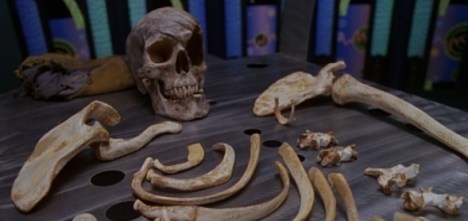
The bones of a theory.

The bare bones of a theory.

Continue reading

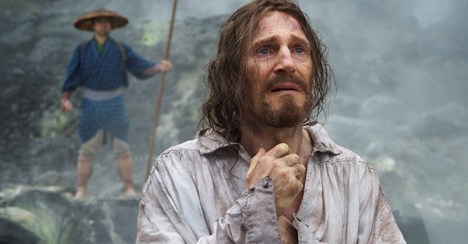
Non-Review Review: Silence

Faith is a curious thing.

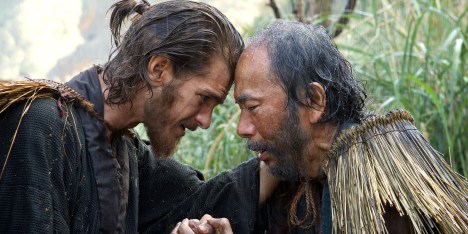
It is a fascinating concept, even (and perhaps especially) for those who lack it or wrestle with it. Pure and untempered faith in the face of a turbulent (and occasionally hostile) world is intriguing. It is something that many long to understand, even if it eludes them. Silence is very much a meditation (or an extended monologue) on the nature of religious belief playing out as a set of conversations and moral dilemmas. Characters wrestle with doubt and uncertainty, and particularly about what their faith means to them.

Easy pray.

Easy pray.

Silence is not a masterpiece or an epic. It is not one of Martin Scorsese’s major works, despite the energy and conviction with which he invests it. It is the weakest film from the director in a very long time, although that sounds very much like praising with faint criticism. Silence is a little too invested in its own dialogue with itself, as delivered through a series of monologues and occasionally through conversation between characters. Silence looks beautiful, but it often feels a little bit like a stunning visual companion to a book on tape.

And yet, in spite of all of this, there is an endearing earnestness to the film. Silence feels like the product of a long and considered reflection on the nature of faith and its place in the world. It never lacks for ambition or vision, playing as a two-and-a-half hour parable about suffering and transcendence. Silence is more interesting than successful, but that is largely because it is so very interesting.

Gotta have faith.

Gotta have faith.

Continue reading

Non-Review Review: Rogue One – A Star Wars Story

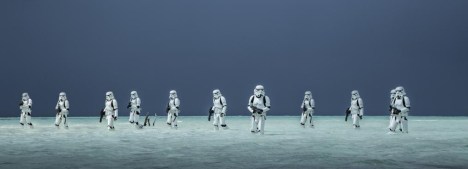
Rogue One: A Star Wars Story feels torn between two extremes.

On one extreme, it is an epic war movie about a universe that is caught in turmoil. Through the lens of science-fantasy, Rogue One can tease out all manner of interesting ideas about the conflict at the heart of the Star Wars franchise. What does an interstellar war look like in the early years of the twenty-first century? What is the view of this epic confrontation from outside the cockpit of an X-Wing or the Millennium Falcon? There are points at which Rogue One almost plays as a war film that just happens to be set within the Star Wars universe.

Too TIE-d to continuity?

Too TIE-d to continuity?

On the other extreme, Rogue One often feels like a collection of deleted scenes intended to bridge Star Wars: Episode III – Revenge of the Sith to Star Wars: Episode VI – A New Hope. The basic premise of the film involves the theft of the Death Star plans that propel the plot of A New Hope, which should be enough to connect it to the parent franchise. Instead, the film is saturated with cameos and callbacks. While it makes sense for a number of minor characters to overlap, Rogue One contorts to include two of the franchise’s biggest characters.

So Rogue One is trapped between being an exciting and exhilarating glimpse of an existing franchise from a new perspective, and feeling just a little bit too much like fan fiction. It is no surprise that the former is much more interesting than the latter.

Watered down?

Watered down?

Continue reading

Star Trek: Deep Space Nine – Soldiers of the Empire (Review)

Soldiers of the Empire is a very effective illustration of just how far Star Trek: Deep Space Nine was willing to push the Star Trek franchise.

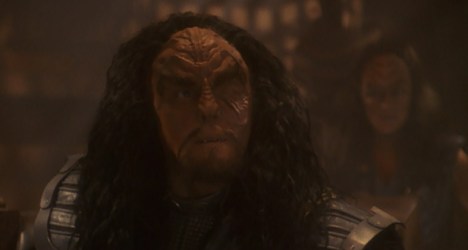
It is an episode that unfolds primarily on a Klingon Bird of Prey. This is nothing new. After all, Star Trek: The Next Generation produced A Matter of Honour in its second season, assigning Riker to serve on a Klingon ship as part of an exchange programme. However, that episode was told primary from a human perspective, the story centring on Riker adjusting and adapting to an alien culture before saving the day. When Worf joined the Klingon fleet in Redemption, Part II, the story kept cutting back to life on the Enterprise in his absence.

"Mahk-cha!"

“Mahk-cha!”

In contrast, Soldiers of the Empire is primarily focused upon the Klingon cast and the Klingon crew. Worf and Dax join the IKS Rotarran to support General Martok in his first command since escaping the Dominion prison camp at the end of By Inferno’s Light, but they are very much bystanders. Although Worf and Dax provide vital narrative functions in introducing the audience to Klingon customs and cultures, the narrative arc of the show belongs to Martok and the crew of the Rotarran. This is not a story about Worf and Dax, this is a story about Martok.

The result is an episode that really pushes the limits of the storytelling possibilities on Deep Space Nine, a reminder that the production team remain as ambitious as ever in the show’s fifth season. Soldiers of the Empire suffers from a few minor plotting issues, but it is exciting and compelling in a way that captures the very best of Deep Space Nine.

A sharp stabbing pain.

A sharp stabbing pain.

Continue reading

Star Trek: Voyager – Real Life (Review)

Real Life is in some ways a departure for Star Trek: Voyager.

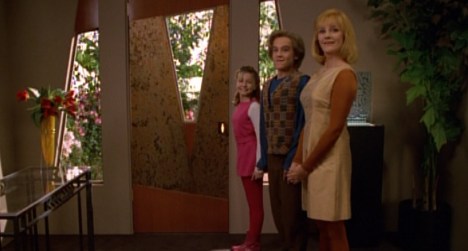
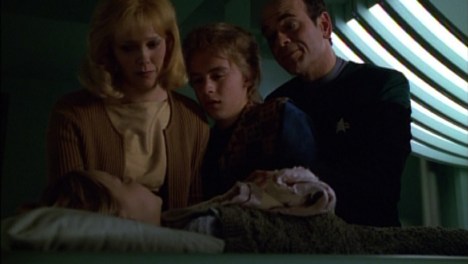
That much is obvious from the teaser, which introduces three new characters on a new set. More than that, the three characters comprise a nuclear family and the set is built to resemble the stereotypical American family home. It is a very strange image, even before the characters begin talking like they escaped from The Brady Bunch. In what might be the best teaser of the entire third season, it is revealed that the EMH has fashioned himself a holographic family and is “commuting” to work in sickbay from the holodeck.

Projections.

Projections.

It is certainly an interesting idea, one that consciously brushes up against the kinds of limitations and expectations that Voyager has faced. It feels experimental, quite removed from the broader third season attempts to position Voyager as the most generic of the Star Trek spin-offs. This does not look or feel like any other episode in the franchise’s history. Indeed, with its focus on family dynamics and conflict, it feels like an extension of Ronald D. Moore’s work on episodes like Family and Doctor Bashir, I Presume.

This makes the episode’s failure to follow through on any of that potential even more disappointing. The third season of Voyager has dramatically scaled down its ambition following the spectacular misfires of the second season. The show is no longer attempting to create long-form stories or introduce iconic new recurring alien species, instead setting more modest goals for itself. There is something disheartening in seeing Voyager set more modest challenges for itself in episodes like Macrocosm or Fair Trade, only to spectacularly bungle the handling of those challenges.

Family matters.

Family matters.

Real Life is another example of the trend. The premise is interesting, and the episode hits on any number of intriguing ideas. There is a great story to be told using this premise, exploring core themes about the human condition in a way that is quite different from the normal storytelling on Voyager. However, the episode flirts with the premise and then balks at it. Real Life is terrified of the implications of its story, padding out the plot with an unnecessary techno-babble-laden diversion and casually discarding the holographic family at the end of the script.

Real Life is an underwhelming story, rendered all the more disappointing for the promise that it squanders.

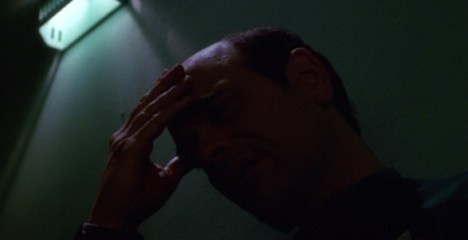
Photon father.

Photon father.

Continue reading

Non-Review Review: Jackie

…  there was a spot, for one brief, shining moment, that was known as Camelot.

Towards the end of Jackie, the title character ruminates on her deceased husband. As a boy, he loved history. He especially loved the tales of Camelot. It does not matter that Camelot never existed, a figment of the collective imagination conjured into being through generations of myth and legend. People wanted to believe in Camelot, and so they invested it with a texture that seemed to manifest itself. Camelot was a story, but it was a story that was in many ways more appealing than the truth.

More like the Pastel House.

More like the Pastel House.

Jackie is a story about mythmaking. Arch and playful, self-aware and self-critical, Jackie tightens its focus on Jackie Onassis Kennedy to the days immediately following the death of her beloved husband. Using the iconic Time magazine interview as a framing device, Jackie follows its protagonist as she sets about building a legacy and a legend around John F. Kennedy. The lines between history and mythology blur, Jackie cleverly contrasting the title character’s restoration of the White House with her construction of her husband’s legend.

There are points at which Jackie seems a little too manner and a little too stage-managed, a little too perfect and a little too rehearsed. There are points at which Natalie Portman slips from being Jackie Onassis Kennedy playing the widow to a beloved legend to being Natalie Portman playing Jackie Onassis Kennedy playing the widow to a beloved legend. This sort of sly recursion is very much in fitting with the tone of the film, but it does occasionally feel a little too cold and a little too distant.

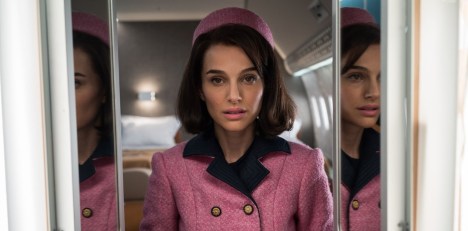
Mirrored in controversy.

Mirrored in controversy.

Continue reading

Star Trek: Deep Space Nine – Ferengi Love Songs (Review)

Ferengi Love Songs has one really good joke. In the episode’s defence, it might just be a great joke.

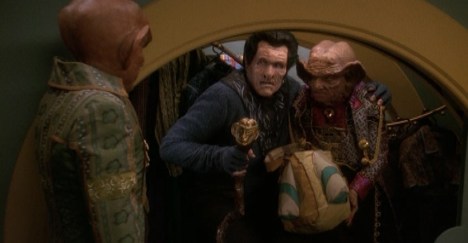
The most striking moment in Ferengi Love Songs comes eight minutes into the episode. In fact, the teaser rushes along so fast that it feels like the production team were pushing for that moment to serve as the sting that would segue into the opening credits. Instead, it arrives during an otherwise short and indistinct first act, providing an effective ad break on syndication. Still, the image is strong enough that it lingers. The image is the sequence in Quark discovers that the Grand Nagus, the most powerful of Ferengi, is hiding in his closet.

Imagine me and you, I do, I think about you day and night, it's only right...

Imagine me and you, I do,
I think about you day and night, it’s only right…

It is a great comedy moment, in both concept and execution. The idea of the leader of a vast interstellar empire hiding in somebody’s bedroom is ridiculous in a way that Star Trek is very rarely ridiculous, at least during the Rick Berman era. It is very much a stock sit-com trope, except it has been dressed up in the trappings of a franchise that has a long record of taking itself incredibly seriously. There is an endearing absurdity to the gag that feels almost like the Star Trek: Deep Space Nine writers are affectionately poking fun at the franchise’s self-seriousness.

Even the execution of the joke works very well. Quark absent-mindedly opens his closet and puts his travel bag inside. The Grand Negus is waiting inside and accepts the bag that is offered. Quark closes the closet, and then does a double-take. He reopens the closet, at which point the Grand Nagus points out that Quark shouldn’t even be here. In a panic, Quark immediately grabs his bag and prepares to leave his house (and the planet) before he properly processes what has happened. “What’s the Nagus doing in my closet?”

He comes with a lot of baggage.

He comes with a lot of baggage.

It is a scene that might have been lifted from some forgotten thirties screwball comedy, which makes sense considering the interests of the Deep Space Nine production team. Rene Auberjonois directs the sequence in which to play into that absurdity, and Armin Shimerman proves quite game at delivering double-takes and exaggerated moments of realisation. It is a great gag, skilfully executed, that is brilliantly silly in the way that Deep Space Nine is not afraid to be.

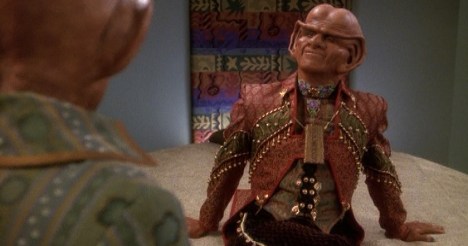
The biggest problem with Ferengi Love Songs is the challenge of where it needs to go from that brilliant little gag. There is an interesting kernel of a story idea here, the writers’ obvious affection for these Ferengi characters shining through. Unfortunately, none of that fits with the tone of the episode’s central gag, which leads a plot that feels strangely dissonant as it tries to wring drama and conflict from the image of the Grand Nagus crouched over in Quark’s closet.

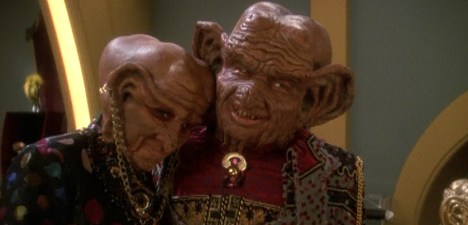
Strange bedfellows...

Strange bedfellows…

Continue reading

Non-Review Review: Office Christmas Party

Office Christmas Party is a mess. Far from a carefully orchestrated festive frivolity, it feels more like it was quickly cobbled together from whatever happened to be lying around the staff canteen.

Office Christmas Party plays like a seasonal-themed pot luck; a combination of weird flavours that might work well in other contexts or on their own, only to clash awkwardly when thrown together. There is a mix-tape quality to the film, as is probably to be expected in a movie with a cast this expansive. However, Office Christmas Party never finds a centre around which it might arrange this particular tale. Instead, it feels like a half-hearted collection of mad-libs that have been shamelessly borrowed from other and better films.

No escape Claus...

No escape Claus…

Continue reading