• Following Us

  • Categories

  • Check out the Archives


  • Awards & Nominations

May the Fourth Be With You! 25% “Opening The X-Files” at McFarland Books, May 4-11!

Quick post to announce that my publisher McFarland Books are having a massive sale on their pop culture books to mark the week of May 4th. Using the coupon PopCulture25, readers can get a discount of one quarter off the retail price of a wide range of books covering film, television and pop culture. If you’ve been waiting for an excuse to pick up a book, this is a good one.

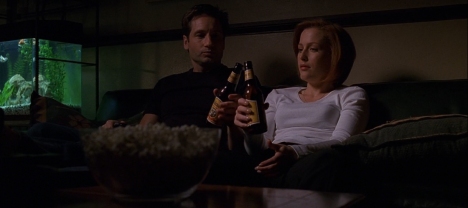
I have a bit of a vested interest in the sale, given that McFarland published my book. Opening the X-Files offers a critical history of the original run of The X-Files, all the way from The Pilot through to I Want to Believe. I’m very proud of the book, and very grateful of the opportunity that McFarland gave me. And the reviews have been quite kind.

It has been described as “an informative and engrossing critical history of the series”, “one of the most confident, assured and enlightening reads on Chris Carter’s seminal show ever produced”, and “one of its essential texts.” To quote the great Jose Chung, I’m going to call those an unqualified rave!

You can visit the company’s website here. You can view all the books included in the offer here. You can order my book, Opening the X-Files, here.

All you need to need to do is just enter the code PopCulture25 when you reach the check-out. No muss, no fuss.

May the fourth be with you!
Non-Review Review: Entebbe

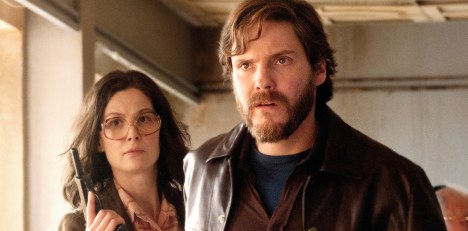
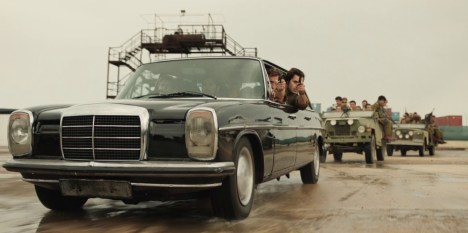
Entebbe is an ambitious, and very messy, hostage drama.

The events that took place in Entebbe Airport in Uganda during June and July 1976 are fascinating. The crisis been adapted for the screen on several occasions already. Anthony Hopkins, Elizabeth Taylor and Richard Dreyfuss starred in Victory at Entebbe later that same year. The following year, Irvin Kershner directed Raid on Entebbe with Charles Bronson and Yaphet Kotto. That same year, Israel produced its own take on the tale in Operation Thunderbolt, which earned an Academy Award nomination for Best Foreign Language Film.

A Brühl-tal experience…

The events leading up to the daring recovery mission are deeply fascinating, with any number of interesting angles on the larger story. It is tempting to look at the events in terms of the tenure of General Idi Amin, who made Uganda a base of operations for these terrorists, much like Last of King of Scotland did. It is possible to look at the Israeli soldiers who trained to mount the rescue mission, knowing the dangers into which they were venturing. It might be reasonable to treat the events as a formative experience for the (then) young state of Israel.

Entebbe attempts to tell the story through all these different prisms at the same time, to offer a holistic perspective on the events that captures the surreal nature of events and the absurd stakes for all of the players caught up in this perilous game. Entebbe bites off a lot more than it can chew, never quite managing to balance the competing demands of the objects of its focus. Entebbe is an intriguing film, but one that feels fractured and unfocused.

Merc task force.

Continue reading

New Podcast! Scannain Podcast (2018) #15!

A jam-packed Scannain podcast this week, featuring a wealth of insightful film people talking about a big week in film.

This week’s episode features an impressive panel, including Jason Coyle, Ronan Doyle, Grace Duffy, Nicola Timmins and Daniel Anderson. There’s a host of material to discuss, including the end of the Audi Dublin International Film Festival with The Delinquent Season. As usual, we also talk about what we watched, what is being released next week and what is currently in the top ten.

Check it out here, or give it a listen below.

To Infinity and Beyond: Of Life (and Death) Without Meaning in “Avengers: Age of Ultron” and “Avengers: Infinity War”

Avengers: Infinity War is a staggering accomplishment, from a purely logistical standpoint.

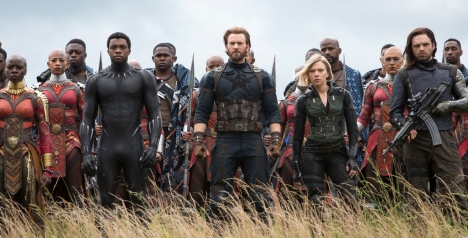
The film features approximately fifty major characters drawn from ten years of cinematic storytelling, all drawn together to face a major existential threat in a story that spans from a fictional African kingdom to the depths of outer space, all told within two-and-a-half hours, and all packaged in a neat and easy-to-follow delivery mechanism. Marvel Studios and the Russo brothers might make it look easy, but there’s no denying the level of skill and technique involved in shepherding a story like this to the big screen and making it work in a fundamental “this is entertaining” kind of way.

It’s important not to undersell this, not to dismiss the level of craft involved in stitching together a coherent narrative from the differing lengths of cloth. There is pleasure to be had in watching the various characters come together; in watching Peter Quill get insecure around Thor, in listening to Rocket joke about stealing the Winter Soldier’s arm, in the fact that Tony Stark and Stephen Strange spend the bulk of the movie attempting to out-Sherlock one another. Infinity War succeeds on these terms. It’s easy to be dismissive of this cinematic experiment, given how easy it looks, but that does not diminish the accomplishment.

However, there’s also something gnawing away in the background of Infinity War, an awkward question that the film never actually answers. “What is this actually about?” somebody might legitimately ask, and there are any number of possible answers. Infinity War is a film about a big purple dude with a magic glove. Infinity War is about paying off ten years of continuity. Infinity War is about proving that it is possible to make a movie like Infinity War. Infinity War is about ensuring that the next Disney shareholders’ meeting is a blowout party.

All of these are legitimate answers, but they dance around the truth. On its own terms, taken as a piece of popular culture projected on to a screen for two-and-a-half hours, Infinity War isn’t actually about anything. When people sit down to look at Infinity War in the years and decades ahead, to dissect and examine it, what will they come back with? What is it actually saying? What is it actually talking about? Not even in some grand “thesis statement about the universe” way, but in a more basic “this is the thematic arc of the film” manner?

Watching Infinity War, there is a deeply uncomfortable sense that Infinity War is about nothing beyond itself.

Continue reading