• Following Us

  • Categories

  • Check out the Archives


  • Awards & Nominations

Star Trek: Deep Space Nine – Emissary (Review)

Star Trek: Deep Space Nine is twenty years old this year. To celebrate, I’m taking a look at the first season. Check back daily for the latest review or retrospective.

Star Trek: Deep Space Nine is a phenomenal piece of television. It’s often a bit overlooked because of its unique setting. After all, the words Star Trek evoke space ships and new worlds – “new life forms and new civilisations.” As such, a Star Trek series about a space station feels counter-intuitive. “To boldly sit” is the hardly the most dynamic premise. And yet, despite that, there’s a very serious argument to be made that Deep Space Nine is the crowning accomplishment of television Star Trek. It’s certainly the last great attempt to boldly push the franchise forward, with Star Trek: Voyager and Star Trek: Enterprise feeling just a tad regressive and conservative in comparison.

Indeed, Deep Space Nine represents a massive narrative leap forward from the success of Star Trek: The Next Generation, which remains one of the greatest science-fiction shows ever produced. For better or worse, Emissary makes it quite clear that Deep Space Nine is not an attempt to copy its direct predecessor, even if some of the other episodes in the first season might back-pedal a bit. In fact, it’s surprising just how well the pilot for this strangest of Star Trek shows holds up, suggesting a firmer grasp of its own identity than a few of the subsequent episodes could claim.
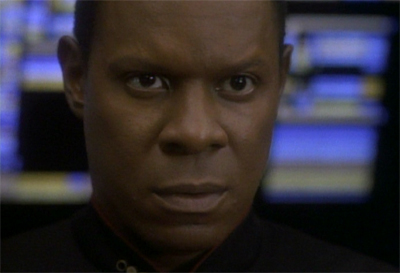
A Commanding presence...

A Commanding presence…

Continue reading

Star Trek: Terok Nor – Day of the Vipers by James Swallow (Review)

Star Trek: Deep Space Nine is twenty years old this year. To celebrate, I’m taking a look at the first season. Check back daily for the latest review or retrospective.

We’ll be supplementing our coverage of the episodes with some additional materials – mainly novels and comics and films. This is one such entry.

Star Trek: Deep Space Nine comes with back story. A lot of back story. In fact, the opening scene of Emissary establishes the show in the context of The Best of Both Worlds, Part II, introducing a lead character whose tragic origin is rooted in an encounter that we had only fleetingly glimpse in Star Trek: The Next Generation. Due to the setting and nature of the show, history and continuity were major parts of Deep Space Nine‘s identity, and a large part of what set the show apart from its predecessors. (And successors, for that matter.)

Although the Klingons would dominate the show’s fourth season and remain a presence throughout the show’s run, and the Romulans might occasionally be glimpsed lurking in the back ground, the series largely focused on two alien races that had been introduced in The Next Generation. The Cardassians had been introduced in the show’s fourth season, in The Wounded, and the Bajorans first appeared during the fifth season in Ensign Ro.

Officially part of The Lost Era series of novels designed to flesh out the history of the shared Star Trek universe, the Terok Nor trilogy exists as a bridge into Emissary, something of an extended history lesson that contextualises the events of Deep Space Nine by providing an account of the Occupation of Bajor, an atrocity that only ended shortly before Emissary actually began.

teroknordayofthevipers1

Continue reading

Non-Review Review: Riddick

Riddick is remarkably candid about the trouble with The Chronicles of Riddick. Somewhere,” Riddick tells us in his introductory monologue, “I lost my way.” The movie sees Riddick trying to get back to his roots – literally and figuratively. He abandons the trappings of The Chronicles of Riddick, casting Karl Urban aside after little more than a cameo and a convoluted back story. He longs to return home.And, in a way, he does.

Eschewing the scale of The Chronicles of Riddick, the movie finds Riddick and the crews of two ships locked in combat on the surface of a planet, discovering that the elements are against them – and the monsters hiding therein. The movie is acutely aware of how tightly it’s mirroring Pitch Black. At one point, before an alien onslaught begins, one co-star asks how many survivors emerged from the crash at the start of Pitch Black. “As many as are in this room,” Riddick replies, underscoring the similarities.

However, Riddick is strongest when it tries to recapture the mood of Pitch Black, rather than trying to connect more directly with its predecessors. The decision to hang the back story of the film on a minor character from a movie released a decade ago feels like a miscalculation, and the movie’s introduction suffers from an indecisiveness about whether it’s breaking free of or following on from its direct predecessor.

Apocalypse how?

Apocalypse how?

Continue reading