• Following Us

  • Categories

  • Check out the Archives


  • Awards & Nominations

Star Trek – Unspoken Truth by Margaret Wander Bonanno (Review)

This August, to celebrate the upcoming release of Star Trek: Into Darkness on DVD and blu ray, we’re taking a look at the Star Trek movies featuring the original cast. Movie reviews are every Tuesday and Thursday.

We’ll be supplementing our coverage of the movies with tie-ins around (and related to) the films. We’ll be doing one of these every week day. This is one such article.

Saavik is an interesting character, for several reasons. Most obviously, there’s the behind the scenes manoeuvrings involving the new character. Everything from her origin to the recasting of the role between Star Trek II: The Wrath of Khan and Star Trek III: The Search for Spock. There’s the inclusion of a short scene in Star Trek IV: The Voyage Home, and the fact that the last time we see Saavik, she’s watching the reunited cast of the original Star Trek continue their galactic adventures.

There’s her complete absence from Star Trek V: The Final Frontier and then the weird pseudo-return of the character in Star Trek VI: The Undiscovered Country, where the role that would become Valeris was originally considered for Saavik, before being cast with Kim Cattrall, an actress who had originally been considered to play Saavik. It’s interesting to consider the conceptual history of the character, given what she was supposed to represent upon her introduction in The Wrath of Khan.

Margaret Wander Bonanno does an excellent job exploring Saavik’s life in the wake of her decision to remain on Vulcan in The Voyage Home, with Unspoken Truth doing an excellent job playing with the character in the grand scheme of the shared Star Trek universe.

startrek-unspokentruth

Continue reading

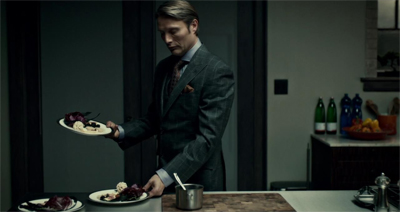
Hannibal – Entrée (Review)

It’s nice that we got this far into the season before Entrée was necessary. It’s the kind of episode that a show like Hannibal was always going to have to produce relatively early on, allowing it to air the laundry, so to speak, and to overtly and clearly distinguish itself from a popular predecessor. In this case, it’s The Silence of the Lambs.

Although we haven’t met Clarice Starling yet, although the credit at the start of each episode cites Red Dragon as the show’s inspiration, it’s hard to escape the shadow of one of the most popular horror films ever made. Many argue that The Silence of the Lambs was the first film to win the Best Picture Oscar. Even today, it remains a cultural touchstone, and there’s an incredibly large number of people who are only familiar with the character of Hannibal Lecter through that story and – in particular – through the film adaptation.

Hannibal hasn’t been shy about referencing The Silence of the Lambs, nor should it be. Crawford’s office from the start of Aperitif seems arranged in homage to the film, while the arrangement of two of the victims in Coquilles couldn’t help but evoke Hannibal’s dramatic escape from his cell at the film’s climax. Still, that doesn’t change the fact that Entrée exists mainly to allow the show to indulge and engage in the imagery and iconography of the film, so that Hannibal can truly distinguish itself.

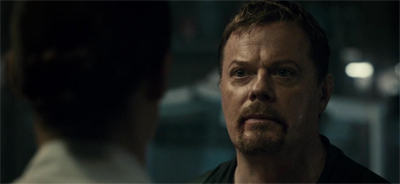
"Oh, goodie..."

“Oh, goodie…”

Continue reading

Star Trek Special #1 (1994) – The Needs of the One (Review)

This August, to celebrate the upcoming release of Star Trek: Into Darkness on DVD and blu ray, we’re taking a look at the Star Trek movies featuring the original cast. Movie reviews are every Tuesday and Thursday.

We’ll be supplementing our coverage of the movies with tie-ins around (and related to) the films. We’ll be doing one of these every week day. This is one such article.

In many ways, the Star Trek movies feature more character development and exploration for the cast than the entire three seasons of the television show. Star Trek III: The Search for Spock and Star Trek IV: The Voyage Home are true ensemble pieces, but there’s also more of a sense that this is a family rather than a bunch of people who just hang out together. I’d argue that the cast of Star Trek: The Next Generation remain the tightest ensemble that the franchise has ever produced, but the first six movies portray the crew of the original Enterprise as a bunch of people who have been to hell and back together.

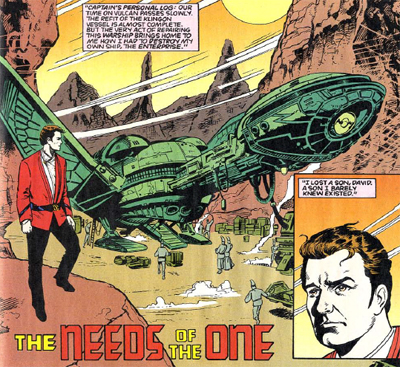
Michael Collins’ The Needs of the One represents a bit of an interlude between The Search for Spock and The Voyage Home, taking place during the crew’s three month “Vulcan exile.” While Collins’ script suffers from its inability to decide whether it’s a Spock-centric character drama or a day-in-the-life of the renegade crew, it’s a fascinating story situated in a lacuna of the movies’ chronology. It cements the idea that Spock has been radically altered over the course of the film series, and that his character arc spans the first four films.

Indeed, Collins’ opening sequence tying together his failure to achieve Kolinahr in Star Trek: The Motion Picture with his decision to once again rejoin the crew in The Voyage Home.

When all Kirk asked for was a tall ship, he probably should have been more specific...

When all Kirk asked for was a tall ship, he probably should have been more specific…

Continue reading

Non-Review Review: Kick-Ass 2

Kick-Ass was a rare treat, a movie that managed to perfectly balance wry cynicism with an almost surreal optimism. It was the story of a kid with a crazy and reckless idea that somehow managed to do some genuine good. It was also arguably a movie that benefited from the fact that it wasn’t a franchise or a brand – it was cheekier and freer than most superhero films. While still an enjoyable ride, Kick-Ass 2 loses a lot of that edge.

"Right, so everybody has watched the Avengers, right?"

“Right, so everybody has watched the Avengers, right?”

Continue reading

Non-Review Review: Star Trek IV – The Voyage Home

This August, to celebrate the upcoming release of Star Trek: Into Darkness on DVD and blu ray, we’re taking a look at the Star Trek movies featuring the original cast. Movie reviews are every Tuesday and Thursday.

Up until the release of JJ Abrams’ Star Trek in 2009, Star Trek IV: The Voyage Home was the most successful of the Star Trek films. Indeed, it ranks alongside Star Trek II: The Wrath of Khan as the film which has most deeply dug itself into the popular consciousness. “I’m from Iowa; I only work in outer space” might not be as iconic a quote as “KHAAAAAAN!!!”, but a lot of people casually remember “the one with the whales.”

The fourth film in the series closes off an inter-connected trilogy of Star Trek films, wrapping up character development for the leads and tying up loose ends, but it’s also – somewhat paradoxically – the most accessible of the movies. If you’re looking for an introduction to Star Trek, it’s hard to think of a more welcoming entry than The Voyage Home. However, what’s really strangely charming about The Voyage Home is that it’s also probably the film truest to the franchise’s humanist values.

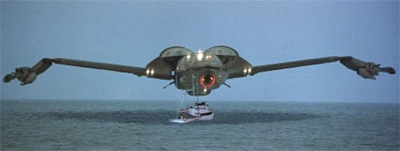
Ship off the starboard bow!

Ship off the starboard bow!

Continue reading

Star Trek (DC Comics, 1984) #28 – The Last Word (Review)

This August, to celebrate the upcoming release of Star Trek: Into Darkness on DVD and blu ray, we’re taking a look at the Star Trek movies featuring the original cast. Movie reviews are every Tuesday and Thursday.

We’ll be supplementing our coverage of the movies with tie-ins around (and related to) the films. We’ll be doing one of these every week day. This is one such article.

Star Trek II: The Wrath of Khan, Star Trek III: The Search for Spock and Star Trek IV: The Voyage Home form a trilogy that tells a single story, covering Spock’s death and resurrection, the loss of the Enterprise and the construction of its replacement and Kirk’s journey from washed-up old commander to saviour of the planet Earth. Although the three films weren’t planned as a single story, they worked out surprisingly well as a Star Trek epic told across three films and four years.

Four years is a remarkable turn-around for three franchise films, let alone three well-received franchise films. However, it’s worth conceding that the storyline had a fairly significant impact on the tie-in media. Books could be published set in the existing gaps in chronology, but DC’s plan for their first volume of Star Trek comics was to feature stories set in the contemporary film universe. Since that universe was in the middle of its own story, and the comic publishers had no idea how it would play out, the results are interesting.

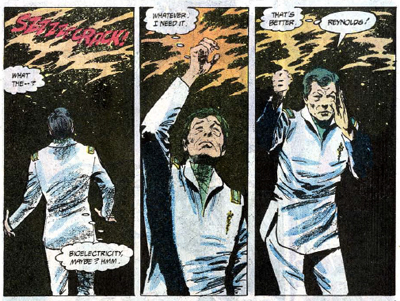
Lighten up...

Lighten up…

Continue reading

Non-Review Review: We’re the Millers

We’re the Millers is a fairly humorous premise extended well past breaking point. The basic set-up (a bunch of strangers pretend to be a family to smuggle drugs into the United States) is a solid enough starting point for a comedy, but We’re the Millers often feels like it’s running on fumes trying to stretch the gag out. There are long lulls of the film where nothing seems to happen, and entire subplots that seem grafted in simply to eat up precious minutes. Does the film really need a teenage romance subplot?

We’re the Millers has a few hilarious moments, and Jason Sudeikis and Jennifer Aniston have enough charm that it’s never too painful to watch, but the film’s extended runtime means that its cynical premise can only maintain its wry thrust for so long before it’s brought down to Earth by the oppressive weight of sentimentality. For a film that starts out cheeky and subversive, the movie meanders into sappy and cheesy territory with considerable speed.

Family fun...

Family fun…

Continue reading

Hannibal: Coquilles (Review)

I feel a little bad now. I spent a lot of time in Amuse-Boche and Ceuf complaining about the possibility that Hannibal might turn into a serial-killer-of-the-week procedural, at a time when the networks are over-saturated with that sort of forensic drama. However, Coquilles manages to be a pretty superlative hour of television despite feeling like a pretty conventional “catch the serial killer” story. The key is in the execution, with Coquilles serving as a rich character-driven drama that just happens to involve the hunt for a gruesome serial killer.

It also helps that the “angel maker” feels like a refugee from an early draft of a Thomas Harris novel rather than a bland psychopath of the week.

Served...

Served…

Continue reading

Star Trek – The Klingons: Starfleet Intelligence Manual (FASA) (Review)

This August, to celebrate the upcoming release of Star Trek: Into Darkness on DVD and blu ray, we’re taking a look at the Star Trek movies featuring the original cast. Movie reviews are every Tuesday and Thursday.

We’ll be supplementing our coverage of the movies with tie-ins around (and related to) the films. We’ll be doing one of these every week day. This is one such article.

The sheer wealth of supplemental material which exists for Star Trek is often quite stunning. While nowhere near the marketing juggernaut that Star Wars is, the depth of the Star Trek brand can’t help but seem impressive. On top of the television show and movies, there are novels and comics, but it goes even further than that. Models, blueprints, Christmas decorations, action figures, and even china dinner sets. It is occasionally awe-inspiring, but also quite intimidating.

Still, it’s interesting to witness how this extended material has come back to influence the “core” of the franchise. It’s not unheard of for spin-offs and tie-ins to help develop a core property. Kryptonite and Jimmy Olsen were added to the Superman mythos, for example, following their popularity on the radio show. Here we have some background material prepared for the FASA Star Trek role-playing game that was popular during the 1980s. As with a lot of this sort of stuff, it’s not really “canon” or “continuity” in anyway that seems to count.

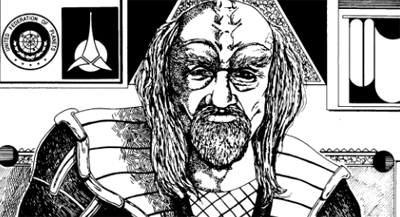
However, The Klingons: Starfleet Intelligence Manual is interesting because it world-builds the franchise, explicitly in reference to John M. Ford’s vision of Klingon culture in The Final Reflection.

st-klingons-fasa

Continue reading

Hannibal – Ceuf (Review)

Ceuf is somewhat overshadowed by the controversy it generated, an episode of Hannibal pulled from broadcast following several national tragedies (including the Boston bombings and the Newtown tragedy). In the wake of these two high-profile incidents, it was felt that broadcasting the full episode so close to the events would have been a bit much. This move naturally generated a host on on-line commentary with various people adopting various positions on the topic of whether or not Bryan Fuller was right to pull the show from the air. In a way, Ceuf is far more interesting for what it ended up being than as a chapter of Hannibal.

Something to chew over...

Something to chew over…

Continue reading