• Following Us

  • Categories

  • Check out the Archives


  • Awards & Nominations

The X-Files – Season 10 (Review)

This June, we’re going to be taking a look at the current run of The X-Files, beginning with the IDW comic book revival and perhaps taking some detours along the way. Check back daily for the latest review.

The six episode revival miniseries is a strange beast.

It is hard to think of it as the tenth season of the show. In fact, the marketing of the DVD and blu ray sets describes it as “the event series”, perhaps a tact acknowledgement of that fact. There are a number reasons why it is difficult to think of these six episodes comprising a tenth season. Most obviously, the season is only six episodes. Even in the current context of truncated episode orders and split season, that is a short season. By modern standards, it would be a short half-season. Referring to it as the tenth season of The X-Files feels like false advertising.

xfiles-homeagain56a

However, there are other reasons that it is difficult to think of these six episodes as constituting a season. Quite frankly, the six episodes are wildly variable in tone and quality, to the point that it is difficult to distill a singular unifying theme or meaning from. They are six random episodes of television, some good and some less good, with one masterpiece and one boldly ambitious mess. It is almost easier to talk about the episodes individually than it is to discuss them as a single season television.

Then again, that’s what makes them feel so much like The X-Files.

xfiles-mulderandscullymeettheweremonster49

Continue reading

The X-Files Deviations (IDW) #1 – Being and Time (Review)

This June, we’re going to be taking a look at the current run of The X-Files, beginning with the IDW comic book revival and perhaps taking some detours along the way. Check back daily for the latest review.

Being and Time is not a good comic book.

There are a number of reasons why the comic doesn’t work, but the simple fact of the matter is that it has an interesting premise but does little of interest with that premise. Nevertheless, there is something quite intriguing the set-up, an “out-of-continuity” tale that offers a glimpse of a parallel universe where Fox Mulder was abducted in the place of his sister Samantha. More to the point, it seems entirely telling that the only supplemental X-Files comic to be published by IDW during the entirety of The X-Files: Season 11 was one entirely outside continuity.

What might have been.

What might have been.

Continue reading

The X-Files – Babylon (Review)

This June, we’re going to be taking a look at the current run of The X-Files, beginning with the IDW comic book revival and perhaps taking some detours along the way. Check back daily for the latest review.

There are two schools of thought on Babylon.

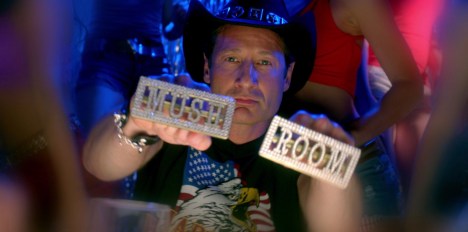
The first school of thought is that the episode is quintessentially X-Files. It is Chris Carter taking advantage of the flexibility of the show’s form to produce an episode of television that looks utterly unlike anything else on television. This is the series at its most creative and its most gonzo, the free-spirited free association that powered early Carter episodes like Syzygy, The Post-Modern Prometheus, Triangle, Fight Club, First Person Shooter and Improbable. It is crazy and “out there”, but… well, so is the truth.

Party on, Mulder.

Party on, Mulder.

The second school of thought is that the episode is spectacularly and recklessly ill-judged. Although undoubtedly well-intentioned, Chris Carter produces a script that is deeply problematic and even potentially inflammatory. Given that so much of the script hinges on the idea that thoughts have “mass” and that ideas can be dangerous, the resulting episode is definitely clumsy and borderline reckless in its exploration of a sensitive issue. This is just as problematic as “classic” episodes like Teso Dos Bichos, Teliko or Badlaa.

Both of these things can be true.

"... I just don't think it'll understand..."

“… I just don’t think it’ll understand…”

Continue reading

The X-Files – Home Again (Review)

This June, we’re going to be taking a look at the current run of The X-Files, beginning with the IDW comic book revival and perhaps taking some detours along the way. Check back daily for the latest review.

If Mulder and Scully Meet the Were-Monster demonstrates the strengths of this six-episode miniseries format, then Home Again makes a case for the weaknesses.

Home Again is not a bad episode of itself. However, it does suffer from two glaring weaknesses of the revival format. The most obvious is that the revival is only six episodes long, which means that everything is truncated and reduced. This was quite clear in My Struggle I, which was essentially a mythology two- or three-parter with all the non-exposition bits cut out. However, it is also clear with Home Again, which feels like two great episodes that have been combined to form one good episode.

"This one has a monster in it."

“This one has a monster in it.”

Glen Morgan is also the weakest director of the four directors working on the revival miniseries. Morgan is a phenomenal writer, but he lacks the stylistic flourish of Chris Carter or the dynamism of James Wong. He does not tailor the script for Home Again to suit his directorial sensibilities in the way that Darin Morgan does with his scripts for Jose Chung’s “Doomsday Defense” or Somehow, Satan Got Behind Me. Morgan is a good director, but one of the most under-appreciated ingredients of The X-Files was its murderer’s row of great television directors.

As a result, Home Again is an episode that is much stronger on paper than it is on camera.

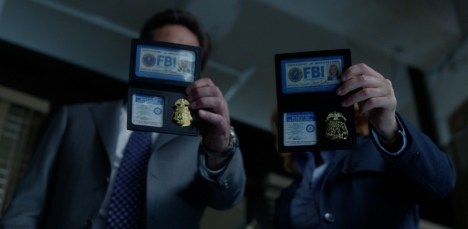
"Mulder and Scully, FBI."

“Mulder and Scully, FBI.”

Continue reading

The X-Files – Founder’s Mutation (Review)

This June, we’re going to be taking a look at the current run of The X-Files, beginning with the IDW comic book revival and perhaps taking some detours along the way. Check back daily for the latest review.

In technical and aesthetic terms, Founder’s Mutation is the most modern of the six episodes to air as part of the revival miniseries.

To be fair, the other episodes in the miniseries do embrace the twenty-first century in their own unique ways. My Struggle I and My Struggle II update the mythology for the new millennium. Mulder and Scully Meet the Were-Monster deals with themes that resonate particularly strongly now that Mulder and Scully are in their middle age. Babylon is a sincere (if misguided) attempt to engage with the current political climate. However, those episodes are decidedly old-fashioned in how they choose to tell their stories.

Title drop.

Title drop.

There are little nods towards contemporary technology in the other five episodes. Mulder’s inability to work his phone is something of a running joke, whether in his failure to snap a picture of Guy Mann in Mulder and Scully Meet the Were-Monster or his inability to turn off his “find my phone” app in My Struggle II. Carter is justifiably proud of how My Struggle II incorporates cutting edge pseudo-science. However, none of those stories integrate new technology and new ideas as smoothly as Founder’s Mutation.

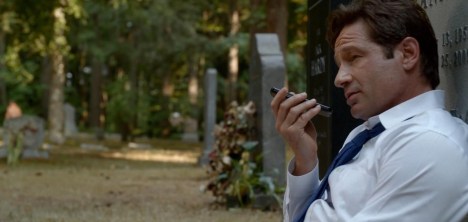
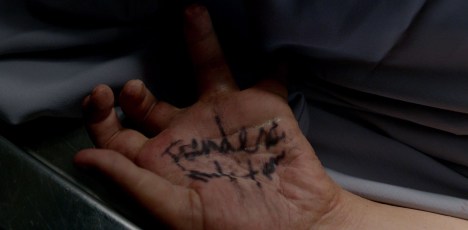
However, it isn’t just the use of technology that marks Founder’s Mutation out as the most modern of the six episodes. The episode’s storytelling and style are noticeably more contemporary than the episodes around it. Founder’s Mutation tells its story in a way that feels very much in step with the television landscape around it. More than the other five episodes in the miniseries, Founder’s Mutation feels like an episode of twenty-first century television.

Can you hear me at all?

Can you hear me at all?

Continue reading

The X-Files: Season 11 (IDW) #5 – My Name is Gibson (Review)

This June, we’re going to be taking a look at the current run of The X-Files, beginning with the IDW comic book revival and perhaps taking some detours along the way. Check back daily for the latest review.

It feels like Season 11 was barely getting started before it started winding down.

There is a leanness to Season 11, as if the eight-issue series exists primarily to wrap up all the loose ends spinning out of Elders so the series can be rebooted and relaunched in keeping with the new continuity established by My Struggle I. The new status quo set up in Cantus was striking. While the premise owed a lot to the set-up of Nothing Important Happened Today I and Nothing Important Happened Today II, putting Mulder on the run as a roving one-man freelance X-files division evoked The X-Files by way of Kung-Fu or The Incredible Hulk.

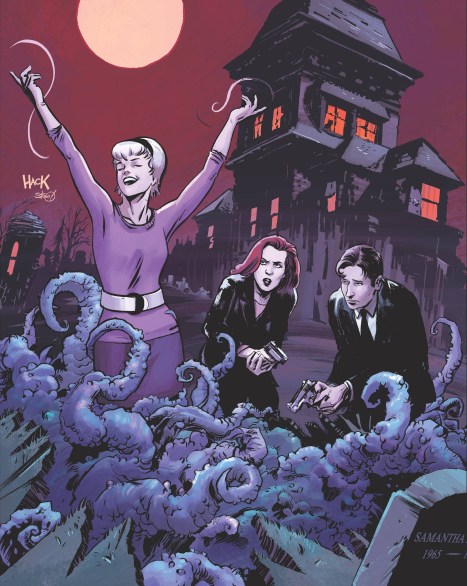
Bewitching.

Bewitching.

In some ways, the set-up felt like a striking homage to seventies pop culture. The wandering hero is a staple of pop culture in general, but American pop culture in particular. In the sixties, it was The Fugitive. In the eighties, it was The A-Team. Nevertheless, the set-up evokes the mood and feeling of the seventies, of a nation lost and discovering itself in the wake of Watergate and Vietnam. Setting Mulder on that particular course was a very clever story hook. The X-Files owes a lot to seventies film and television, so this set-up felt strangely appropriate.

With that in mind, it feels somewhat disappointing that the new status quo comes to a close so quickly. At the end of Home Again, Mulder is taken into custody as a fugitive. With My Name is Gibson, Joe Harris begins aligning the pieces for the climax of his three-year run on Season 10 and Season 11. It seems like Season 11 is over before it has started, which seems quite disappointing given all of the promise on display.

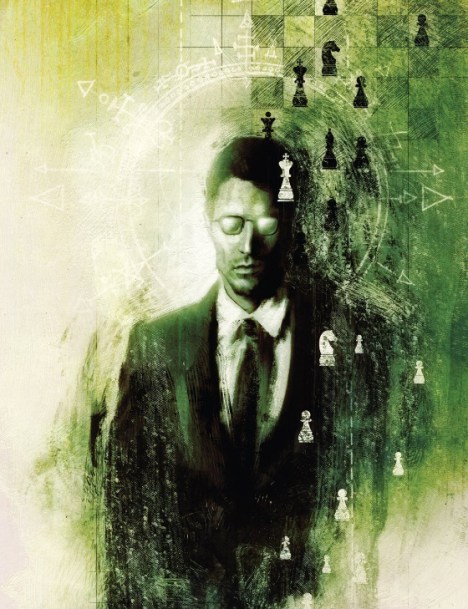
Chess master.

Chess master.

Continue reading

The X-Files: Season 10 (IDW) (Review)

This June, we’re going to be taking a look at the current run of The X-Files, beginning with the IDW comic book revival and perhaps taking some detours along the way. Check back daily for the latest review.

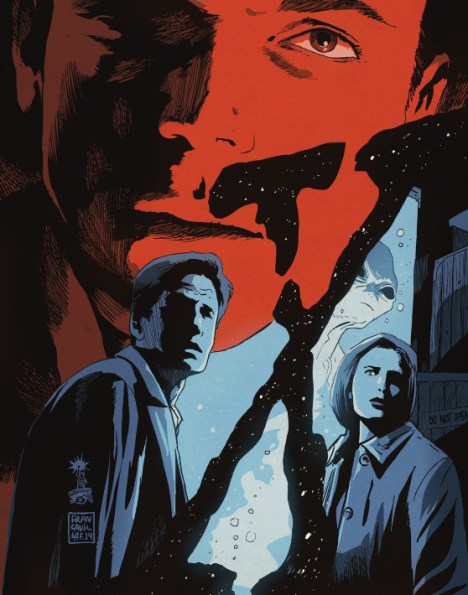
The X-Files: Season 10 is something of a mixed bag.

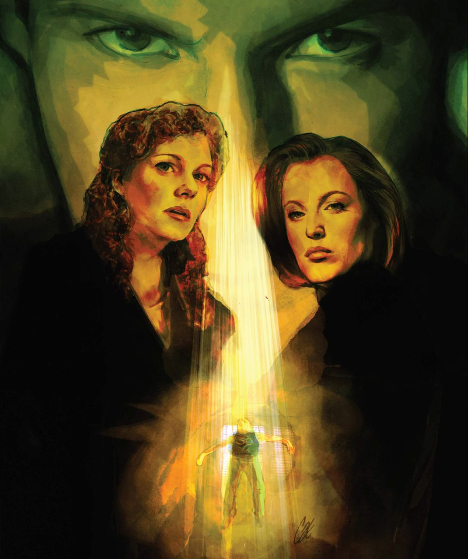
A significant portion of that is down to changes that took place in the background over the comic’s life cycle. When IDW first announced the series, The X-Files was largely considered to be a dead franchise with no viable future. By the time that the first arc (Believers) had wrapped up in October 2013, there were already murmurings about bringing the series back in one form or another. By the time that the second mythology arc (Pilgrims) was kicking off in April 2014, Chris Carter was already meeting with Glen Morgan to hammer it out.

xfiles-pilgrims55

By the time that the comic’s final arc (Elders) wrapped up in July 2015, the entire world had known for months that The X-Files would be coming back to television. This knowledge deflated the comic book relaunch somewhat. The X-Files: Season 10 had been launched with a “co-writer” credit for Chris Carter on the first five issues; he was afforded an “executive producer” credit on most of the rest of the line. What had been positioned as a semi-official continuation of the adventures of Mulder and Scully was swiftly reduced to a historical curiosity.

However, these developments affected more than just the perception of the series. When the comic launched, it was very much the only game in town. By the end of his first arc, Joe Harris was already forced to make concessions to the possible return of The X-Files in film and television. A lot of the mythology set up in Believers was hastily abandoned and brushed aside, with the characters even acknowledging as much in Monica & John. This put The X-Files: Season 10 at something of a disadvantage, with the sense the mythology was being rewritten on the fly.

xfiles-elders

In a way, it felt like a lot of The X-Files: Season 10 was driven by a recurring conversation about its own validity and legitimacy. In More Musings of a Cigarette-Smoking Man, the eponymous character tries to piece together his own fractured continuity. In Pilgrims, a clone of Alex Krycek fought desperately to assert his individuality. In Monica & John, Monica Reyes lamented being abandoned and “forgotten.” In Elders, the clones of the conspirators lament the warping of their organisation into something grotesque.

While there was something suitably clever and postmodern to all of this, there was a sense that The X-Files: Season 10 was suffocating in nostalgia and continuity. Of the twenty-five issues published, only one (Chitter) was a completely original story that did not serve the return of a familiar premise or a meditation on some past point of continuity. The classic mythology dominated the series, but even many of the standalone stories played as continuity-filling “origin stories” for classic characters and concepts.

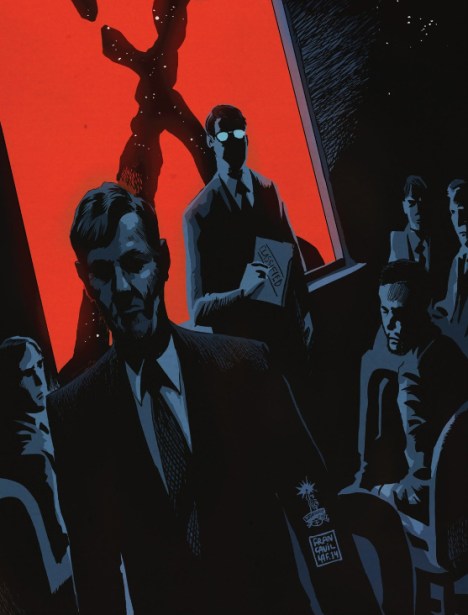
Missing in action...

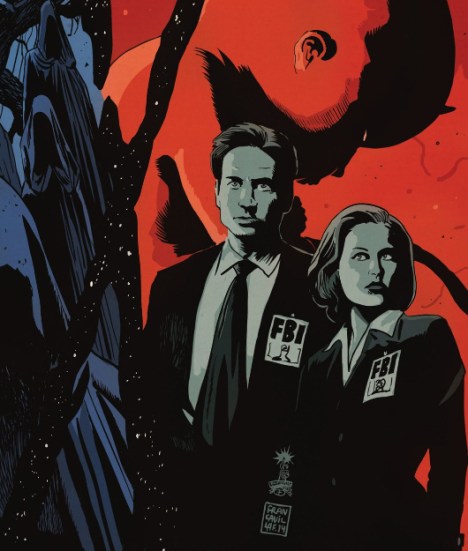
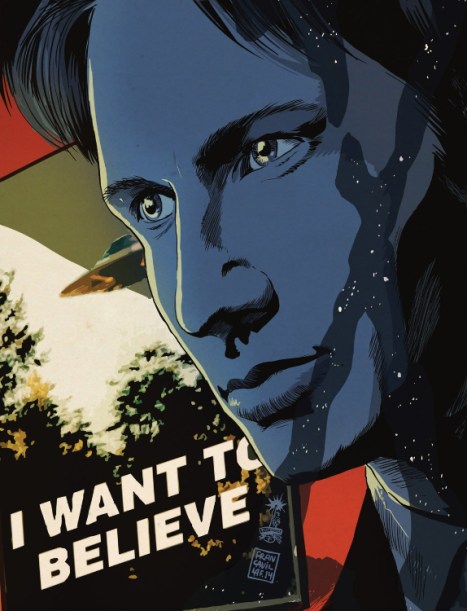
Fluke Man got a very X-Files origin story in Hosts. Mister X got a very generic origin story in Being for the Benefit of Mister X. The Cigarette-Smoking Man explored his history in More Musings of a Cigarette-Smoking Man. Even the classic “I Want to Believe” poster got an origin story in G-23. This is to say nothing of the fact that Hosts and More Musings of a Cigarette-Smoking Man were explicitly sequels to The Host and Musings of a Cigarette-Smoking Man. At a macro story level, The X-Files: Season 10 often felt like an exercise in nostalgia.

Which is a shame, because it really feels like writer Joe Harris has a firm grip on The X-Files. The writer has a good handling on most his characters, particularly Mulder’s sarcastic and the tragedy of the Cigarette-Smoking Man. He understands the core themes underpinning the series and even finds a way to make those themes feel contemporary in stories like Chitter and Immaculate. However, the comic feels somewhat hobbled by its insistence on keeping the mythology running. The series has its eye on the past more than the future.

xfiles-immaculate27

Continue reading

The X-Files: Season 10 (IDW) #19-20 – G-23 (Review)

This June, we’re going to be taking a look at the current run of The X-Files, beginning with the IDW comic book revival and perhaps taking some detours along the way. Check back daily for the latest review.

One of the more underrated aspects of The X-Files: Season 10 is the care that writer Joe Harris takes to emulate the structure and tone of a regular season of The X-Files.

There are obvious structural differences, of course. Twenty-five issues cannot possibly correspond to twenty-five episodes of television, and the comic ran for over two years rather than across nine months. Nevertheless, Harris works hard to ensure that the comic book series adopted a structure rather similar to that of the television series. The X-Files: Season 10 has a flow to it that feels vaguely like the structure of those classic nineties seasons, albeit with fewer individual stories due to the nature of the medium.

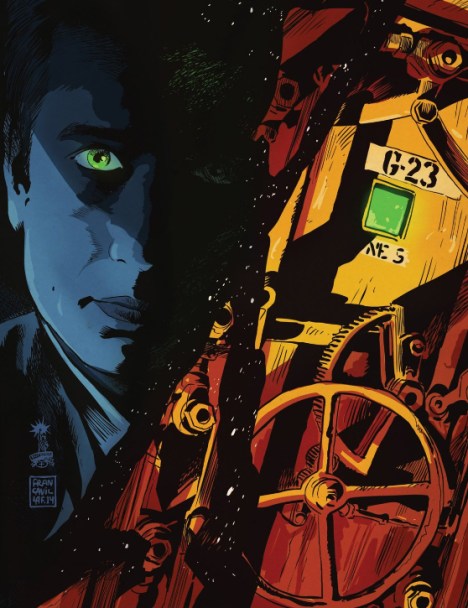
Ol' green eyes is back...

Ol’ green eyes is back…

Believers was an epic mythology season premiere, akin to The Blessing Way and Paper Clip or Redux I and Redux II. Pilgrims was a big mid-season mythology adventure like Nisei and 731 or Piper Maru and Apocrypha. Elders is an epic game-changing season finale, like The Erlenmeyer Flask or Anasazi or Requiem. Even stand-alone character-centric stories like Being for the Benefit of Mister X or More Musings of a Cigarette-Smoking Man recall episodes focusing on supporting characters like Zero Sum or En Ami.

With that in mind, G-23 is very much the weird mind-bending off-format episode that tends to appear towards the end of the season. Indeed, Harris boasted on Twitter that the end of the season would “include an… off-beat story.” In that light, G-23 feels very much like an affectionate nod to trippy stories like Demons, Folie à Deux and Field Trip. Indeed, it is something of a precursor to the positioning of Babylon within the revival series.

Poster child...

Poster child…

Continue reading

The X-Files (IDW) Christmas Special 2014 (Review)

This June, we’re going to be taking a look at the current run of The X-Files, beginning with the IDW comic book revival and perhaps taking some detours along the way. Check back daily for the latest review.

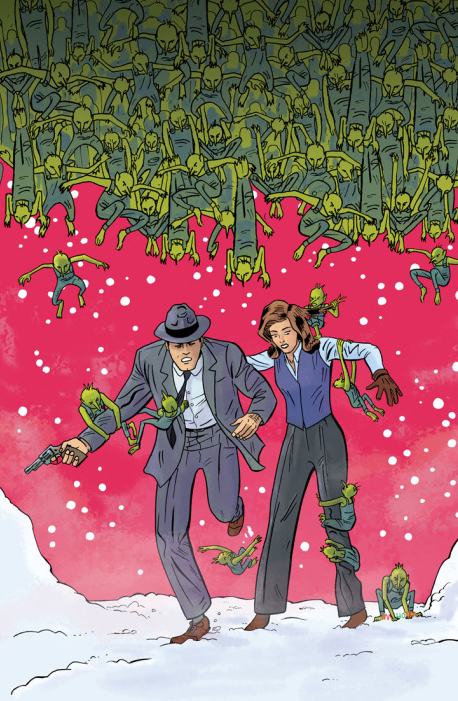
The X-Files Christmas Special 2014 is an indulgence. There is no other way to cut it. The primary story is essentially a Christmas wrap party that happens to feature the bulk of the cast from The X-Files: Season 10, cutting loose and making references and in-jokes like nobody’s business. The secondary story allows writer Karl Kesel the opportunity to expand out a fun one-liner from Year Zero into a full-blown story. Neither story is essential, or adds much to their parent series. It is hard to justify either story on its own merits.

Still, if you can’t excuse an indulgence at Christmas time, when can you?

How the gremlins stole Christmas...

How the gremlins stole Christmas…

Continue reading

The X-Files: Year Zero (IDW) #1-5 (Review)

This June, we’re going to be taking a look at the current run of The X-Files, beginning with the IDW comic book revival and perhaps taking some detours along the way. Check back daily for the latest review.

Year Zero is the best thing that IDW has done with the X-Files license.

There are multiple reasons for that. Most obviously, the five-part miniseries is incredibly charming when taken on its own terms. Writer Karl Kesel offers in incredibly playful script, one full of teases and wordplay that holds together remarkably well without ever seeming heavy-handed or awkward. Artists Greg Scott and Vic Malhotra do an excellent job keeping the comic consistent while clearly distinguishing between its two time periods. The modern day sequences as scratchy and detailed, while the flashbacks are illustrated more like cartoons.
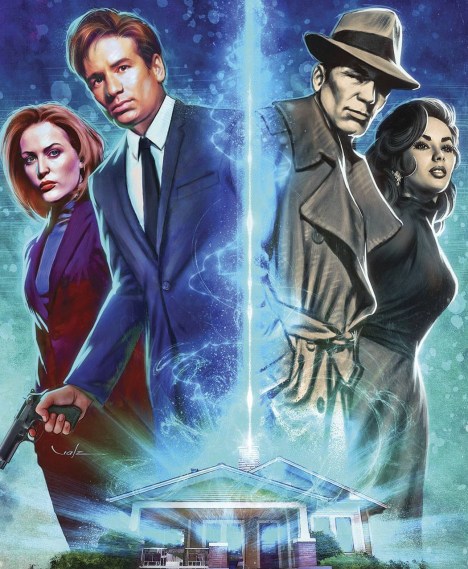
X-over appeal.

X-over appeal.

There is also a clever metafictional commentary underpinning the story that feels like something of a companion to the larger mythology of The X-Files. If the mythology of The X-Files can be read as a secret history of the United States filtered through folklore about aliens and UFOs, then Year Zero positions itself as an origin story for that folklore. It places the origin of The X-Files at the moment those narratives began to change, tying the series into the aftermath of the Second World War in a manner distinct from (but still compatible with) that featured on the show.

More than that, Year Zero is a story that unfolds without a heavy reliance on the mythology or continuity. Given the way that Joe Harris has approached The X-Files: Season 10 and The X-Files: Season 11, it is a welcome surprise that the comic does not feature a guest appearance from William Mulder or C.G.B. Spender. There are lots of little winks and nods to the finer details of the show, but Year Zero is more than just a story carved out from a throwaway line of dialogue in Shapes or as an extension of Travelers.
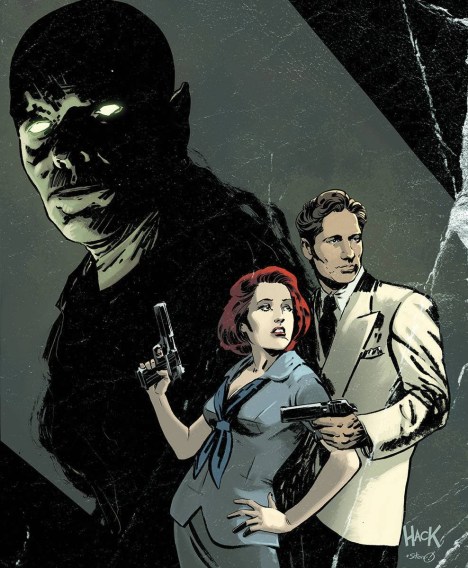
Holding out for a Zero.

Holding out for a Zero.

In fact, Year Zero practically revels in the discontinuity of it all. References to existing stories seem to exist primarily to emphasise the disconnect that exists between them. Given the care the IDW have taken in trying to craft and shape a consistent X-Files continuity, there is something quite refreshing in the cheeky approach taken by Karl Kesel to Year Zero. This is a book that could easily be handed to a casual fan who stopped watching the show around the fifth season, or even to somebody who had only seen a handful of episodes.

However, Year Zero does something far more important. The IDW comics have placed a heavy emphasis on the idea of legitimacy and canon. The comics have worked hard to present themselves as a viable continuation of the franchise. However, a lot of that has involved looking backwards and evoking nostalgia. The Cigarette-Smoking Man returns, Mister X reappears, Alex Krycek is revived. Even the other tie-in miniseries exist to market existing aspects of the brand. Conspiracy is a companion to The Lone Gunmen. Millennium brings back Frank Black.
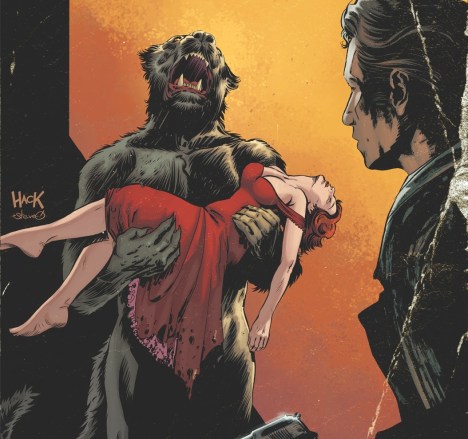
A beast of a man...

A beast of a man…

Year Zero gives the IDW comics something unique and novel. It creates something fresh and exciting rather than simply repackaging recognisable moments or iconic characters. It gives the IDW line something that never existed in any prior incarnation of The X-Files. The characters of Humility Ohio and Bing Ellinson might be familiar archetypes, but they represent something intriguing. Instead of simply repackaging material and elements that fans loved, Year Zero slots in something exciting and intriguing.

The fact that all of this is done as through what is effectively positioned as a clichéd “origin story” makes it all the more exciting.
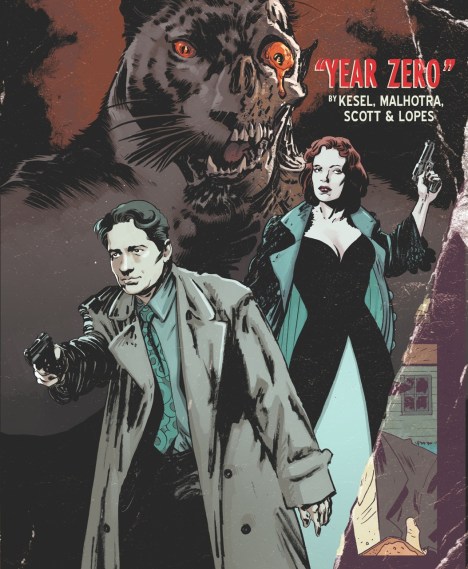
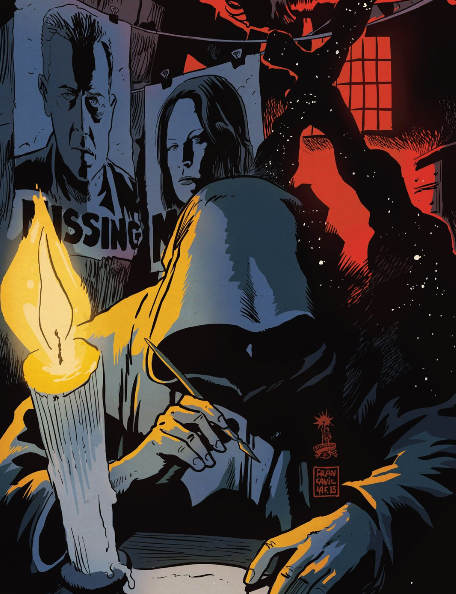
Madame X.

Madame X.

Continue reading