• Following Us

  • Categories

  • Check out the Archives


  • Awards & Nominations

Doctor Who: Planet of Evil (Review)

To celebrate the fiftieth anniversary of the longest-running science-fiction show in the world, I’ll be taking weekly looks at some of my own personal favourite stories and arcs, from the old and new series, with a view to encapsulating the sublime, the clever and the fiendishly odd of the BBC’s Doctor Who.

Planet of Evil originally aired in 1975.

He used the neutron accelerator. If he hit Sorenson, it could be disastrous.

You mean things can get worse? I don’t believe it.

– the Doctor and Sarah Jane make sure we understand the stakes

I feel a bit sorry for Planet of Evil. I mean, it sits near the start of one of the best seasons of Doctor Who, and yet it’s generally overlooked. It’s not that Planet of Evil is bad – The Android Invasion from the same season is actually bad, and is remembered as such. It’s more that Planet of Evil doesn’t really feel as exceptional as it could be. The Hinchcliffe and Holmes era of Doctor Who was cranking out classic adventures and iconic images to beat the band, but Planet of Evil just wound up feeling relatively generic. That’s not necessarily entirely fair. The opening two episodes of Planet of Evil are superb, but it is let down by a fairly average conclusion and undermined by a fairly weak supporting cast.

It is nowhere near the best story of the season, but it’s hardly a spectacular failure. there are times in the history of Doctor Who where Planet of Evil would be a welcome relief. However, it suffers from being a reasonably mediocre adventure in a fantastic season.
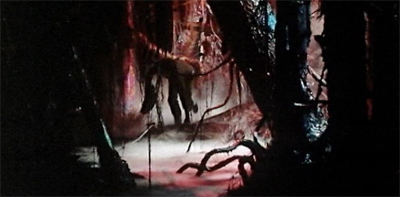
In the jungle, the peaceful jungle...

In the jungle, the peaceful jungle…

Continue reading

Doctor Who: The Claws of Axos (Review)

To celebrate the fiftieth anniversary of the longest-running science-fiction show in the world, I’ll be taking weekly looks at some of my own personal favourite stories and arcs, from the old and new series, with a view to encapsulating the sublime, the clever and the fiendishly odd of the BBC’s Doctor Who.

The Claws of Axos originally aired in 1971.

Are you trying to tell me you can absorb the total output of this complex in a police box?

Yes.

– Hardiman and the Master discover that self-confidence is a genetic Time Lord trait

The Claws of Axos tends to come in for a fair bit of criticism for pretty much being the quintessential Earth-based Jon Pertwee story, with very little exceptional to distinguish it from the pack. Personally, I’m actually quite fond of it, perhaps precisely for that reason. I think you’re hard-pressed to find an adventure in the early part of Jon Pertwee’s tenure that so effectively and so efficiently captures the spirit of the show – both good and bad. That kind of makes The Claws of Axos stand out if only because it so perfectly embodies those early Pertwee years.

Eye see you…

Continue reading

Doctor Who: Shada (2003) (Review)

To celebrate the fiftieth anniversary of the longest-running science-fiction show in the world, I’ll be taking weekly looks at some of my own personal favourite stories and arcs, from the old and new series, with a view to encapsulating the sublime, the clever and the fiendishly odd of the BBC’s Doctor Who.

Shada originally broadcast on the BBC website in 2003.

Doctor, a fool would realise that it was written in code!

Skagra, this thing is written in code!

– Skagra and the Doctor have some communication difficulties

Has a failed Doctor Who story every haunted the collective consciousness in the way that Shada does? There’s a wealth of adventures that were proposed and never produced, from the last Master story that never happened in The Final Game, through to the laundry list of unproduced adventures that would have made up Colin Baker’s second season if the show hadn’t been parked by the BBC. However, Shada is something different. So different, in fact, that it has been told quite a few times. In fact, it might be the only Doctor Who story I end up covering twice.

This was a webcast version, a very simply animated version of the tale produced for the BBC website, using an audio play adapted from Douglas Adams’ original script by Big Finish, the fan collective who produce a range of celebrated audio plays for the classic series. Starring Paul McGann, the Eighth Doctor who never really got a chance to develop the role in live action, it’s an interesting glimpse at what might have been.

Lost in time...

Lost in time…

Continue reading

Doctor Who: Horror of Fang Rock (Review)

To celebrate the fiftieth anniversary of the longest-running science-fiction show in the world, I’ll be taking weekly looks at some of my own personal favourite stories and arcs, from the old and new series, with a view to encapsulating the sublime, the clever and the fiendishly odd of the BBC’s Doctor Who.

Horror of Fang Rock originally aired in 1977.

So you found the trouble then?

Yes, I always find trouble.

– Vince and the Doctor

The show was on something of a hot streak when Horror of Fang Rock aired. While producer Philip Hinchcliffe’s tenure on the show is roundly praised, and is a personal favourite, the standard of the show had been particularly high. The beloved Talons of Weng-Chiang had closed out the previous season, following hot-on-the-heels of the well-regarded Robots of Death – both classic and iconic stories that stand as the very best of Tom Baker’s time in the lead role. Horror of Fang Rockis right on up there, as perhaps one of the best gothic horrors that the series has ever produced.

Something wicked this way comes...

Continue reading

Doctor Who: Robot (Review)

To celebrate the fiftieth anniversary of the longest-running science-fiction show in the world, I’ll be taking weekly looks at some of my own personal favourite stories and arcs, from the old and new series, with a view to encapsulating the sublime, the clever and the fiendishly odd of the BBC’s Doctor Who.

Robot originally aired in 1974 and 1975.

There you are. Now come along, Doctor, you’re supposed to be in the sick bay.

Am I? Don’t you mean the infirmary?

No, I do not mean the infirmary. I mean the sick bay. You’re not fit yet.

Not fit? I’m the Doctor.

No, Doctor, I’m the doctor and I say that you’re not fit.

You may be a doctor, but I’m the Doctor. The definite article, you might say.

– Harry meets the Doctor

Robot feels a bit like trying to fit a round peg into a square hole, or a Tom-Baker-shaped peg into a Jon-Pertwee-shaped hole. At the time that Baker assumed the role as everybody’s favourite time-travelling phone-booth dweller, Pertwee had just finished the longest stint as the character, portraying the Doctor for five years. Of course, Baker himself would go on to break that record, playing the part for seven years, but it gives you a sense of just how big of a transition it was. As such, it’s easy to understand why outgoing producer Barry Letts felt the need to essentially cast Tom Baker in what feels distinctly like a Jon Pertwee story. As a concept, the central character aside, Robot feels like it would have fit in quite well as part of Pertwee’s last season, which is – I think – part of the problem here.

Tom Baker is a lot of things, but he’s not Jon Pertwee. As a result, Robot feels a little clunkier than it really should, as if the show is actively working against the character who should be driving it.

The Doctor will see you now...

The Doctor will see you now…

Continue reading

The Doctor Is In? Is Doctor Who “Too British” For American Audiences?

Well, it’s been about a week since the news broke that David Yates would be directing the new Doctor Who movie, being produced by the BBC, aimed at American audiences. Perhaps Steven Moffat’s rumoured commentary was perfectly apt: it seems that neither the director nor the studio have any idea what exactly they are planning, and the announcement might have been more than a little preemptive. There’s a lot of chatter out there about what this means for the television show, which is rumoured to be running severely over-budget and under pressure from the BBC executives. Because, you know, it’s not like the show makes enough to justify its costs.

I don’t know if this means potential cancellation or a reboot after the fiftieth anniversary, or even if the show and the movie will run alongside in two distinct continuities (and people said Moffat’s “timey-wimey” plots were too complicated!). Being entirely honest, I’m not sure if Yates knows either. However, something does fascinate me about this. Bringing Yates on-board represents a vote of confidence, suggesting that Doctor Who could be somewhere in the region of “Harry Potter” success stateside.

I can’t help but wonder if Doctor Who is simply “too British” for mainstream American audiences, and if launching a movie franchise to appeal to the demographics will be able to keep the core of the character and the show, while courting North American movie-goers.

States of play?

Continue reading