• Following Us

  • Categories

  • Check out the Archives


  • Awards & Nominations

Star Trek: Enterprise – Fortunate Son (Review)

Next year, Star Trek is fifty years old. We have some special stuff planned for that, but – in the meantime – we’re reviewing all of Star Trek: Enterprise this year as something of a prequel to that anniversary. This January, we’re doing the first season. Check back daily for the latest review.

Fortunate Son is a solid premise ruined by an overly simplistic execution.

One of the more interesting aspects of Star Trek: Enterprise is a chance to return to the pioneering spirit of the original Star Trek. It’s an excuse to imagine what the early years of humanity’s exploration of space must have looked like. More than any other spin-off except Star Trek: Deep Space Nine, this show lends itself to world-building and expansion. What does space look like before the Federation was established? How was it regulated before a gigantic conglomeration of space-faring races decided to impose their own laws and rules upon the spaceways?

Well, that sucked the air out of the room...

Well, that sucked the air out of the room…

Broken Bow made a big deal about how the Enterprise was the first human ship capable of travelling at warp five. In essence, it is the beginning of the Star Trek franchise as fans know it. The speed that engine brings and the distance the ship can cover serve as a gateway to the wider Star Trek universe. So, logically, if Enterprise is the first step in that direction, the ship must be emerging into a universe that looks radically different – a culture that is very distinct from that depicted on the other Star Trek spin-offs. With slower engines, fewer ships, less known about the universe, this should be an entirely different world.

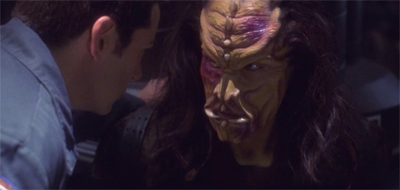
Fortunate Son touches on this idea a little bit, throwing Archer into conflict with the crew of a long-haul space freighter over intergalactic piracy. The problem with the episode is that it feels very much like Archer is arguing from a position grounded in the Star Trek franchise as it is yet to develop, rather than the current status quo. In his debates with Ryan, Archer gets to be right for two contrived reasons: Ryan is written as an idiot; and Archer’s philosophy applies to the status quo of over five hundred other episodes.
Beaten to the punch...

Beaten to the punch…

Continue reading

Star Trek: Enterprise – Civilisation (Review)

Next year, Star Trek is fifty years old. We have some special stuff planned for that, but – in the meantime – we’re reviewing all of Star Trek: Enterprise this year as something of a prequel to that anniversary. This January, we’re doing the first season. Check back daily for the latest review.

After Breaking the Ice hinted at what Star Trek: Enterprise might become, Civilisation is an episode that nudges the show right back into its comfort zone. It’s an episode of Star Trek that feels like it could have been produced for Star Trek: The Next Generation or Star Trek: Voyager, with only a minimum amount of change to the script. However, what is strangest about Civilisation is the way that it feels like a rather direct throwback to the very classic Star Trek show, serving as a tale about our hot-blooded captain fighting evil imperialist adversaries and seducing sexy alien space babes.

Of course, there’s a sense that this sense of regression is exactly what the show is aspiring towards. After all, Archer was advertised as “Captain Kirk’s childhood hero”, and it makes sense for the show to play with the classic Star Trek tropes that are regarded so affectionately by popular culture. Unfortunately, Civilisation lacks the spark and wit necessary to make such a pulpy homage work, instead feeling too much like a dull retread.

David Ickes was right!

David Icke was right!

Continue reading

Star Trek: Enterprise – Breaking the Ice (Review)

Next year, Star Trek is fifty years old. We have some special stuff planned for that, but – in the meantime – we’re reviewing all of Star Trek: Enterprise this year as something of a prequel to that anniversary. This January, we’re doing the first season. Check back daily for the latest review.

Breaking the Ice is the first episode of the first season of Star Trek: Enterprise not to reserve a “story by” credit for Rick Berman and Brannon Braga. (Although – in the To Boldly Go documentary – Braga has suggested that at least some of the episode came from his own ideas.)

It is instead credited solely to the writing team of Maria & Andre Jacquemetton. A husband-and-wife writing team, the duo have a long history of writing for television. Before they worked on Enterprise, their credits included Baywatch Nights. However, they are probably more notable for the work that they did after Enterprise, working as executive producers and writers on Mad Men. The duo have won WGA awards for their contributions to Mad Men and been nominated for Emmys.

Guess who's coming to dinner...

Guess who’s coming to dinner…

It is very easy to take the pedigree of the writers on Star Trek for granted. After all, Ronald D. Moore went from a Star Trek: The Next Generation fan with a spec script to the showrunner on the rebooted Battlestar Galactica. Bryan Fuller went from a workhorse on the Star Trek: Voyager staff to a television auteur with work on Dead Like Me, Pushing Up Daisies and Hannibal. Brannon Braga has been prolific since his departure from the franchise, while Ira Steven Behr and René Echevarria have worked consistently in genre television.

It is tempting to claim that Enterprise was something of a formative experience for the Jacquemettons, but that would be disingenuous. Despite writing the show’s first script without a credit to Berman and Braga, the duo were not around long enough to make an impression on the show. They departed at the end of the first season, along with most of the writing staff. Indeed, the most significant influence that Enterprise had on their career was probably the fact that they used to discuss the idea for Mad Men with creator Matt Weiner while they were working on this show.

They're cracking up out there...

They’re cracking up out there…

Still, while hardly a demonstration that Jacquemettons were a creative force to be reckoned with, Breaking the Ice is a solid little episode. It ranks as the strongest episode of Enterprise since the pilot. In many respects, it recalls the Prime Factors/State of Flux duology from the first season of Voyager. It is a flawed episode that has no shortage of ambition, offering a taste of what could make its show unique in the Star Trek pantheon.

It is an episode that celebrates everything that makes Enterprise unique as compared to the other Star Trek shows, taking a great deal of pleasure in things that the audience had come to take for granted in the franchise. It’s a quiet character piece, where what little plot exists is pushed very much to the background, and which offers a much more nuanced view of human/Vulcan relations than Strange New World or The Andorian Incident.

Those Vulcans are cold so-and-sos...

Those Vulcans are cold so-and-sos…

Continue reading

Star Trek – Assignment: Earth (Review)

The first Star Trek pilot, The Cage, was produced in 1964. To celebrate its fiftieth anniversary, this December we are reviewing the second season of the original Star Trek show. You can check out our first season reviews here. Check back daily for the latest review.

Assignment: Earth was almost the last episode of Star Trek ever produced.

It was also possibly (although nowhere near “almost”) the pilot for a spin-off television show.

Seventh heaven?

Seventh heaven?

At the last minute, following a very high-profile fan campaign, Star Trek was renewed for a third season.

Fans would have to wait decades to see an actual Star Trek finalé that reduced the main cast to guest stars.

"Wait, who just hijacked my show?"

“Wait, who just hijacked my show?”

Continue reading

Star Trek: Enterprise – Strange New World (Review)

Next year, Star Trek is fifty years old. We have some special stuff planned for that, but – in the meantime – we’re reviewing all of Star Trek: Enterprise this year as something of a prequel to that anniversary. This January, we’re doing the first season. Check back daily for the latest review.

Strange New World is the first episode of Star Trek: Enterprise to come from a writing team other than Brannon Braga and Rick Berman. Berman and Braga would dominate the writing credits for the first season. Even when the final teleplay was credited to another writer or writing team, there was often a “story by” credit given to Berman and Braga. Braga himself has conceded that he essentially re-wrote all of the episodes of the first season.

Still, Strange New World is credited to the writing team of Mike Sussman and Phyllis Strong. Both had worked on Star Trek: Voyager before migrated to Star Trek: Enterprise along with André Bormanis. Sussman had pitched the story for Meld and worked on a number of solo stories and scripts before teaming with Strong on the seventh and final season of the show. The two would remain a writing team for the first two seasons of Star Trek: Enterprise, hitting their stride with some of the strongest episodes of the troubled second season.

Picture perfect...

Picture perfect…

Strange New World is an interesting début for the pair. On the hand, it is a story that celebrates the unique place of Star Trek: Enterprise in the Star Trek pantheon. It’s a story about how great it must be to set foot on an alien planet, and how wondrous it must be to breath air from outside our atmosphere. With its emphasis on shuttlepods and primitive transporters, it does remain relatively true to the prequel premise of Enterprise.

On the other hand, Strange New World is a very familiar Star Trek template. Indeed, it’s a very familiar first season template. It’s the episode where the crew of the ship are exposed to some strange outside force that makes them all act out of character. It’s something of a Star Trek standard. The original Star Trek had The Naked Time and Star Trek: The Next Generation had The Naked Now, while Star Trek: Deep Space Nine had both Babel and Dramatis Personae. In many ways, Strange New World feels like a familiar old story.

Strange yellow daisy fields forever...

Strange yellow daisy fields forever…

Continue reading

Star Trek – The Omega Glory (Review)

The first Star Trek pilot, The Cage, was produced in 1964. To celebrate its fiftieth anniversary, this December we are reviewing the second season of the original Star Trek show. You can check out our first season reviews here. Check back daily for the latest review.

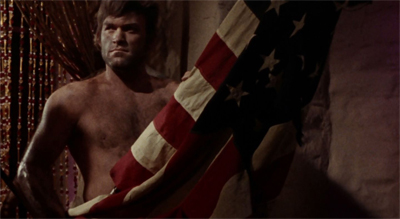
Gene Roddenberry is a controversial figure who casts a fairly large shadow. It is very hard to talk about Star Trek – particularly the classic Star Trek – without talking about Roddenberry’s influence and vision. Roddenberry was fond of myth-making when he was alive, of playing up his own contributions to Star Trek while marginalising or dismissing the other people who shaped or defined the franchise.

Roddenberry is a polarising figure among fans and critics, insiders and outsiders. To some, Roddenberry was the man who created Star Trek. While this doesn’t immunise him against criticism, it does provide a sense of context – whatever sins he may have committed and whatever faults he may have had must be offset against that. To others, Roddenberry was prone to exaggerate his accomplishments at the expense of people like David Gerrold or Gene L. Coon who shaped the franchise just as much as (if not more than) he did.

Flagging trouble ahead...

Flagging trouble ahead…

While those are two extremes, they are not the only possible views of Roddenberry. There are a broad range of opinions that might be offered, and not all of them are mutually exclusive. Ask a dozen people who know their Star Trek about Roddenberry, and are likely to come up with a dozen nuanced and defensible positions on the man and his legacy. Nobody seems entirely what to make of Roddenberry and his creative contributions to the franchise.

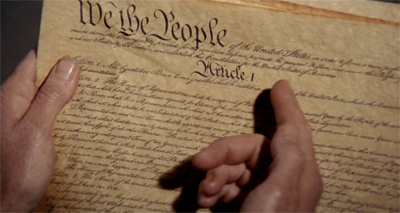
The Omega Glory is an interesting episode, one that invites as much debate as any of Roddenberry’s contributions to the franchise.

A strong constitution to make it through this one...

A strong constitution to make it through this one…

Continue reading

Star Trek: Enterprise – Broken Bow (Review)

Next year, Star Trek is fifty years old. We have some special stuff planned for that, but – in the meantime – we’re reviewing all of Star Trek: Enterprise this year as something of a prequel to that anniversary. This January, we’re doing the first season. Check back daily for the latest review.

Broken Bow is probably the strongest pilot in the Star Trek canon, with Emissary and The Cage vying for second place.

That’s not saying a lot. Broken Bow is still a troubled production with some rather sizeable issues marring what is otherwise an ambitious début for a new Star Trek show. Watching, Broken Bow – as with watching most of the first few years of Star Trek: Enterprise (or just Enterprise) – it feels like the show is at war with itself. It wants to be something new and fresh and exciting, but it also wants to be an important part of this larger tapestry. And the episode has difficulty reconciling that.

New (old) frontier...

New (old) frontier…

So we get new aliens like the Suliban, but a plot that revolves around the Klingons; we get an entirely new crew with a Vulcan science officer and Southern gentleman as the Captain’s best friend; we get a ship without most of the conveniences that we take for granted on Star Trek, but with substitutes and a resolution that relies on technological gimmickry; we get to explore an uncharted part of the Star Trek canon, but with the intrusion of the future to help make it feel a little more familiar.

From the first episode, Star Trek: Enterprise seems to exist as a show trapped between what it could have been and what it has to be. It’s a premise rich with potential, but which still feels a little too much like everything that came before.

Into the sunset...

Into the sunset…

Continue reading

Star Trek – Patterns of Force (Review)

The first Star Trek pilot, The Cage, was produced in 1964. To celebrate its fiftieth anniversary, this December we are reviewing the second season of the original Star Trek show. You can check out our first season reviews here. Check back daily for the latest review.

Patterns of Force is a rather strange little episode, the type of weird and iconic adventure that Star Trek tended to do quite well. It’s very much an off-the-wall adventure, of the kind that none of the spin-off shows would attempt. “Planet of the Nazis” is a concept that belongs alongside other second-season episodes like “Planet of the Romans” or “Planet of the Gangsters.” It’s a very goofy premise, one that requires considerable suspension of disbelief before the episode even starts.

And, yet, despite the many serious problems with Patterns of Force, this is an episode that very clearly and very forcefully has something to say. Reflecting the world in which it aired, Star Trek is a show that is largely defined by the Second World War. In The City on the Edge of Forever, it was revealed that the Second World War had to happen to beckon the bright and optimistic future of Star Trek. Almost forty years later, the final televised season of the franchise would return to that idea in its opening episode.

"Computer, query. What is Godwin's Law?"

“Computer, query. What is Godwin’s Law?”

Kirk’s “final frontier” was Kennedy’s “new frontier” extrapolated centuries into the future, an optimistic and very American vision of what the twenty-third century might hold. Given that the show aired two decades following the end of the Second World War, the conflict that made America the most powerful global superpower, it makes sense that the conflict should cast a shadow over Star Trek. Various members of the production had served in the conflict, and it remained part of the national consciousness.

So an episode pitting Kirk and Spock against honest-to-goodness space Nazis seemed inevitable.

"Well, there goes syndication in Germany..."

“Well, there goes syndication in Germany…”

Continue reading

Star Trek – The Gamesters of Triskelion (Review)

The first Star Trek pilot, The Cage, was produced in 1964. To celebrate its fiftieth anniversary, this December we are reviewing the second season of the original Star Trek show. You can check out our first season reviews here. Check back daily for the latest review.

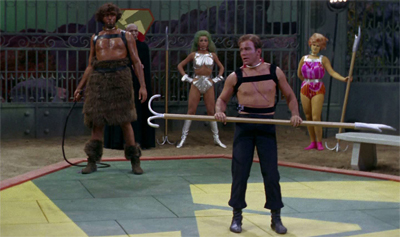
The Gamesters of Triskelion is not a great episode of Star Trek. Although filmed after Obsession, even if the production order lists it before that episode, The Gamesters of Triskelion feels like we’re watching producer John Meredyth Lucas finding his feet. It’s an episode that feels light and looks relatively cheap, formed from a collection of clichés that would already be familiar to Star Trek fans or fans of pulp science-fiction.

Perhaps the best thing that can be said about The Gamesters of Triskelion is that it has a decidedly pulpy charm to it. The entire episode looks like it was lifted from the cover to some trashy paperback, and the plot is recycled from stock science-fiction concepts and themes. While this isn’t enough to sustain an entire fifty minutes of television, it does allow the episode to feel a little distinctive and memorable… if not necessarily in a good way.

Shat happens...

Shat happens…

It is amazing how much of the franchise’s memorable iconography and imagery comes from weaker episodes of the classic Star Trek. It’s a testament to the show’s production design team, that could always find a way to make Star Trek look impressive, even on a tight budget and a short schedule. There’s also something enduring about the bizarre images that Star Trek could throw up on screen, even when the scripts were lacking; from space!Lincoln in The Savage Curtain to half-black/half-white racism in Let That Be Your Last Battlefield.

Of course, there are episodes that are both great and iconic at at the same time, like Mirror, Mirror. Still, rewatching the show, it is hard to believe just how much of the popular perception of Star Trek comes from episodes that are of… questionable quality. After all, The Gamesters of Triskelion seems to have made an impression. It seems to be a go-to reference for Matt Groening’s television shows.

Throwing a bit of stick about...

Throwing a bit of stick about…

Continue reading

Star Trek – Bread and Circuses (Review)

The first Star Trek pilot, The Cage, was produced in 1964. To celebrate its fiftieth anniversary, this December we are reviewing the second season of the original Star Trek show. You can check out our first season reviews here. Check back daily for the latest review.

Bread and Circuses is not subtle. Then again, that is the point.

There’s a lot of interesting stuff happening in Bread and Circuses, the fourteenth episode produced for the second season, but the last to air. There’s the idea of a world dominated by “a twentieth century Rome”, a rogue captain, a Prime Directive dilemma and a scathing indictment of modern television. Not only is it one of the last episodes with a “produced by Gene L. Coon” credit, it is also an episode co-written by Roddenberry and Coon. It is also the episode of Star Trek that endorses Christianity most explicitly and heavily.

"Wait, we're only getting it in black and white?"

“Wait, we’re only getting it in black and white?”

Bread and Circuses is a bold and audacious piece of television, full of venom and righteous anger, rich in satire and cynicism. It’s a plot so ridiculously over-stuffed with good ideas that viewers are liable to forgive the show’s somewhat cop-out ending where Kirk and his away team beam back to the Enterprise and continue on their merry way as though little has actually happened. Bread and Circuses feels like it uses every minute of its fifty-minute runtime wisely, balancing character with world-building.

It is probably a little bit too messy and disjointed to be labelled a dyed-in-the-wool classic, particularly when compared to the shows produced around it. Nevertheless, it is a decidedly ambitious piece of work, and one that demonstrates what Star Trek could do when it sets its mind to something.

When in Rome...

When in Rome…

Continue reading