• Following Us

  • Categories

  • Check out the Archives


  • Awards & Nominations

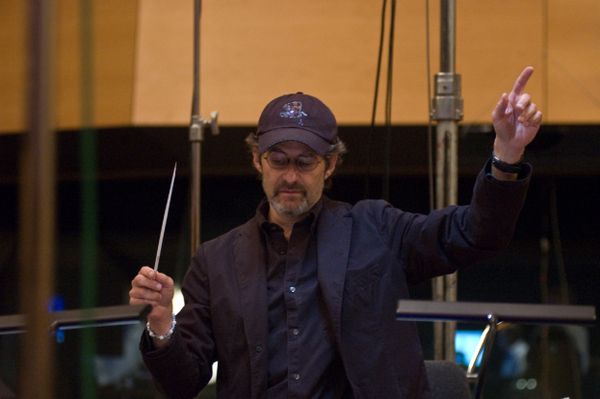
James Horner

It is no exaggeration to say that James Horner was one of the greatest film composers of all time.

Such measures are seldom objective, but Horner was the rare composer who could match critical and commercial success across a wide range of genre and material. Understandably, coverage around his death has focused on the biggest hits in his extensive filmography. He won two Oscars out of ten nominations. He occupied two of the five nomination slots in 1996 for his soundtracks to Apollo 13 and Braveheart. It is quite something to compete against yourself for an Oscar.

6a00d8341c630a53ef012875f27459970c-600wi

Titanic tends to headline such discussions of Horner’s work, as one might expect given that it was “the biggest selling primarily orchestral film score in history.” More than that, Horner wrote The Heart Will Go On, the love theme that sold more than 15 million copies to become one of the biggest selling singles of all time and the biggest selling single of 1998. The Heart Will Go On is credited with revitalising the “spin-off hit” in the late nineties, prompting lots of movie-launched love ballads like Don’t Wanna Miss a Thing or There You’ll Be.

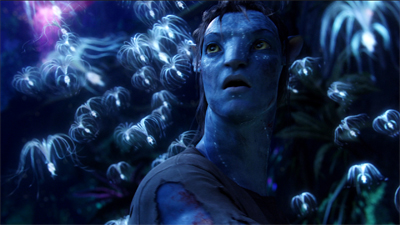
Horner enjoyed no shortage of commercial success. He provided the soundtracks to two movies that could claim to be the biggest movies of all time upon their release. Titanic was the first such example, becoming the most successful movie of all time upon its release in 1998. Horner also provided the soundtrack to Avatar, the movie that would claim the title in 2009. However, the most impressive aspect of Horner’s extensive filmography is the sheer scope of his work.

avatar1

Continue reading

Star Trek: Enterprise – Season 2 (Review)

Next year, Star Trek is fifty years old. We have some special stuff planned for that, but – in the meantime – we’re reviewing all of Star Trek: Enterprise this year as something of a prequel to that anniversary. This April, we’re doing the second season. Check back daily for the latest review.

The second season of Star Trek: Enterprise is a strange beast, breaking down into roughly three sections.

The first section runs from Shockwave, Part II through to A Night in Sickbay. There is a nice energy to these episodes, with the first appearance of the Romulans in Minefield and nice internal continuity between otherwise stand-alone adventures like Minefield and Dead Stop. Carbon Creek is a fun diversion and A Night in Sickbay at least tries to do something novel and exciting – even if the show can’t quite pull it off. This stretch of the season feels like an organic development from the first season, a collection of episodes of variable quality; balancing the desire to try new things with nods to the franchise’s strengths.

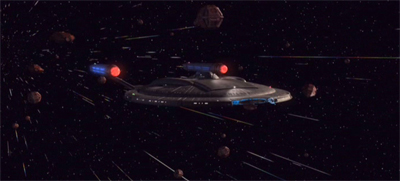
ent-theexpanse9

The final stretch runs from Judgment to The Expanse. The third season looms large over these episodes, with a sense of impending change in the air. These episodes seem to bid farewell to a version of Star Trek that has existed since the third season of Star Trek: The Next Generation. Judgment gives the Klingons one last epic story, Regeneration checks in on the Borg. The Breach offers a traditional Star Trek morality play, while Cogenitor brutally subverts it. Even episodes like Horizon and First Flight call back to the earliest episodes of Enterprise, as if to offer one last reflection on what might have been.

However, the second season is dominated by a long middle stretch – episodes running from Marauders through to The Crossing. While episodes like Future Tense provide an occasional reprieve, this middle stretch of the season is workmanlike and functional. This is the first two seasons of Enterprise as they are often dismissed: a lite version of Star Trek: Voyager in the same way that Star Trek: Voyager is a lite version of Star Trek: The Next Generation. In that long and dull middle stretch, it feels like the writing staff might as well be blowing dust off of scripts written for the seventh season of The Next Generation.

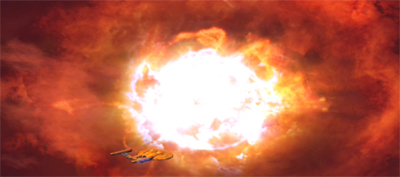
ent-shockwavepart2o

Unfortunately, while the first and third sections of the season have a lot to recommend them, it is the middle stretch that sets the mood for the season. The second season of Enterprise has more than a couple genuine stinkers – Precious Cargo, The Crossing and Bounty come to mind – but the season never hits the sustained lows of the third season of Star Trek, the first and second seasons of The Next Generation or the second season of Voyager. However, there is long string of episodes that are just dull and uninspired; formulaic and familiar.

In that extended run in the middle of the season, there are episodes that can be easily reduced to “[earlier episode or pop culture reference] by way of [earlier episode or pop culture reference]” without missing anything much. Marauders is The Magnificent Seven by way of Star Trek”, The Communicator is A Piece of the Action by way of First Contact”, Singularity is “Bliss by the way of The Game”, Vanishing Point is “Realm of Fear by way of Remember Me”, Precious Cargo is “Elaan of Troyius by way of The Perfect Mate”, Dawn is The Enemy by way of Darmok.” And so on.

ent-futuretense16

The result is a second season that is exhausting and draining. Watching it on original broadcast was a disheartening experience; each week seemed to bring more of the same. The long stretch from the end of October to the start of April was unforgiving; each week seemed to offer more evidence that Star Trek was tired and played out, a franchise disengaged from not only the world around it but also from the changing rules of its own medium. Coupled with the spectacular (but entirely foreseeable) failure of Star Trek: Nemesis, the second season of Enterprise seemed to seal the franchise’s fate.

There is a very real tragedy to all this. For all that the tail end of the second season sees a massive up-swing in quality and energy, it is perhaps too little and too late. By the time that Judgment had begun a late-season revitalisation, Rick Berman had already announced a bold new direction for the third season. That last stretch is a lame duck. In a way, the second season of Enterprise plays like a microcosm of the series itself; a dramatic upswing in quality and ambition at a point where fate has already made its decision.

ent-cogenitor

Continue reading

Star Trek: Enterprise – The Expanse (Review)

Next year, Star Trek is fifty years old. We have some special stuff planned for that, but – in the meantime – we’re reviewing all of Star Trek: Enterprise this year as something of a prequel to that anniversary. This April, we’re doing the second season. Check back daily for the latest review.

And, finally, everything changes.

It feels inevitable. Maybe not in this particular form, maybe not in this particular way, but Star Trek: Enterprise needed something. The show needed to stop feeling like a relic of the early nineties – a great song played on loop to the point where it became nothing more than generic white noise. The Expanse gives the show a clear sense of direction and a clear sense of purpose. It is not a direction that is unanimously loved, and it is not a purpose that is realised as well as it might be, but it finally feels like Enterprise is boldly going in its own direction.

A walk among the wreckage...

A walk among the ruins…

In many respects, the obvious point of comparison for The Expanse is an episode like The Jem’Hadar or A Call to Arms. It is an episode that is clearly written to reach an ending so that the show can start doing something new. These episodes tend to tease a brave new future, one utterly unlike anything that Star Trek has done before, but they play like extended forty-five minute trailers. Watching The Expanse, it feels like show runners Rick Berman and Brannon Braga are thinking more about the direction than the destination. That’s not a bad thing at this point.

Polarising as it might be, and occasionally awkward as it might be, The Expanse was utterly necessary. Enterprise is a Star Trek show that exists in the shadow of 9/11. That horrific terrorist attack has reverberated throughout the series. The War on Terror informs and distorts narratives like Shadows of P’Jem, ShockwaveThe SeventhCease FireThe CrossingJudgmentRegeneration and Cogenitor. However, there is a sense that Enterprise never accepted that heavy pull of gravity.

Homecoming...

Homecoming…

Sometimes it worked; Judgment, Regeneration and Cogenitor are all examples of the series trying to apply its own morality to a more complicated and confusing geopolitical climate. However, the War on Terror made it hard to reconcile Jonathan Archer as both an explorer and a paranoid reactionary. The unquestioning trust in authority in The Seventh, to the point where he did not question the Vulcan High Command’s mindwipe of T’Pol? The all-consuming dread upon meeting something different in The Crossing? These do not fit well within Star Trek.

So The Expanse pushes all that to the front. The opening teaser features a strange alien ship appearing and carving a large scar in the surface of the planet – a very visual representation of the damage done to the utopian optimism of Star Trek. Now that the scar had been literalised, it could be discussed and explored. The Expanse made sure that nobody was talking around the elephant in the room; everybody was now charging right at it.

The way ahead is cloudy...

The way ahead is cloudy…

Continue reading

Star Trek: Enterprise – First Flight (Review)

Next year, Star Trek is fifty years old. We have some special stuff planned for that, but – in the meantime – we’re reviewing all of Star Trek: Enterprise this year as something of a prequel to that anniversary. This April, we’re doing the second season. Check back daily for the latest review.

First Flight is a prequel to a prequel.

First Flight unfolds before the events of Broken Bow, providing something of a belated origin story for Captain Jonathan Archer. The tail end of the second season feels like an odd place for such a story. The decision to air First Flight and Bounty as a double feature meant that First Flight premiered only a week before The Expanse, an episode that changed everything that fans thought they knew about Star Trek: Enterprise. Then again, perhaps this is the perfect place for an episode like this.

Ground Control to Commander Robinson... Ground Control to Commander Robinson...

Ground Control to Commander Robinson… Ground Control to Commander Robinson…

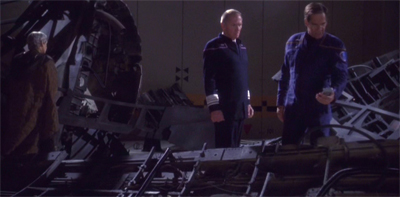
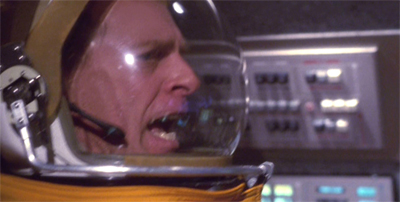
Much of the final stretch of the second season of Enterprise is introspective and reflective. The show seems aware that a big change is coming, and takes the opportunity of these last few episodes to look back on a classic model of Star Trek. Judgment puts Archer on trial; Cogenitor wonders whether old-fashioned Star Trek morality plays can still work in the twenty-first century; Regeneration finds the Borg lying among the (literal) wreckage of Star Trek: The Next Generation. First Flight opens with the death of Captain A.G. Robinson, a character we never met before.

More to the point, First Flight opens with the death of the man who was almost the captain of the Enterprise. On the cusp of a creative change in direction that effectively kills the show as it existed in the first two seasons, First Flight is pretty heavy on the symbolism.

... Take your protein pill and put your helmet on...

… Take your protein pill and put your helmet on…

Continue reading

Star Trek: Enterprise – Horizon (Review)

Next year, Star Trek is fifty years old. We have some special stuff planned for that, but – in the meantime – we’re reviewing all of Star Trek: Enterprise this year as something of a prequel to that anniversary. This April, we’re doing the second season. Check back daily for the latest review.

Horizon takes us backwards.

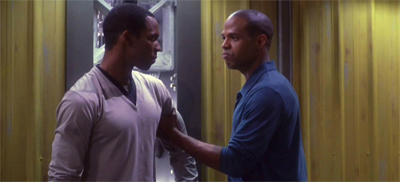
Early in the episode, the Enterprise is redirected to investigate a strange interstellar phenomenon. “This system’s almost thirty light years behind us,” Mayweather observes. Archer responds, “Admiral Forrest assures me it’s only a temporary detour.” This is largely what Horizon feels like, a journey back to the first season of Star Trek: Enterprise. Horizon is a deathly dull episode, but it would be more tolerable had it aired early in the first season. At least it is not as offensive as Unexpected or Terra Nova.

"A Travis episode? I'll be right there!"

“A Travis episode? I’ll be right there!”

There is something particularly regressive about Horizon, as if the episode is a relic of the show that Enterprise used to be. It focuses on human space exploration outside of Starfleet, as promised in episodes like Terra Nova or Fortunate Son. It gives the audience another glimpse into “boomer” life and even opens with Mayweather relaxing in “the sweet spot”, the first time that the audience has seen that location since Broken Bow. Even the plot feels like a retread of first season episodes – a strange hybrid of Fortunate Son and Silent Enemy.

The character beats are no better. Horizon struggles to construct a credible character-driven story for Mayweather. Unable to figure anything out, the show decides to saddle him with the same character arc that Hoshi repeated in episodes like Fight or Flight, Sleeping Dogs or Vox Sola. The problems are compounded by the script’s lack of trust in Anthony Montegomery to carry the himself, leading to an extended (and dull) first act and a padded (and dull) subplot. If Judgment made a sterling defense of Enterprise, Horizon is a damning argument for the prosecution.

Freight stuff...

Freight stuff…

Continue reading

Star Trek: Enterprise – The Crossing (Review)

Next year, Star Trek is fifty years old. We have some special stuff planned for that, but – in the meantime – we’re reviewing all of Star Trek: Enterprise this year as something of a prequel to that anniversary. This April, we’re doing the second season. Check back daily for the latest review.

The Crossing represents a troubling return to form for the second season of Star Trek: Enterprise in a number of ways.

In terms of basic storytelling, the show is back at the point where it is simply throwing Star Trek plots into a blender and serving up a rather unappetising smoothy. The Crossing is packed with familiar Star Trek tropes – it is Return to Tomorrow by the way of Power Play through Cathexis. The idea of non-corporeal entities hijacking living bodies is not particularly novel, and The Crossing really has nothing new to offer in terms of that sort of story. There is no element of The Crossing as fun as Leonard Nimoy’s performance in Return to Tomorrow or the hostage crisis stakes of Power Play.

Here's Trip!

Here’s Trip!

However, even without the feeling of reheated leftovers, The Crossing is a very ugly little story. It reflects the reactionary post-9/11 politics of the show, the sense of isolationism and xenophobia that have become part of the fabric of Enterprise. The Crossing is essentially a fifties horror film repurposed as a post-9/11 cautionary tale about the dangers of trusting people who are not like you. It feels like a pretty solid indication of just how thoroughly Star Trek has lost its way. The decision to just externalise these anxieties in The Expanse is long overdue.

The fact that The Crossing is credited to the two showrunners driving Enterprise is quite worrying, particularly given that it serves to express an uncomfortable subtext running through the season.

Having a gas time...

Having a gas time…

Continue reading

Star Trek: Enterprise – Future Tense (Review)

Next year, Star Trek is fifty years old. We have some special stuff planned for that, but – in the meantime – we’re reviewing all of Star Trek: Enterprise this year as something of a prequel to that anniversary. This April, we’re doing the second season. Check back daily for the latest review.

The Temporal Cold War arguably works better as a metaphor than a plot.

There is something quite compelling about the imagery of Star Trek‘s past and future doing battle within the confines of a troubled prequel, of outside forces meddling in a narrative, of the characters caught in the grip of forces they cannot understand. To expect the Temporal Cold War to make sense is to miss the point; to expect clear resolution is foolhardy. Instead of serving as a strong narrative thread running through Star Trek: Enterprise, it serves as a visual manifestation of the troubles haunting the show. It also serves as a very effective story backdrop.

Let's do the time warp again...

Let’s do the time warp again…

Future Tense has a pretty straightforward story. Archer and his crew discover a piece of floating space debris. They bring it aboard, discovering it is not what it appears to be. The Suliban show up, claiming salvage rights. The Tholians arrive, demanding the same. A chase ensues, as Archer tries to outrun the two alien species desperate to get their hands on the technology. Future Tense is a classic chase narrative, as multiple parties fight over what Hitchcock described as a “macguffin.” Little is revealed, nothing is proven, everything is resolved so neatly that it seems divine intervention is at work. Maybe it is.

And yest, despite – or perhaps because – of this narrative simplicity, Future Tense stands as a highlight of the troubled second season. Future Tense leaves almost every question about the Temporal Cold War unanswered, but it is a tight and efficient action adventure. Like Cold Front before it, it recognises that the Temporal Cold War is a story as much as a backdrop. The fact that it is mysterious and nonsensical and arbitrary make it all the more compelling. After all, that is how it must appear to Archer.

Alien bodies...

Alien bodies…

Continue reading

Star Trek: Enterprise – Cease Fire (Review)

Next year, Star Trek is fifty years old. We have some special stuff planned for that, but – in the meantime – we’re reviewing all of Star Trek: Enterprise this year as something of a prequel to that anniversary. This April, we’re doing the second season. Check back daily for the latest review.

It is weird to think that Star Trek was dying in early years of the twenty-first century.

After all, the original series had greatly increased its cultural cachet at the height of the Cold War. The adventures of James Tiberius Kirk offered an optimistic alternative to total nuclear annihilation and a doomsday clock that was rapidly approaching midnight. Logic would suggest that utopian fantasy was all the more essential when contrasted against harsh reality. In fact, it seemed like cynicism and pessimism thrived in the (relatively) peaceful and prosperous decade following the collapse of the Cold War. The X-Files and Star Trek: Deep Space Nine were inescapably products of the nineties.

I'm blue dabba dee dabba dii...

I’m blue dabba dee dabba dii…

So one imagines that the dread and fear that took root in the wake of 9/11 might somehow make the optimism and hope of Star Trek all the more essential. After all, pundits and commentators wasted no time in suggesting that irony and cynicism were passé. Stephen Thompson, editor of The Onion, suggested that the age of irony had ended only a week after the attacks.  Graydon Carter, editor of Variety, observed, “I think it’s the end of the age of irony. Things that were considered fringe and frivolous are going to disappear.” In a highly publicised Time article, Roger Rosenblatt rejoiced.

Of course, irony was far from dead, as films like Team America: World Police demonstrated. The Colbert Report became a cultural phenomenon. The Onion is still in business. However, the speed with which these commentators latched on to the idea of the death of irony suggested that the mood had changed perceptibly. Maybe not definitively, maybe not completely, but there was a change in the air. If ever there was a time for the optimism and the utopianism of Star Trek, it would be this particular moment.

"This is the point where everything changed..."

“This is the point where everything changed…”

However, it seemed like 9/11 eroded the franchise’s faith in utopia. Understandably – and perhaps inevitably – Star Trek: Enterprise found itself warped by images and iconography associated with the attacks. The tradition idyllic alien worlds associated with the franchise – visible in early episodes like Strange New World and Civilisation were quickly replaced by landscapes evoking the popular mood – apocalyptic cityscapes of Shadows of P’Jem and Shockwave, Part II, the deserts of Desert Crossing, the militaristic settings of Detained and The Communicator, or even the darkness of Rogue Planet.

It was as if 9/11 had warped the psychological landscape of the Star Trek universe, throwing everything into doubt. Far from responding to that real-world tragedy with optimism and hope, it seemed that Enterprise only lost certainty in itself. Cease Fire is an episode that feels plagued by self-doubt and insecurity, even as it tries to find its way back to the franchise’s trademark idealism. It may not quite find its way back to the path, but it makes a reasonable effort.

It's all in ruins...

It’s all in ruins…

Continue reading

Star Trek: Enterprise – Stigma (Review)

Next year, Star Trek is fifty years old. We have some special stuff planned for that, but – in the meantime – we’re reviewing all of Star Trek: Enterprise this year as something of a prequel to that anniversary. This April, we’re doing the second season. Check back daily for the latest review.

It’s been a long road.

Continuing the effort in Dawn to refocus Star Trek: Enterprise on franchise core values, Stigma offers a good old-fashioned allegory episode. It is a script clearly designed to stand alongside earlier iconic Star Trek shows like A Taste of ArmageddonErrand of MercyLet That Be Your Last BattlefieldToo Short a SeasonThe High GroundHalf a LifeEthics, The Outcast, Rejoined and Distant Origin. This is a big and important episode, dealing with big and important themes. In this case, the stigma associated with HIV/AIDS and (whisper it) homosexuality.

It's just not in the show's DNA at this point...

It’s just not in the show’s DNA at this point…

Of course, it arrives well over a decade too late. Writer David Gerrold had pitched his own allegory about HIV/AIDS and homosexuality with Blood and Fire during the first season of Star Trek: The Next Generation. The script was a little clunky, but – rather than rework it – the producers decided to shut it down completely. During that show’s third season, David Livingston was on hand to stop the show from providing the franchise’s first glimpse of a homosexual couple in The Offspring. What queer content made it into Star Trek seemed somewhat haphazard.

The decision to allow Lal to chose her own gender in The Offspring is remarkable, because it goes almost unremarked. Dax’s deduction that Pel has a crush on Quark in Rules of Acquisition comes before Pel reveals that she is a female passing herself off as male. The sincerity of The Outcast was somewhat undermined by the decision to cast a female performer in the role of genderless alien who is attracted to Riker. The good work of Rejoined is undercut by the crassness of Profit and Lace and The Emperor’s New Cloak.

Meditating on a contemporary issue...

Meditating on a contemporary issue…

There was a time when an episode like Stigma would have seemed cutting edge and provocative. Broadcast during the first (or even the second) season of The Next Generation, the episode would have challenged a number of the underlying public assumptions about the spread of HIV/AIDS and attacked a very real (and very frank) homophobic policy from the government. The biggest problem with Stigma is that it features Captain Jonathan Archer instead of Captain Jean-Luc Picard.

Of course, this suggests a very tangible issue with Enterprise at this stage of its life-cycle. It still feels like a show stuck in the past. This is still Star Trek as it was being produced in 1989, despite the fact that it is now 2003. It is a problem that has haunted Enterprise since the broadcast of Fight or Flight, but one which is really emphasised not only by the plotting of Stigma, but also in its political targets.

"You know, given how often I seem to risk removal from the ship, I should probably just keep this packed..."

“You know, given how often I seem to risk removal from the ship, I should probably just keep this packed…”

Continue reading

Star Trek: Enterprise – Dawn (Review)

Next year, Star Trek is fifty years old. We have some special stuff planned for that, but – in the meantime – we’re reviewing all of Star Trek: Enterprise this year as something of a prequel to that anniversary. This April, we’re doing the second season. Check back daily for the latest review.

Dawn arrives at a very delicate moment in Star Trek history.

Star Trek: Nemesis had hit cinemas the weekend before The Catwalk aired. It had been an immediate and humiliating disaster for Paramount. It arrived in a stuffed Christmas season, amid a relentless onslaught of big budget blockbuster fare – competing for space against Harry Potter and the Chamber of Secrets, Die Another Day and Lord of the Rings: The Two Towers. It was the first Star Trek film not to open at the top of the United States box office, landing second to Maid in Manhattan.

Engineering a solution...

Engineering a solution…

The prognosis for Star Trek as a franchise had not been particularly optimistic for quite some time. The ratings had been in decline since Star Trek: The Next Generation went off the air. Star Trek: Enterprise was airing on a dying network. Changing management at UPN was less friendly to the franchise than it had been. However, the spectacular failure of Star Trek: Nemesis was perhaps the most public blow the franchise had taken. The critics now had ammunition; the vultures were circling; the franchise was on the ropes for the world to see.

The Catwalk had aired a few days after Nemesis crash-landed, when the franchise was still reeling. The first episode of Star Trek to air in 2003, Dawn was broadcast after the franchise and the public had time to properly process the disaster. It goes without saying that there was a lot of pressure on the episode.

Alien nation...

Alien nation…

Continue reading