• Following Us

  • Categories

  • Check out the Archives


  • Awards & Nominations

Star Trek: The Next Generation – Requiem by Michael Jan Friedman & Kevin Ryan (Review)

To celebrate the release of Star Trek: Into Darkness this month, we’ll be running through the first season of the classic Star Trek all this month. Check back daily to get ready to boldly go. It’s only logical.

We’ll be supplementing our coverage of the episodes with some additional materials – mainly novels and comics and films. This is one such entry.

At the risk of stating the obvious, Star Trek is a franchise spanning almost half-a-century with six leading actors and five different television shows. Due to its nature, one of the more enjoyably fanboy-ish pastimes is attempting to reimagine various confrontations and encounters, swapping out the characters involved. How would Kirk have responded to the Borg? Would Sisko have been ideally suited to dealing with the Xindi threat? What if Janeway faced the Doomsday Machine? Different characters have different defining moments, and those moments often play to their particular strengths. It might be fun to watch Khan spar with Picard, but it probably wouldn’t work as well as it did with Kirk. Q and Kirk would probably have difficulty striking it off.

Still, Kirk’s confrontation with the Gorn in Arena stands as one of the most iconic moments in the whole of the franchise, to the point where the weird toga-wearing god-like being at the end barely gets a look-in. Indeed, based on Sisko’s fanboy gushing in Trials and Tribble-ations, it seems to be one of Kirk’s defining moments within the shared Star Trek universe. So it might be fun to take Captain Jean-Luc Picard, and put him through that same sort of confrontation.

tng-requiem

Continue reading

Star Trek – The Squire of Gothos (Review)

To celebrate the release of Star Trek: Into Darkness this month, we’ll be running through the first season of the classic Star Trek all this month. Check back daily to get ready to boldly go. It’s only logical.

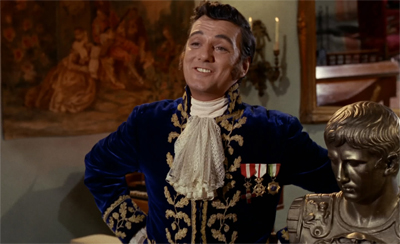
It’s easy to see why The Squire of Gothos has become such a Star Trek touchstone. The show is iconic, but there are particular images and ideas that resonate beyond the core fanbase. Captain Pike’s wheelchair from The Menagerie is one such example, as is the fight with the Gorn from Arena. It’s amazing that Star Trek could produce so many memorable and distinctive images so quickly. Trelane might not have the same name recognition, or even the same pop culture cache, but The Squire of Gothos makes quite an impression.

Indeed, the image of a god-like being acting like a spoilt child, dressed in all manner of period military clothing is a great visual, and it’s little wonder that Roddenberry would return to that idea when he was writing Encounter at Farpoint, the first episode of Star Trek: The Next Generation. Similarly, The Squire of Gothos is one of the major influences on Futurama‘s superb parody/homage, Where No Fan Has Gone Before, right down to the wonderful “twist” ending that has been spoiled by almost half-a-century of pop culture osmosis.

Still, even apart from its massive influence on pop culture, The Squire of Gothos is still a fantastic piece of television, and an example of Star Trek at its very best.

It's hip to be squire...

It’s hip to be squire…

Continue reading

Star Trek – The Menagerie, Part II (Review)

To celebrate the release of Star Trek: Into Darkness this month, we’ll be running through the first season of the classic Star Trek all this month. Check back daily to get ready to boldly go. It’s only logical.

I will admit that I am sceptical of Gene Roddenberry as a writer. There’s no denying that Roddenberry was a fantastic ideas man. After all, his concepts and characters have stood the test of time. Without Roddenberry, there would be none of the Star Trek that we all love so dearly. As such, I feel a little guilty when I criticise his writing, or when I argue that his influence on the early years of Star Trek: The Next Generation held the show back from greatness. (I’d suggest that it was only when Roddenberry’s involvement was minimised, and the writers were allowed to add shading to his futuristic utopia that The Next Generation truly came into its own.)

Still, Roddenberry was always an excellent salesman, and his script for The Menagerie brings out that quality in abundance. The Menagerie is effectively an excuse for why the show ran out of original scripts half-way through its first year, and Roddenberry might not make the most convincing argument, but he still makes it compelling.

Watching Star Trek on Star Trek...

Watching Star Trek on Star Trek…

Continue reading

Star Trek – The Menagerie, Part I (Review)

To celebrate the release of Star Trek: Into Darkness this month, we’ll be running through the first season of the classic Star Trek all this month. Check back daily to get ready to boldly go. It’s only logical.

Ah, clip shows. The bane of modern television. Okay, I’m being a bit harsh. After all, home media is a relatively recent invention. Up until the past couple of decades, it seemed that most people would only catch their television shows on… well, television. The audience was generally thought to be somewhat transient, the realities of scheduling and life making it highly unlikely that everybody would see everything. Indeed, most fans of old television shows found themselves at the mercy of fickle network schedules. Particularly for long-running shows, it was reasonable to assume that a significant portion of your audience might not be intimately familiar with the show.

Of course, the emergence of DVD box sets and on-line streaming have radically changed the way that television operates. Most obviously, there has been a massive a swing towards serialisation in the past few years, overlapping with the expansion of home media. While it’s tough to imagine a show like The Wire or Game of Thrones working in the early nineties, the fact that people can record and download and own their television shows means that producers can get away with assuming that everybody has seen everything.

What I’m getting at here  is that there was a time when clip shows were an understandable, maybe even desirable, part of the network television landscape. They could bring new viewers up to speed, or allow old viewers to celebrate the favourite parts of the show that they would otherwise never see again. Indeed, The Menagerie, the only two-part episode of the classic Star Trek, has a better excuse than most. The clip sections of this adventure are taken from the 1964 pilot, The Cage. Not only was this footage two years old when The Menagerie was broadcast, it had also never been aired.

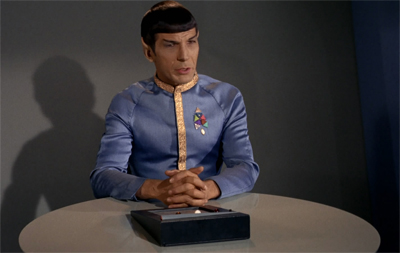
Spock the difference...

Spock the difference…

Continue reading

Star Trek – The Galileo Seven (Review)

To celebrate the release of Star Trek: Into Darkness this month, we’ll be running through the first season of the classic Star Trek all this month. Check back daily to get ready to boldly go. It’s only logical.

It’s amazing to think that only now, almost half-way through the first year of Star Trek, the show is doing a Spock-centric episode. Spock is an iconic and instantly recognisable part of Star Trek lore, to the point that Leonard Nimoy’s version of the character served as the link between the classic series and JJ Abrams’ 2009 reboot of the franchise. The character appeared in The Cage, the very first episode of Star Trek ever produced. He is perhaps even more iconic than James T. Kirk himself.

So it feels slightly weird, then, that The Galileo Seven should serve as the first episode of the series completely devoted to Spock as a character, pushing Jim firmly to the background as we get a look at Spock’s first command experience.

Talk about carrying dead weight...

Talk about carrying dead weight…

Continue reading

Star Trek – The Conscience of the King (Review)

To celebrate the release of Star Trek: Into Darkness this month, we’ll be running through the first season of the classic Star Trek all this month. Check back daily to get ready to boldly go. It’s only logical.

The Conscience of theKing continues the work of Balance of Terror in fleshing out the fictional universe of Star Trek. While the first few episodes of the show gave little thought to this universe’s shared history and our characters’ origins, The Conscience of the King offers us a glimpse into the past of Captain James T. Kirk. Like Dagger of the Mind, another episode borrowing its title from Shakespeare, it builds off the suggestion that humanity is still a long way from perfection, and that the fact we have reached the cold expanse of space does not mean that our troubles can be left entirely behind. In contrast to some of Roddenberry’s later decisions about the Star Trek franchise, it is clear that utopia is a path, and not a clear destination.

His mask is slipping...

His mask is slipping…

Continue reading

Star Trek – Errand of Vengeance: The Edge of the Sword by Kevin Ryan (Review)

To celebrate the release of Star Trek: Into Darkness this month, we’ll be running through the first season of the classic Star Trek all this month. Check back daily to get ready to boldly go. It’s only logical.

We’ll be supplementing our coverage of the episodes with some additional materials – mainly novels and comics and films. This is one such entry.

When you think about it, Star Trek finished its first season with its mythology reasonably well established. There were the Romulans, the Klingons and the Federation. (Oh, my!) We knew that Kirk had a brother on the colonies, who died in the season finalé. Vulcan was a hot desert planet. The Prime Directive existed, and we even got a taste of how Starfleet operated. However, these things all developed gradually over the course of the year, and early episodes couldn’t even seem to agree who exactly Kirk was working for.

The Federation was first mentioned in Arena and only fully named in A Taste of Armageddon. The Klingons were introduced in Errand of Mercy, with a cold war between the two galactic powers finally turning hot. Of course, it’s hard to write “finally” when they had only been introduced in this particular episode. So where were the Klingons during the show’s first year? How come we didn’t pick up any of the tension that must have been simmering?

Kevin Ryan’s Errand of Vengeance trilogy attempts to offer some context, suggesting that the Klingon threat had been brewing during the entire first season. It follows Jon Anderson, a new recruit to the ship’s security department, arriving just before the events of What Are Little Girls Made Of? Oh, and he’s a Klingon infiltrator.

tos-errandofvengeance1

Continue reading

Star Trek – What Are Little Girls Made Of? (Review)

To celebrate the release of Star Trek: Into Darkness this month, we’ll be running through the first season of the classic Star Trek all this month. Check back daily to get ready to boldly go. It’s only logical.

What Are Little Girls Made Of? is the first episode from a script written by Robert Bloch, perhaps best known as the author of Psycho. Interestingly, it wasn’t the first script Bloch wrote for the show. Apparently Bloch contributed Catspaw first, when the show asked him for a Halloween special, even though it wouldn’t be produced until the series’ second year. And, to be fair, you can sense that What Are Little Girls Made Of? is a bit more comfortable with the Star Trek conventions than Bloch’s other two episodes. An uncredited re-write from Gene Roddenberry probably helped.

With Bloch’s third script, Wolf in the Fold, serving as a loose adaptation of (or spiritual successor to) his celebrated short story Yours Truly, Jack the RipperWhat Are Little Girls Made Of? stands out among Bloch’s contributions to the show. It’s an iconic episode, one that has undoubtedly influenced the way that we remember Star Trek, serving as the source for all manner of Star Trek memes like Kirk overwhelming a hot android with his sexual charisma, and defeating a less physically attractive robot with a logic puzzle. It features some of the most iconic costuming of the original Star Trek show, and also serves as the root of the whole “what constitutes life?” philosophical strand that would find itself embodied by Data on Star Trek: The Next Generation.

It helps that, like so much of this first season of Star Trek, it is just good pulpy fun.

A cold reception...

A cold reception…

Continue reading

Star Trek – Romulans: Pawns of War by John Byrne (Review)

To celebrate the release of Star Trek: Into Darkness this month, we’ll be running through the first season of the classic Star Trek all this month. Check back daily to get ready to boldly go. It’s only logical.

We’ll be supplementing our coverage of the episodes with some additional materials – mainly novels and comics and films. This is one such entry.

Where were the Klingons? That seems to be one of the most frequently asked questions when a modern writer re-visits the early part of the first season of Star Trek. It makes sense. The Klingons are the franchise’s flagship aliens, and their long-term relations with the Federation mark one of the show’s earliest examples of continuity. The Organian Peace Treaty from Errand of Mercy is mentioned once or twice, but it informs a lot of the appearances of the Klingons in the classic Star Trek, as the warriors are prevented from engaging in direct warfare with the Federation.

However, when first introduced in Errand of Mercy, towards the end of the first season, the Klingons have just declared war on the Federation. However, it seems like this has been expected for a long time. Kirk speaks of the Klingons like old enemies. Kor knows that captain of the Enterprise by name. There’s a sense of a pre-established history, which makes their appearance towards the tale-end of the season all the more perplexing. Apparently they have been there all along, even if we haven’t seen them before.

John Byrne’s Alien Spotlight issue might have been themed around the Romulans, and the collected edition might be Romulans: Pawns of War, but it seems more devoted to exploring what exactly the Klingons were up to behind the scenes between their appearances on Star Trek.

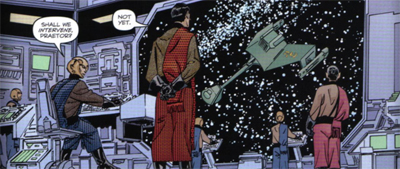
Cry havok, and let slip the dogs of war...!

Cry havok, and let slip the dogs of war…!

Continue reading

Star Trek – Balance of Terror (Review)

To celebrate the release of Star Trek: Into Darkness this month, we’ll be running through the first season of the classic Star Trek all this month. Check back daily to get ready to boldly go. It’s only logical.

I’ve talked about it about it quite a bit in my earlier reviews, so I won’t dwell on it too much here, but Star Trek got really good really quickly. Balance of Terror is only the ninth ever episode of Star Trek ever produced, but it stands as one of the finest entries in the original series, and perhaps even the franchise. It also represents the moment where the model of what Star Trek would be really sort of solidified. The first eight episodes had contained any number of classic Star Trek tropes.

The Cage and Charlie X gave us old and immeasurably powerful alien civilisations, while Where No Man Has Gone Before gave us a god-like being. The Man Trap gave us space monsters. Mudd’s Women gave us awkward gender politics. The Enemy Within created the whole “transporter malfunction” and “evil duplicate” subgenres. However, Balance of Terror is the first episode to suggest outer space might be more than the place where crazy stuff happens and our heroes bump into monsters or ancient civilisations. The universe might have its own politics, its own history, its own civilisations that will emerge, contrasted with mankind’s expansion into space.

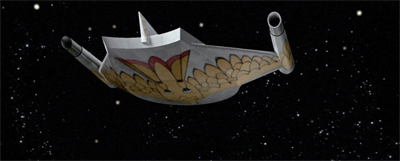
The Klingons are undoubtedly the most recognisable and iconic of the classic Star Trek races, but the Romulans are the first of the franchise mainstays to appear, and Balance of Terror is the first episode to devote considerable effort to world-building the Star Trek universe.

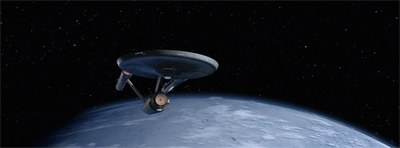
The not-so-great bird of the galaxy...

The not-so-great bird of the galaxy…

Continue reading