• Following Us

  • Categories

  • Check out the Archives


  • Awards & Nominations

The X-Files 104: Ten “Monster of the Week” Episodes (Seasons 6-9)

Next week sees the release of The X-Files on blu ray for the first time, just over a month before the new six-episode series premieres on Fox in January. We’re running daily reviews of the show (and its spin-offs) between now and the end of the year, but we thought it might be worth compiling some guides for newer viewers who are looking to experience the length and breadth of what The X-Files has to offer. Every day this week, we’ll be publishing one quick list of recommended episodes every day, that should offer a good place to start for those looking to dive into the show.

Everything changed between the fifth and sixth seasons of The X-Files. The release of The X-Files: Fight the Future perhaps represented the peak of the show’s popularity, but the summer of 1998 saw the show moving its production from Vancouver to Los Angeles. This had a tremendous impact on how the show was produced; working in Los Angeles meant higher budgets, bigger guest stars and a completely different environment. Gone was the rainy atmosphere of Canada, replace with California sun. It was almost a new show.

xfiles-millennium37a

Continue reading

The X-Files – Dæmonicus (Review)

This December, we’re taking a trip back in time to review the ninth season of The X-Files.

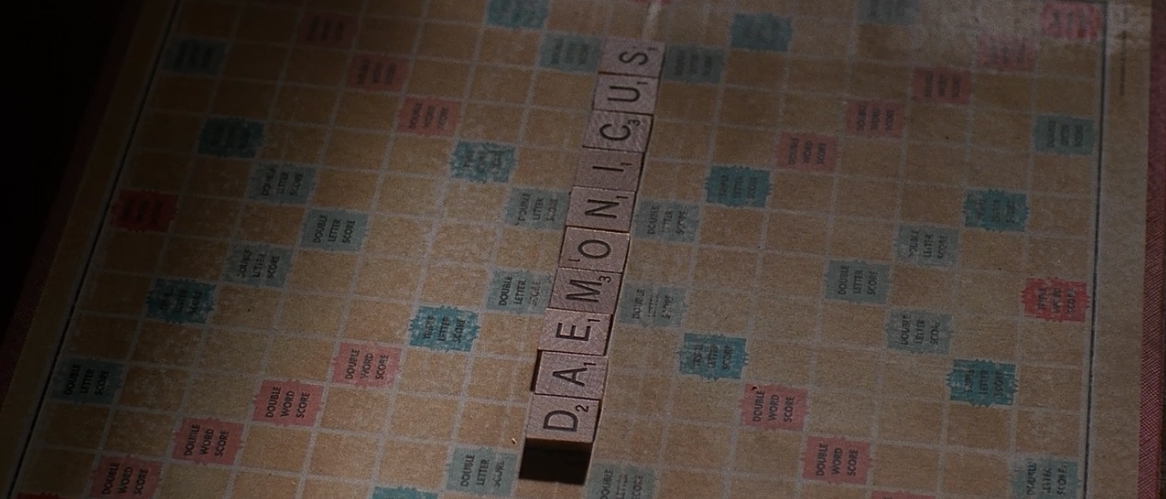
Dæmonicus is the first “monster of the week” episode of the ninth season.

This is important, particularly following on from two particularly limp introductory mythology episodes. After all, The X-Files amounts to more than just its mythology; problems with the mythology are less of a problem when they are surrounded by strong standalone episodes. Tunguska and Terma arrived as messy mythology episodes at the peak of the show’s popularity, but nobody was too bothered because they were surrounded by standalone episodes like Musings of a Cigarette-Smoking Man or Paper Hearts.

The devil inside...

The devil inside…

So the show can probably withstand the hit of Nothing Important Happened Today I and Nothing Important Happened Today II. After all, the third season opened with The Blessing Way and the fifth season opened with Redux I, with both of those seasons standing among the best seasons that the show ever produced. (That said, it helps that the second episodes of those seasons – Paper Clip and Redux II – were much stronger.) There is still a chance to salvage things here. The ninth season is down, but don’t count it out yet.

Dæmonicus could really turn things around, right?

Well, that's just cheating.

Well, that’s just cheating.

Continue reading

The X-Files – Existence (Review)

This October/November, we’re taking a trip back in time to review the eighth season of The X-Files and the first (and only) season of The Lone Gunmen.

This is not the end.

But it really should be. At least for Mulder and Scully.

There was no season nine. What are you talking about?

There was no season nine.
What are you talking about?

Continue reading

The X-Files – Essence (Review)

This October/November, we’re taking a trip back in time to review the eighth season of The X-Files and the first (and only) season of The Lone Gunmen.

The mythology of The X-Files is a strange beast.

In the show’s declining years, it frequently became a stick with which the show might be beaten by critics and fans who had grown exhausted of ambiguity and labyrinthine plotting. Steven King lamented the fact that the show “blundered off into a swamp of black oil, and in that swamp it died.” In assessing the impact of the series, Joyce Millman described the mythology as a “sadistically convoluted plot line.” Juliette Harrisson complained that the entire mythology ended up “so twisted and incomprehensible by the end.”

Oh, baby.

Oh, baby.

In hindsight, it seems like history has not been kind to the mythology. In the years since the show went off the air, it seems that fans have come to value the episodic “monster of the week” stories ahead of the central story arc about aliens plotting to colonise the planet. This is ironic, given the attention devoted to the mythology while the show was on the air. The mythology dominated season premieres and finalés, taking the limelight during Sweeps and commanding impressive production values.

This assessment of the mythology is at once fair and unfair. Examined from far enough away, the mythology was linear and logical: alien colonists were coming back to reclaim the planet and enslave (or exterminate) mankind. Everything else was just window-dressing, with the mythology exploring the compromise and collaboration that facilitated this plan. The mythology was, at its best, an exploration of human weakness and the corruption of authority; a timeless (and almost Shakespearean) tragedy. From a sufficient distance, it was not hard to follow.

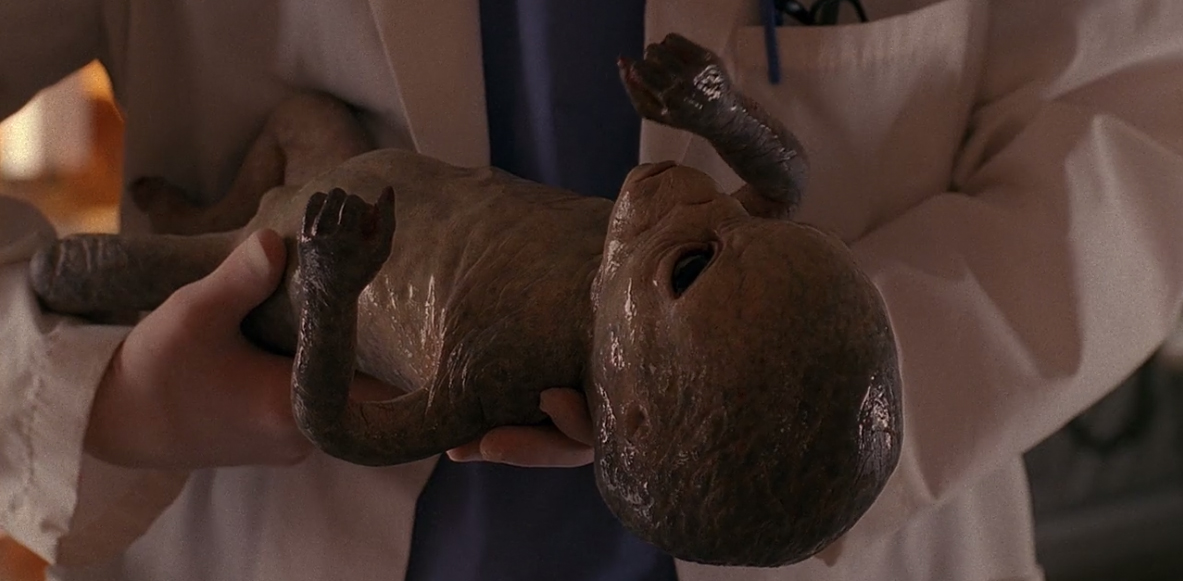
Oh, alien baby.

Oh, alien baby.

However, the details tend to create confusion, with everything getting a little muddled as The X-Files piles compelling and memorable visuals on top of one another. Are the bees intended to spread smallpox to thin the population as Zero Sum suggests, or to spread the black oil to aid in repopulation as The X-Files: Fight the Future implies? Is the black oil a sinister body-hopping parasite as suggested in Piper Maru and Vienen, or is it an organism that turns the body into a host for a gestating alien organism like in Fight the Future or The Beginning?

The eighth season does a lot to simplify the mythology by stripping out the conspirators and the vaccine and the rebels and the hybrids, replacing them with a more blunt central narrative about “alien replicants” mounting a stealth invasion. That said, things begin to get a bit cluttered and crowded as the season reaches its conclusion. Essence and Existence have a very clear structure and clear objectives, but there is a sense that that the narrative could still be streamlined a bit.

Oh, blood-splattered alien babies...

Oh, blood-splattered alien babies…

Continue reading

The X-Files – This is Not Happening (Review)

This October/November, we’re taking a trip back in time to review the eighth season of The X-Files and the first (and only) season of The Lone Gunmen.

The eighth season of The X-Files is remarkable in a number of ways.

It accomplishes a lot of things, and does them in a very logical and linear way. The departure of David Duchovny at the end of the seventh season set an agenda for the season ahead, and gave the production team a very clear set of goals. The eighth season required more discipline and planning than any of the previous seven seasons, with less room for improvisation or error. If Chris Carter and his team were to succeed at bringing the eighth season to life, it would require even more care and discipline than the show usually required.

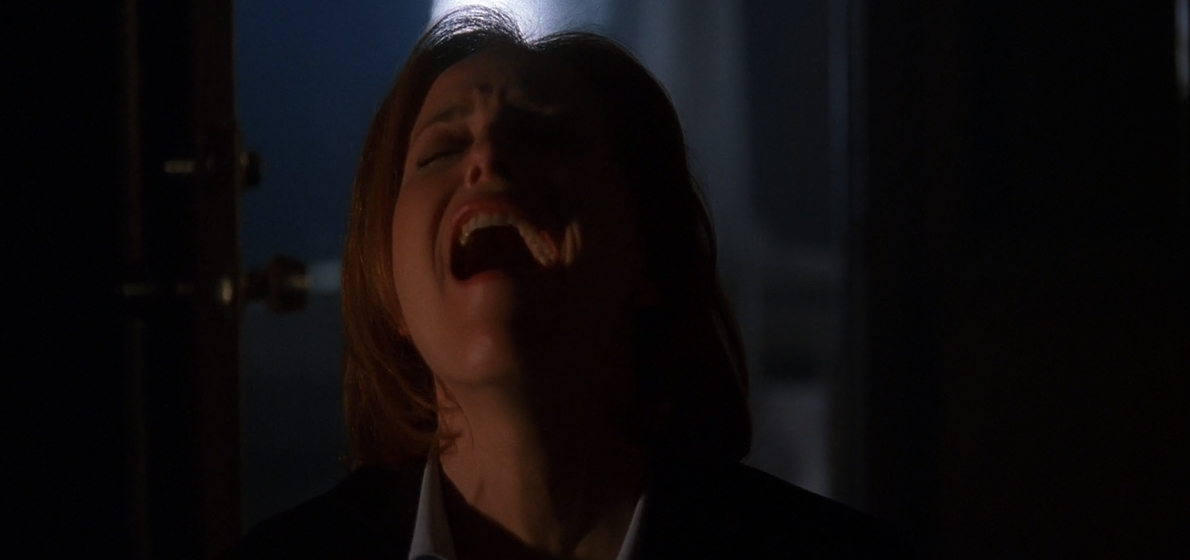
"Nooooo!"

“Nooooo!”

One of the least discussed aspects of the eighth season is the care that the production team took to structure it. The eighth season of The X-Files is the most meticulously and carefully structured season of The X-Files, clearly adhering to an internal three act structure. The first seven or eight episodes (Within to Via Negativa or Per Manum) are all set-up. The next five (Surekill to Medusa) explored that new set-up. The final eight (This is Not Happening to Existence) closed out the plots and threads of the season, leaving the show in a very different place.

The decision to shift Per Manum around in the broadcast order changes things slightly, but there is still a sense that the eighth season was entering its end game in late February 2001. Positioned at the start of the season’s third act, This is Not Happening offers perhaps the bleakest cliffhanger and puts our heroes at their lowest possible point. Adhering to the classic three-act structure, This is Not Happening serves as the emotional climax of the season. With a five week gap between the broadcast of This is Not Happening and DeadAlive, this is one hell of a cliffhanger.

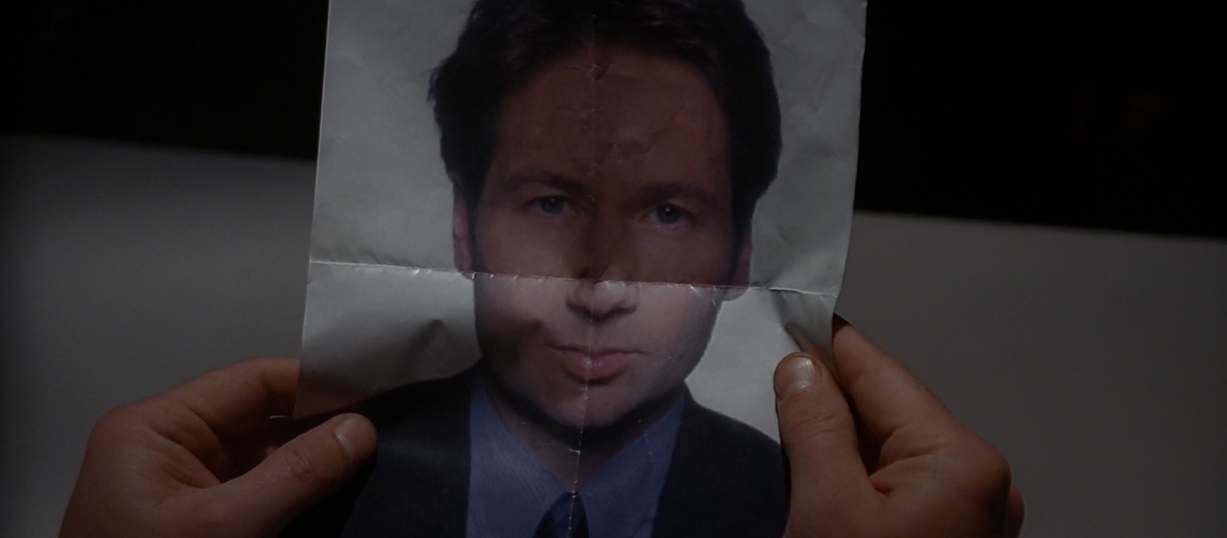
"Have you seen this devilishly handsome man?"

“Have you seen this devilishly handsome man?”

Continue reading

The X-Files – Per Manum (Review)

This October/November, we’re taking a trip back in time to review the eighth season of The X-Files and the first (and only) season of The Lone Gunmen.

Per Manum marks a very serious shift in the eighth season of The X-Files.

It marks the point at which the show becomes more serialised and more tightly interwoven on an episode-to-episode basis than it had been at any point in the past. There are several “monster of the week” stories populating the final third of the eighth season (most obviously Vienen, Empedocles and Alone), but the last eight episodes of the season are more tightly interlocked than any other eight episodes of the show. Perhaps the closest comparison is to the opening nine episodes of the second season, but even the majority of those were stand-alones in a new status quo.
Things past...

Things past…

With Per Manum, the show reengages with the two big central mysteries driving the mythology of the eighth season. The closing moments of Requiem featured the disappearance of Mulder and the revelation of Scully’s pregnancy, establishing them as a driving force for the future of the show. Of course, nobody knew what form that future would take when Requiem was written and filmed. However, it is interesting how little forward momentum the eighth season has on these plot points. Two-thirds of the way through the season, neither is closer to resolution.

Of course, that is not to suggest that the production team have forgotten about Scully’s pregnancy or Mulder’s disappearance. One of the stronger aspects of the eighth season is the way that these details are woven into the plots of episodes where they are not even explicitly acknowledged. Mulder’s disappearance informs Scully’s unspoken reluctance to trust Doggett in Roadrunners; Scully’s pregnancy explains her decision not to go into the subway tunnels with Doggett in Medusa. Still, there is no linear sense of progress by this point of the year.
Hold it there...

Hold it there…

This is probably because these two plot threads cannot necessarily be explored in increments. Within and Without suggested that Mulder was being experimented upon from the comfort a spaceship; short of Scully and Doggett hijacking a space-shuttle, there is little they can do to affect his return but wait. Similarly, Scully’s pregnancy has a natural time limit imposed upon it; short of inducing labour, there is little she can do to affect the outcome but wait. As such, these are not the most dynamic plot points, but they work quite well in the context of the eighth season.

The first two thirds of the eighth season are spent waiting and anticipating, reflecting on strange absences and unexpected presences. The final third is spent rushing towards the finish line. Per Manum marks the transition point.

Don't turn this into a competition, Doggett...

Don’t turn this into a competition, Doggett…

Continue reading

The X-Files – Surekill (Review)

This October/November, we’re taking a trip back in time to review the eighth season of The X-Files and the first (and only) season of The Lone Gunmen.

And with Surekill, the eighth season of The X-Files hits a problem.

The eighth season of The X-Files starts out strong, doing a good job of introducing a new major character without forcing him down the audience’s throat and allowing viewers to come to terms with the idea of The X-Files without Mulder. Even if some of the episodes are not jaw-droppingly amazing, there is a novelty to the format and a genuine curiosity that makes the opening seven episodes of the season more intriguing and exciting than the show has been in quite some time.

A hole lot of trouble...

A hole lot of trouble…

The eighth season also finishes strong. It is tempting to put this all upon the return of David Duchovny to the show, bringing a sense of stability to the series. That is definitely a factor, but discussions of the eighth season tend overlook how the final stretch of the year is the most serialised that the show (and the mythology) has ever been and ever will be. For one brief (roughly ten-episode) run, it seemed like The X-Files had burst into the twentieth century with a new-found purpose and joie de vivre.

Notably, this leaves something of a lull in the middle of the season, between the opening stretch and before the season begins gathering momentum. This is the point at which it feels like this grand experiment might not actually work out, after all. It is very much an attempt to do by-the-book “monster of the week” stories in the traditional style of The X-Files, now that Doggett has settled in. Unfortunately, this only has the effect of reinforcing that one of the key ingredients of a classic by-the-book “monster of the week” story is sorely missing. Doggett is no Mulder.

Throwing in the towel...

Throwing in the towel…

Continue reading

The X-Files – Roadrunners (Review)

This October/November, we’re taking a trip back in time to review the eighth season of The X-Files and the first (and only) season of The Lone Gunmen.

In case there was any doubt, Roadrunners proves that the eighth season of The X-Files means business.

In some ways, it seems remarkable that Roadrunners did not receive a warning about graphic content. The season would wait until Via Negativa before offering a viewer discretion advisory. Roadrunners is one of the most uncomfortable and unsettling episodes in the show’s nine-season run, one that cements the “back to basics” horror aesthetic of the eighth season as a whole. It was clear from the opening three episodes that the eighth season was intended as a return to the darkness of the first five seasons, but Roadrunners commits to the idea.

Off-road...

Off-road…

Roadrunners is a “back to basics” script in a number of ways, even beyond its very graphic horror stylings. It is a very good “small town” story, returning to the motif that populated many of the show’s early episodes. It is a story about an eccentric and isolate space in America, a place with its own unique character and its own rich history and traditions. It is a place that stands quite apart from the modern world, that might have looked the same at the turn of the twentieth century as it does at the start of the twenty-first.

Roadrunners could be seen as Vince Gilligan’s answer to Home, a similarly brutal (and unsettling) small-town tale.

"On to new business. Today's mission is for all of you to go to the brain slug planet." "What are we going to do there?" "Just walk around not wearing a helmet."

“On to new business. Today’s mission is for all of you to go to the brain slug planet.”
“What are we going to do there?”
“Just walk around not wearing a helmet.”

Continue reading

The X-Files – Patience (Review)

This October/November, we’re taking a trip back in time to review the eighth season of The X-Files and the first (and only) season of The Lone Gunmen.

Patience is necessary.

The eighth season of The X-Files is conservative. There are arguments to be made that this is true in a political sense, but it is certainly true in a narrative sense. The eighth season generally plays it quite safe when it comes to the structuring and plotting. The most structurally ambitious episode of the eighth season is perhaps Redrum, which feels a lot less “out there” than episodes like The Post-Modern Prometheus, Bad Blood, Triangle, X-Cops or First Person Shooter. Narratively, the eighth season plays it relatively “safe.”

Batsh!t crazy...

Batsh!t crazy…

There is a reason for this, of course. Losing David Duchovny for half the season and rotating in Robert Patrick represents perhaps the biggest risk that the show will ever take. Given how essential Duchovny had been to the show’s success, the eighth season is taking quite the gamble. With that in mind, it makes sense to play it safe. Without Mulder around, the show’s primary goal is to reassure fans that it is still The X-Files. This is not the time for experimental “event” episodes, because “Mulder is not in this episode” is an experimental event of itself.

As such, the eighth season feels largely like a return to a more traditional X-Files aesthetic, a “back to basics” approach. In that respect, Patience is essentially about kicking the tires and taking the show for a gentle test drive in its new configuration.

The show won't be caught with its pants down...

The show won’t be caught with its pants down…

Continue reading

The X-Files – Without (Review)

This October/November, we’re taking a trip back in time to review the eighth season of The X-Files and the first (and only) season of The Lone Gunmen.

Taken as a whole, the eighth season of The X-Files is remarkable.

It is not a perfect season of television, by any stretch. The eighth season doesn’t hit as many highs as the fourth, fifth or sixth seasons. As great as Robert Patrick is as John Doggett, and as skilfully as he is introduced, it is impossible to replace the easy dynamic between Mulder and Scully. The actual mythology of the season feels overcrowded and convoluted, with “supersoldiers” feeling a tad cliché and Mulder’s terminal illness going nowhere of note. The season’s recurring motifs of darkness, death and body horror are not for everybody.

I bet David Duchovny really missed working on The X-Files...

I bet David Duchovny really missed working on The X-Files

At the same time, there is a staggering consistency and reliability to the season. From the outset, the eighth season seems to know what it wants to be and where it wants to go. There is a stronger sense of purpose to the eighth season than to any other season of the show, with the possible exception of the third. Even the lead-up to the release of The X-Files: Fight the Future did not feel this single-minded and focused. In terms of consistency of theme and imagery, this is the closest the show ever came to pulling off a season-long arc.

It is tempting to credit this renewed vigour and energy to the absence of David Duchovny; the search for Mulder provides a solid and compelling hook for the season ahead. However, there is more to it than that. Mulder’s disappearance is a part of it, but the big thematic bow wrapped around the eighth season is Scully’s pregnancy. After all, David Duchovny returns to the show two-thirds of way through the season; it is Scully’s pregnancy that provides the season’s finalé.

"Thank goodness we all wore different ties. That might have been awkward."

“Thank goodness we all wore different ties. That might have been awkward.”

Continue reading