• Following Us

  • Categories

  • Check out the Archives


  • Awards & Nominations

Star Trek: Voyager – Prime Factors (Review)

This September and October, we’re taking a look at the jam-packed 1994 to 1995 season of Star Trek, including Star Trek: Deep Space Nine and Star Trek: Voyager. Check back daily for the latest review.

Prime Factors has some great ideas, but blunders awkwardly in the execution. In that respect, it genuinely feels like a first season episode of a new show in the same way that The Cloud did – there’s a sense that the series is trying to expand its own comfort zone in a way that offers potential for future storytelling opportunities. Prime Factors might make a few pretty serious missteps along the way, and often seems a little too timid to commit to its bolder ideas directly, but at least it feels more ambitious than Time and Again or Ex Post Facto.
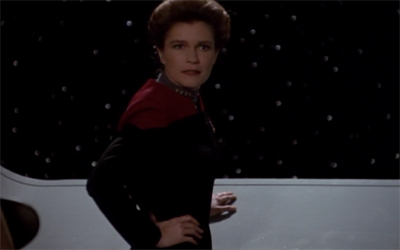
Make way for Janeway...

Make way for Janeway…

Continue reading

Star Trek: Voyager – Time and Again (Review)

This September and October, we’re taking a look at the jam-packed 1994 to 1995 season of Star Trek, including Star Trek: Deep Space Nine and Star Trek: Voyager. Check back daily for the latest review.

It’s really remarkable the sense of self that Star Trek: Voyager had three issues into its run. It took Star Trek: The Next Generation two years to figure out what it wanted to be. Star Trek: Deep Space Nine only really settled down in its fourth season. Star Trek: Enterprise reinvented itself twice before it was cancelled. On the other hand, Voyager just seemed so aware of what it was and what it was going to be within only a few episodes.

Sure, there would be a few changes made in the years ahead. The Borg would appear in the third season; Seven of Nine would join the cast in the fourth. Janeway’s fickleness has yet to be firmly established; the Doctor hasn’t come to the fore. And, yet, three episodes in, it is quite possible to look at Star Trek: Voyager and get a sense of what the next seven years will be like. The shape of things to come.

Time and Again is a time travel story, but it’s also the first time that Voyager pulls a full-on end-of-episode reset. It will not be the last.

Guest starring: anomaly of the week!

Guest starring: anomaly of the week!

Continue reading

Star Trek: The Next Generation – Who Watches the Watchers? (Review)

This January and February, we’ll be finishing up our look at the second season of Star Trek: The Next Generation and moving on to the third year of the show, both recently and lovingly remastered for high definition. Check back daily for the latest review.

Who Watches the Watchers? continues a strong start to the third season of Star Trek: The Next Generation. It is the last episode of the third season produced by Michael Wagner. He would depart the show and leave Michael Piller in charge of the scripts for the rest of the season. It’s also the third-to-last credit for writers Hans Beimler and Richard Manning, who had both been around from the first season.

The writing duo would work on Yesterday’s Enterprise with Ira Steven Behr and Ronald D. Moore, but also finish Allegiance before departing the show at the end of the third season. (They were rather enraged by Piller’s tactless “writing 101” memo, sent later in the season.) Manning and Beimler would go on to write Paradise for Star Trek: Deep Space Nine, and Behr would convince Beimler to return to the franchise for the fourth season of Deep Space Nine. Beimler would be Behr’s most faithful writing partner on that spin-off, teaming with Behr throughout the sixth and seventh seasons in particular.

In many ways, Who Watches the Watchers? returns to some of the themes that the duo had touched upon in their strongest script of the first season, Symbiosis. It’s a complicated morality tale about the ethics of Starfleet and the burden of the Prime Directive.

The answer, apparently, is Liko.

The answer, apparently, is Liko.

Continue reading

Star Trek: The Next Generation – Pen Pals (Review)

This January and February, we’ll be finishing up our look at the second season of Star Trek: The Next Generation and moving on to the third year of the show, both recently and lovingly remastered for high definition. Check back daily for the latest review.

Pen Pals is a pretty mediocre episode of Star Trek: The Next Generation, one with a lot more potential than the episode actually delivers upon. Centring around Data’s unilateral decision to violate the Prime Directive and the consequences stemming from that decision, there’s a sense that Pen Pals might have been a lot more incisive in earlier version – a lot more willing to ask tough questions about the rules and regulations that our heroes uphold.

Sadly, Pen Pals instead ends with a massive cop out and an unwillingness to really commit to any big idea or to interrogate any of the show’s core concepts.

Everything burns...

Everything burns…

Continue reading

Star Trek: The Next Generation – Conspiracy (Review)

To celebrate the twenty-fifth anniversary of Star Trek: The Next Generation, and also next year’s release of Star Trek: Into Darkness, I’m taking a look at the recent blu ray release of the first season, episode-by-episode. Check back daily for the latest review.

Conspiracy stands out from the first season of Star Trek: The Next Generation. In fact, it stands out from pretty much the majority of the Star Trek canon, feeling distinctly unpleasant and unnerving throughout. It is not just the gore – which remains one of the most weirdly graphic scenes in Star Trek history, to the point where it was edited out of the original BBC broadcast of the show.

There’s something more unnerving and uncomfortable about Conspiracy, as it represents the first time we’ve really seen the Federation and Starfleet so thoroughly corrupted and subverted. Sure, we’ve had rogue officials, obfuscating bureaucrats and meddling administrators, but Conspiracy represents a thoroughly cynical examination of some of the core concepts that Star Trek takes for granted.

It isn’t indicative of what The Next Generation would eventually evolve into, even seeming considerably darker than Star Trek: Deep Space Nine normally delved, but it does represent something bold and new, something that we never would have seen in the original Star Trek. I think that is what makes it such a fascinating episode in this rocky first season, even ignoring its sizeable flaws.

A can of worms...

A can of worms…

Continue reading

Star Trek: The Next Generation – Symbiosis (Review)

To celebrate the twenty-fifth anniversary of Star Trek: The Next Generation, and also next year’s release of Star Trek: Into Darkness, I’m taking a look at the recent blu ray release of the first season, episode-by-episode. Check back daily for the latest review.

After Arsenal of Freedom, I was wary of Symbiosis. Star Trek has always liked exploring socially and morally relevant ideas through the vehicle of science-fiction. I can understand the appeal of it – science-fiction allows us to divorce basic arguments for all manner of clouding context and to address them in the purest or terms. I think Star Trek is at its most powerful exploring these themes (as The Next Generation would do in episodes like The Outcast), but there’s a risk involved. Nobody wants to be lectured about a simplistic moral principle for forty-minutes, and nobody wants to see a complex issue boiled down past all recognition.

So it’s pretty nice that Symbiosis works quite well. The show is a bit bumpy in places, but it does a lot of things well enough that it’s an entertaining watch. Indeed, it feels like the kind of episode we should have seen a lot earlier in the year.

Star gazing...

Star gazing…

Continue reading