• Following Us

  • Categories

  • Check out the Archives


  • Awards & Nominations

Star Trek: Myriad Universes – Echoes and Refractions: A Gutted World by Keith R. A. DeCandido (Review)

Star Trek: Deep Space Nine is twenty years old this year. To celebrate, I’m taking a look at the first and second seasons. Check back daily for the latest review or retrospective.

We’ll be supplementing our coverage of the episodes with some additional materials – mainly novels and comics and films. This is one such entry.

“What if” stories are inherently fascinating. Naturally, they are predicated on investment in the original story, but it’s always fascinating to imagine the branching possibilities, the ripples in the stream. Sometimes, these are used to explore the grand philosophical questions of Star Trek in a new light; to imagine how, were you to change one variable in a complex formula, the answer might be radically different.

However, Keith R. A. DeCandido’s A Gutted World feels different. It is a massive story, spanning a huge amount of time and space, drawing in a massive ensemble cast and gently probing the politics of five or six different Star Trek culture, as DeCandido explores what might have happened if the Cardassians never withdrew from Bajor, if Terok Nor never became Deep Space Nine.

To put it more succinctly, if the show never happened, but its central storyline still did.

st-myriaduniverses

Continue reading

Star Trek: Deep Space Nine – Dramatis Personae (Review)

Star Trek: Deep Space Nine is twenty years old this year. To celebrate, I’m taking a look at the first season. Check back daily for the latest review or retrospective.

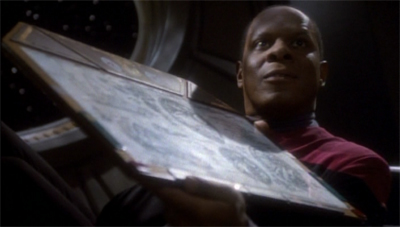
Dramatis Personae tends to get lost in the shuffle at the end of Star Trek: Deep Space Nine‘s first season. Sitting between two of the season’s most generic Star Trek stories (If Wishes Were Horses… and The Forsaken) and two distinctly Deep Space Nine classics (Duet and In the Hands of the Prophets), it’s easy to see why Joe Menosky’s tale of repeated history tends to get overlooked. It manages to sit quite neatly in both camps, as a generic Star Trek tale and as something more specific to Deep Space Nine.

After all, possession stories are scattered throughout the Star Trek mythos. Star Trek: The Next Generation was quite fond of have various members of the crew impersonated or doubled or controlled by a variety of alien influences. Dramatis Personae also feels like a very Joe Menosky script, linked by various thematic connections to the writer’s work on both The Next Generation and later on Star Trek: Voyager.

And yet, despite all those links, Dramatis Personae feels quite anchored to Deep Space Nine. It’s hard to imagine the dynamic working with any other Star Trek cast, even Voyager‘s Maquis and Starfleet ensemble. There’s also the sense that the episode’s pattern of repeated history feels more in keeping with Deep Space Nine‘s perception of history than any other Star Trek show’s.

The man with the plan...

The man with the plan…

Continue reading

Star Trek: Deep Space Nine – Dax (Review)

Star Trek: Deep Space Nine is twenty years old this year. To celebrate, I’m taking a look at the first season. Check back daily for the latest review or retrospective.

Dax is a very weird episode. It is the first episode centred around Jadzia Dax, but it also demonstrates the problems that will affect Dax-centric episodes throughout Terry Farrell’s time on the show. Due to the nature of the character, the stories about Dax tend to treat her as a plot point or a macguffin rather than a character in and of herself. Here, for example, Dax finds herself on trial for the actions of her direct predecessor, Curzon Dax. It’s a fascinating moral and philosophical dilemma (can you hold somebody accountable for their actions in a past life?), but it’s a story about Dax that isn’t about the character as she currently exists. It’s fascinating and frustrating in equal measure, but at least it’s a sign that Star Trek: Deep Space Nine is content to do more than merely imitate Star Trek: The Next Generation.

Touching...

Touching…

Continue reading

Star Trek – Cast No Shadow by James Swallow (Review)

This August, to celebrate the upcoming release of Star Trek: Into Darkness on DVD and blu ray, we’re taking a look at the Star Trek movies featuring the original cast. Movie reviews are every Tuesday and Thursday.

We’ll be supplementing our coverage of the movies with tie-ins around (and related to) the films. We’ll be doing one of these every week day. This is one such article.

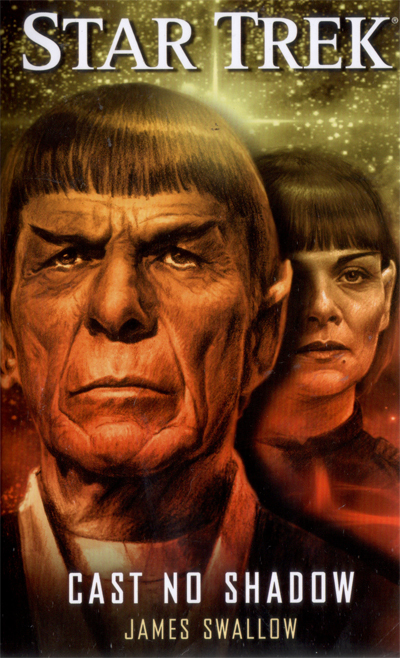
Valeris is a fascinating character who gets a bit lost in the scope of Star Trek VI: The Undiscovered Country. Given the film’s focus on bidding a fond farewell to the iconic crew of the Enterprise, it’s understandable that the newest addition to the crew should get pushed aside. It’s even more notable because Valeris is clearly a stand-in for the character of Saavik, another of Spock’s young female Vulcan protegés, making her not only a newer character, but a substitute for a newer character.

One of the most interesting things about Star Trek tie-in fiction is the scope afforded by the gigantic shared universe. Across the dozen movies and the seven-hundred episodes of television, there are countless supporting characters and concepts thrown out. Due to plotting necessities and the demands of particular stories, some of these ideas are never truly fleshed out. The sheer volume of tie-in material means that writers do get a chance to develop and expand upon these character which might otherwise be forgotten.

Writing a novel centred on Valeris is a very bold idea, but one which acknowledges just how intriguing the concept of Kim Cattrall’s Vulcan traitor is, despite the fact the film treats her as a minor character at best.

castnoshadow

Continue reading

Star Trek Special #2 (DC Comics, 1994) – A Question of Loyalty (Review)

This August, to celebrate the upcoming release of Star Trek: Into Darkness on DVD and blu ray, we’re taking a look at the Star Trek movies featuring the original cast. Movie reviews are every Tuesday and Thursday.

We’ll be supplementing our coverage of the movies with tie-ins around (and related to) the films. We’ll be doing one of these every week day. This is one such article.

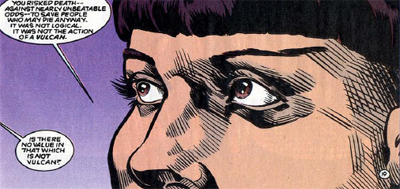
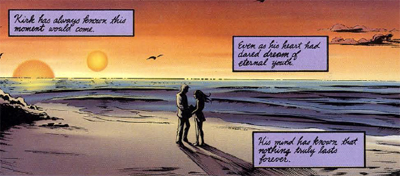
A Question of Loyalty is essentially a Star Trek character study, comparing and contrasting the two young Vulcan female characters to appear in the film franchise, providing a meeting between Valeris and Saavik, Spock’s two young protegés. The production history of Star Trek VI: The Undiscovered Country is interesting, as there were early plans to include Saavik. For a variety of reasons, this didn’t work out and director Nicholas Meyer and his writers decided to cast a new role, Valeris. A Question of Loyalty allows the two characters to come face-to-face, and offers both some character motivation for the under-developed Valeris and a fond farewell for Saavik.

Her ears are tingling...

Her ears are tingling…

Continue reading

Star Trek – In the Name of Honour by Dayton Ward (Review)

This August, to celebrate the upcoming release of Star Trek: Into Darkness on DVD and blu ray, we’re taking a look at the Star Trek movies featuring the original cast. Movie reviews are every Tuesday and Thursday.

We’ll be supplementing our coverage of the movies with tie-ins around (and related to) the films. We’ll be doing one of these every week day. This is one such article.

The Klingons changed rather dramatically, between the classic Star Trek and Star Trek: The Next Generation. Part of the changes were physical – most obviously, advances in make-up allowed Klingon characters to be shown with their now-iconic forehead ridges. However, there was another interesting change. Somewhere between The Turnabout Intruder and Encounter at Farpoint, the Klingons went from generic communist stand-ins to a fully-formed alien culture with a wealth of ritual and tradition.

To a large extent, this shift took place during the movie era. Klingons wound up being the focus of Star Trek III: The Search for Spock, and were a significant presence in each of the films that followed. Star Trek V: The Final Frontier, produced at the same time as the first season of Star Trek: The Next Generation, suggested that it wasn’t necessary for the Federation and the Klingon Empires to be mortal enemies. The final movie featuring the original cast, Star Trek VI: The Undiscovered Country, tied up Kirk’s adventures with the promise of galactic peace.

Still, it’s hard to reconcile the differences in characterisation between the Klingons seen in the classic Star Trek television show and those from the later spin-offs. With In the Name of Honour, Dayton Ward tries to explore this radical shift and also to bridge The Final Frontier and The Undiscovered Country. He does the former much better than the latter.

startrek-inthenameofhonour

Continue reading

Star Trek – Dwellers in the Crucible by Margaret Wander Bonanno (Review)

This August, to celebrate the upcoming release of Star Trek: Into Darkness on DVD and blu ray, we’re taking a look at the Star Trek movies featuring the original cast. Movie reviews are every Tuesday and Thursday.

We’ll be supplementing our coverage of the movies with tie-ins around (and related to) the films. We’ll be doing one of these every week day. This is one such article.

The state of Star Trek tie-ins in 1985 was radically different than it is today. While the film series was at height of its popularity, generating a great deal of attention for the franchise, authors working on the associated tie-in novels were granted a great deal of freedom. Books from this era tend to be a great deal looser, adapting a sort of “devil may care” attitude towards the type of restrictions one might impose on a Star Trek story. Novels could be dedicated to new characters or to existing aliens, or offer radical twists on the show’s rich mythology. It was almost free-style Star Trek, with authors afforded the freedom to tell the stories that they wanted to tell, no matter how difficult it might be to fit that within the confines of “Star Trek.”

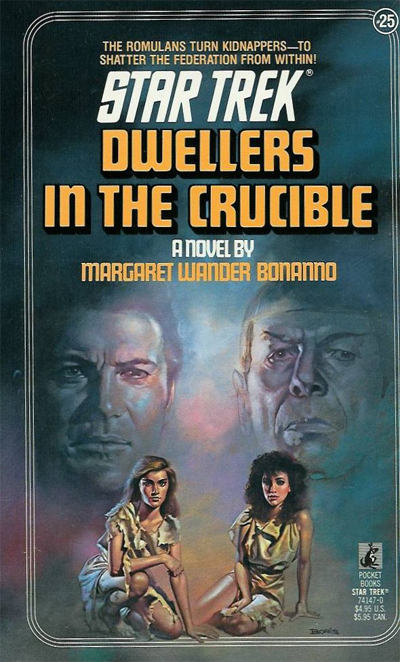
Dwellers in the Crucible captures a lot of the spirit of this era quite well. It’s Margaret Wander Bonanno’s first Star Trek tie-in book, but it’s also her strangest. It’s a rather high-concept piece of trashy “women in prison” fiction that dares to ask a question that nobody in their right mind had ever broached before: what if Kirk and Spock were lesbians?

st-dwellersinthecrucible

Continue reading

Star Trek – The Ashes of Eden by William Shatner et al (DC Comics) (Review)

This August, to celebrate the upcoming release of Star Trek: Into Darkness on DVD and blu ray, we’re taking a look at the Star Trek movies featuring the original cast. Movie reviews are every Tuesday and Thursday.

We’ll be supplementing our coverage of the movies with tie-ins around (and related to) the films. We’ll be doing one of these every week day. This is one such article.

The Ashes of Eden is effectively professionally published Star Trek fan fiction, written by William Shatner. The actor gets some assistance from veteran Star Trek writers Judith and Garfield Reeves-Stevens, but it’s clear that Shatner is the driving force behind The Ashes of Eden. Indeed, an astute reader will spot quite a few thematic overlaps with Shatner’s much-maligned directorial effort, only without the rest of the cast around to temper his efforts to make this a story about Kirk and Kirk alone.

Still, The Ashes of Eden isn’t as bad as it might be. After all, just because something is fan fiction – professionally published or otherwise – says nothing of its quality. The story is probably best read as an exploration between Shatner and his alter ego, but it holds together quite well, providing a much more solid (if still far from perfect) exploration of the themes hinted at in Shatner’s Star Trek V: The Final Frontier.

The dusk of an era...

The dusk of an era…

Continue reading

Star Trek Special #1 (1994) – The Needs of the One (Review)

This August, to celebrate the upcoming release of Star Trek: Into Darkness on DVD and blu ray, we’re taking a look at the Star Trek movies featuring the original cast. Movie reviews are every Tuesday and Thursday.

We’ll be supplementing our coverage of the movies with tie-ins around (and related to) the films. We’ll be doing one of these every week day. This is one such article.

In many ways, the Star Trek movies feature more character development and exploration for the cast than the entire three seasons of the television show. Star Trek III: The Search for Spock and Star Trek IV: The Voyage Home are true ensemble pieces, but there’s also more of a sense that this is a family rather than a bunch of people who just hang out together. I’d argue that the cast of Star Trek: The Next Generation remain the tightest ensemble that the franchise has ever produced, but the first six movies portray the crew of the original Enterprise as a bunch of people who have been to hell and back together.

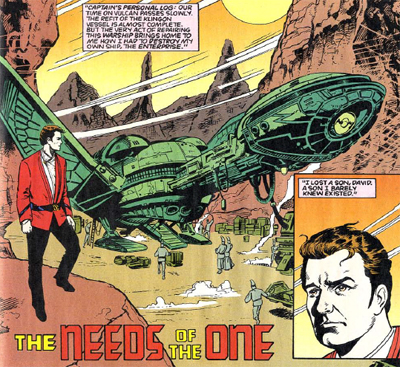
Michael Collins’ The Needs of the One represents a bit of an interlude between The Search for Spock and The Voyage Home, taking place during the crew’s three month “Vulcan exile.” While Collins’ script suffers from its inability to decide whether it’s a Spock-centric character drama or a day-in-the-life of the renegade crew, it’s a fascinating story situated in a lacuna of the movies’ chronology. It cements the idea that Spock has been radically altered over the course of the film series, and that his character arc spans the first four films.

Indeed, Collins’ opening sequence tying together his failure to achieve Kolinahr in Star Trek: The Motion Picture with his decision to once again rejoin the crew in The Voyage Home.

When all Kirk asked for was a tall ship, he probably should have been more specific...

When all Kirk asked for was a tall ship, he probably should have been more specific…

Continue reading

Star Trek – The Klingons: Starfleet Intelligence Manual (FASA) (Review)

This August, to celebrate the upcoming release of Star Trek: Into Darkness on DVD and blu ray, we’re taking a look at the Star Trek movies featuring the original cast. Movie reviews are every Tuesday and Thursday.

We’ll be supplementing our coverage of the movies with tie-ins around (and related to) the films. We’ll be doing one of these every week day. This is one such article.

The sheer wealth of supplemental material which exists for Star Trek is often quite stunning. While nowhere near the marketing juggernaut that Star Wars is, the depth of the Star Trek brand can’t help but seem impressive. On top of the television show and movies, there are novels and comics, but it goes even further than that. Models, blueprints, Christmas decorations, action figures, and even china dinner sets. It is occasionally awe-inspiring, but also quite intimidating.

Still, it’s interesting to witness how this extended material has come back to influence the “core” of the franchise. It’s not unheard of for spin-offs and tie-ins to help develop a core property. Kryptonite and Jimmy Olsen were added to the Superman mythos, for example, following their popularity on the radio show. Here we have some background material prepared for the FASA Star Trek role-playing game that was popular during the 1980s. As with a lot of this sort of stuff, it’s not really “canon” or “continuity” in anyway that seems to count.

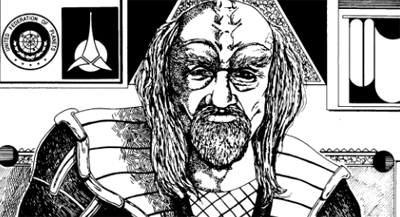
However, The Klingons: Starfleet Intelligence Manual is interesting because it world-builds the franchise, explicitly in reference to John M. Ford’s vision of Klingon culture in The Final Reflection.

st-klingons-fasa

Continue reading