












And so the Chris Chibnall era begins.
Any discussion of the Chris Chibnall era must begin with an acknowledgement that it is, by any measure, a commercial success. Even allowing for erosion over the course of the season, the overnight ratings are appreciably up on where they were during the Moffat era. This is particularly true in the United States, where the show is thriving on BBC America. More than that, these new viewers are younger and female, indicating that the efforts to revitalise the show have been largely successful in attracting a new audience to a series that has been on the air for ten seasons (over one hundred and forty episodes) over thirteen years.
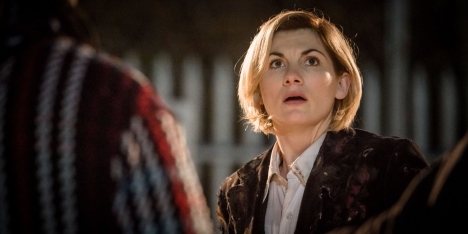
More than that, the series has survived an incredible transition. In theory, the casting of a female lead in a major long-running science-fiction property really shouldn’t be that big a deal. (After all, the advertising neatly summarised it as “about time.”) However, one need only look at the controversy around things like increasing the diversity in mainstream comic books or even the backlash over Star Wars: Episode VIII – The Last Jedi in order to see how easy it is to start a culture war. Jodie Whittaker is the Doctor, and her widespread acceptance speaks well to Whittaker and Chibnall, and to fans as a whole.
There is a catch, however. As much as the eleventh season has been a commercial success by any measure, it has also been a massive creative disappointment. The eleventh season of Doctor Who is very stylishly produced. There is a credible argument to be made that these ten episodes are the best that the show has ever looked. However, it is also the most generic that the series has ever been. From its earliest days, the series has been defined by a hint of madness and insanity, wonder and awe. The eleventh season of Doctor Who strips all of that out, looking like any other successful science-fiction series. That’s disappointing.

Filed under: Television | Tagged: Chris Chibnall, doctor who, jodie whittaker | 39 Comments »






 the m0vie blog