• Following Us

  • Categories

  • Check out the Archives


  • Awards & Nominations

Star Trek – Unspoken Truth by Margaret Wander Bonanno (Review)

This August, to celebrate the upcoming release of Star Trek: Into Darkness on DVD and blu ray, we’re taking a look at the Star Trek movies featuring the original cast. Movie reviews are every Tuesday and Thursday.

We’ll be supplementing our coverage of the movies with tie-ins around (and related to) the films. We’ll be doing one of these every week day. This is one such article.

Saavik is an interesting character, for several reasons. Most obviously, there’s the behind the scenes manoeuvrings involving the new character. Everything from her origin to the recasting of the role between Star Trek II: The Wrath of Khan and Star Trek III: The Search for Spock. There’s the inclusion of a short scene in Star Trek IV: The Voyage Home, and the fact that the last time we see Saavik, she’s watching the reunited cast of the original Star Trek continue their galactic adventures.

There’s her complete absence from Star Trek V: The Final Frontier and then the weird pseudo-return of the character in Star Trek VI: The Undiscovered Country, where the role that would become Valeris was originally considered for Saavik, before being cast with Kim Cattrall, an actress who had originally been considered to play Saavik. It’s interesting to consider the conceptual history of the character, given what she was supposed to represent upon her introduction in The Wrath of Khan.

Margaret Wander Bonanno does an excellent job exploring Saavik’s life in the wake of her decision to remain on Vulcan in The Voyage Home, with Unspoken Truth doing an excellent job playing with the character in the grand scheme of the shared Star Trek universe.

startrek-unspokentruth

Continue reading

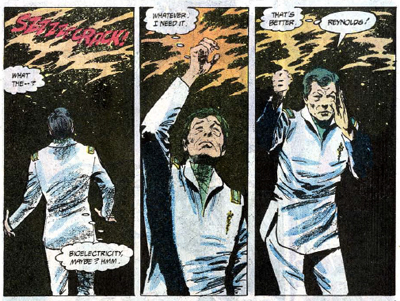
Star Trek (DC Comics, 1984) #28 – The Last Word (Review)

This August, to celebrate the upcoming release of Star Trek: Into Darkness on DVD and blu ray, we’re taking a look at the Star Trek movies featuring the original cast. Movie reviews are every Tuesday and Thursday.

We’ll be supplementing our coverage of the movies with tie-ins around (and related to) the films. We’ll be doing one of these every week day. This is one such article.

Star Trek II: The Wrath of Khan, Star Trek III: The Search for Spock and Star Trek IV: The Voyage Home form a trilogy that tells a single story, covering Spock’s death and resurrection, the loss of the Enterprise and the construction of its replacement and Kirk’s journey from washed-up old commander to saviour of the planet Earth. Although the three films weren’t planned as a single story, they worked out surprisingly well as a Star Trek epic told across three films and four years.

Four years is a remarkable turn-around for three franchise films, let alone three well-received franchise films. However, it’s worth conceding that the storyline had a fairly significant impact on the tie-in media. Books could be published set in the existing gaps in chronology, but DC’s plan for their first volume of Star Trek comics was to feature stories set in the contemporary film universe. Since that universe was in the middle of its own story, and the comic publishers had no idea how it would play out, the results are interesting.

Lighten up...

Lighten up…

Continue reading

Non-Review Review: Star Trek II – The Wrath of Khan

This August, to celebrate the upcoming release of Star Trek: Into Darkness on DVD and blu ray, we’re taking a look at the Star Trek movies featuring the original cast. Movie reviews are every Tuesday and Thursday.

In many respects, Star Trek II: The Wrath of Khan represents the franchise’s first true “reboot.”

There have been various points in the history of the franchise when the show has undergone a reinvention of some description, a radical shift from what it was into what it would be. The third season of Star Trek: The Next Generation represented such a dramatic update, a shift turn-around from the show’s first troubled two seasons. The third and fifth seasons of Star Trek: Deep Space Nine did something similar. Star Trek: Enterprise tried to affect some radical shift, but only managed to accomplish it in the third season. JJ Abrams’ recent summer blockbuster represented its own dramatic alteration to what Star Trek was or could be.

However, The Wrath of Khan represents the show’s first massive shift, the first point at which the franchise effectively evolved into something markedly different from what it had been before.

You Khan do it!

You Khan do it!

Continue reading

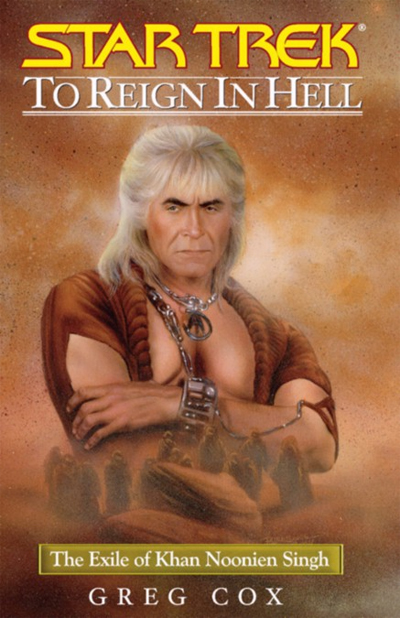
Star Trek: To Reign in Hell – The Exile of Khan Noonien Singh by Greg Cox

This August, to celebrate the upcoming release of Star Trek: Into Darkness on DVD and blu ray, we’re taking a look at the Star Trek movies featuring the original cast. Movie reviews are every Tuesday and Thursday.

We’ll be supplementing our coverage of the movies with tie-ins around (and related to) the films. We’ll be doing one of these every week day. This is one such article.

I feel like I’m in the minority because I didn’t much care for Greg Cox’s The Eugenics Wars: The Rise and Fall of Khan Noonien Singh, Vol. 1 & 2. The books had an absolutely great premise, and Cox had a very clever way of explaining how the Star Trek universe could have had a major conflict between genetically-engineered supermen in the 1990s, despite the fact that their version of the 1990s looked a lot like ours. However, Cox became bogged down in shout-outs and continuity references and character cameos. Despite the seemingly epic scope of the story, it seemed like 20th century Earth was inhabited by twenty people who all knew one another.

In contrast, To Reign in Hell has a much less ambitious and exciting premise, but the novel also reigns in some of Cox’s excesses. While the author’s taste for continuity sometimes overwhelms the narrative, he is somewhat restrained in how heavily he cane lean on what came before. While Cox’s prose is still a little prosiac, and his narration a little ham-fisted, he at least has a bit more room here to develop Khan as a character. Without the crutch of feeling the need to reference every 20th century character ever to appear in Star Trek, Cox can focus on his leading man.

Well, mostly.

st-toreigninhell

Continue reading

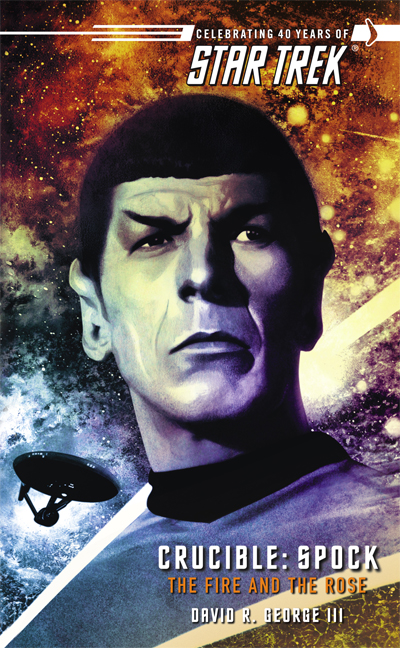
Star Trek – Crucible: Spock – The Fire and the Rose by David R. George III (Review)

This August, to celebrate the upcoming release of Star Trek: Into Darkness on DVD and blu ray, we’re taking a look at the Star Trek movies featuring the original cast. Movie reviews are every Tuesday and Thursday.

We’ll be supplementing our coverage of the movies with tie-ins around (and related to) the films. We’ll be doing one of these every week day. This is one such article.

The second part of David R. George II’s epic Crucible trilogy, The Fire and the Rose, can’t quite measure up to the charm and warmth of the first instalment in the series, Provenance of Shadows. George’s Crucible trilogy is a breathtakingly ambitious piece of work. Celebrating the fortieth anniversary of Star Trek with a trilogy of novels, each grounded in The City on the Edge of Forever and each based around a different member of the show’s leading trinity. The Fire and the Rose is still a very smart and well-constructed read, but it stands in the shadow of the first of George’s three books.

I suspect that at least part of the reason The Fire and the Rose doesn’t work as well is down to the subject. Leonard McCoy is a vitally important Star Trek character, but he was also a relatively under-developed one. While he was one of the leading trio on the original show, he was never as popular as Kirk and Spock, and never garnered the same amount of attention. (Notwithstanding solid work done by writers like Diane a Duane.) So McCoy was a relatively blank canvas for George to develop.

In contrast, Spock is the face of Star Trek. He was part of the first episode of Star Trek ever produced. He appeared in the most recent film released. Although DeForest Kelley christened Star Trek: The Next Generation with a cameo in Encounter at Farpoint, Leonard Nimoy’s visit to the spin-off earned a full two-parter in Unification. As such, Spock is a character who has been developed and explored and expanded by countless writers over the franchise’s long history.

Quite frankly, it’s hard to imagine there’s too much left to say about him. George tries quite hard, and find a nuance or two, but The Fire and the Rose feels more like an attempt to consolidate what we already know of Spock.

cruciblespock

Continue reading

Non-Review Review: Star Trek – The Motion Picture

This August, to celebrate the upcoming release of Star Trek: Into Darkness on DVD and blu ray, we’re taking a look at the Star Trek movies featuring the original cast. Movie reviews are every Tuesday and Thursday.

Star Trek: The Motion Picture has a lot to recommend it. It’s big, thoughtful science-fiction, ripe with ideas and high-concepts tying directly into the root of the franchise. It gives both Kirk and Spock clear character arcs. It looks and sounds amazing, demonstrating just how far special effects had evolved in the decade since the show went off the air. However, it suffers from a pace that might best be described as “glacial”, and a sense that – for all the grand ideas – we aren’t really boldly going anywhere that new. Elements of the film can’t help but recall both the 1968 science-fiction classic 2001: A Space Odyssey and even the show’s own episode The Changeling.

While it’s easy to admire The Motion Picture, it’s a lot harder to enjoy it.

Strange new worlds...

Strange new worlds…

Continue reading

Star Trek – Leonard McCoy, Frontier Doctor by John Byrne (Review)

The August, to celebrate the upcoming release of Star Trek: Into Darkness on DVD and blu ray, we’re taking a look at the Star Trek movies featuring the original cast. Movie reviews are every Tuesday and Thursday.

We’ll be supplementing our coverage of the movies with tie-ins around (and related to) the films. We’ll be doing one of these every week day. This is one such article.

It’s fascinating how few stories take place around Star Trek: The Motion Picture. There’s a rake of tie-in material that exists to flesh-out the Enterprise’s five-year mission, and a large volume of material set during the period from Star Trek II: The Wrath of Khan straight through to Star Trek VI: The Undiscovered Country. However, the space around The Motion Picture has been somewhat overlooked by writers delving into the expanded world of Star Trek tie-in fiction.

To be fair, there are reasons for this. Although it was a box office success, looked stunning for the time, had a rake of big ideas and welcomed the crew to the screen, The Motion Picture isn’t generally considered to be one of the high points of the franchise. As such, it seems reasonable that it garners less attention, the affection shown by a few writers aside. There’s also the fact that The Motion Picture opens with the crew of the Enterprise broken up, scattered amongst the cosmos.

The Motion Picture sees Kirk putting the band back together after the universe seems to have forgotten about them, pulling them out of mothballs. Any story set in the lead-up to The Motion Picture would have to feature the ensemble all separated and going about their own thing. This limits the kind of stories that can be told in the setting, and makes it less appealing than other settings in Star Trek continuity.

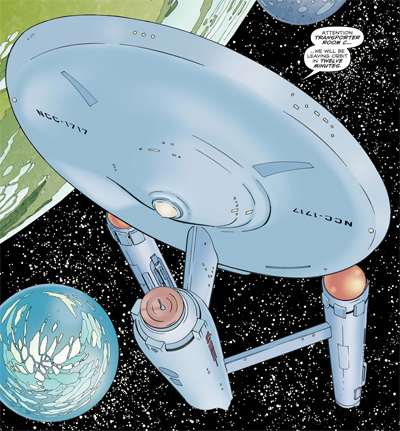
John Byrne’s Leonard McCoy, Frontier Doctor gives us a glimpse of what a project set between the end of the Enterprise’s mission and the start of The Motion Picture might look like. It’s essentially a solo adventure series focusing on one member of the cast, and it’s absolutely fascinating.

These are the voyages of the Starship... Yorktown...

These are the voyages of the Starship… Yorktown…

Continue reading

Star Trek – Crucible: McCoy – Provenance of Shadows by David R. George III (Review)

To celebrate the release of Star Trek: Into Darkness this month, we’ll be running through the first season of the classic Star Trek all this month. Check back daily to get ready to boldly go. It’s only logical.

We’ll be supplementing our coverage of the episodes with some additional materials – mainly novels and comics and films. This is one such entry.

The classic Star Trek was not really a character-driven show. Of course, everybody recognises Kirk, Spock and McCoy, but the show seldom took the time to really dig into their history or origins. We’d occasionally find out that Kirk had some overlap with the villain of the week. He had served on a starship that had been the victim of a vampire space cloud, or lived on a colony during a brutal massacre. These details added up to something, along with the occasional reference to (and eventual death of) his brother Sam.

Spock got a bit more development, probably due to the fact that he was an alien. After all, developing Spock meant developing an entire exotic alien species, and offered some insight into how Vulcans must live. We’d also get occasional factoids or tidbits (Vulcans can mind meld, they have inner eyes, they had a schism millennia ago) that help to give a concrete picture of the where the character came from and where he might like to go.

McCoy, on the other hand, was a bit of a blank slate. Everybody knows McCoy. He’s the irritable surgeon on the ship, prone to insulting Spock and complaining about the fact that he’s flying through space in a ship filled with mechanical doo-hickeys. However, we never really get a sense of McCoy’s past. We never learn much about his family on-screen, except when the writers wanted a bit of dramatic fodder in the penultimate movie featuring the original cast, Star Trek V: The Final Frontier. But we don’t talk about that.

So David R. George III’s Crucible: McCoy – Provenance of Shadows is an interesting book. Not only because it is a book completely devoted to the least-developed of the iconic leading trio, but also because this relatively under-developed character also gets one of the longest Star Trek tie-in books ever written. And without too much focus on his past.

tos-cruciblemccoy

Continue reading

Star Trek – Spock Must Die! by James Blish (Review)

To celebrate the release of Star Trek: Into Darkness this month, we’ll be running through the first season of the classic Star Trek all this month. Check back daily to get ready to boldly go. It’s only logical.

We’ll be supplementing our coverage of the episodes with some additional materials – mainly novels and comics and films. This is one such entry.

Spock Must Die! is notable for being one of the first Star Trek novels published. Indeed, it is the first original novel published by Bantham Books. (For trivia hounds, the young adult original novel Mission to Horatius was actually published during the show’s run.) It’s written by James Blish, the British author responsible for those Star Trek episode novelisations I have been sporadically quoting over the past month or so. Blish was a published science-fiction author before he worked with Star Trek. Reading Spock Must Die!, you can definitely sense the writer’s fondness for high concepts and metaphysical quandaries.

Indeed, one of the defining attributes of Spock Must Die! is that Blish seems more preoccupied with the logic and implications of the show’s pseudo-science (and his own elements building on that) than he is with the characters themselves. It’s not necessarily a fatal flaw, but Spock Must Die! is more interesting and intriguing as a curiosity than as an expansion or examination of the Star Trek franchise.

tos-spockmustdie1

Continue reading

Star Trek – Space Seed (Review)

To celebrate the release of Star Trek: Into Darkness this month, we’ll be running through the first season of the classic Star Trek all this month. Check back daily to get ready to boldly go. It’s only logical.

Following the commercial success (and lack of critical success) of Star Trek: The Motion Picture, Paramount made a conscious decision to side-line Gene Roddenberry. Given that his plans for the sequel involved Spock travelling through time to assassinate Kennedy, we can likely all agree that was probably a good thing. Harve Bennett was tasked with producing the sequel, and took to the task of researching what would become the second Star Trek film. Demonstrating considerable respect for the source material, Bennett locked himself away and screened all three seasons of the show, looking for inspiration.

Apparently he only needed to reach the tail end of the first season, because he had found the basis of his film by the closing credits of Space Seed.

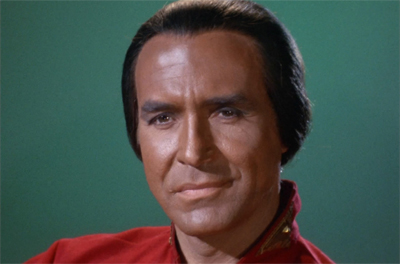
You Khan do it...

You Khan do it…

Continue reading