• Following Us

  • Categories

  • Check out the Archives


  • Awards & Nominations

Star Trek – The Trouble With Tribbles (Review)

The first Star Trek pilot, The Cage, was produced in 1964. To celebrate its fiftieth anniversary, this December we are reviewing the second season of the original Star Trek show. You can check out our first season reviews here. Check back daily for the latest review.

This is a classic.

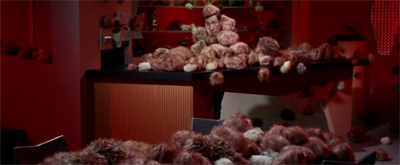
The Trouble With Tribbles is an episode that can make a legitimate claim to being the best episode of Star Trek, if not the best episode of the entire franchise. It is a genuine classic in countless ways, perfectly embodying so much of what makes Star Trek classic and iconic and loved. David Gerrold’s script, polished by Gene Coon, is easily the best comedy episode that the franchise has ever produced, but never at the expense of the show’s credibility. The Trouble With Tribbles may be silly, but it is also very clever and insightful.

Nobody knows the Tribbles I've seen...

Nobody knows the Tribbles I’ve seen…

Continue reading

Star Trek – The Apple (Review)

The first Star Trek pilot, The Cage, was produced in 1964. To celebrate its fiftieth anniversary, this December we are reviewing the second season of the original Star Trek show. You can check out our first season reviews here. Check back daily for the latest review.

It’s amazing how iconic Star Trek could be, even when it was terrible. There’s something quite ironic about how much of the franchise’s truly memorable iconography is rooted in some of the show’s weakest episodes. The Apple is one of the most iconic and memorable Star Trek episodes, featuring a giant evil dragon head sculpture, David Soul in orange body paint, lots of speechifying from Kirk, and a strong atheistic message with Kirk casting himself as Satan in the Garden of Eden.

It is also just terrible.

"VAAAAAAAL!!!"

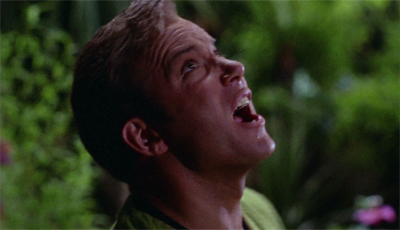
“VAAAAAAAL!!!”

Continue reading

Star Trek – The Changeling (Review)

The first Star Trek pilot, The Cage, was produced in 1964. To celebrate its fiftieth anniversary, this December we are reviewing the second season of the original Star Trek show. You can check out our first season reviews here. Check back daily for the latest review.

The Changeling, an episode so good that they made it twice.

Sarcasm aside, The Changeling is mostly interesting for reasons outside the episode itself. It is the first contribution from John Meredyth Lucas, who would become the show’s producer towards the end of the season. Lucas took over from Gene L. Coon and is notable for being the first production staff member on Star Trek to direct an episode from his own script, with Elaan of Troyius in the show’s troubled third season. The Changeling arguably had an even bigger influence on the franchise, serving as a template for the first feature film.

Probing problems...

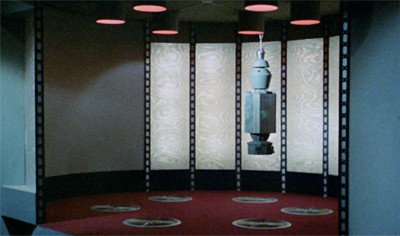
Probing problems…

Okay, “template” may be a slight exaggeration. However, you can definitely feel the influence of The Changeling on Star Trek: The Motion Picture. However, that may simply be because the script to The Changeling hits quite heavily on some of Gene Roddenberry’s pet themes. It has a villainous robot outwitted by emotional humans, Kirk besting a god-like entity, and larger philosophical questions about religion and theology.

Even outside of the themes that resonate specifically with Roddenberry, The Changeling hits on a variety of other classic Star Trek tropes – from a threat leaving nothing but dead star systems in its wake through to an abundance of dead red shirts. There’s an argument to be made that The Changeling is one of the most archetypal Star Trek episode. If you were to bake a Star Trek episode from a stock list of ingredients, it would look a lot like this. For better or worse.

Melding metal...

Melding metal…

Continue reading

Star Trek – Wolf in the Fold (Review)

The first Star Trek pilot, The Cage, was produced in 1964. To celebrate its fiftieth anniversary, this December we are reviewing the second season of the original Star Trek show. You can check out our first season reviews here. Check back daily for the latest review.

Wolf in the Fold is Robert Bloch’s third and final contribution to Star Trek.

In keeping with What Are Little Girls Made Of? and Catspaw, the result is intriguing, bizarre and more than a little bit dysfunctional. More than any of the other writers drafted in to write for the science fiction show, Bloch’s fingerprints remain all over his script. Writers like Gene L. Coon and D.C. Fontana generally do a good job reconciling the work of science-fiction writers like Ray Bradbury, Theodore Sturgeon, Norman Spinrad or Harlan Ellison to make their stories fit within the frame work of Star Trek. However, even after re-writes, Bloch’s voice remains his own.
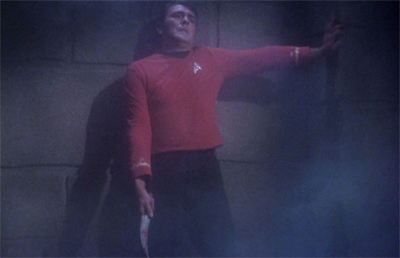
Knife to see you...

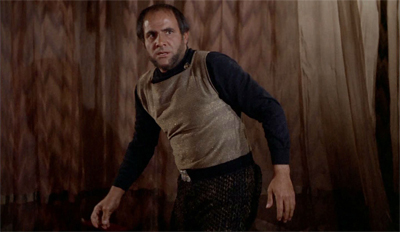
Knife to see you…

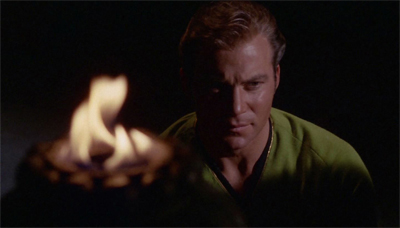
Of course, it’s quite clear that Wolf in the Fold has been through the standard re-write process. The script is a mess, struggling to tie together two basic plots (Scotty is accused of murder; the Enterprise is possessed by Jack the Ripper) in ways that don’t always work. There’s a really long and awkward expositional scene in the middle of the episode that consists primarily of Majel Barrett reading off weird-sounding words in order to assure viewers that Jack the Ripper really could be an immortal hate-fueled killing machine, given the rules of the Star Trek universe.

The are very serious problems with Wolf in the Fold. On a storytelling level, the pacing is a mess and the tone is all over the place. Bloch’s scripts continue to be even more problematic than usual when it comes to issue of gender – “Star Trek does slasher horror” is as borderline misogynistic as you might fear. However, there is something endearingly bizarre about the whole thing, as Bloch once again forces Kirk and his crew to confront an irrational universe that doesn’t necessarily conform to their understanding of it.
Flame on...

Flame on…

Continue reading

Star Trek – Friday’s Child (Review)

The first Star Trek pilot, The Cage, was produced in 1964. To celebrate its fiftieth anniversary, this December we are reviewing the second season of the original Star Trek show. You can check out our first season reviews here. Check back daily for the latest review.

Errand of Mercy was a highlight of the first season. A wry script from producer Gene L. Coon introduced the Klingons as an antagonist for the Federation. Made up to look like space!Mongols, the Klingon Empire was presented as an imperial force hell-bent on expanding its sphere of influence. In case the parallels were a little too subtle, they were locked in a Cold War with the Federation. As such, they were the perfect stand-ins for Communist aggressors trying to undermine American foreign policy.

Of course, Errand of Mercy was brutally cynical in its depiction of the Federation. The episode suggested quite heavily that the Federation was just as imperialist and adversarial as the Klingons. They might couch their foreign policy in friendly language and polite overtures, but their end goals are quite similar. Smaller political entities are nothing but pieces shuffled around a board in a deadly game of chess. Errand of Mercy was not flattering in its portrayal of Kirk, presenting him as little more than a warmonger.

"Damn dirty Klingon!"

“Damn dirty Klingon!”

Errand of Mercy was a massive success. It remains a fan favourite to this day. In some respects, that is due to the introduction of the Klingons, but it is also an exceptional hour of scripted science fiction. So it makes sense that the show would return to the Klingons when it was renewed for a second season. Friday’s Child was the third episode produced during the second season, and returns to quite a few themes hit on by Errand of Mercy. Those themes would recur.

Friday’s Child demonstrates the obvious risks of an episode like Errand of Mercy. It’s an episode that essentially takes the “Klingons as space!Communists” seriously.

We come in peace...

We come in peace…

Continue reading

Star Trek – Metamorphosis (Review)

The first Star Trek pilot, The Cage, was produced in 1964. To celebrate its fiftieth anniversary, this December we are reviewing the second season of the original Star Trek show. You can check out our first season reviews here. Check back daily for the latest review.

Gene L. Coon’s last solo script for Star Trek, Metamorphosis is an intriguing episode that seems trapped between two extremes.

A love story operating within the unique confines of the Star Trek universe, it is nominally a story about how love can take just about any form. Here, it’s a story between a lonely old man and sentient cloud of sparkles. However, at the same time, Metamorphosis is aggressively and actively heteronormative – suggesting that while it may be acceptable for a man to fall in love with a non-corporeal entity, that alien has to be female.

All your Cochranes are belong to us...

That “in love” glow…

Continue reading

Star Trek – The Movies (Review)

This August, to celebrate the upcoming release of Star Trek: Into Darkness on DVD and blu ray, we’re taking a look at the Star Trek movies featuring the original cast. Movie reviews are every Tuesday and Thursday.

It’s interesting how radically different the Star Trek feature films were from the show that spawned them. All were anchored in the classic science-fiction series. Star Trek: The Motion Picture felt like it was heavily influenced by The Changeling. Star Trek II: The Wrath of Khan obviously drew on Space Seed. Star Trek III: The Search for Spock evoked The Menagerie. Star Trek IV: The Voyage Home featured the same plot device (and time travel technique) as Tomorrow is Yesterday. Star Trek V: The Final Frontier had Kirk defeating one final god-like being. Star Trek VI: The Undiscovered Country had the crew finally make peace with Klingons.

However, they were quite clearly a very different animal from the original television show. Which makes a great deal of sense. After all, there’s a world of difference between a fifty-minute adventure produced for weekly television and a big theatrical event. However, what’s interesting about these changes is that they weren’t necessarily in the direction you might expect. The television show was a collection of episodic adventures, but what’s really striking about the films is that most of them have a reasonably clear serialised arc.

startrek-themotionpicture

Continue reading

Star Trek – The City on the Edge of Forever (Review)

To celebrate the release of Star Trek: Into Darkness this month, we’ll be running through the first season of the classic Star Trek all this month. Check back daily to get ready to boldly go. It’s only logical.

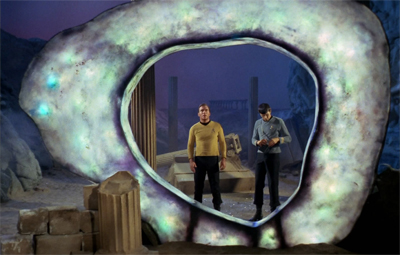
The City on the Edge of Forever stands as both on of the most troubled episodes of Star Trek ever produced, and one of the most brilliant. It’s a powerful science-fiction romance, cleverly constructed and smoothly executed. Everything in the episode seems to working smoothly, which seems all the more improbable given the difficulties occurring behind the scenes. Harlan Ellison’s teleplay differs significantly from the finished product, but it’s very hard to argue that the televised episode isn’t among the finest Star Trek stories ever produced.

The hole in things...

The hole in things…

Continue reading

Star Trek – The Devil in the Dark (Review)

To celebrate the release of Star Trek: Into Darkness this month, we’ll be running through the first season of the classic Star Trek all this month. Check back daily to get ready to boldly go. It’s only logical.

There are any number of ways to “get into” Star Trek, to jump on board the cult phenomenon. Despite decades of continuity, a lot of the franchise is accessible on its own terms, and it’s easy enough to come across a list of recommended classic episodes for a neophyte to sample. There are over seven hundred hours of Star Trek, so there’s something for everybody. And it’s perfectly possible to tailor a recommendation to the new viewer’s preferences.

Want proof that Star Trek can do credible drama? Stick on The City on the Edge of Forever. Fascinated by Spock? Try Amok Time. Want to watch William Shatner take on another leading character with a similar amount of gravitas? Give Space Seed a go. Want some high-concept sci-fi android stuff? Maybe What Are Little Girls Made Of? is right up your street. Want a contemporary commentary on the Vietnam War? Watch A Private Little War.

However, if you asked me to recommend an example of the franchise’s philosophy and its humanist values, executed with a superb level of craftsmanship, The Devil in the Dark is really the only choice. There’s a reason that Arthur C. Clarke considers it to be the most memorable episode of Star Trek ever produced.

Spock would have to have a heart of stone not be affected by this...

Spock would have to have a heart of stone not be affected by this…

Continue reading

Star Trek – Arena (Review)

To celebrate the release of Star Trek: Into Darkness this month, we’ll be running through the first season of the classic Star Trek all this month. Check back daily to get ready to boldly go. It’s only logical.

Arena is a fascinating piece of Star Trek, because it’s such an iconic and important piece of franchise history, despite the fact that it’s far from the best that the show has to offer. Indeed, the basic premise of the show is rather generic science-fiction B-movie stuff. Kirk is forced to compete against a lizard-like alien by some god-like beings to ensure the survival of his crew. The script, by producer Gene L. Coon, is credited to a story written by Fredric Brown. Despite its similarities to Brown’s short story of the same name, Arena also shares quite a few plot points with a 1964 episode of The Outer Limits, Fun & Games. None of this is to suggest that Coon was consciously channelling these sources when he wrote the teleplay, just to illustrate how generic the basic plot is.

However, despite (or perhaps because of) this rather straightforward and familiar set-up, Arena is a truly memorable episode of Star Trek. Like quite a few other episodes of the original Star Trek, the episode produced images and concepts that have resonated well outside Star Trek fandom, to the point where elements like the Gorn or Kirk’s highly dubious improvised weapon will be recognisable to people who have never actually seen the episode. However, the episode is also vitally important to the Star Trek franchise itself, as it offers a more thorough expansion and exploration of the back story that has been inconsistently hinted at throughout this first season. Arena is really the first episode to feature a fully-formed framework for the internal logic of the Star Trek universe, one that has informed half-a-century of the franchise.

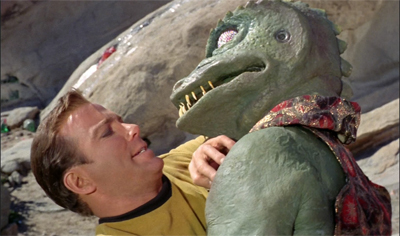
Plus, you know, Kirk wrestles a lizard man.

Don't pretend you aren't loving every minute of this, Shatner!

Don’t pretend you aren’t loving every minute of this, Shatner!

Continue reading