• Following Us

  • Categories

  • Check out the Archives


  • Awards & Nominations

Star Trek: Deep Space Nine – Cardassians (Review)

Star Trek: Deep Space Nine is twenty years old this year. To celebrate, I’m taking a look at the first and second seasons. Check back daily for the latest review or retrospective.

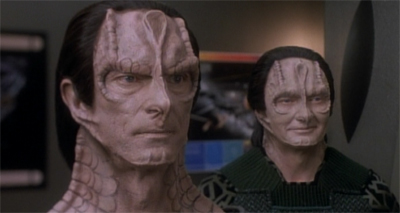
Cardassians suffers a bit from the same problems that haunt Invasive Procedures. Here’s another solidly constructed piece of world-building featuring a wonderful guest cast and an intriguing high concept. However, in the midst of all this, it seems like the human (er, Cardassian) element gets a bit lost. It’s great to have Garak and Dukat back on the show, and it’s great to deal with more fallout from the Occupation, but Cardassians never makes the emotional connection that a story about war orphans probably should.

Keeping up with the Cardassians...

Keeping up with the Cardassians…

Continue reading

Star Trek: Terok Nor – Night of the Wolves by S.D. Perry & Britta Dennison (Review)

Star Trek: Deep Space Nine is twenty years old this year. To celebrate, I’m taking a look at the first season. Check back daily for the latest review or retrospective.

We’ll be supplementing our coverage of the episodes with some additional materials – mainly novels and comics and films. This is one such entry.

Prequels are a tricky business. Not just because we already know the ending – after all, we love adapting old familiar stories in new ways, and knowing the outcome can easily lend a project an air of grand tragedy or irony. However, the temptation with prequels is to make it all make sense, to tie absolutely everything up in a neat little bow, resolving all the plot threads and removing any hint of ambiguity or mystery from the original work – less of a story in its own right and more of a “fill in the blanks” approach.

James Swallow’s Day of the Vipers occasionally fell into this trap as it offered an account of the Cardassian plot to take control of Bajor, but it managed to offer its own insights and character development – giving us a suitably complex and self-justifying version of Gul Dukat. Night of the Wolves is somewhat less successful at avoiding the same problems, with a plot that appears to have been fashioned by linking off-hand references and back story from various early episodes together.

We get Odo and Kira meeting for the first time; an account of the liberation of Gallitep; a back story for a young Damar; the roots of Natima Lang’s dissatisfaction with the Central Command. None of these threads seem to build to anything insightful or clever, instead playing out predictably – pretty much exactly as we might have imagined them.

Continue reading

Star Trek: Terok Nor – Day of the Vipers by James Swallow (Review)

Star Trek: Deep Space Nine is twenty years old this year. To celebrate, I’m taking a look at the first season. Check back daily for the latest review or retrospective.

We’ll be supplementing our coverage of the episodes with some additional materials – mainly novels and comics and films. This is one such entry.

Star Trek: Deep Space Nine comes with back story. A lot of back story. In fact, the opening scene of Emissary establishes the show in the context of The Best of Both Worlds, Part II, introducing a lead character whose tragic origin is rooted in an encounter that we had only fleetingly glimpse in Star Trek: The Next Generation. Due to the setting and nature of the show, history and continuity were major parts of Deep Space Nine‘s identity, and a large part of what set the show apart from its predecessors. (And successors, for that matter.)

Although the Klingons would dominate the show’s fourth season and remain a presence throughout the show’s run, and the Romulans might occasionally be glimpsed lurking in the back ground, the series largely focused on two alien races that had been introduced in The Next Generation. The Cardassians had been introduced in the show’s fourth season, in The Wounded, and the Bajorans first appeared during the fifth season in Ensign Ro.

Officially part of The Lost Era series of novels designed to flesh out the history of the shared Star Trek universe, the Terok Nor trilogy exists as a bridge into Emissary, something of an extended history lesson that contextualises the events of Deep Space Nine by providing an account of the Occupation of Bajor, an atrocity that only ended shortly before Emissary actually began.
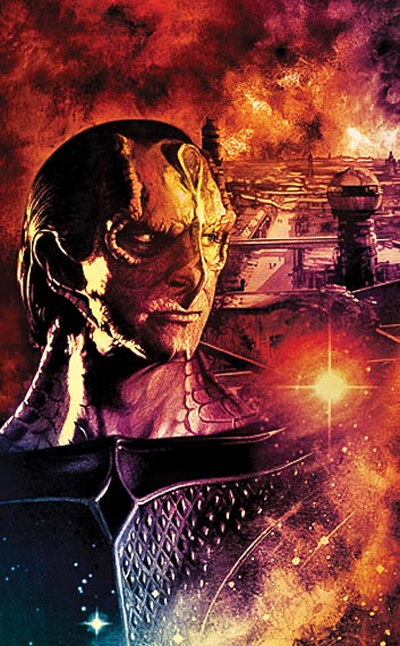
teroknordayofthevipers1

Continue reading