• Following Us

  • Categories

  • Check out the Archives


  • Awards & Nominations

Doctor Who: Hell Bent (Review)

“Where can he run?”

“Where he always runs. Away. Just away.”

– the Time Lords finally get a grip on the Doctor

If Death in Heaven was Moffat channelling the spirit of his predecessor, then Hell Bent is a decidedly (and perhaps even quintessentially) Moffat era finalé.

The art of a Moffat era finalé seems to be in burying the lead. The key is something of a narrative shell game, asking the audience to figure out where the actual point of the story lies as it unfolds. There is a fair amount of misdirection and wrong-footing involved in this, with Moffat frequently setting up what amounts to be a traditionally “epic” science-fiction premise only to swerve sharply in the opposite direction towards something altogether more intimate and personal.

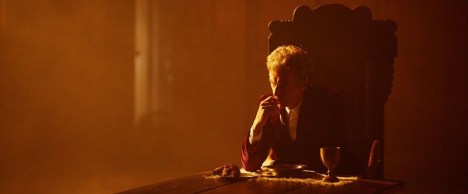
doctorwho-hellbent3

As much as The Pandorica Opens might have teased a Legion of Doom supervillains team-up with reality itself at stake, The Big Bang devolved into a run-around with a small ensemble trapped inside the British Museum. The Wedding of River Song was less about explaining the Doctor’s demise in The Impossible Astronaut and more about reuniting the Pond family. The Name of the Doctor revealed that “the Impossible Girl” arc was just a red herring and that Clara was always a character rather than a plot point.

Even The Time of the Doctor eschewed an epic “final regeneration” story to tell the more low-key tale of “the man who stayed for Christmas.” Of course, the effectiveness of this technique varies on a case-by-case basis. Sometimes the show’s shift in focus is clever and astute; sometimes it feels a little too messy and disorganised. In many respects, the true test of a Moffat era season finalé is the fine act of balancing the epic story that has been set up with the more personal story that plays out.

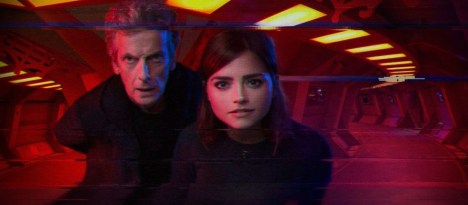
doctorwho-hellbent2

Hell Bent has a pretty big hook. Gallifrey has been a massive part of the show’s mythology for decades, becoming even more conspicuous in its absence since its destruction was first suggested in Rose and acknowledged by name in Gridlock. Gallifrey has always been coming back, something that has been particularly apparent since The Day of the Doctor. The return of the planet was inevitable in some way shape or form. The cliffhanger to Heaven Sent and the teaser trailer for Hell Bent both put a heavy emphasis on the planet’s return.

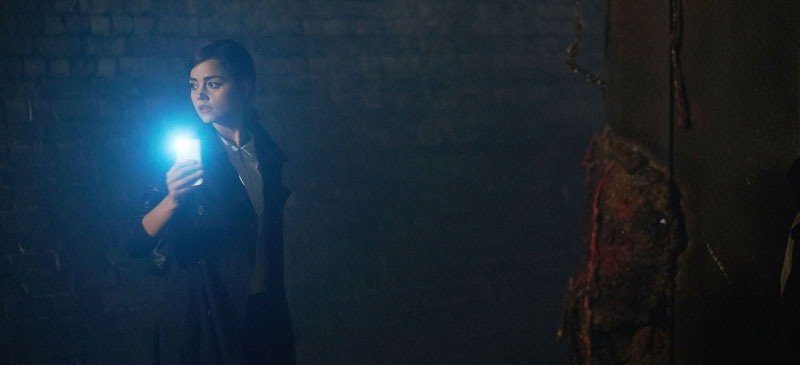
This makes the sharp turn midway through Hell Bent all the more effective. It turns out that the death of Clara in Face the Raven was never about raising the stakes for an apocalyptic Gallifrey story; the return of Gallifrey was just a background detail in Clara’s departure tale. It is a very clever and wry twist, one that works particularly well because the show commits to it so wholeheartedly.
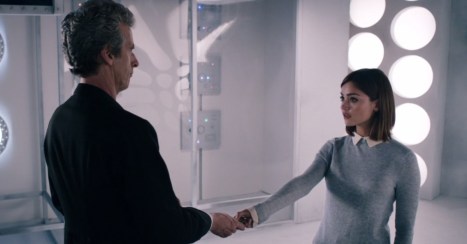
doctorwho-hellbent7

Continue reading

Doctor Who: Heaven Sent (Review)

“I’ve finally run out of corridor. There’s a life summed up.”

Heaven Sent is a masterful piece of television, a reminder of just what Doctor Who is capable of.

The ninth season of Doctor Who is a very ambitious season of television, largely eschewing standalone episodes in favour of multi-episode storytelling. This was quite the gambit, particularly in the context of a twelve-episode season. Doctor Who would essentially be cutting back from between ten and thirteen stories in a year to a more modest six stories in a season. In some ways, it felt like the revival was consciously harking back to the approach of the classic series, favouring multi-episode narratives. After so many years of standalone storytelling, it was a bold move.

doctorwho-heavensent8

That bold move has not always paid off. The ninth season of Doctor Who has been short any major embarrassments, but the season seems to have lacked the sort of ambition necessary to pull off a gambit like that. Indeed, the most successful two-parter of the season has been The Zygon Invasion and The Zygon Inversion, the episode with the least structural trickery or nuance. Other efforts to justify the decision to run with a season of two-parters have not really worked; the season has often struggled to fulfill all the promise and ambition offered at the start of the year.

Heaven Sent is a spectacular effort, one that manages to fulfill all of that ambition and then some. It is a genuinely bold episode of Doctor Who, one that feels utterly unique in the show’s fifty year history, but executed with incredible confidence and self-assuredness from a production team utterly convinced of what they are doing. It is an instant classic, a season highlight, and easily the best episode of the season by quite some margin.

doctorwho-heavensent5a Continue reading

Doctor Who: Face the Raven (Review)

“She enjoyed that way too much.”

“Tell me about it.”

– Clara Oswald, RIP (for now)

Of course a season of two-parters would end with a three-parter.

That said, it seems quite clear that Face the Raven is the first part of a three-parter in the same way that Utopia was the first part of a three-parter; it is largely a standalone story that exists to manoeuvre the various characters to the point where the season finalé can actually begin. In a way, Face the Raven even marks its own “return of a classic series element”, albeit in a much more subdued manner than Utopia. It seems quite clear exactly who Ashidlr is dealing with, and it seems to be a pretty big deal.

Quoth the raven...

Quoth the raven…

There is quite a lot of narrative shuffling taking place here, to the point that Face the Raven feels very much like a premise rather than a self-contained story. The episode was allegedly cobbled together at reasonably short notice when Mark Gatiss could not extend Sleep No More into a two-parter keeping with the rest of the season. Given all the demands imposed on the script, it seems perfectly reasonable to suggest that Sarah Dollard was handed what is traditionally known as a “nightmare brief.”

In light of all of the obligations imposed on it, it is surprising that Face the Raven works at all. It is even more impressive that it works downright splendidly.

... nevermore...

… nevermore…

Continue reading

Doctor Who: Sleep No More (Review)

“No. No no no. You don’t get to name things. I’m the Doctor, I do the naming.”

Sleep No More is not a bad idea by any stretch.

One of the defining features of the Moffat era has been a willingness to engage directly with imagery and metaphors tied to the history and culture iconography of Doctor Who. The show has played not only with monsters, but also with the idea of monsters, frequently creating conceptual nightmares that have undoubtedly cost many viewers (young and old) a few nights sleep. The Weeping Angels are monsters that can only move when you can’t see them. The Silence exist in the gaps in your memory. Last Christmas even has the Doctor confront the idea of Santa Claus.

What? No HD feed?

What? No HD feed?

In many ways, Sleep No More feels like a logical continuation of this trend. In a way, the episode doubles-down on the show’s scariness, offering viewers (particularly children) monsters that are immune to (and even capitalise on) potential defenses against scary episodes. If Weeping Angels of Blink are monsters designed to be especially scary to viewers hiding behind the couch or covering their eyes, then the “Sandmen” of Sleep No More are intended to be particularly unsettling to viewers who already have trouble falling asleep after a scary story.

The biggest problem is that the episode is written by Mark Gatiss.

Guess Who?

Guess Who?

Continue reading

Doctor Who: The Zygon Inversion (Review)

“I wouldn’t even let you get talking like you always do. Bullet between the eyes. First thing.”

“Again, thank you.”

“Twelve times, if necessary.”

“Yes, well, why limit yourself? You’ve really thought this through.”

“I’m a big fan.”

– Osgood and the Doctor plan an invasion (planet well, even)

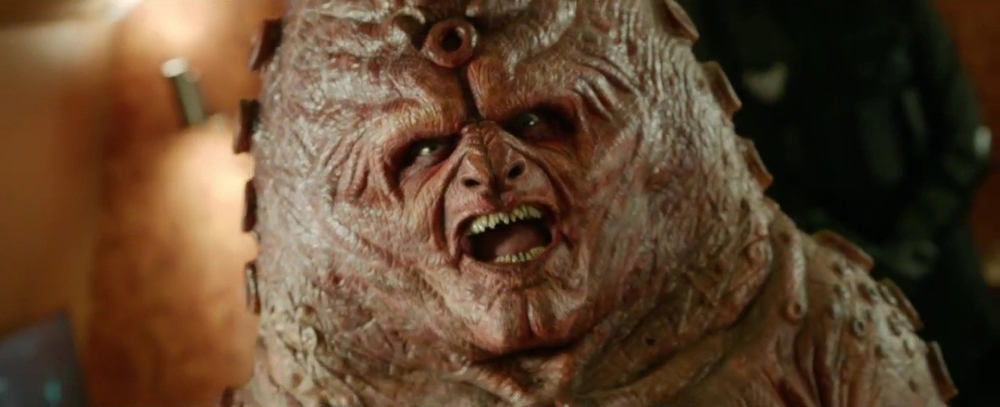
It seems rather odd to think that The Zygon Invasion and The Zygon Inversion are the most conventional two-parter of the season to this point. In terms of structure and plot, the two episodes bleed quite neatly into one another. There is no temporal shift like the shifts that divide Under the Lake and Before the Flood or The Girl Who Died and The Woman Who Lived. There is no sharp tonal shift like the shift that divides The Magician’s Apprentice and The Witch’s Familiar.

In terms of format, The Zygon Invasion and The Zygon Inversion are very much a classic two-parter without any significant structural sleight of hand. The themes and characters remain consistent, details set up in The Zygon Invasion pay off in The Zygon Inversion. This is very much a two-parter in the mould of the Davies era, where it feels like the story is split over two forty-five minute slots because there is simply too much material to handle in a single episode. It is very interesting, given how the earlier episodes tended to play with the form.

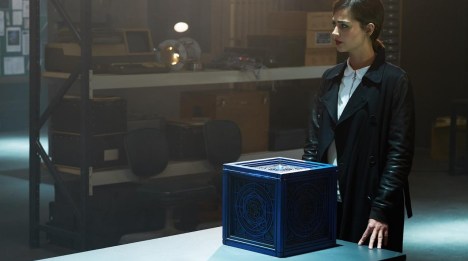
"... or you can take the mystery box..."

“… or you can take the mystery box…”

Of course, The Zygon Invasion and The Zygon Inversion are also very good on their own terms. They are the standout episodes of the season to this point. They comprise one of the most satisfying two-parters of the Moffat era, if not the entire revival. There are times when the Moffat era can get a little lost in formal ambition, but The Zygon Invasion and The Zygon Inversion work because they are simply a good story well told. The lack of structural hijinks or narrative experimentation allows for a story that is ambitious on its own terms.

The Zygon Invasion and The Zygon Inversion are a fantastic piece of work for the show.

"Seeking companion. Must enjoy long walks on the beach. And in eternity."

“Seeking companion. Must enjoy long walks on the beach. And in eternity.”

Continue reading

Doctor Who: The Zygon Invasion (Review)

“Why don’t you wear them anymore?”

“Oh, I do. I have question mark underwear.”

– Osgood and the Doctor discuss questionable fashion

Doctor Who has never been the most subtle of shows.

The fourth episode of the show, Aliens of London, proceeded to brutally murder Tony Blair and shove his body into a closet in Downing Street. Just in case the show’s politics weren’t clear enough, The Sound of Drums went on to have the Master model himself on some evil hybrid of the Tenth Doctor and Tony Blair while engaged in a crazy scheme to conquer the world. He took great care to execute the President of the United States (or “President Elect”) in the process.

Invasion of the body doubles!

Invasion of the body doubles!

Even the classic show was prone of moments of grand political pantomime. The Sylvester McCoy era had great fun skewering Thatcherism with stories like Paradise Towers and The Happiness Patrol. The media were reportedly surprised when Andrew Cartmel revealed that the real Cartmel Masterplan was to bring down the government, which only serves to demonstrate just how few people watched the show’s twilight years. Of course, Robert Holmes also wrote The Sunmakers when he had an axe to grind with the inland revenue.

All of which is to point out that The Zygon Invasion has a long pedigree. Doctor Who has a rich and distinguished history when it comes to filtering political commentary through a cartoon megaphone. While the results are undoubtedly a bit crude and blunt, it is fascinating to see a family show tackling this sort of issue relatively head-on.

Getting the all Clara...

Getting the all Clara…

Continue reading

Doctor Who: The Woman Who Lived (Review)

Can’t we share? Isn’t that what robbery is all about?

– the Doctor on redistribution of wealth

The Woman Who Lived adopts the same structure as The Girl Who Died, basically grafting a fairly generic alien invasion narrative on to a more character-driven story. It is an approach that worked very well for Jamie Mathieson and Steven Moffat, but it admittedly works a little less smoothly this time around.

The Girl Who Died had the luxury of some very generic antagonists posing a very generic threat to a very generic village populated (for the most part) with fairly generic characters. Against this backdrop, there was room to develop not only the character of Ashidlr, but also to flesh out the perspective of the Twelfth Doctor and Clara. The stakes weren’t particularly high in the context of Doctor Who, and the resolution was decidedly goofy. But that was the thrill.

Okay, now Peter Capaldi is just showing off...

Okay, now Peter Capaldi is just showing off…

The Woman Who Lived is decidedly heavier in tone and content. This is not to suggest that the alien threat at the heart of the episode is any more substantial or nuanced. There is an alien emissary plotting to open a dimensional portal so that his buddies can harvest the Earth for their own sinister purpose. This is, if anything, even more generic than the Mire’s plot to harvest testosterone. The problem is that the script clutters everything up, adding betrayals and macguffins and mythos that add little of value.

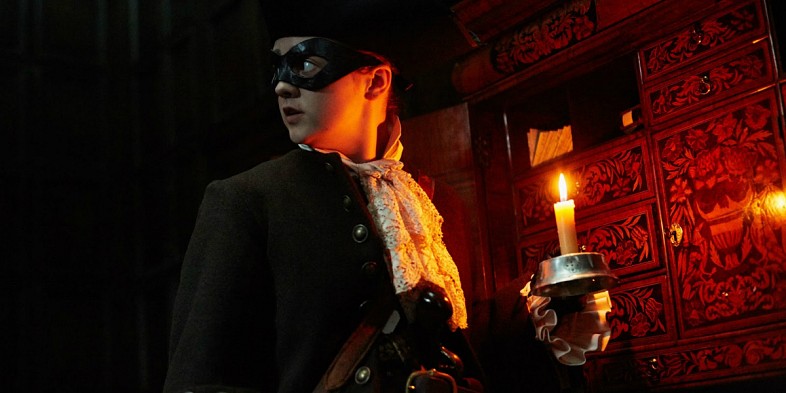
It is not as if the convolutions of the generic alien invasion plot exist to balance a lighter character-driven story. If anything, the meat of Ashidlr’s character arc is to be found in The Woman Who Lived, as she learns to cope with the mixed blessing of immortality. The Woman Who Lived certainly gives Maisie Williams more to do. So The Woman Who Lived has a lot more going on than The Girl Who Died, which is not necessarily a good thing.

Candle in the wind...

Candle in the wind…

Continue reading

Doctor Who: The Girl Who Died (Review)

“He’s not really Odin, is he?”

“He hasn’t even got a yoyo.”

The Girl Who Died is very much in keeping with Jamie Mathieson’s previous scripts for Mummy on the Orient Express and Flatline. It is a script that expresses an affection and fondness for Doctor Who, but with just a hint of playful innovation. The Girl Who Died is recognisably part of the show, but in a way that feels like more than simple imitation or emulation. Mathieson does not just understand the mechanics of the show, he understands how and why they work in relation to one another.

After all, the set-up of The Girl Who Died is almost aggressively traditional. The Doctor wanders into a dangerous situation where he finds himself tasked with protecting a small community from a band of aggressive outsiders. Using his wits and no small amount of technobabble, the Doctor manages to stop the hyper-advanced aggressors in their tracks. He does this in a way that relies on trickery and subterfuge more than blunt force. The day is saved when the Doctor offers a quick-witted and chatty speech that sends his opponents reeling.

Not a patch on Odin.

Not a patch on Odin.

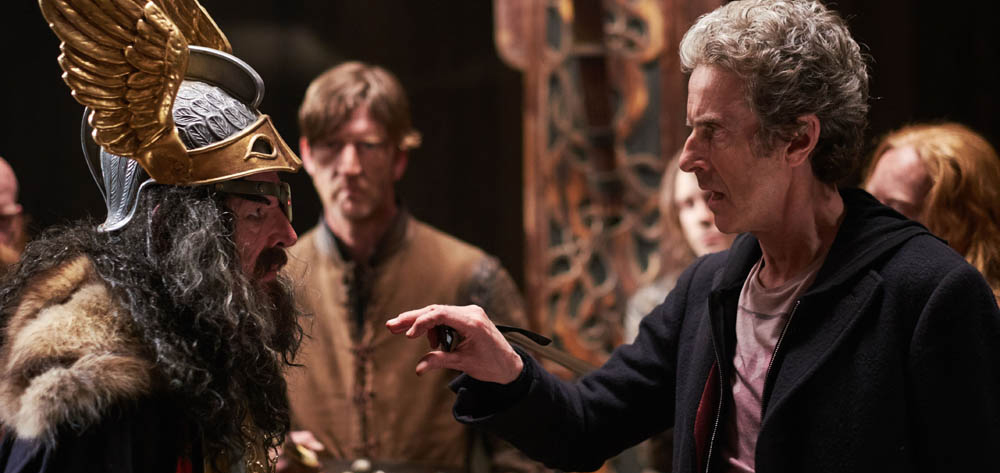
In terms of plot, there is not a lot happening here. The Mire are a fairly generic band of alien baddies, a stock science-fiction warrior race in the style of the Sontarans or the Klingons. (Indeed, Ronald D. Moore’s suggestion that the Klingons are “space Vikings” pays off here as the Mire find themselves squaring off against literal Vikings.) With the exception of Ashildr, most of the guest cast are reasonably bland; it seems highly unlikely that most of the audience will remember any of their actual names, instead remembering the Doctor’s “affectionate” nicknames.

However, The Girl Who Died takes the opportunity to flesh out its character dynamics, affording time and energy to long conversational (and philosophical) scenes in which the Doctor and Clara meditate upon responsibility and salvation. The Girl Who Died is very much an episode that feels like set-up, building towards that cliffhanger and into The Woman Who Lived, but its use of build-up is very canny and astute. Mathieson takes advantage of the two-part format adopted by the ninth season, expertly exploiting the space afforded by a two-parter.

Viking Direct, eh?

Viking Direct, eh?

Continue reading

Doctor Who: Before the Flood (Review)

“Prentis! He’s alive.”

“No, he’s just not dead yet.”

– Bennett and the Doctor understand how this whole base under siege thing works

There is an argument to be made that Before the Flood is just too damn clever for its own good.

Under the Lake was a very conventional and familiar “base under siege” story, the kind of tense confined thriller that Doctor Who did so well. However, Before the Flood does more than simply extend that premise by another forty-five minutes. Instead, it gets decidedly playful. This is a nice twist on the structure of the season, a season built around multiple interlocking two-part episodes. Taking advantage of the break between Under the Lake and Before the Flood, writer Toby Whithouse shifts the episode’s genre along with its setting.

A Fisher (King) in the face of reality itself...

A Fisher (King) in the face of reality itself…

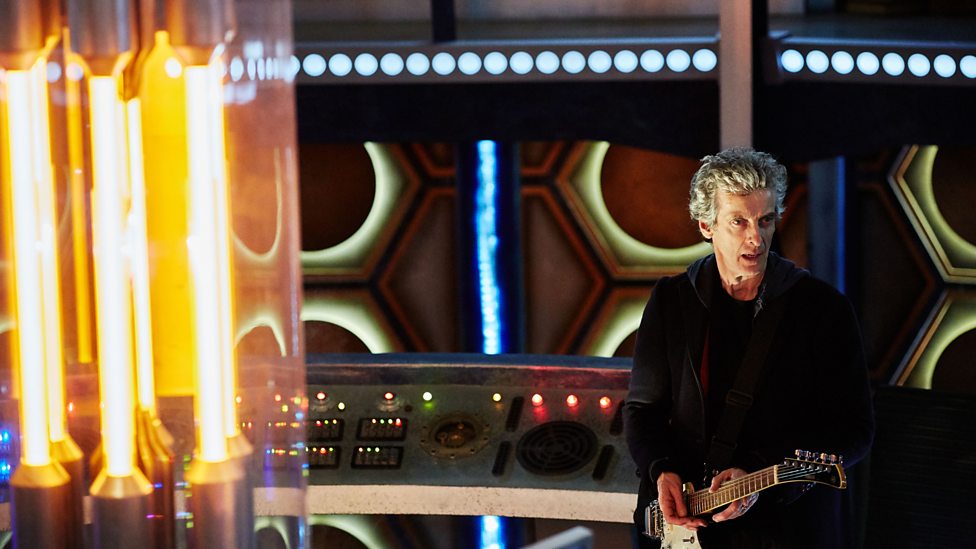
The teaser sets the tone, with the Doctor addressing the audience directly. In fact, one suspects that google searches on the phrase “bootstrap paradox” jumped dramatically at around 8:27pm BST, 10th October 2015. Although the episode’s closing sequence suggests that the Doctor might plausibly be addressing Clara, the framing makes it quite clear that he is talking through the television to the viewers at home. As if to emphasise this little detail, the Doctor’s wailing electric guitar plays into the opening credits; in case the show needed to be more self-aware.

However, Before the Flood is never entirely sure how much of this self-awareness is genuine cleverness and just how much of it is necessary structuring.

Flood of ideas...

Flood of ideas…

Continue reading

Doctor Who: Under the Lake (Review)

You’re going to go back in time? How can you do that?

Extremely well.

– Bennett and the Doctor lay down some ground rules

Part of the thrill of the ninth season is the ambition and experimentation involved.

As a rule, the Moffat era has tended towards compression, favouring individual episodes over epic two parters. While the final stories of Davies-era seasons tended to burst at the seams, with extended runtimes pushing stories beyond even the generous runtimes of two- (or even three-) part episodes, the Moffat era has favoured the standalone story. Moffat finalés are packed tight, with episodes like The Wedding of River Song and The Name of the Doctor feeling like they might come off the rails if they moved any faster.

An axe to grind...

An axe to grind…

Constructed an entire season of two-part episodes represents a very clear change in how Doctor Who is telling stories. The change in the type of story alters both the fundamental structure of the episodes and the underlying rhythm of the season. There is no precedent for this in the ten years since the show came back, which makes it all very exciting. The show has told multi-part stories before, but always as events rather than as default. It feels entirely appropriate that Under the Lake sets up quite a distinct and delineated two-part adventure.

Toby Whithouse is one of the most traditionalist writers working on Doctor Who, give or take Mark Gatiss. After all, it was Whithouse who was assigned to bring Sarah Jane into the present with School Reunion during the second season. With that in mind, it makes sense that Under the Lake and Before the Flood feel a little bit like an attempt to bring a very classic multi-part structure into the twenty-first century.

Siege the moment...

Siege the moment…

Continue reading