• Following Us

  • Categories

  • Check out the Archives


  • Awards & Nominations

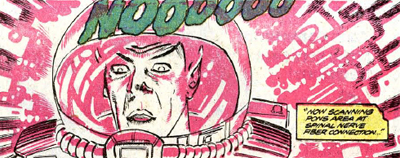
Star Trek: The Newspaper Strips – Called Home (Review)

This June, we’re taking a look at some classic Star Trek movie tie-ins and other interesting objects. Check back daily for the latest reviews and retrospectives.

It’s amazing how diverse and expansive the history of the Star Trek franchise is. Even odd little curiosities like the Gold Key Comics and The Newspaper Strips endure in one form or another – passed down over the years and lovingly maintained. There really are no truly forgotten pieces of Star Trek out there, and one of the great things about IDW’s management of the Star Trek license has been their willingness to dig into the annals of Star Trek history to produce some striking pieces of work.

(I am really hoping that their reprint programme extends at some point to include the British Star Trek comic strips, which were wonderfully dynamic pieces of work that were never properly reprinted outside the United Kingdom. However, given how thorough the reprint programme has been, it seems almost inevitable that those strips will see the light of day in some form or another.)

The Newspaper Strips were launched in 1979, débuting four days before the cinematic release of Star Trek: The Motion Picture. The strip only ran for until 1983, cancelled due to the fact that the market was crowded out with more popular science-fiction comic strips like Star Wars or Flash Gordon. Still, despite the ignominious finish for the strip, it is a fascinating piece of Star Trek history, an example of one of the many ways the franchise survived during its long hiatus from television.

tos-calledhome

Continue reading

Star Trek (Marvel Comics, 1979) #1-3 – The Motion Picture (Review)

This June, we’re taking a look at some classic Star Trek movie tie-ins and other interesting objects. Check back daily for the latest reviews and retrospectives.

What better way to announce the arrival of Star Trek at Marvel Comics than with an adaptation of Star Trek: The Motion Picture? Initially published as a giant Marvel Super-Size issue, the adaptation was subsequently split across the opening three issues of Marvel’s ill-fated Star Trek monthly.

It is worth noting that the franchise’s initial association with Marvel was relatively brief, with the Star Trek monthly series only lasting eighteen issues from 1979 through to 1982. In 1982, the Star Trek comic book franchise moved to DC Comics, where it remained until the nineties. Things became a bit more complicated at that stage, but it was a long-term relationship.

Still, in 1979, Marvel became the second company to publish monthly comics based around the Star Trek license. However, they were a substantially more impressive operation than Gold Key Comics, the previous license-holder. For example, this adaptation of The Motion Picture comes from some very talented creators, and its publication was treated as something of an event.

The light at the end of the tunnel...

The light at the end of the tunnel…

Continue reading

Harlan Ellison’s 7 Against Chaos (Review)

This June, we’re taking a look at some classic Star Trek movie tie-ins and other interesting objects. Check back daily for the latest reviews and retrospectives.

Star Trek: The Motion Picture went through a variety of iterations before settling on the version finally produced – a revised version of In Thy Image, the proposed pilot for the aborted Star Trek: Phase II television series. The story was devised by noted science-fiction author Alan Dean Foster, who had enjoyed a long relationship with the franchise – novelising episodes of Star Trek: The Animated Series earlier in the decade. Decades later, he would novelise the JJ Abrams films.

However, Foster was not the only noted science-fiction author who consulted on the development of what would become The Motion Picture. Theodore Sturgeon, who had contributed to the show, was among those contributing. Ray Bradbury, who Roddenberry had pursued to write for the show on several occasions but never did, also pitched. However, one of the more interesting ideas came from Harlan Ellison.

Ellison is a writer who will forever be associated with the franchise. He contributed the original teleplay for The City on the Edge of Forever, but was infamously displeased with how the episode turned out. He and Roddenberry had an acrimonious relationship after that point, with both sides prone to make cutting remarks and accusations across the aisle at one another. Roddenberry was fond to exaggerating or lying about Ellison’s original script, while Ellison was quite candid about his opinion of Roddenberry as a writer.

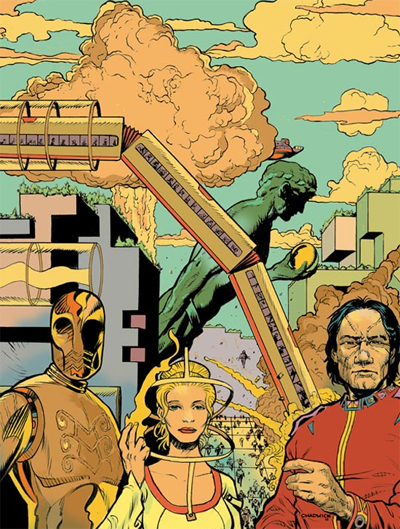
7againstchaos7

Continue reading

X-Men: The End – Book Two: Heroes and Martyrs (Review/Retrospective)

This May, to celebrate the release of X-Men: Days of Future Past, we’re taking a look at some classic and modern X-Men (and X-Men-related) comics. Check back daily for the latest review.

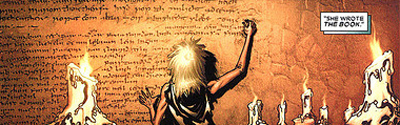
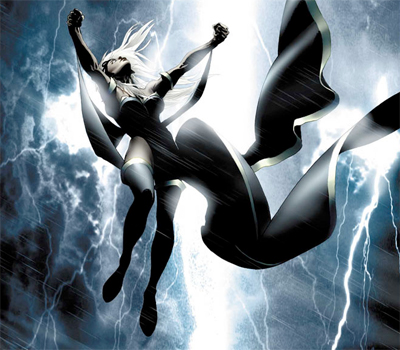
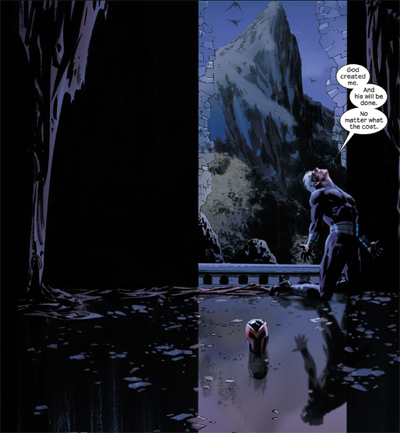
To describe Chris Claremont’s three six-part miniseries that comprise X-Men: The End as “convoluted” is to miss the point. Of course they are convoluted. Claremont is essentially writing a gigantic epilogue to his work on Uncanny X-Men. He is tidying away decades of continuity and offering a sense of closure to his work on these characters and their world. Claremont is an exceptional storyteller when it comes to long-form serialised storytelling.

As a writer, Claremont tends to layer interesting twists on top of interesting twists, with every resolution opening up more avenues for future stories to explore. He has demonstrated an ability to string along plots for decades, revisiting characters and situations years after most readers had forgotten about them. These are the qualities that make his Uncanny X-Men run so deeply fascinating, but they are also the qualities that make him a bit of an awkward fit for a concept like The End, an epic miniseries built around the idea of wrapping up the entire X-Men mythos.

Some things never go into fashion...

Some things never go into fashion…

However, what is so fascinating about X-Men: The End is that all of the elements that Claremont uses are the same elements that he has been playing with since he took over Uncanny X-Men. The story beats have a familiar pattern to them, the themes are familiar, the characters speak as they did in the years that Claremont wrote them. What is fascinating about X-Men: The End is the way that it serves to really set Claremont’s take on the X-Men in stone, treating the elements associated with Claremont as a truly inexorable part of the comic’s mythology.

X-Men: The End is very much a Chris Claremont comic, through-and-through. That’s what makes it feel like such a perfect fit.

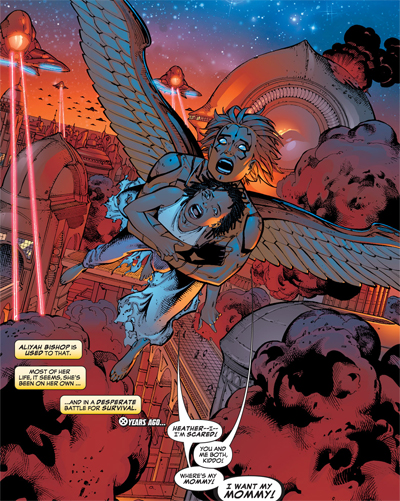
A wing and a prayer...

A wing and a prayer…

Continue reading

An Interview with Chris Claremont, Part III (of V)

All this week, to celebrate the release of X-Men: Days of Future Past, we’re publishing a serialised interview that we conducted with the wonderful Chris Claremont back in February for publication in a British comic book magazine. Many thanks to Mr. Claremont for taking the time to talk to us, and also to Adam Walsh for allowing us to publish this.

The heart of Chris Claremont’s storytelling is character.

In talking about the iconic X-Men characters he helped to shape and define, he’ll often use their first names. Even minor characters like Thunderbird get referenced using their proper names.

“People are not picking up the book to see the action,” Claremont explains. “People are picking up the book to see the characters.” For Claremont, one of the keys to writing Uncanny X-Men for so long was remaining true to the characters.

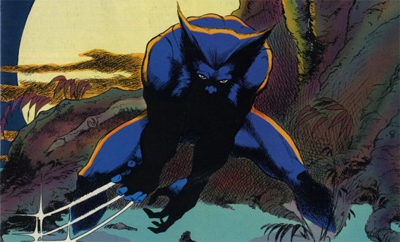
wolverinesavethetiger7

Continue reading

Jason Aaron’s Wolverine – Wolverine, Vol. 4 (Review/Retrospective)

This May, to celebrate the release of X-Men: Days of Future Past, we’re taking a look at some classic and modern X-Men (and X-Men-related) comics. Check back daily for the latest review.

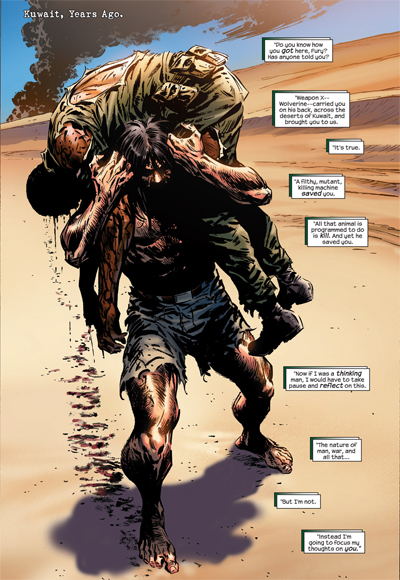
Jason Aaron’s work on the character of Wolverine is absolutely fascinating. The writer was written for Logan across a number of different books and in a number of different contexts. Indeed, his first professional comic book credit was on an eight-page story featuring the character. Since the publication of that first story, Aaron has enjoyed a long and productive relationship with Marvel’s most iconic mutant.

He has written Get Mystique for the third volume of Wolverine. He has written a number of miniseries featuring the character – including the tie-in Manifest Destiny miniseries and a six-part Astonishing Spider-Man and Wolverine miniseries. Along the way, he has provided a number of back-ups and short stories featuring the character. He also secured two different spin-offs for Wolverine –  the sixteen-issue Weapon X title and Wolverine and the X-Men.

Slice o' life...

Slice o’ life…

So Aaron and Wolverine work quite well together. It’s no surprise that Aaron was chosen as the writer to launch the fourth volume of Wolverine, shepherding the book to its three-hundredth issue. While his work on Wolverine might not be quite as brilliantly eccentric as Astonishing Spider-Man and Wolverine or as insanely fun as Wolverine and the X-Men, it does represent a rather thoughtful and insightful reflection on the popular comic book character.

After all, one of the recurring themes of Aaron’s work with Wolverine is the idea that a character who has lived to long – and one who has been published so frequently – must have seen and done almost everything by this point. The trick is to try and find something new and exciting for the character after all these years. In many respects, that is what is most interesting about Jason Aaron’s run on Wolverine: how much of the run exists to push the character into position for the next leg of his arc.

Villains of all Creeds down here...

Villains of all Creeds down here…

Continue reading

X-Men: The End – Book One: Dreamers & Demons (Review/Retrospective)

This May, to celebrate the release of X-Men: Days of Future Past, we’re taking a look at some classic and modern X-Men (and X-Men-related) comics. Check back daily for the latest review.

Marvel went through a phase of publishing books based around “The End” of various iconic properties. These comics allowed creators to imagine telling the last possible story for a given character or corner of the Marvel universe. Creators like Garth Ennis or Peter David got to write stand-alone one-shot stories for The Punisher and The Incredible Hulk, respectively. Paul Jenkins wrote a six-issue miniseries Wolverine: The End, while Jim Starlin closed off the entire Marvel Universe with Marvel Universe: The End.

However, given the sprawling and expansive continuity of the X-Men franchise, it stands to reason that any attempt to tell the final X-Men story would have to be a rather epic tale. Writer Chris Claremont wrote Uncanny X-Men for well over a decade, so even asking him to close off his own threads and plot points would take up considerable space. However, X-Men: The End is an absolutely sprawling comic book saga that is spread across three miniseries and eighteen issues.

Blackbird down...

Blackbird down…

In a way, it feels like a touching coda for Claremont’s version of The X-Men. The writer defined the X-Men franchise, introducing many of the plot and character elements that readers would come to take for granted when reading an X-Men story. The End isn’t Claremont’s last X-Men story by any stretch – the writer still works on the franchise quite frequently in a variety of different roles, enjoying short runs and long runs.

However, The End does seem to serve as an epic farewell tour of the world that Claremont helped to build and define. As such, it’s fitting that the miniseries is somewhat clunky and awkward and epic and sprawling and melodramatic and overblown and absurd and unexpected. It is a capstone to Claremont’s gigantic X-Men epic, a closing statement and thoughtful summation to decades of work.

"X" marks the spot...

“X” marks the spot…

Continue reading

Ed Brubaker’s Run on Uncanny X-Men – The Extremists (Review/Retrospective)

This May, to celebrate the release of X-Men: Days of Future Past, we’re taking a look at some classic and modern X-Men (and X-Men-related) comics. Check back daily for the latest review.

One of the things that is most striking about Ed Brubaker’s work on Uncanny X-Men is just how disjointed the whole thing is. Announcing his arrival on the franchise with the Deadly Genesis miniseries, it seemed like Brubaker was really planning on shaking things up. Like Brian Michael Bendis had done for The Avengers with Avengers Disassembled, Brubaker’s Deadly Genesis had attacked some of the foundations of the X-Men franchise.

Brubaker’s first arc on Uncanny X-Men did follow up on some of the threads from Deadly Genesis, but not the obvious ones. The Rise and Fall of the Shiar Empire was a twelve-issue story featuring a bunch of X-Men launching themselves into space to recover Gabriel Summers and become embroiled in a galactic power struggle. It was very far from what fans had come to expect from the franchise, and worlds apart from the tone of Deadly Genesis or House of M. It felt strangely disconnected from a book that should have been driving the franchise.

The writing's on the wall...

The writing’s on the wall…

His second story arc on the title, The Extremists comes towards the start of Brubaker’s second year on Uncanny X-Men, and it still feels decidedly uncertain. A five-issue story arc about terrorism and religion, The Extremists is incredibly engaged with contemporary American politics. It feels like an entirely different story from The Rise and Fall of the Shiar Empire, as if Brubaker has suddenly decided to alter the direction of his run.

The Extremists is a story that feels like an orphaned part of an X-Men epic that never quite developed, a small segment of a whole that doesn’t actually exist. It’s easy to imagine The Extremists as part of an untold post-9/11 Uncanny X-Men saga that may have spun off from Deadly Genesis and brought the comic into the twenty-first century. Unfortunately, with Brubaker’s run being pulled in multiple directions around it, it can’t help but feel a little hollow.

Cooking up a storm...

Cooking up a storm…

Continue reading

Ultimate Origins (Review/Retrospective)

This May, to celebrate the release of X-Men: Days of Future Past, we’re taking a look at some classic and modern X-Men (and X-Men-related) comics. Check back daily for the latest review.

Ultimatum effectively brought an end to the first stage of life for Marvel’s Ultimate Universe. To be fair, Ultimate X-Men and Ultimate Fantastic Four had both cycled through multiple creative teams by that point, but Ultimatum was the book that effectively drew a line under a certain era of Marvel’s Ultimate Universe. Ultimate Spider-Man, Ultimate X-Men and Ultimate Fantastic four were all cancelled in the wake of the massive end, marking it as the end of an era.

As such, it made sense to go back to the start of the line – to task writer Brian Michael Bendis to craft an origin for this shared spin-off universe. With Ultimatum killing off so many characters and so radically altering the status quo, it made sense to go back to the beginning and offer a glimpse at the formative moments of this alternate universe. The Ultimate Universe had been built from the ground up, so it made sense that the continuity all fit together.

A Magnetic personality...

A Magnetic personality…

While Ultimate Origins offered a series of insights and revelations that radically altered (or expanded) the back story of almost every corner of the Ultimate publishing line, Brian Michael Bendis’ Ultimate Origins undoubtedly had the most profound implications for the characters of Ultimate X-Men. While the characters from Ultimate Spider-Man or The Ultimates could go back to something approximating business as usual, those characters would never be the same again.

Offering an explanation for the mutant genome that would alter the context of mutants and play into the climax of Ultimatum, Ultimate Origins represents something radical and distinct from mainstream Marvel publishing. In a way, it feels like it is playing into the mission statement of Ultimatum – redefining the Ultimate line so as to distinguish the Ultimate Universe from its mainstream counterpart. This is no long a streamlined and cleaned up alternative; it is something radically different.

Carry on...

Carry on…

Continue reading

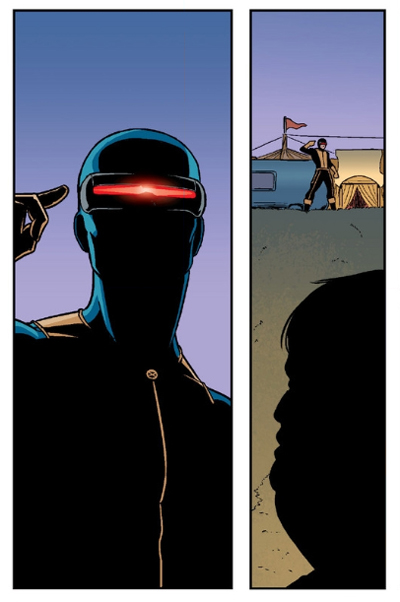
X-Men: Season One by Dennis Hopeless and Jamie McKelvie (Review)

This May, to celebrate the release of X-Men: Days of Future Past, we’re taking a look at some classic and modern X-Men (and X-Men-related) comics. Check back daily for the latest review.

X-Men: Season One is a weird beast. The core of Marvel’s Season One initiative has been offering accessible standalone graphic novels that take their iconic characters back to their roots – as if to have something that you could point a new reader towards, say “this is how [character] got started.” The line hasn’t always lived up to that promise, with the quality of the collection of graphic novels being quite uneven in practice, but it’s a solid starting point.

However, the X-Men were always going to seem a bit strange when this approach was applied. After all, many of the most iconic X-Men character – from Wolverine to Storm to Rogue – didn’t appear for years after Stan Lee and Jack Kirby launched X-Men. Beast didn’t have blue fur for quite some time. Magneto was fairly generic and one-dimensional. For a comic book series about an oppressed minority, the characters were all white, middle-class and straight; Jean Grey often felt like the token girl.

The Tomorrow People...

The Tomorrow People…

So revisiting the roots of the X-Men was going to be different from exploring the origins of The Avengers or Thor or Ant-Man, because a lot of what people take for granted about the X-Men didn’t exist in those early years. Trying to find a way to encapsulate what makes the X-Men so successful and appealing into the context of those early stories is a pretty ambitious task, making X-Men: Season One seem like an almost impossible challenge.

Luckily, Marvel recruited some top-notch talent for the book. Artist Jamie McKelvie is one of the best artists working in comics today. His linework is clear, his action sequences are stylish – but he’s also fantastic with characters. McKelvie can offer a lot in a small amount of space – body language, facial expressions. He’s paired with writer Dennis Hopeless, who has a bit of a knack dealing with potentially troublesome assignments turning Avengers Arena from ruthless Battle Royale (or The Hunger Games) knock-off into a pretty compelling read. The X-Men are in good hands.

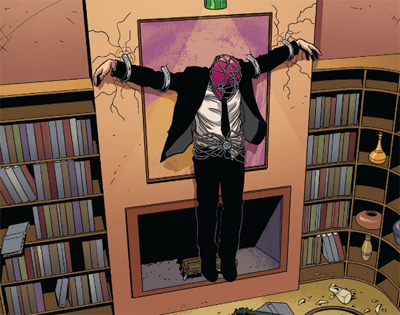
The child protection agency is going to crucify Charles for this one...

The child protection agency is going to crucify Charles for this one…

Continue reading