• Following Us

  • Categories

  • Check out the Archives


  • Awards & Nominations

The X-Files (IDW) Christmas Special 2015 (Review)

This June, we’re going to be taking a look at the current run of The X-Files, beginning with the IDW comic book revival and perhaps taking some detours along the way. Check back daily for the latest review.

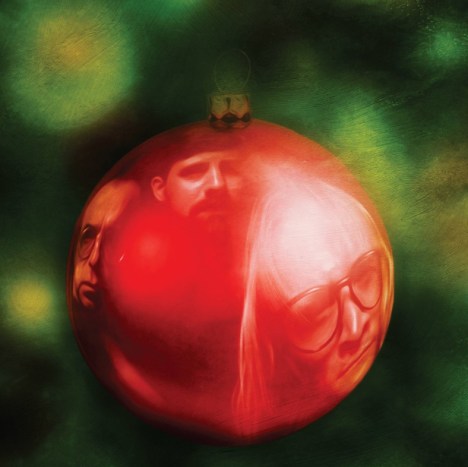
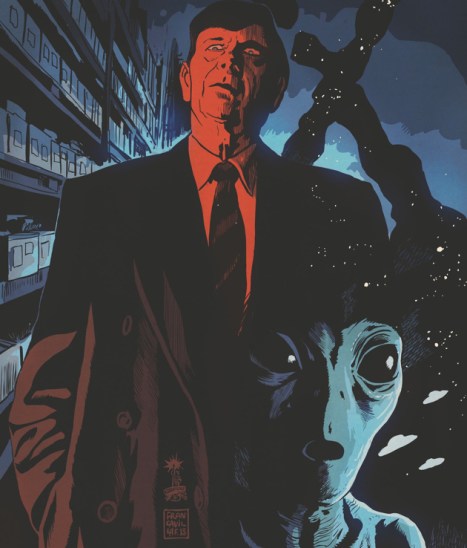
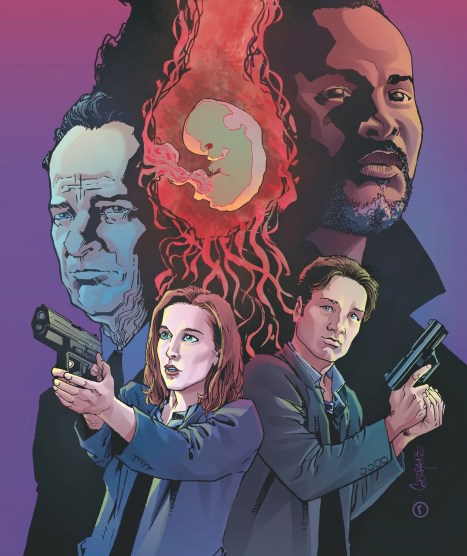
Nothing gives a better sense of how compressed The X-Files: Season 11 is than the decision to incorporate The X-Files Christmas Special 2015 into the larger arc of the season, as a bridge between Mulder’s capture at the end of Home Again, his detention in My Name is Gibson, and his adventuring with Scully in Endgames. Although it might be possible for readers to smoothly jump from the climax of My Name is Gibson into the high-stakes action of Endgames, the events of The X-Files Christmas Special 2015 smooth the transition.

Arriving late in the run of The X-Files: Season 10, The X-Files Christmas Special 2014 felt almost like an “out of continuity” adventure that found the cast sharing the holiday season together in the apartment of Walter Skinner. The festive levity provided a nice contrast to the trauma regularly inflicted upon these characters, providing a much lighter story in the spirit of the season. In contrast, The X-Files Christmas Special 2015 struggles to balance the lighter tone expected of a Christmas special with the demands of the larger arc.

Merry Christmas.

Merry Christmas.

Continue reading

The X-Files: Season 11 (IDW) #1 – Cantus (Review)

This June, we’re going to be taking a look at the current run of The X-Files, beginning with the IDW comic book revival and perhaps taking some detours along the way. Check back daily for the latest review.

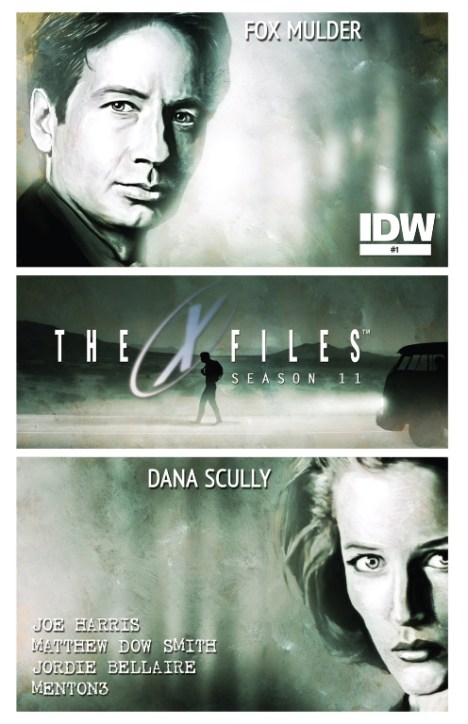
The X-Files: Season 11 is a truncated season, in more than one way.

While The X-Files: Season 10 ran for twenty-five issues with two annuals, a Christmas special and three tie-in miniseries, The X-Files: Season 11 is a more modest affair. The monthly series runs for eight issues, although there is a single Christmas special thrown in for good measure. More than that, there is a very clear condensed quality to the narrative. It feels like writer Joe Harris, along with artist Matthew Dow Smith and colourist Jordie Bellaire, are racing frantically towards the finish line.

See no evil.

See no evil.

This makes a certain amount of sense. After all, The X-Files: Season 11 was not the only big news to hit the fandom in February or March 2015. The creative team had done good work reviving the nineties science-fiction franchise, but news of a fresh season of X-Files comic books was always going to pale in comparison to news that Fox had managed to bring back Chris Carter along with Gillian Anderson and David Duchovny for a six-episode miniseries to air less than one year later.

The X-Files: Season 11 was always going to exist in the shadow of the louder and showier revival. In some respects, the entire eight-issue series feels like a frantic attempt to wrap up all the dangling threads set up in that initial run. It feels very much like the publisher getting its house in orders before that classic theme music plays on prime-time once again. The X-Files: Season 11 is a somewhat modest affair. Although that modesty is somewhat endearing.

On the road again.

On the road again.

Continue reading

The X-Files (IDW) Annual 2014 (Review)

This June, we’re going to be taking a look at the current run of The X-Files, beginning with the IDW comic book revival and perhaps taking some detours along the way. Check back daily for the latest review.

The X-Files: Season 10 was a massive success for IDW publishing.

Although the monthly series had been announced in January 2013, it hit the stands in June 2013. That meant that the opening arc, Believers, basically ran through the summer season and towards the big twentieth anniversary coverage in October 2013. The X-Files: Season 10 was one of the first indicators that there was a public appetite for The X-Files, with behind-the-scenes talks about a live action revival only really coming to a head after that first issue hit shelves.

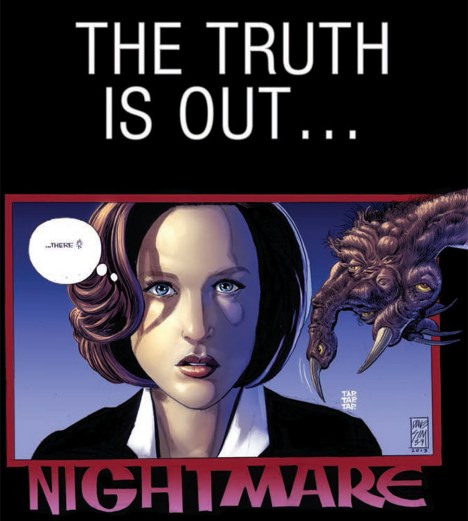
... and so is the fact that they let Dave Sim write a Scully story.

… and so is the fact that they let Dave Sim write a Scully story.

It is perhaps too much to credit The X-Files: Season 10 for building or sustaining momentum towards the revival. However, the monthly comic series spoke very clearly to the series’ continued relevance and to the audience very eagerly invested in the idea of more stories built around these iconic characters. IDW moved to capitalise on the hunger quite quickly, and it is telling that the publisher moved to publish at least two X-Files books per month for most of the comic’s run. Fans wanted more X-Files, and IDW wanted to give it to them.

This explains The X-Files Annual 2014, a book published outside the monthly schedule of The X-Files: Season 10 and drawing two big-name creators to draft their own short stories focusing on Mulder and Scully. Neither of these stories is particularly brilliant or insightful, and neither feels like it really needed to be told, creating the impression that the comic exists mainly so that fans can have more Mulder and Scully in their lives.

"Have you seen The Exorcist?" "No, but I've seen The Calusari."

“Have you seen The Exorcist?”
“No, but I’ve seen The Calusari.”

Continue reading

The X-Files: Season 10 (IDW) #10 – More Musings of a Cigarette-Smoking Man

This June, we’re going to be taking a look at the current run of The X-Files, beginning with the IDW comic book revival and perhaps taking some detours along the way. Check back daily for the latest review.

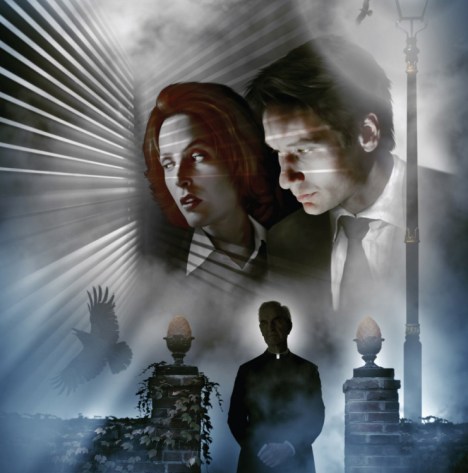
More Musings of a Cigarette-Smoking Man is certainly an ambitious story.

As the title suggests, writer Joe Harris and artist menton3 position this one-shot as a spiritual sequel to Musings of a Cigarette-Smoking Man, the controversial fourth season episode written by Glen Morgan and directed by James Wong. Musings of a Cigarette-Smoking Man offered a window into the past of the Cigarette-Smoking Man, a possible glimpse of who he had been and how he had come to be. It was also one of the most consciously stylised and ambiguous episodes in the entire nine-year run of the show.

Wheels within wheels.

Wheels within wheels.

Writing a spiritual sequel to that classic episode is a bold decision from the creative team. As with a lot of the big creative decisions concerning The X-Files: Season 10, More Musings of a Cigarette-Smoking Man seems too focused on the past. There is a sense that the monthly series is a little too beholden to what came before, too rooted in continuity, too dedicated to revisiting the iconography of the series. Writing a single-issue standalone story positioned as a sequel to on of the most unique episodes of the original run only emphasises this unease.

And, yet, in spite of these legitimate concerns, More Musings of a Cigarette-Smoking Man works reasonably well. It is indulgent and obsessive, but it is also rich and mysterious. It is disjointed and uneven, but that feels like the point. In keeping with the spirit of Musings of a Cigarette-Smoking Man, it feels like More Musings of a Cigarette-Smoking Man is a reflection on the comic book itself. This is a comic book contemplating its own identity and purpose, even as it finds itself being made redundant.

X marks the spot.

X marks the spot.

Continue reading

The X-Files: Conspiracy (IDW) (Review)

This June, we’re going to be taking a look at the current run of The X-Files, beginning with the IDW comic book revival and perhaps taking some detours along the way. Check back daily for the latest review.

IDW is quite different from Topps and Wildstorm, the two prior comic book companies to hold the license for The X-Files.

Part of that simply reflects changes in the comic book industry over time, with a greater fixation on concepts like shared universes and continuity, along with an increased emphasis on the importance of “the canon.” Part of that is simply down to the way that IDW operates as a publisher. The company is the fourth-largest comic book publisher in America, behind Marvel, DC and Image. While the company publishes a number of creator-owned properties, its success has largely been based around licensing properties.

A mutant phenomenon...

A mutant phenomenon…

In doing so, the company has adopted a model quite close to that of Marvel or DC. It tends to organise its books around these properties in the same way that Marvel or DC might organise themselves around the so-called “families.” Much like books like Detective Comics, Nightwing or Batgirl are considered part of the “Batman” family or books like Wolverine, Namor and X-Force fall under the X-Men banner, IDW tends to group its books into familiar families based around licensed properties. Transformers, G.I. Joe, Teenage Mutant Ninja Turtles.

It is not uncommon for each of those lines to support multiple books. For example, the company would publish a number of miniseries as companion pieces to their monthly Star Trek or Doctor Who comics. The same would be true of The X-Files: Season 1o, with the company publishing a number of tie-in books around that. Year Zero and Millennium are the most obvious example, providing the company with the opportunity to publish several branded X-Files books within the same month.

I bet super soldiers wish that they could do this.

I bet super soldiers wish that they could do this.

At the same time, the company engages with its properties in much the same way that Marvel or DC might. Marvel and DC tend to fall into a pattern of massive so-called “events” that serve to draw particular books away from their own internal narratives and towards a more “epic” story. Civil War focused on a fight between Captain America and Iron Man, but crossed over into over one hundred comic book issues published over seven months. There are countless other examples, from House of M to Crisis on Infinite Earths to Siege to Final Crisis.

IDW has organised several of its own blockbuster events to tie together its own licensed properties; Infestation and and Infes2ation come to mind. To celebrate the landing of the license, it was decided that the 2014 crossover would be themed around The X-Files. It is just a shame that the result was terrible.
We ain't afraid of no ghosts...

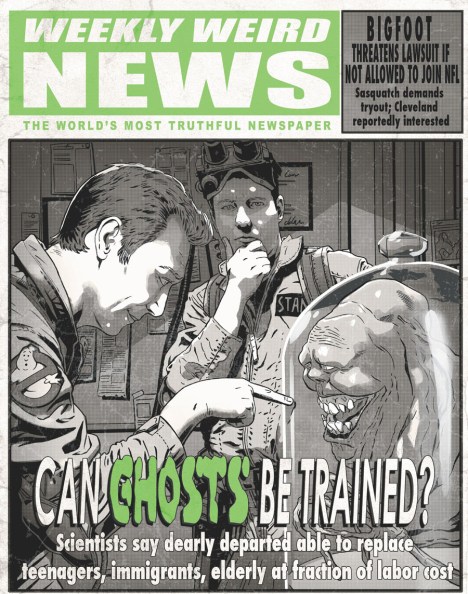
We ain’t afraid of no ghosts…

Continue reading

The X-Files: Season 10 (IDW) #8 – Being for the Benefit of Mr. X (Review)

This June, we’re going to be taking a look at the current run of The X-Files, beginning with the IDW comic book revival and perhaps taking some detours along the way. Check back daily for the latest review.

Being for the Benefit of Mr. X is effectively another origin story, following on from Hosts.

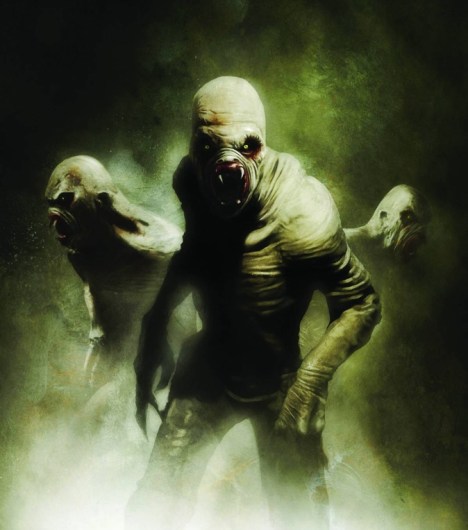
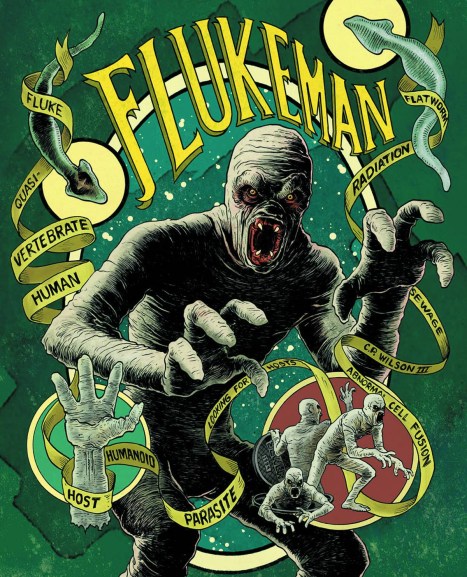
While Hosts explained exactly how the Fluke Man came to be, and even gave the character tangible motivation, Being for the Benefit of Mr. X is largely driven by flashbacks that proceed to explain and elaborate upon Mulder’s second informant. Mister X has long been one of the franchise’s most interesting and underdeveloped character, in part owing to the fact that the show fleshed out very little about him and in part due to Steven Williams’ performance. While the show revealed a lot about Deep Throat or the Cigarette-Smoking Man, Mister X remains a mystery.

Marking the spot.

Marking the spot.

The question, of course, is what this actually adds to the story being told. It is fun to revisit the origin of Mister X, but he is very much an outdated concern at this point in the show’s life. In fact, the character’s last appearance was in flashback in Unusual Suspects at the start of the fifth season, following his death in Herrenvolk at the start of the fourth season. Unlike the Cigarette-Smoking Man, Mister X was never literally resurrected. Unlike Deep Throat, he never turned up to haunt Mulder in episodes like The Blessing Way or The Sixth Extinction II: Amor Fati.

It is not as if writer Joe Harris has constructed a particularly compelling origin story for Mister X. The story told in Being for the Benefit of Mr. X is solid and sturdy, integrating quite smoothly with the continuity of the show and the character as we understand it. However, there are no real surprises or tangents, no twists or surprises. Being for the Benefit of Mr. X is a solid “done in one” story. It just feels a tad unnecessary.

In too Deep (Throat)...

In too Deep (Throat)…

Continue reading

The X-Files: Season 10 (IDW) #6-7 – Hosts (Review)

This June, we’re going to be taking a look at the current run of The X-Files, beginning with the IDW comic book revival and perhaps taking some detours along the way. Check back daily for the latest review.

Balance was always going to be an issue for The X-Files: Season 10, even in a purely logistical sense.

At its peak, The X-Files was churning out twenty-six episodes in a season. Of those, maybe a third would be mythology episodes and the rest would be standalone monster of the week stories. As a result, the show could find the time to balance earth-shaking mythology episodes like Paper Clip, Nisei, 731 and Talitha Cumi with brilliant episodic television like Clyde Bruckman’s Final ReposeOublietteGrotesquePusher and Jose Chung’s “From Outer Space.” Part of the appeal of The X-Files was always striking that balance.

No Fluke.

No Fluke.

That is not really possible with a conventional comic book release schedule. Comic books are released once a month, limiting the creative team to twelve issues in a given year. They might also get an annual, if the comic is popular. Given modern comic book narrative conventions and the lower page counts of modern comics, “done-in-one” standalone stories are increasingly uncommon. At best, it seems like a creative team might get away with seven stories in a year, six two-parters and an annual.

This causes issues in structuring a comic book season of The X-Files. Quite cleverly, The X-Files: Season 10 runs for twenty-five issues, evoking the length of a classic television season. However, it tells far fewer stories, with the run dominated by epic sprawling mythology stories like the five-part Believers, the five-part Pilgrims and the five-part Elders. That is three-fifths of the “season” given over to three mythology stories. It is no wonder that the rest of the run feels so compressed.

Worming his way back to you...

Worming his way back to you…

Continue reading

Batman – Vengeance of Bane #1 (Review/Retrospective)

This March sees the release of Batman vs. Superman. To celebrate, we’ll be looking at some iconic and modern Batman and Superman stories over the course of the month.

Bane is a fascinating creation, arguably the most important addition to Batman’s rogues gallery since Denny O’Neil and Neal Adams created Ra’s Al Ghul in the early seventies.

There have been important villains added since. Jeph Loeb and Jim Lee created Hush, a character who has subsequently been developed and expanded by Paul Dini and Dustin Nguyen; Hush has popped up with surprising frequency in various Batman media, even being incorporated into the weekly series Batman Eternal in a major way. It will be interesting to see how Lincoln March and the Court of Owls endure after Scott Snyder and Greg Capullo finish their run on Batman. Still, Bane towers above all of those.

"When Gotham is ashes..."

“When Gotham is ashes…”

Continue reading

Batman: Sword of Azrael (Review)

This March sees the release of Batman vs. Superman. To celebrate, we’ll be looking at some iconic and modern Batman and Superman stories over the course of the month.

Given how messy Knightfall ended up, readers would be forgiven for assuming that the Batman editorial staff had been making it up on the fly.

To a certain extent, the editors and writers were effectively making it up as they went along. According to writer Greg Rucka, the big Batman events of the nineties were not so much mapped out as loosely plotted. The creative talent had some vague idea of where they wanted to go and what they wanted to accomplish, but not necessarily the particulars of how they would get there or how they would accomplish it. After all, Rucka’s novelised adaptation of No Man’s Land had a different ending to the comic book because the novel had to be finished ahead of time.

All fired up...

All fired up…

Reading Knightfall, it quickly becomes clear that the writers had no real idea about how they wanted the story to unfold. The event has a fairly solid first act, but its second act is cluttered and much of the resolution is messy and unsatisfying. At the same time, it is clear that the writers had some idea of what they were doing and where they were going; at least in the beginning. As much as the sprawling nineties even might bungle the pay-off, it benefits from a very careful and meticulous set-up.

A lot of the key elements of the Knightfall saga were set up and signposted ahead of time. The months leading up to the start of Knightfall in April 1993 were quite busy at the Batman offices. Shondra Kinsolving was introduced in November 1992. Bane was introduced in a special one-shot in January 1993, The Vengeance of Bane, that provided the back story of the new antagonist. Bridging these two milestones was the miniseries Batman: Sword of Azrael, introducing the character who would step into the vacancy left by the broken bat.

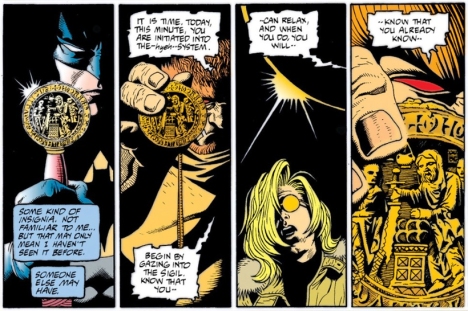
Medallion man.

Medallion man.

Continue reading

The Adventures of Superman – The Sound of One Hand Clapping (Review)

This March sees the release of Batman vs. Superman. To celebrate, we’ll be looking at some iconic and modern Batman and Superman stories over the course of the month.

Max Landis has a relatively unique path to writing for Superman.

Landis is one of the most striking young writers to emerge from Hollywood in quite some time, making a strong impression through his collaboration with Josh Trank in the low-budget found-footage superhero film Chronicle. Landis has diversified somewhat since that original screenplay; a filmography that includes films like Mr. Right, American Ultra and Victor Frankenstein suggests that Landis’ interests lie more in unconventional pairings than in the superhero genre itself.

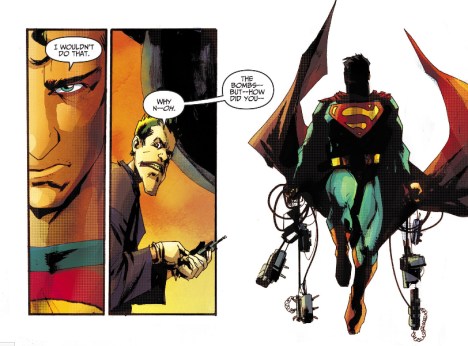
The Joker's gags really bombed...

The Joker’s gags really bombed…

Nevertheless, Landis is a writer who does seem fascinated with the mechanics and underlying logic of superhero storytelling. A year before the release of Chronicle, Landis put together a short film that served as an extended discussion of The Death and Return of Superman featuring a variety of top tier talent like Mandy Moore, Elijah Wood, Ron Howard and Simon Pegg. At once reveling in the absurdity of the massive nineties comic book crossover and interrogating its central character’s identity crisis, it was a potent piece of pop culture criticism.

In the years following his initial success, Landis has remained relatively connected with the Man of Steel. He drafted an eight-page origin for the Atomic Skull for the first annual of DC comics’ relaunched Action Comics run, and would get a change to craft his own origin story for Clark Kent in American Alien. However, he also wrote a short two-issue story as part of DC’s digital-first The Adventures of Superman comic, scripting Superman’s first encounter with the Clown Prince of Crime.

Last laugh...

Last laugh…

Continue reading