• Following Us

  • Categories

  • Check out the Archives


  • Awards & Nominations

The X-Files – Musings of a Cigarette-Smoking Man (Review)

This February and March, we’re taking a trip back in time to review the fourth season of The X-Files and the first season of Millennium.

“No great man lives in vain. The history of the world is but the biography of great men.”

– Thomas Carlyle, On Heroes, Hero-Worship, and the Heroic in History

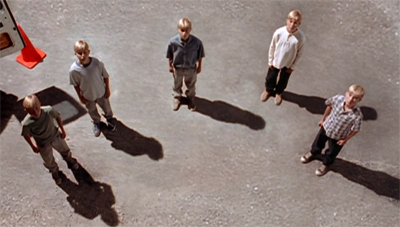
Light 'em up...

Light ’em up…

Continue reading

The X-Files – Herrenvolk (Review)

This February and March, we’re taking a trip back in time to review the fourth season of The X-Files and the first season of Millennium.

After Talitha Cumi, Herrenvolk cannot help but seem like a little bit of a disappointment.

Towards the end of the episode, the Alien Bounty Hunter hunts down Jeremiah Smith. Mulder begs for mercy, but the Bounty Hunter will hear nothing of it. “He shows you pieces, but tells you nothing of the whole,” the Bounty Hunter remarks to Mulder. It feels like that sentiment encapsulates Herrenvolk in a nutshell. Mulder goes on the run with Jeremiah Smith and sees a collection of vague but compelling things that may or may not tie into colonisation.

"Now you're thinking, 'I hope that's shepherd's pie in my knickers!'"

“Now you’re thinking, ‘I hope that’s shepherd’s pie in my knickers!'”

Like a lot of the mythology in the fourth and fifth seasons, it feels like a holding pattern. Talitha Cumi was surprisingly candid in its revelations. The aliens were plotting to colonise Earth in collaboration with the human conspirators. The date had been set, the plot was in motion. That was a pretty big bombshell, confirmed in unequivocal terms. It was arguably the clearest and most transparent that the conspiracy arc would ever be. There was a clear goal, a deadline, and a sense of purpose.

Almost immediately, Herrenvolk works to muddy the water. It stalls, it procrastinates, it delays, it evades. It is a plot structured around a collection of ominous conspiracy buzz words (DNA, smallpox, colonies, clones) without a clear purpose or objective.
A bloody mess...

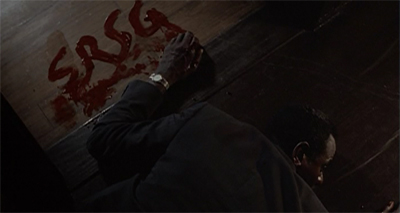
A bloody mess…

Continue reading

The X-Files – Talitha Cumi (Review)

This November (and a little of December), we’re taking a trip back in time to review the third season of The X-Files and the first (and only) season of Space: Above and Beyond.

Talitha Cumi is a staggeringly confident piece of television, the kind of episode casually produced by a show at (or approaching) the top of its game.

It is interesting just how much this season finalé seems to promise business as usual. It is perhaps the least radical of the show’s season-ending cliffhangers, with the third season closing on an immediate rather than a conceptual threat to our leads and to The X-Files as a show. The Erlenmeyer Flask ended with the death of Deep Throat and the closing of the X-files. Anasazi ended with Mulder being burnt alive in a boxcar filled with alien bodies. Gethsemane ups the ante further.

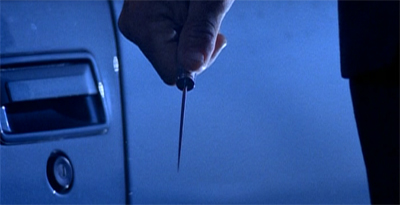
A stab in the dark...

A stab in the dark…

In contrast, Talitha Cumi ends with the Alien Bounty Hunter walking towards Mulder and Scully in a rather menacing fashion. It is very effective television – and a solidly suspenseful cliffhanger – but it also feels rather low-key when compared to other season-ending episodes. Talitha Cumi feels like a pretty effective hook, rather than a game-changer. There’s an immediacy to the cliffhanger, but nothing that threatens to upend the show as a whole.

Then again, one suspects that is entirely the point. The third season has been largely about consolidation of The X-Files. It makes sense that it wouldn’t throw everything up into the air at the end of the season.

It's been a long year...

It’s been a long year…

Continue reading

The X-Files – Paper Clip (Review)

This November (and a little of December), we’re taking a trip back in time to review the third season of The X-Files and the first (and only) season of Space: Above and Beyond.

And now we return to your scheduled viewing.

In many respects, Paper Clip feels like the real third season premiere. It establishes a lot of the recurring themes and ideas for the mythology of the season, from Krycek-on-the-run through to collaboration in the wake of the Second World War. It builds on the successful multi-part formula established by episodes like Ascension or End Game during the show’s second season. It moves things along in a way that The Blessing Way simply refused to. (It even resolves the cliffhanger from the last episode on screen.)

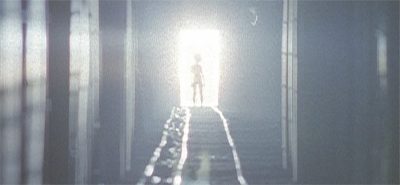
The light at the end of the tunnel...

The light at the end of the tunnel…

Paper Clip demonstrates the strengths of the third season of The X-Files. The third season was the point at which the show really pushed the mythology out, building on earlier implications that there was form to be found in the shadows. The third season also looked to the second season to determine what had worked and what had not worked. Paper Clip is very clearly modelled on the successful aspects of second parts like Ascension or End Game.

It moves. The power of Paper Clip comes from an incredible forward momentum that allows the show to maintain tension and excitement while refusing to allow the audience to catch their breath. Instead of resolving the bigger plot threads from the first episode, questions and hints are thrown out with reckless abandon as the script just drives through set pieces and emotional beats and suspenseful sequences. It is a very meticulously, very cleverly constructed piece of television.

Watching the skies...

Watching the skies…

Continue reading

The X-Files – The Blessing Way (Review)

This November (and a little of December), we’re taking a trip back in time to review the third season of The X-Files and the first (and only) season of Space: Above and Beyond.

The Blessing Way is the first mythology episode of The X-Files that doesn’t really work.

And it doesn’t really work for a lot of the same reasons that some of the later mythology episodes don’t really work. Its pacing is terrible. It wallows in new age mysticism, allocating characters thoughtful monologues that awkwardly state themes and render subtext as supratext. It plays into the deification of Mulder, trying to bend Mulder’s story to fit into an archetypal “chosen one” narrative. More than that, it is very clearly a holding pattern, an effort to eat up time without moving forward.

Wiping it all out...

Wiping it all out…

However, despite the fact that The Blessing Way really doesn’t work, it is still a fascinating episode. It’s a wonderful demonstration of how The X-Files has developed a fleshed-out world inhabited by compelling characters. The best moments in The Blessing Way are character-focused, with Skinner caught between his duty to the government and his loyalty to his agents, the Cigarette-Smoking Man revealed to be middle-management at best, and the implication that even vast sinister government conspiracies are hostage to chaos.

The Blessing Way is an oddity, a rather strange piece of television that is almost endearing in its stubborn refusal to deliver what the audience wants and expects. That doesn’t make it good, but it does make it interesting.

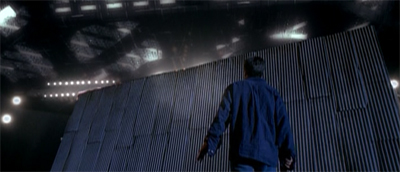
The truth is up there...

The truth is up there…

Continue reading