• Following Us

  • Categories

  • Check out the Archives


  • Awards & Nominations

Doctor Who: Evolution of the Daleks (Review)

To celebrate the fiftieth anniversary of the longest-running science-fiction show in the world, I’ll be taking weekly looks at some of my own personal favourite stories and arcs, from the old and new series, with a view to encapsulating the sublime, the clever and the fiendishly odd of the BBC’s Doctor Who.

Evolution of the Daleks originally aired in 2007.

Caan, let me help you. What do you say?

Emergency temporal shift!

– sadly the Doctor doesn’t follow this with a dramatic “CAAAAAAAN!!!”

Well, that went off the rails rather quickly. Okay, to be fair, the problems here were all hinted at in the first part, with those potential obstacles only turning into gaping flaws as this two-part adventure galloped toward the finish line. And, again, Evolution of the Daleks fails because it has too much ambition, rather than a complete lack of it. Still, the episode is a mess, full of mismatched ideas and crazy concepts that really don’t work especially well within the context of a Dalek episode. It’s not too hard to imagine a lot of these elements being recycled into a working story for the show, but the main problem seems to be that none of those elements work especially well with the Daleks.

I can see it in its eye-stalk...

I can see it in its eye-stalk…

Continue reading

Doctor Who: Daleks in Manhattan (Review)

To celebrate the fiftieth anniversary of the longest-running science-fiction show in the world, I’ll be taking weekly looks at some of my own personal favourite stories and arcs, from the old and new series, with a view to encapsulating the sublime, the clever and the fiendishly odd of the BBC’s Doctor Who.

Daleks in Manhattan originally aired in 2007.

We must evolve! Evolve! Evolve!

– Dalek Sec has perhaps the most out-of-character moment for a Dalek ever

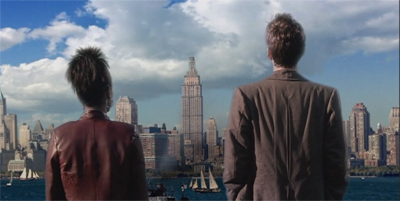
The concept of Daleks in the past is a great idea. However, with the exception of Evil of the Daleks, it is also a bit of a tricky one. Steven Moffat found that out with the first Dalek story of his tenure, Victory of the Daleks, bringing the Daleks to the Second World War. However, Russell T. Davies tried telling a Dalek story set in the past as part of the show’s third season. The Parting of the Ways had featured a Dalek story set in the future, while Doomsday saw the fiends lay siege to modern-day London. Placing the Daleks in 1930s New York seems a staggeringly ambitious proposition.

It's a hell of a town...

It’s a hell of a town…

Continue reading

Doctor Who: The Dalek Invasion of Earth (Review)

To celebrate the fiftieth anniversary of the longest-running science-fiction show in the world, I’ll be taking weekly looks at some of my own personal favourite stories and arcs, from the old and new series, with a view to encapsulating the sublime, the clever and the fiendishly odd of the BBC’s Doctor Who.

The Dalek Invasion of Earth originally aired in 1964.

We are the masters of Earth. We are the masters of Earth. We are the masters of Earth.

– who are the Daleks trying to convince?

Watching the early years of Doctor Who, I often find myself struggling to measure the quality of a show as against its importance to the series as a whole. Sixties Doctor Who has perhaps an unfair reputation when it comes to quality. In fact, as a rule, I’ve been pleasantly surprised on my trips back to the archives for these reviews. However, it’s often much more interesting to look at the context and the legacy of these classic episodes, as the show begins to define what it is and what it isn’t, what it can do and what it can’t do.

In that context, The Dalek Invasion of Earth is a massively important story. It features the first returning monsters of the series (go on, guess!), the first departure of a companion, the first invasion of Earth, the first aliens in London. The list goes on and on. There’s an incredibly vast influence that The Dalek Invasion of Earth has on the half-century of Doctor Who that follows. It’s nearly impossible to deny the shadow that this adventure casts.

However, it’s also a very flawed piece of television, for all its iconic status. Indeed, watching these six episodes I’m more often struck by what is important rather than what is good.

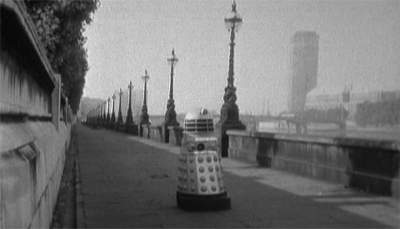
The Daleks of London...

The Daleks of London…

Continue reading

Doctor Who: Colony in Space (Review)

To celebrate the fiftieth anniversary of the longest-running science-fiction show in the world, I’ll be taking weekly looks at some of my own personal favourite stories and arcs, from the old and new series, with a view to encapsulating the sublime, the clever and the fiendishly odd of the BBC’s Doctor Who.

Colony in Space originally aired in 1971.

Are you some kind of scientist?

I’m every kind of scientist.

– Caldwell and the Doctor

Colony in Space is an interesting story for many reasons. For one thing, it’s the first colour adventure to travel to another world. It was the first time since Jon Pertwee took over the title role that the character had been allowed to leave the surroundings of modern-day Earth. Even if he did land in a quarry. Colony in Space demonstrated the possibilities to tell futuristic and extraterrestrial stories in the new and remodelled version of Doctor Who, and the show began to slowly venture further and further afield over the next few years, with the Doctor finally regaining control of his TARDIS in The Three Doctors a little under two years later.

However, Colony in Space is also interesting because it is a script from Malcolm Hulke, who has really become one of the more Doctor Who script writers more inclined to pepper his scripts with political and moral philosophy. Colony in Space is an interesting exploration of those themes, even if it does run a little bit long in places. (That said, Hulke is one of the better writers of the six-part format in the show’s history.)

Go on, try to fight the urge to pronounce the episode title like "colony... IN SPACE!"

Go on, try to fight the urge to pronounce the episode title like “colony… IN SPACE!”

Continue reading

Doctor Who: The Claws of Axos (Review)

To celebrate the fiftieth anniversary of the longest-running science-fiction show in the world, I’ll be taking weekly looks at some of my own personal favourite stories and arcs, from the old and new series, with a view to encapsulating the sublime, the clever and the fiendishly odd of the BBC’s Doctor Who.

The Claws of Axos originally aired in 1971.

Are you trying to tell me you can absorb the total output of this complex in a police box?

Yes.

– Hardiman and the Master discover that self-confidence is a genetic Time Lord trait

The Claws of Axos tends to come in for a fair bit of criticism for pretty much being the quintessential Earth-based Jon Pertwee story, with very little exceptional to distinguish it from the pack. Personally, I’m actually quite fond of it, perhaps precisely for that reason. I think you’re hard-pressed to find an adventure in the early part of Jon Pertwee’s tenure that so effectively and so efficiently captures the spirit of the show – both good and bad. That kind of makes The Claws of Axos stand out if only because it so perfectly embodies those early Pertwee years.

Eye see you…

Continue reading

Doctor Who: Terror of the Autons (Review)

To celebrate the fiftieth anniversary of the longest-running science-fiction show in the world, I’ll be taking weekly looks at some of my own personal favourite stories and arcs, from the old and new series, with a view to encapsulating the sublime, the clever and the fiendishly odd of the BBC’s Doctor Who.

Terror of the Autons originally aired in 1971.

That jackanapes! All he ever does is cause trouble!

– nice to see the Doctor taking the Master seriously

I think you can make a fairly credible argument that Jon Pertwee’s first season of Doctor Who stands out as one of the best years the show ever produced. Facing the challenge of migrating from black-and-white to colour, and forced to tell stories entirely set on present-day Earth, the writers and producers managed to craft a season of television that I think stands quite well when measured against the very best of vintage BBC science-fiction. Sure, there may have been walking shop-front dummies, lizard people, animal men and haunted space suits, but the stories were surprisingly mature and relatively clever. The writers used the framework of Doctor Who to tell four very good and very philosophical stories exploring both bold science-fiction high-concepts (alternate universes) and also moral quandaries (how humanity relates to the unknown).

Terror of the Autons is the first story in Jon Pertwee’s second season. I’m actually quite fond of it, and it’s packed to the brim with iconic imagery, so it’s very difficult to be too critical of it. After all, any adventure that left so large an impression on the public imagination must have something to recommend it. However, there’s a very clear sense of regression here. It seems, from this first serial of Pertwee’s second year, that the agenda has changed somewhat.

Terror of the Autons is arguably more indicative of Pertwee’s time in the lead role than any of those stories from his first year. It’s exciting, it’s fast-paced, it has a decidedly man-of-mystery feeling to it, but it also feels somewhat light and a little insubstantial. Not that there’s anything wrong with that, but it just feels like a definite regression.

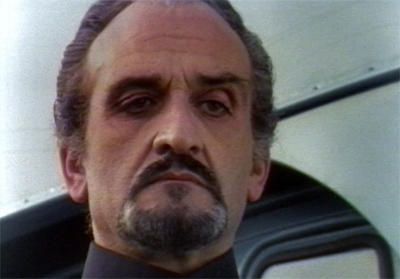
Master of the Whoniverse?

Master of the Whoniverse?

Continue reading

Doctor Who: Attack of the Cybermen (Review)

To celebrate the fiftieth anniversary of the longest-running science-fiction show in the world, I’ll be taking weekly looks at some of my own personal favourite stories and arcs, from the old and new series, with a view to encapsulating the sublime, the clever and the fiendishly odd of the BBC’s Doctor Who.

Attack of the Cybermen originally aired in 1985.

We realise this must be confusing for you.

– Threst tells it how it is

There is a tendency, these days, to be more sympathetic in appraisals of the Colin Baker years. Everybody – including Baker – accepts that his tenure could have gone a lot smoother. Watching Attack of the Cybermen, I can’t help but feel sorry for just about everybody involved. Rewatching Colin Baker’s first season, I can’t help but feel that the problem with this period of the show wasn’t that the production crew were making new mistakes or deviating from good ideas. It seems quite apparent that a lot of the major problems were embedded during Peter Davison’s time in the role.

The problem with Colin Baker’s first year on the show was that the writers and producers allowed those already significant flaws to attain critical mass.

A crushing blow...

A crushing blow…

Continue reading

Doctor Who: The Age of Steel (Review)

To celebrate the fiftieth anniversary of the longest-running science-fiction show in the world, I’ll be taking weekly looks at some of my own personal favourite stories and arcs, from the old and new series, with a view to encapsulating the sublime, the clever and the fiendishly odd of the BBC’s Doctor Who.

The Age of Steel originally aired in 2006.

Human race. For such an intelligent lot, you aren’t half susceptible. Give anyone a chance to take control and you submit. Sometimes I think you like it.

– oh, Doctor, you kinky so-and-so

I really don’t like Rise of the Cybermen. I think it’s a waste of a potential origin story for one of the Doctor’s most iconic adversaries. However, most of the problems with this two-parter are front-loaded. The set-up, quite frankly, is relatively pedestrian. It’s Doctor Who on auto-pilot. The follow-up, Age of Steel, actually works a bit better. That’s not to suggest that the script is any smarter or any tighter. Indeed, this is very much Doctor Who in big blockbuster mode. However, Age of Steel does have one massive advantage. It has director Graeme Harper working on it.

At least they're stylish...

At least they’re stylish…

Continue reading

Doctor Who: The Tomb of the Cybermen (Review)

To celebrate the fiftieth anniversary of the longest-running science-fiction show in the world, I’ll be taking weekly looks at some of my own personal favourite stories and arcs, from the old and new series, with a view to encapsulating the sublime, the clever and the fiendishly odd of the BBC’s Doctor Who.

The Tomb of the Cybermen originally aired in 1967.

In fact you might say they’ve had a complete metal breakdown.

Oooooh….

I’m sorry, Jamie.

– traveling with the Doctor can be quite pun-ishing

The Tomb of the Cybermen is a bit of miracle. Originally thought lost to history in the great BBC archives purge (along with most of the Troughton era), The Tomb of the Cybermen was recovered completely intact from Hong Kong in 1992, a quarter of a century after the adventure aired and several years after the original series had been cancelled by the BBC. It remains perhaps the most significant recovery in recent memory, and fosters hope that there might be a few other serials that have been preserved in their entirety. Still, even outside of its significant historical context, I’d make the argument that The Tomb of the Cybermen stands as the best adventure to feature the metallic men.

Sealing your tomb…

Continue reading

Doctor Who: Rise of the Cybermen (Review)

To celebrate the fiftieth anniversary of the longest-running science-fiction show in the world, I’ll be taking weekly looks at some of my own personal favourite stories and arcs, from the old and new series, with a view to encapsulating the sublime, the clever and the fiendishly odd of the BBC’s Doctor Who.

Rise of the Cybermen originally aired in 2006.

Delete. Delete.

– the moment the Cybermen realise they are second-rate Daleks

I’ll freely concede that I am sceptical of the Cybermen. Okay, that’s not fair. I actually really like the early Cybermen stories. However, it seems like Doctor Who really forgot how the Cybermen worked when it turned them into a recurring “once per Doctor” sort of threat. However, they are part of the show’s iconography. The image of the Cybermen marching down the steps of St. Paul’s Cathedral from The Invasion is important enough to earn them a sacred place in the show’s history.

So the return of the Cybermen was inevitable, even before we caught a glimpse of one of their silly helmets in Dalek. Russell T. Davies has generally done a great job revitalising old concepts for the revived series, so Rise of the Cybermen has that in its corner. Unfortunately, I’m not convinced that Rise of the Cybermen approaches anything resembling the quality of Dalek, and I think that Rise of the Cybermen manages the rare feat of turning most of Davies’ strengths into weaknesses.

March of the Cybermen...

March of the Cybermen…

Continue reading