• Following Us

  • Categories

  • Check out the Archives


  • Awards & Nominations

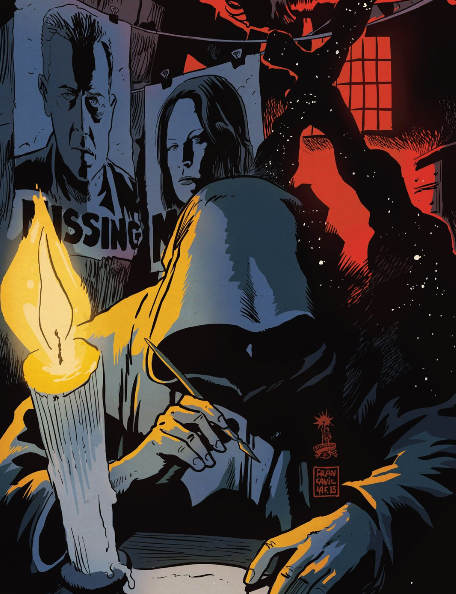
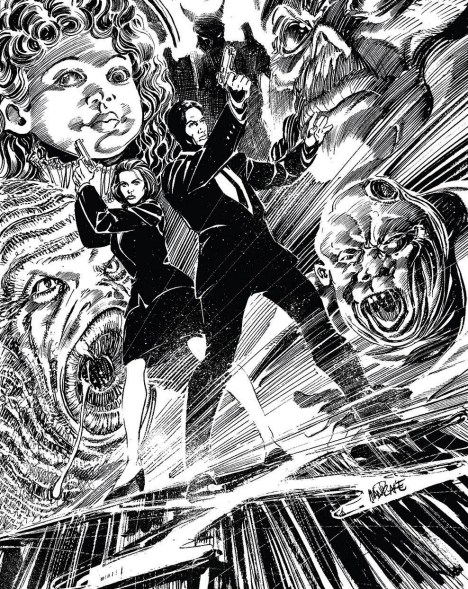
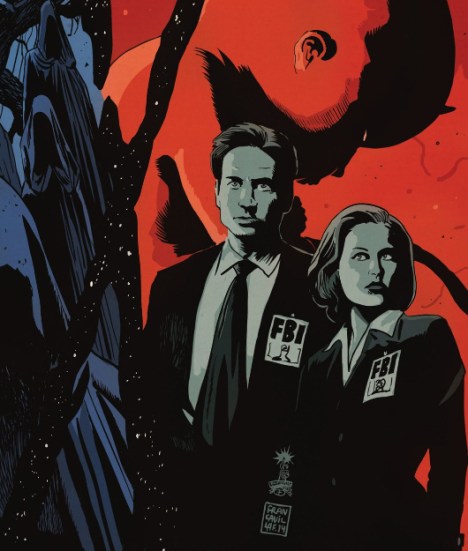
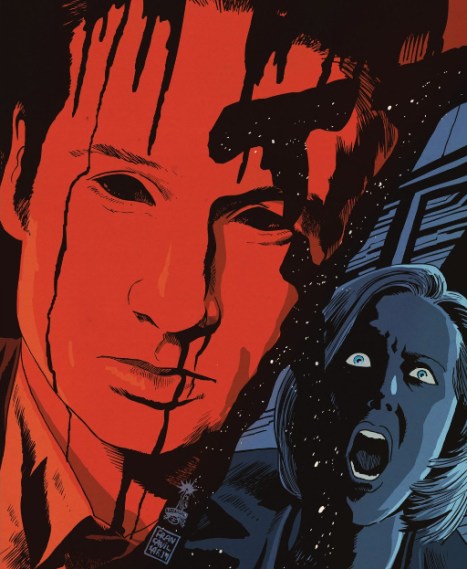
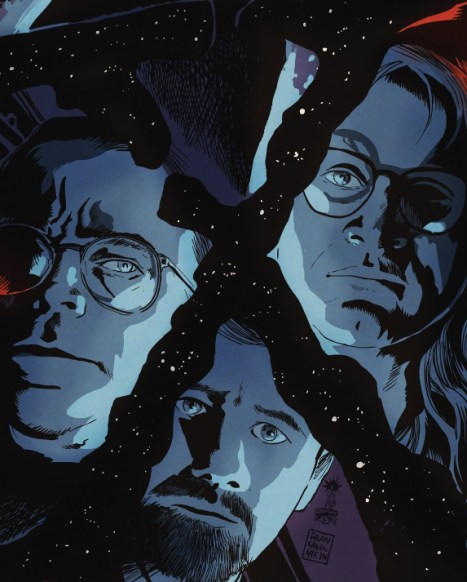
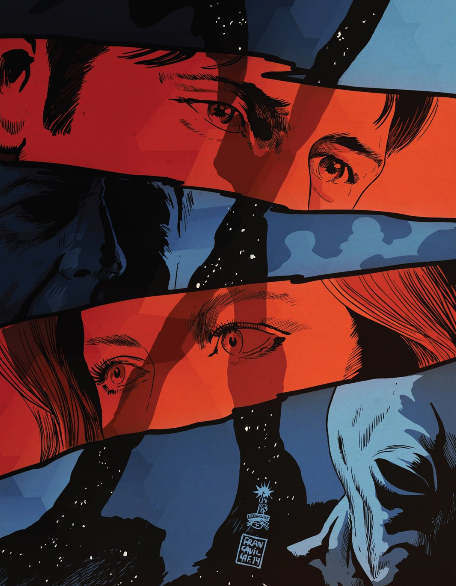
The X-Files (IDW) Annual 2015 – Most Likely to… (Review)

This June, we’re going to be taking a look at the current run of The X-Files, beginning with the IDW comic book revival and perhaps taking some detours along the way. Check back daily for the latest review.

Most Likely to… is an interesting stories in a number of respects.

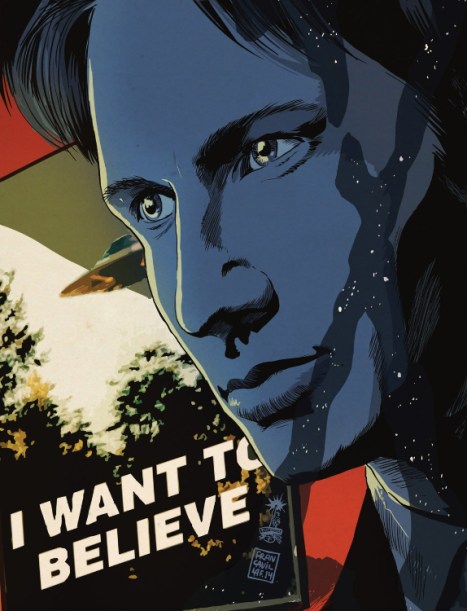
Most obviously, it represents a clear change in how IDW are approaching their X-Files license. When The X-Files: Season 10 was announced in January 2013, a big deal was made of the fact that it would be the “official” continuation of the adventures of Mulder and Scully. The comic line was very much an expansion of the series, to the point that the bulk of issues – including spin-offs like Conspiracy and like Millennium – took place following the events of The X-Files: I Want to Believe. The future of the franchise was up for grabs.

Flashback.

Flashback.

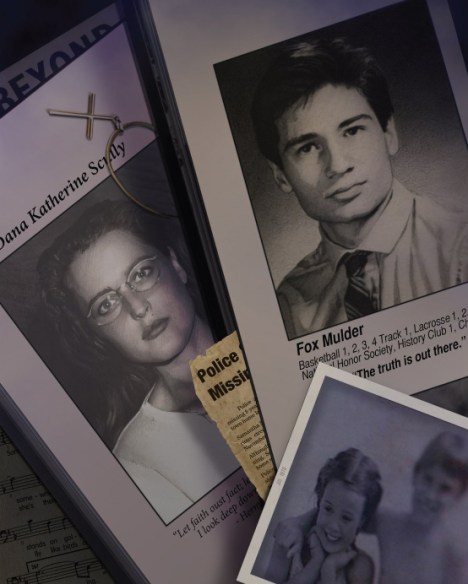
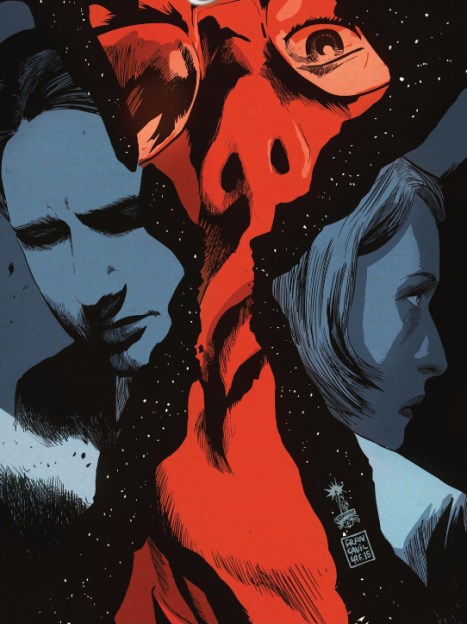
Most Likely to… is notable as the first X-Files comic published by IDW to unfold entirely within the continuity of the television series, rather than beyond it. Even the framing device in Year Zero was very much set during Season 10. The comic is dated as taking place in November 1999, which would place it early in the seventh season of the show. The dialogue makes it clear that this issue takes place before the events of Sein und Zeit and Closure. This choice of setting feels more like the Topps or Wildstorm comics than the IDW line.

This is a very interesting transition, given how keenly IDW had been focused on their position as the continuation of the franchise. However, it does demonstrate just how much as changed.

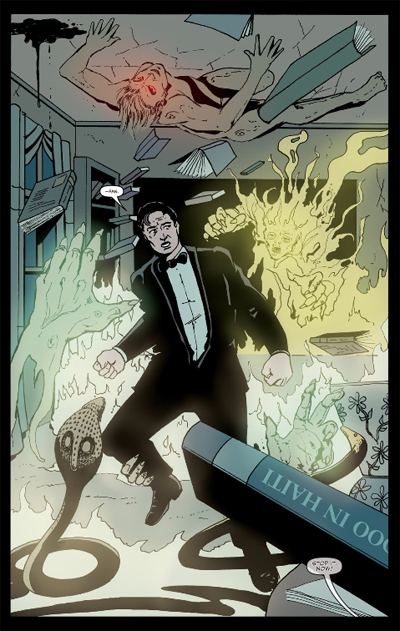
Burning down the house...

Burning down the house…

Continue reading

The X-Files: Season 10 (IDW) #21-25 – Elders (Review)

This June, we’re going to be taking a look at the current run of The X-Files, beginning with the IDW comic book revival and perhaps taking some detours along the way. Check back daily for the latest review.

One of the more disappointing aspects of The X-Files: Season 10 and The X-Files: Season 11 is that it does very little to adapt the mythology to the twenty-first century.

The X-Files is very much a show rooted in the political and cultural context of the nineties. Everything about the show’s first seven seasons reflects the Clinton era, with the series perfectly capturing the zeitgeist in the weird lacuna between the fall of the Berlin Wall and the destruction of the World Trade Centre. At its peak, the show touched on underlying anxieties that are social, political and existential; it asked tough questions about identity in the final days of the twentieth century. As much as Friends or The Simpsons, The X-Files embodied the nineties.

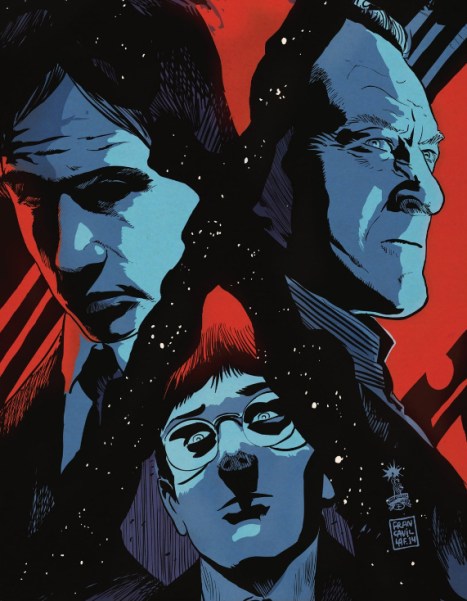
The son becomes the father... And the pseudo-son...

The son becomes the father…
And the pseudo-son…

As such, any revival of The X-Files must face questions of relevance. The X-Files so perfectly captured the spirit of the nineties that removing the series from that context runs the risk of severely damaging it. What makes now such a perfect time for The X-Files? What does The X-Files have to say about contemporary culture? How will the show be tweaked for modern audiences and sensibilities? These are not trivial questions. Any X-Files revival should be more than just a nostalgic “victory lap.”

This question of relevance faced the revival miniseries, but it also faced The X-Files: Season 10. What does The X-Files mean in the modern world? Harris had broached the question in a number of different ways, perhaps most skilfully in his approach to the classic “small town horror stories” that populated the show’s nine-season run. Whereas those stories tended to touch upon themes of globalisation and the erosion of so-called eccentric spaces, Harris used stories like Chitter and Immaculate to explore a growing cultural divide in twenty-first century America.

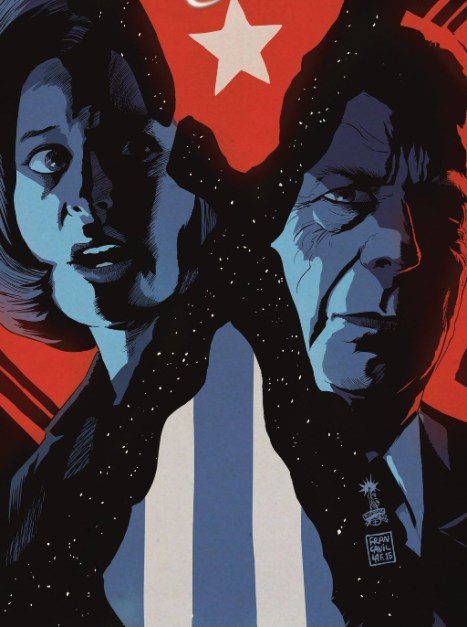
Cuba libre...

Cuba libre…

However, The X-Files: Season 10 does not work quite as well when it comes to updating the mythology for the twenty-first century. A lot of this is down to the strong nostalgic pull of the nineties mythology. Harris employs a lot of the same elements that were in play while the show was on the air; the same characters, the same dynamics, the same story beats. There were occasional nods towards the changing geopolitical realities, such as the use of black-oil-as-oil in Pilgrims. However, the revived mythology never engaged with the twenty-first century as well as it might.

Effectively serving as the season “finale”, Elders makes the strongest play for relevance yet. It consciously references and evokes the imagery of the War on Terror in its exploration of Gibson Praise’s revived conspiracy. Unfortunately, it doesn’t quite work.

Cross to bear...

Cross to bear…

Continue reading

The X-Files: Season 10 (IDW) #19-20 – G-23 (Review)

This June, we’re going to be taking a look at the current run of The X-Files, beginning with the IDW comic book revival and perhaps taking some detours along the way. Check back daily for the latest review.

One of the more underrated aspects of The X-Files: Season 10 is the care that writer Joe Harris takes to emulate the structure and tone of a regular season of The X-Files.

There are obvious structural differences, of course. Twenty-five issues cannot possibly correspond to twenty-five episodes of television, and the comic ran for over two years rather than across nine months. Nevertheless, Harris works hard to ensure that the comic book series adopted a structure rather similar to that of the television series. The X-Files: Season 10 has a flow to it that feels vaguely like the structure of those classic nineties seasons, albeit with fewer individual stories due to the nature of the medium.

Ol' green eyes is back...

Ol’ green eyes is back…

Believers was an epic mythology season premiere, akin to The Blessing Way and Paper Clip or Redux I and Redux II. Pilgrims was a big mid-season mythology adventure like Nisei and 731 or Piper Maru and Apocrypha. Elders is an epic game-changing season finale, like The Erlenmeyer Flask or Anasazi or Requiem. Even stand-alone character-centric stories like Being for the Benefit of Mister X or More Musings of a Cigarette-Smoking Man recall episodes focusing on supporting characters like Zero Sum or En Ami.

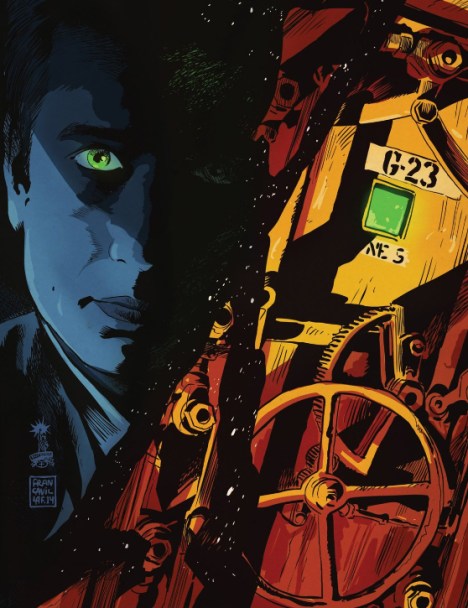
With that in mind, G-23 is very much the weird mind-bending off-format episode that tends to appear towards the end of the season. Indeed, Harris boasted on Twitter that the end of the season would “include an… off-beat story.” In that light, G-23 feels very much like an affectionate nod to trippy stories like Demons, Folie à Deux and Field Trip. Indeed, it is something of a precursor to the positioning of Babylon within the revival series.

Poster child...

Poster child…

Continue reading

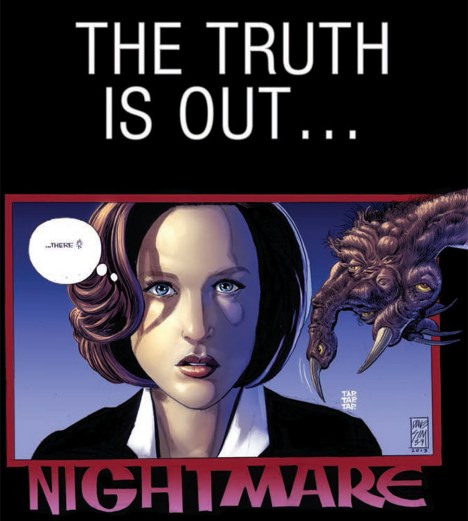
The X-Files (IDW) Christmas Special 2014 (Review)

This June, we’re going to be taking a look at the current run of The X-Files, beginning with the IDW comic book revival and perhaps taking some detours along the way. Check back daily for the latest review.

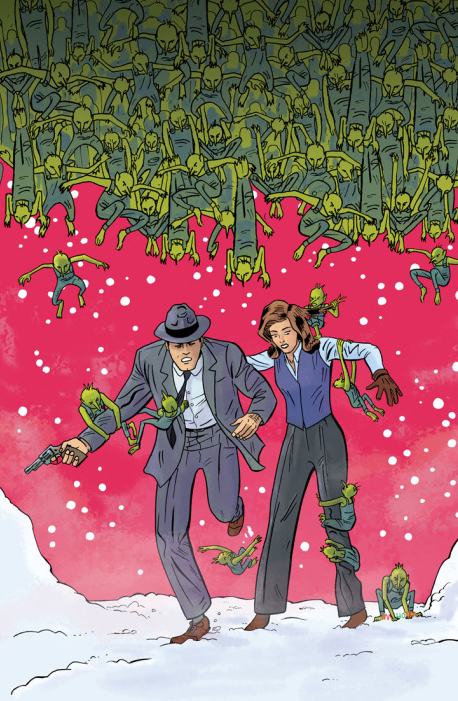
The X-Files Christmas Special 2014 is an indulgence. There is no other way to cut it. The primary story is essentially a Christmas wrap party that happens to feature the bulk of the cast from The X-Files: Season 10, cutting loose and making references and in-jokes like nobody’s business. The secondary story allows writer Karl Kesel the opportunity to expand out a fun one-liner from Year Zero into a full-blown story. Neither story is essential, or adds much to their parent series. It is hard to justify either story on its own merits.

Still, if you can’t excuse an indulgence at Christmas time, when can you?

How the gremlins stole Christmas...

How the gremlins stole Christmas…

Continue reading

The X-Files: Season 10 (IDW) #18 – Monica & John (Review)

This June, we’re going to be taking a look at the current run of The X-Files, beginning with the IDW comic book revival and perhaps taking some detours along the way. Check back daily for the latest review.

Monica & John feels like a bit of housekeeping as The X-Files: Season 10 moves towards its conclusion.

Put simply, The X-Files was in a very different place in November 2014 than it was when The X-Files: Season 10 launched in June 2013. When IDW initially announced the series in January 2013, it seemed like The X-Files was dead. Following the twentieth anniversary celebrations in October 2013, there was a sense that a revival was on the cards. Even before writer Joe Harris had finished Believers, the rules of the game had changed. The X-Files: Season 10 was highly unlikely to be the “canon” successor to The X-Files for long.

Missing in action...

Missing in action…

Over the next year or so, the details of the revival began to take shape. Something was brewing, even if nobody was sure exactly what. The prospect of a return to television would only be leaked to the press in January 2015, being officially confirmed two months later. All of this was still in the air at the time that Joe Harris was working on Monica & John. The writer has claimed to have no real specific insight into the workings of Ten Thirteen or the longer-term plans of Chris Carter, but he seems aware of anybody that changes are definitely coming in one form or another.

A rare single-issue story, Monica & John plays as a meditation on all the loose ends left dangling at the end of Believers that have been truncated and superseded by the knowledge that those threads are to be tackled by Chris Carter in another media. Monica & John feels like a reflection on the limbo to which those various elements have been consigned, including the Acolytes and the two eponymous agents.

It's not as black-and-white as it first appears...

It’s not as black-and-white as it first appears…

Continue reading

The X-Files: Year Zero (IDW) #1-5 (Review)

This June, we’re going to be taking a look at the current run of The X-Files, beginning with the IDW comic book revival and perhaps taking some detours along the way. Check back daily for the latest review.

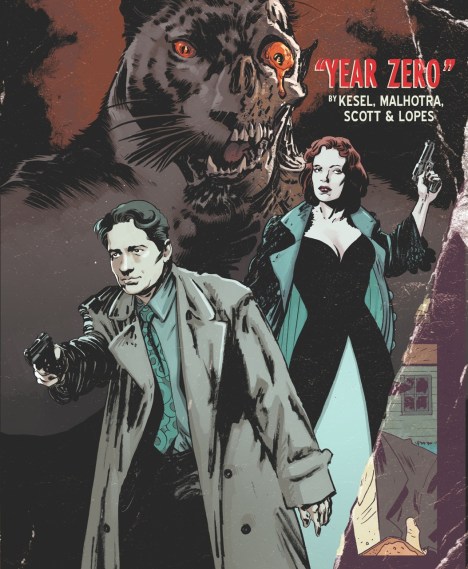
Year Zero is the best thing that IDW has done with the X-Files license.

There are multiple reasons for that. Most obviously, the five-part miniseries is incredibly charming when taken on its own terms. Writer Karl Kesel offers in incredibly playful script, one full of teases and wordplay that holds together remarkably well without ever seeming heavy-handed or awkward. Artists Greg Scott and Vic Malhotra do an excellent job keeping the comic consistent while clearly distinguishing between its two time periods. The modern day sequences as scratchy and detailed, while the flashbacks are illustrated more like cartoons.
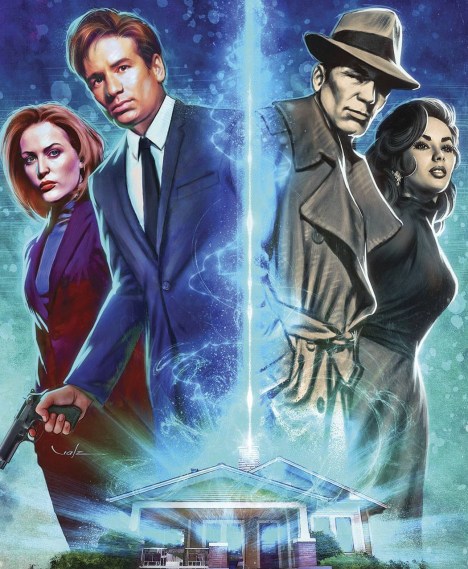
X-over appeal.

X-over appeal.

There is also a clever metafictional commentary underpinning the story that feels like something of a companion to the larger mythology of The X-Files. If the mythology of The X-Files can be read as a secret history of the United States filtered through folklore about aliens and UFOs, then Year Zero positions itself as an origin story for that folklore. It places the origin of The X-Files at the moment those narratives began to change, tying the series into the aftermath of the Second World War in a manner distinct from (but still compatible with) that featured on the show.

More than that, Year Zero is a story that unfolds without a heavy reliance on the mythology or continuity. Given the way that Joe Harris has approached The X-Files: Season 10 and The X-Files: Season 11, it is a welcome surprise that the comic does not feature a guest appearance from William Mulder or C.G.B. Spender. There are lots of little winks and nods to the finer details of the show, but Year Zero is more than just a story carved out from a throwaway line of dialogue in Shapes or as an extension of Travelers.
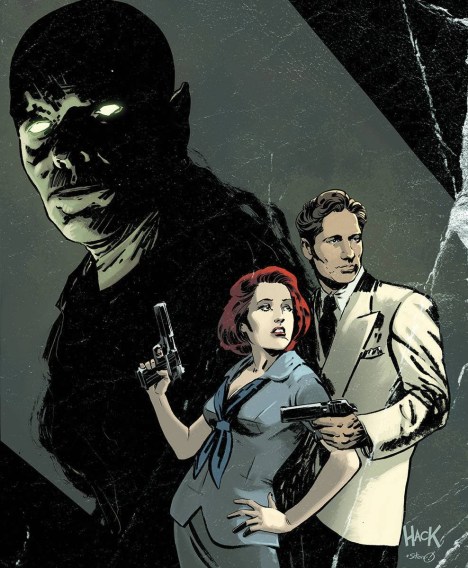
Holding out for a Zero.

Holding out for a Zero.

In fact, Year Zero practically revels in the discontinuity of it all. References to existing stories seem to exist primarily to emphasise the disconnect that exists between them. Given the care the IDW have taken in trying to craft and shape a consistent X-Files continuity, there is something quite refreshing in the cheeky approach taken by Karl Kesel to Year Zero. This is a book that could easily be handed to a casual fan who stopped watching the show around the fifth season, or even to somebody who had only seen a handful of episodes.

However, Year Zero does something far more important. The IDW comics have placed a heavy emphasis on the idea of legitimacy and canon. The comics have worked hard to present themselves as a viable continuation of the franchise. However, a lot of that has involved looking backwards and evoking nostalgia. The Cigarette-Smoking Man returns, Mister X reappears, Alex Krycek is revived. Even the other tie-in miniseries exist to market existing aspects of the brand. Conspiracy is a companion to The Lone Gunmen. Millennium brings back Frank Black.
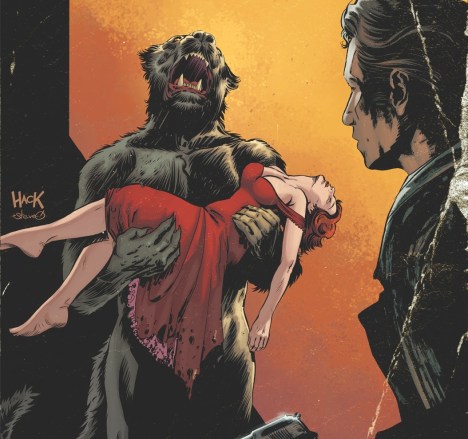
A beast of a man...

A beast of a man…

Year Zero gives the IDW comics something unique and novel. It creates something fresh and exciting rather than simply repackaging recognisable moments or iconic characters. It gives the IDW line something that never existed in any prior incarnation of The X-Files. The characters of Humility Ohio and Bing Ellinson might be familiar archetypes, but they represent something intriguing. Instead of simply repackaging material and elements that fans loved, Year Zero slots in something exciting and intriguing.

The fact that all of this is done as through what is effectively positioned as a clichéd “origin story” makes it all the more exciting.
Madame X.

Madame X.

Continue reading

The X-Files: Season 10 (IDW) #16-17 – Immaculate (Review)

This June, we’re going to be taking a look at the current run of The X-Files, beginning with the IDW comic book revival and perhaps taking some detours along the way. Check back daily for the latest review.

Immaculate is perhaps most notable for reintroducing the character of Frank Black.

One of the more interesting ironies of Millennium is the fact that show had a smaller fanbase than The X-Files, but also a much more vocal campaign to resurrect the series. Outside of a few die-hards eagerly hoping for a third film, X-Files fans had only really begun to clamour for the series to return following the hype around the show’s twentieth anniversary. In contrast, fans of Millennium had been angling for a continuation of their beloved series for years in a number of high-profile ventures.

Familiar demons...

Familiar demons…

Perhaps the most obvious of these campaigns was the Back to Frank Black campaign, which was even endorsed by series star Lance Henriksen providing an introductory voiceover to the Millennium Group Session podcasts urging listeners that “the time is now” and which put out a wonderful series of critical essays and interviews concerning the series in October 2012. As recently as August 2015, they were organising a campaign to bring a revival to Netflix. When the return of The X-Files was announced, one of the big recurring questions was “what about Frank Black?”

As such, it seemed like it was only a matter of time before Frank Black turned up in IDW’s monthly X-Files comic book series.

Baby on board.

Baby on board.

Continue reading

The X-Files Files (Review)

This June, we’re going to be taking a look at the current run of The X-Files, beginning with the IDW comic book revival and perhaps taking some detours along the way. Check back daily for the latest review.

For anybody looking to chart the return of The X-Files to television, The X-Files Files is a hugely important milestone.

The podcast launched in June 2014, a little over half a year following the massive twentieth anniversary celebrations in October 2013 and at a point where everybody involved in the revival was talking seriously about the prospect of bringing The X-Files back in some official capacity. Hosted by comedian and actor Kumail Nanjiani, the podcast offered in-depth discussions and explorations of the classic show with a wide variety of fans drawn from a wealth of different background digging into the show and its history.

xfilesfiles

The podcast became a breakout hit. Not only did the caliber of guest speak to the enduring appeal of The X-Files, but the podcast’s immediate success also spoke to a hunger for more media connected to the show. Even before the revival was announced, the podcast generated a significant amount of media coverage from sources as diverse as The A.V. Club and The Globe and Mail. Part of this was a reaction to the quality of the podcast itself, with Nanjiani serving as phenomenal host, but part of it was down to the fact that it tapped into the cultural mood.

The X-Files Files speaks to the massive positive influence of fandom and as a testament to the role that this fandom played in bringing the show back to television.

xfilesfiles1

Continue reading

The X-Files: Season 10 (IDW) #11-15 – Pilgrims (Review)

This June, we’re going to be taking a look at the current run of The X-Files, beginning with the IDW comic book revival and perhaps taking some detours along the way. Check back daily for the latest review.

Pilgrims is essentially an attempt to do a mid-season mythology episode in the style of Colony and End Game or Tunguska and Terma, a big sprawling epic populated by familiar faces and impossible scale that is driven more by questions and mysteries than by answers or revelations. It is in many ways a testament to writer Joe Harris’ desire to emulate the basic structure and framework of The X-Files, right down to the manner in which he structures The X-Files: Season 10.

There are a lot of obvious markers and touches that help Pilgrims to feel like a classic mid-season mythology episode. There is an international scope, as seen in the trip to the Arctic in End Game or to Hong Kong in Piper Maru or to Russia in Terma. The first half of Pilgrims unfolds in Saudi Arabia, with Mulder and Scully dispatched to investigate what initially appears to be a terrorist attack on an oil operation but is promptly revealed to be something far more sinister.

The red and the black.

The red and the black.

Similarly, in keeping with the style and tone of many of the best mythology two-parters, the basic plot is relatively straightforward even as complications appear at the edge of the frame. In End Game, Mulder is racing to recover his lost sister as details about secret cloning experiments spill out around him. In Nisei, Mulder is trapped in a traincar with a ticking time bomb and a dangerous assassin as he digs away at the conspiracy. In Apocrypha, the black oil just wants to go home. The same is true in Pilgrims, which follows an alien trying to escape.

Even the structure of the five-issue arc recalls that of many X-Files two-parters, with a massive pivot coming between the third and fourth issues in the same way that many two-parters would switch premises at the half-way point. The Saudi Arabia plot wraps up at the end of the third issue, while Gibson Praise is introduced at the start of the fourth. The first three issues focus on the mystery of the Saudi attack, while the final two put a much greater emphasis on the traditional trappings of the X-Files mythology including the conspirators and Skyland Mountain.

Lone survivors.

Lone survivors.

It is remarkable how faithful Joe Harris is to the format of those classic X-Files mythology episodes. Of course, this is something of a double-edged sword. As with a lot of The X-Files: Season 10, the biggest weakness of Pilgrims is the fact that it all feels a little overly familiar and a little too indulgent. Krycek was one of the most popular supporting characters from the nine-season run of The X-Files, but bringing him back at the centre of a five-part epic mythology story feels like pandering and fan service. Harris is not inventing his own mythology, but resurrecting an old one.

Then again, that might seem to be the point. The black oil discovered in Pilgrims is compared to the oil resting beneath Saudia Arabia. In that respect, it is the remains of long-dead organisms compressed and decayed and converted into fuel. There is something more than a little appropriate about that.

Eye see.

Eye see.

Continue reading

The X-Files (IDW) Annual 2014 (Review)

This June, we’re going to be taking a look at the current run of The X-Files, beginning with the IDW comic book revival and perhaps taking some detours along the way. Check back daily for the latest review.

The X-Files: Season 10 was a massive success for IDW publishing.

Although the monthly series had been announced in January 2013, it hit the stands in June 2013. That meant that the opening arc, Believers, basically ran through the summer season and towards the big twentieth anniversary coverage in October 2013. The X-Files: Season 10 was one of the first indicators that there was a public appetite for The X-Files, with behind-the-scenes talks about a live action revival only really coming to a head after that first issue hit shelves.

... and so is the fact that they let Dave Sim write a Scully story.

… and so is the fact that they let Dave Sim write a Scully story.

It is perhaps too much to credit The X-Files: Season 10 for building or sustaining momentum towards the revival. However, the monthly comic series spoke very clearly to the series’ continued relevance and to the audience very eagerly invested in the idea of more stories built around these iconic characters. IDW moved to capitalise on the hunger quite quickly, and it is telling that the publisher moved to publish at least two X-Files books per month for most of the comic’s run. Fans wanted more X-Files, and IDW wanted to give it to them.

This explains The X-Files Annual 2014, a book published outside the monthly schedule of The X-Files: Season 10 and drawing two big-name creators to draft their own short stories focusing on Mulder and Scully. Neither of these stories is particularly brilliant or insightful, and neither feels like it really needed to be told, creating the impression that the comic exists mainly so that fans can have more Mulder and Scully in their lives.

"Have you seen The Exorcist?" "No, but I've seen The Calusari."

“Have you seen The Exorcist?”
“No, but I’ve seen The Calusari.”

Continue reading